

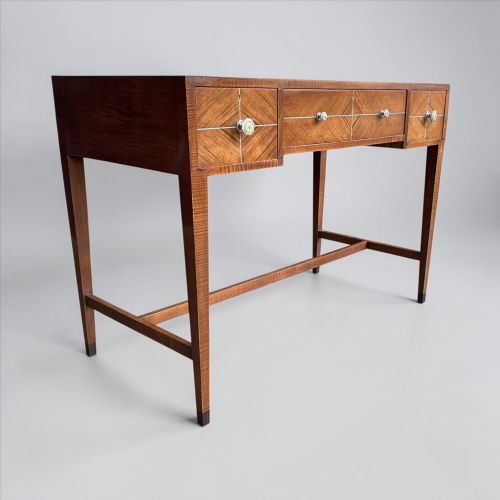
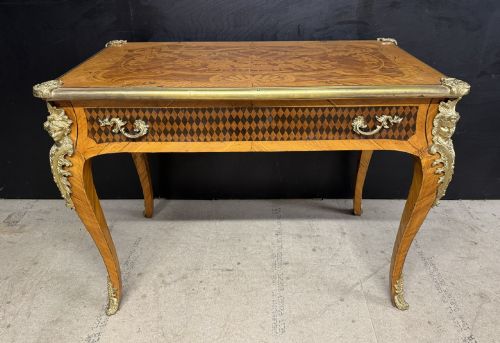
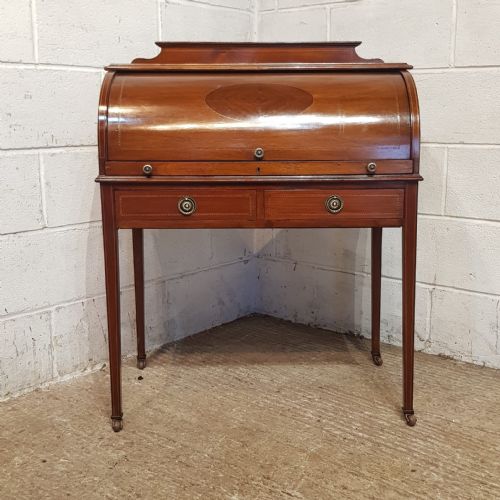


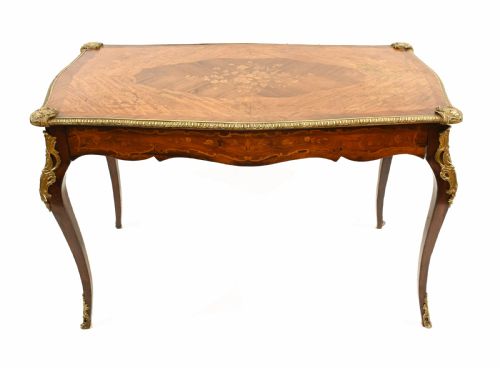


Inlaid Wooden Study Desk
An inlaid wooden study desk brings traditional craftsmanship and refined writing surfaces into a room.
Inlaid Wooden Study Desk
When you search for an inlaid wooden study desk, you encounter writing furniture spanning from the eighteenth century through the Edwardian era. The selection centres heavily on Edwardian mahogany writing tables and cylinder bureau cabinet desks featuring delicate satinwood details.
Forms range from compact ladies writing desks and kneehole tables to grand partners desks and twin pedestal variants. Alongside these writing surfaces, the inventory incorporates associated library desk chairs and armchairs constructed in complementary styles.
Origins stretch across English workshops, French ateliers, and broader European centres. Makers utilise period specific vocabularies including Georgian proportions, Regency lines, and Edwardian Sheraton Revival motifs.
Materials and Construction
These pieces rely on primary timbers such as mahogany, walnut, and satinwood, paired with contrasting inlay woods like boxwood. Cabinetmakers incorporated fitted leather writing surfaces, often finished with gilt tooling, alongside functional brass handles and ormolu mounts.
Marquetry and banding techniques create geometric and floral ornamentation across tabletops, drawer fronts, and cylinder falls. Structural joinery employs traditional methods suited to heavy daily use in studies and libraries.
Inlaid Wooden Study Desk Retail Price Guide 2026
Typical asking prices for inlaid wooden study desk among the pieces listed under this phrase on Sellingantiques today, from the lower quarter to the upper quarter. They describe what is for sale here now, not the wider market.
The listings span from the Georgian period through the Edwardian era, incorporating mahogany, walnut, satinwood, and ormolu.
Factors of Distinction
Quality reveals itself in the crispness of the marquetry and the selective choice of figured veneers for prominent surfaces. Master cabinetmakers balanced structural timber selection with precise inlay work that remains stable across changing temperatures.
Hardware choice and interior arrangement indicate the standing of a piece, from secondary drawer timbers to the execution of ormolu mounts and leather inserts. The integration of functional mechanics in bureau cylinders and pedestal drawers distinguishes finer workshops.
Maple and Co
The Inlaid Wooden Study Desk Glossary
- Marquetry
- Decorative patterns formed by fitting together small pieces of wood veneer onto a structural ground. This technique creates pictorial or geometric designs across desk surfaces.
- Satinwood
- A lustrous tropical timber with a golden yellow sheen, frequently utilised for banding and detailed inlay work during the eighteenth and Edwardian periods.
- Ormolu
- Gilded bronze mounts applied to furniture for decorative enrichment, common on French influenced writing tables.
- Partners Desk
- A large double sided desk designed for two people to work opposite one another, featuring drawers on both faces.
- Carlton House Desk
- A distinctive writing table featuring a raised superstructure of small drawers and compartments curved around the back and sides of the writing surface.
Inlaid Wooden Study Desk: Frequently Asked Questions
How do I choose the right size desk?
Consider the proportions of your room and the intended daily use, balancing compact ladies writing desks against twin pedestal writing tables.
Measure available floor space carefully to ensure clearance for desk chairs and movement around the piece.
Are these desks suitable for daily laptop use?
Many historical writing desks accommodate modern writing equipment, provided the surface dimensions match your hardware requirements.
Leather lined tops offer a durable writing plane, though care should be taken with modern heat generating devices.
How do I tell Georgian pieces from Edwardian copies?
Georgian pieces display the timber ageing, structural joinery methods, and proportions characteristic of the eighteenth century.
Edwardian Sheraton Revival pieces adopt eighteenth century motifs while utilising manufacturing techniques and timber stocks typical of nineteen hundred.
How should I care for the leather top?
Maintain leather writing surfaces by keeping them away from direct sunlight and treating the material with appropriate conservation balms.
Avoid excessive moisture and use protective pads if placing drinks or sharp objects on the leather.