


Inlaid Wooden Hall Desk
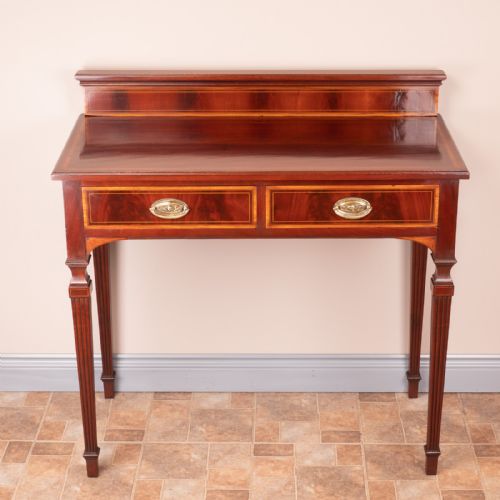
An inlaid wooden hall desk brings immediate warmth and practical surface space to an entranceway, combining rich timber with delicate ornamentation.
Inlaid Wooden Hall Desk
When searching for an inlaid wooden hall desk, you encounter compact writing tables and side tables spanning the nineteenth century through the Edwardian period. These pieces frequently utilise mahogany, rosewood, and satinwood, enhanced by contrasting stringing and decorative motifs.
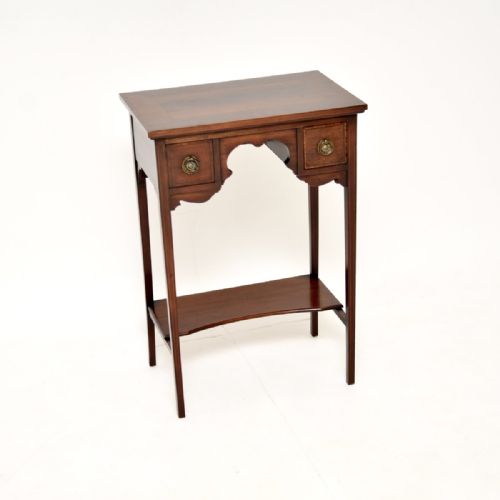
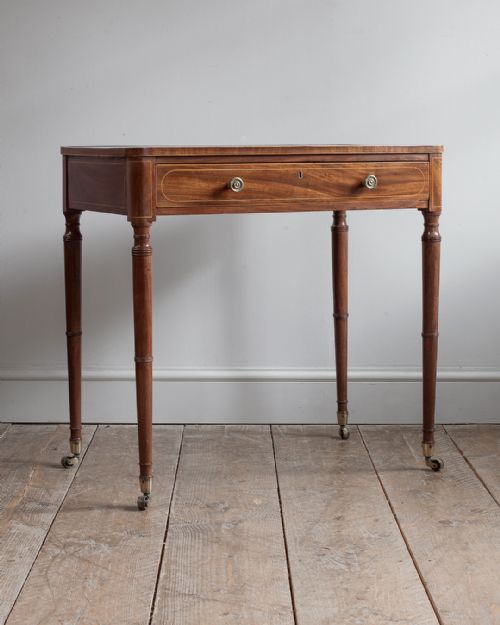
The selection here draws primarily upon nineteenth-century and Edwardian forms, including bow-fronted side tables and compact writing desks fitted with drawers. Their slim proportions suit entrance halls and narrow passages where standard furniture proves too deep.
Cabinetmakers designed these items for light correspondence and the placement of daily essentials near the front door. The integration of satinwood, boxwood, and brass inlay provides visual refinement without overwhelming a modest room.
How they were made
Cabinetmakers built the carcases of these tables using solid timbers such as mahogany and rosewood, often applying figured veneers to the primary surfaces. Crossbanding in contrasting woods frames the edges of tops and drawer fronts to create a neat border.
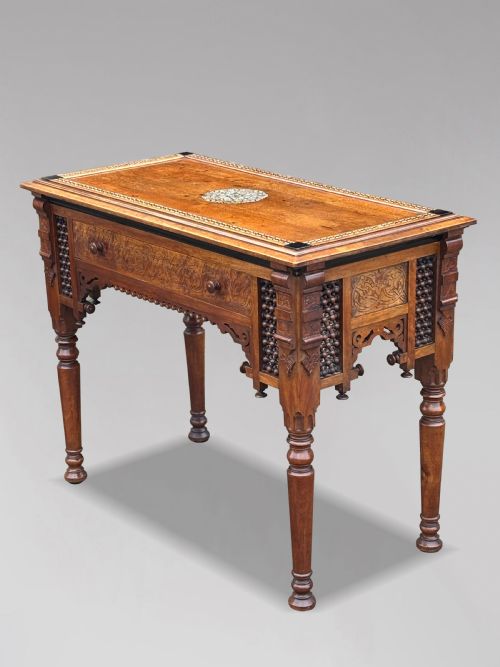
Inlay work relied on precise hand-cutting of materials like boxwood and brass, fitted meticulously into shallow recesses carved into the timber surface. This technique requires steady skill to ensure flush joints between the differing materials.
The listings on this page span the 19th century, Regency, Victorian, and Edwardian eras, utilising mahogany, rosewood, satinwood, and brass inlay.
What varies in quality
The standard of an inlaid wooden hall desk rests on the crispness of the timber selection and the precision of the inlay work. Finer examples display tightly grained mahogany or figured satinwood with sharply defined boxwood and brass motifs that remain flush with the surrounding surface.
Structural integrity and the quality of internal drawer construction also distinguish better pieces. Smoothly running drawers with neat dovetail joints indicate a higher grade of workshop production than simpler framing.
The Inlaid Wooden Hall Desk Glossary
- Inlay
- A decorative technique where pieces of contrasting material, such as wood, brass, or shell, are set into the surface of a base timber to form a pattern.
- Satinwood
- A pale, lustrous timber native to the tropics, prized by cabinetmakers for its golden sheen and smooth texture used in fine veneers and banding.
- Stringing
- A thin strip of contrasting wood or light-coloured inlay used to create narrow decorative lines around the edges of tabletops and drawer fronts.
- Bow-fronted
- A curved furniture front where the central section sweeps outward in a convex arc, softening the corners of side tables and desks.
- Lowboy
- A small, low table with one or more rows of drawers, commonly used as a dressing or writing table during the eighteenth and nineteenth centuries.
Inlaid Wooden Hall Desk: Frequently Asked Questions
What is a hall desk?
A hall desk is a compact surface intended for narrow spaces like corridors and entranceways, providing a convenient place for sorting letters or dropping keys.
These pieces typically feature slim proportions and shallow drawers to avoid obstructing household traffic while offering traditional cabinetwork style.
How do I date an inlaid desk?
Dating relies on observing the prevailing style, choice of secondary timbers, and the nature of the construction methods used in the drawers.
Nineteenth-century examples often combine mahogany or rosewood with boxwood inlay, while Edwardian pieces frequently utilise lighter satinwood veneers and simpler structural framing.
Where should I place a side table?
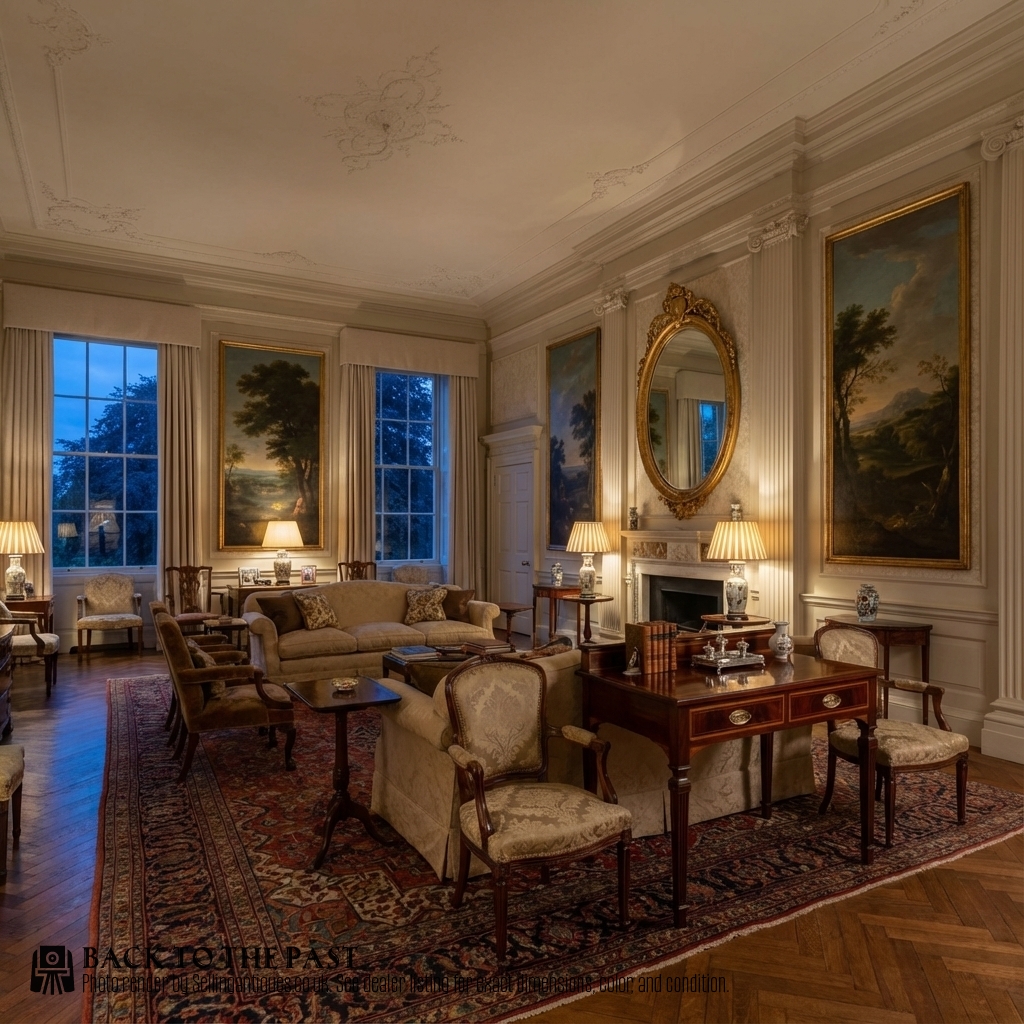
These versatile tables fit well against entrance walls, beneath windows, or in small reception rooms where a full-sized desk takes up too much floor space.
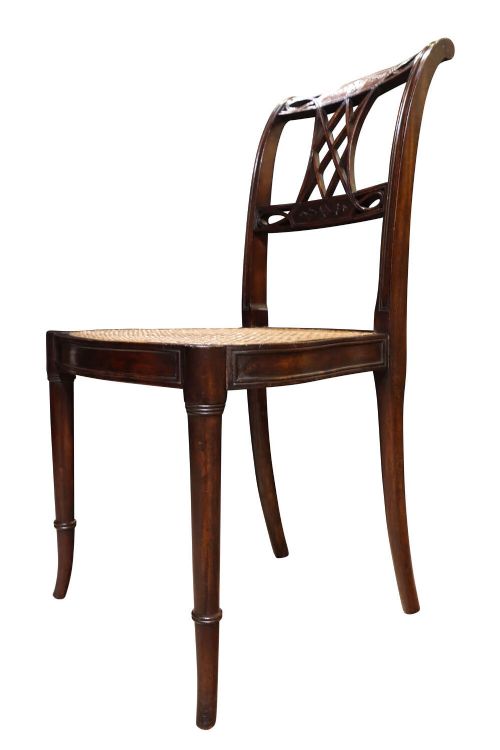
Pairing them with a matching chair or a small lamp creates a functional writing nook without crowding the room.
What woods were used for inlay?
Cabinetmakers commonly selected boxwood for its pale, even tone, which stands out clearly against darker timbers like mahogany and rosewood.
Brass and marquetry details also appear, adding variety and metallic contrast to the surface patterns of Victorian and Regency pieces.