
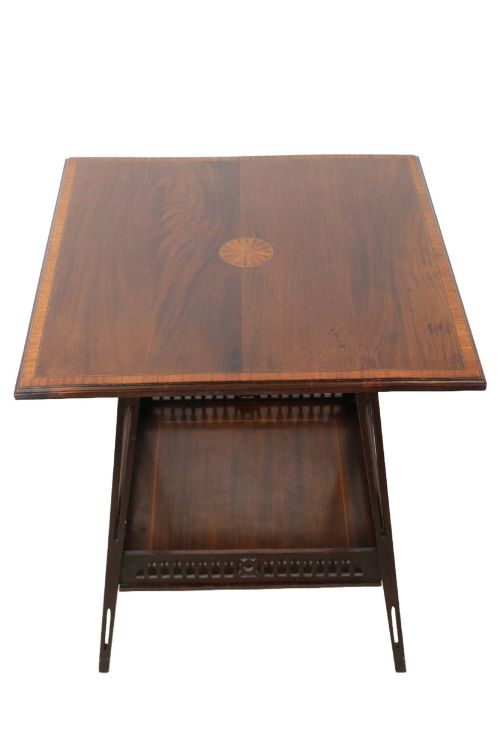
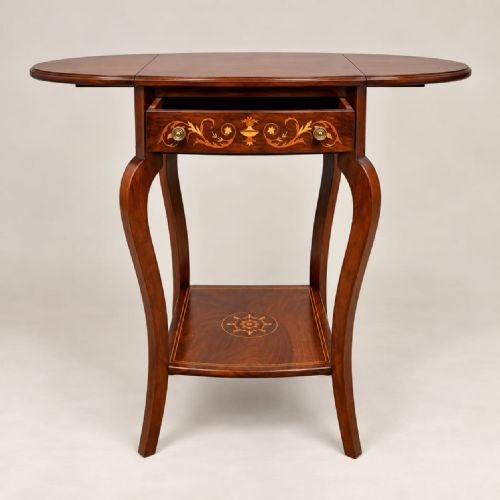

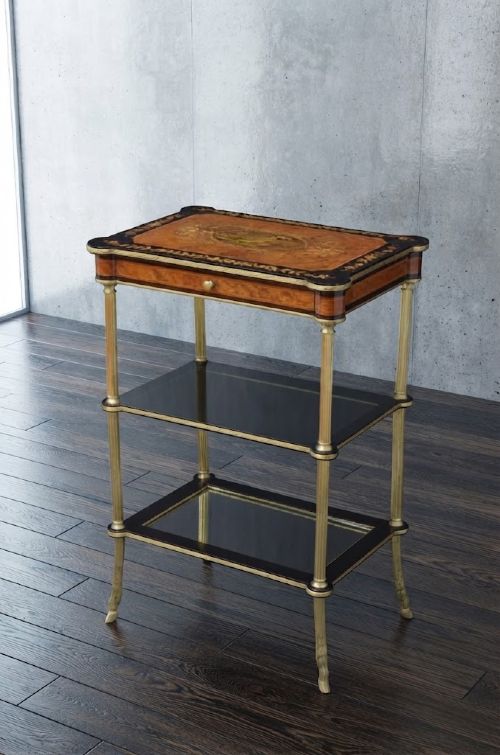
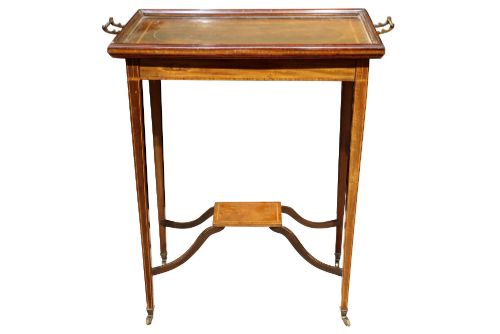
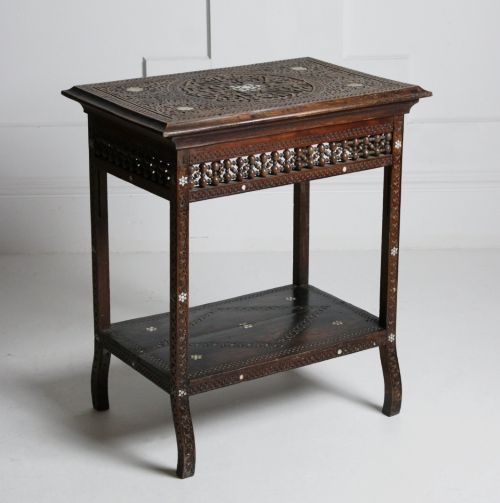
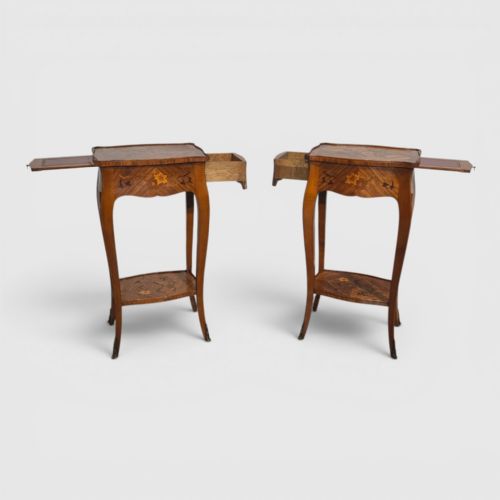
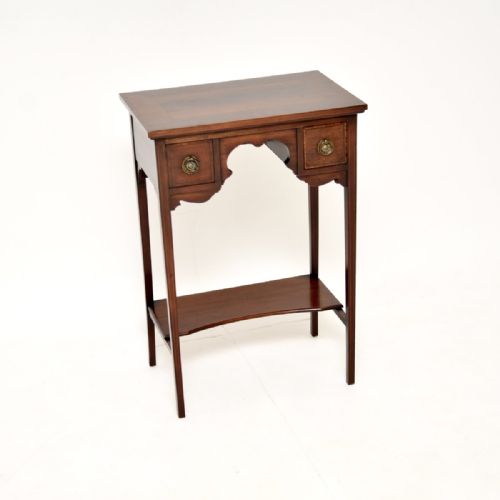
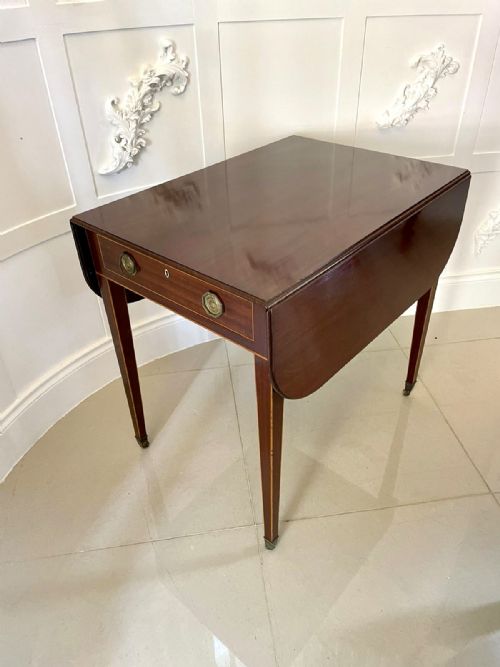
Inlaid Wooden End Table
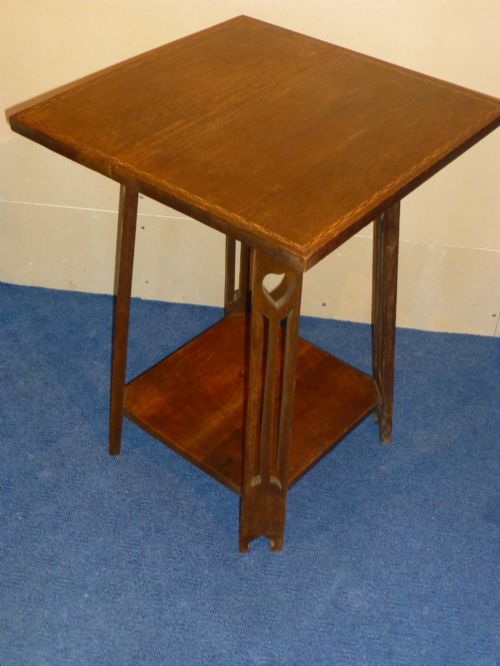
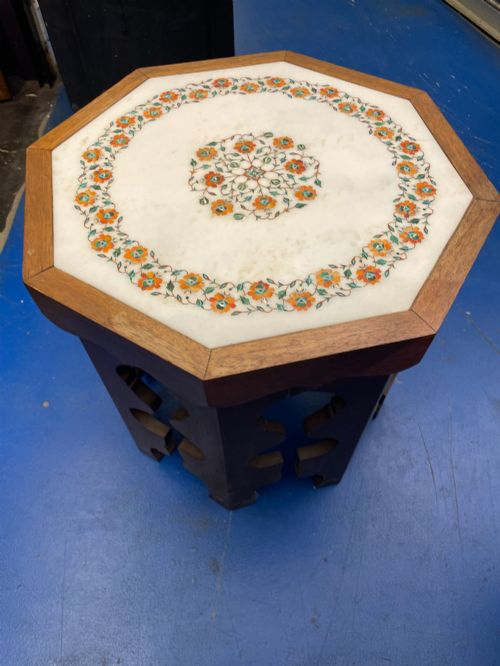
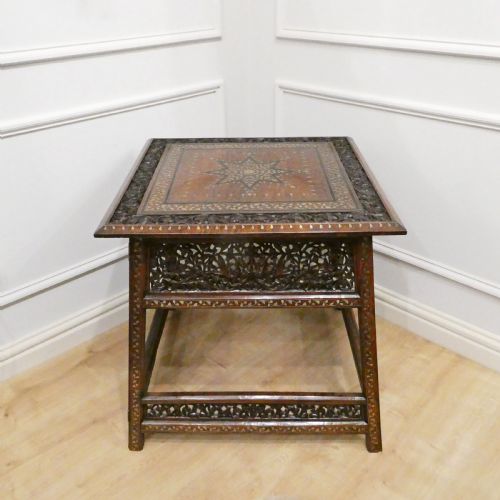
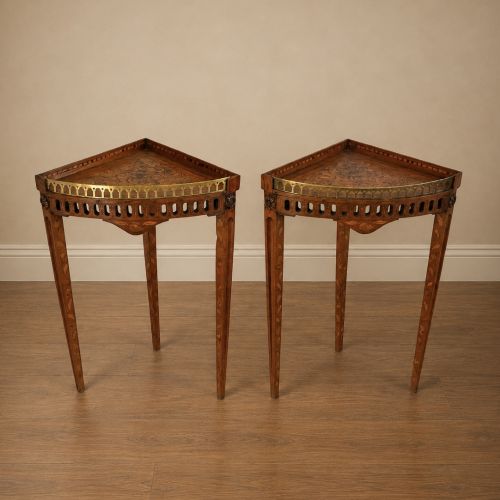
An inlaid wooden end table brings patterned timber work and compact utility to a corner or beside a chair.
Inlaid Wooden End Table
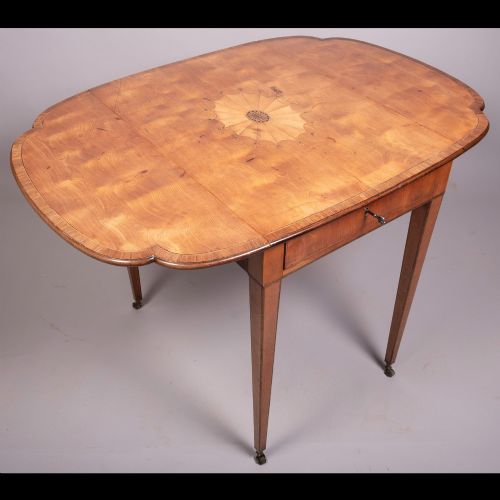
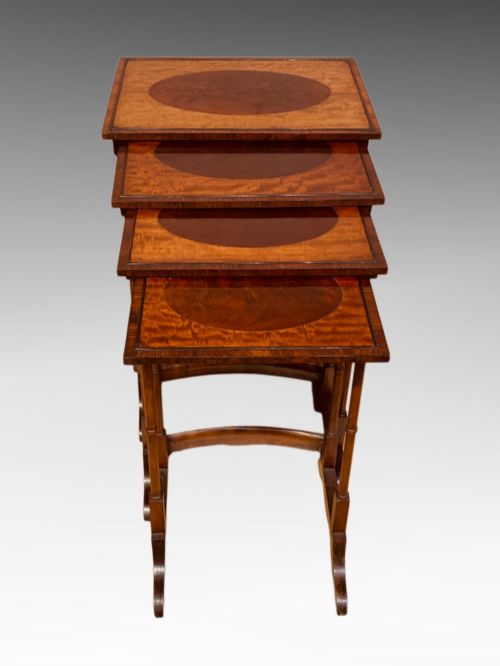
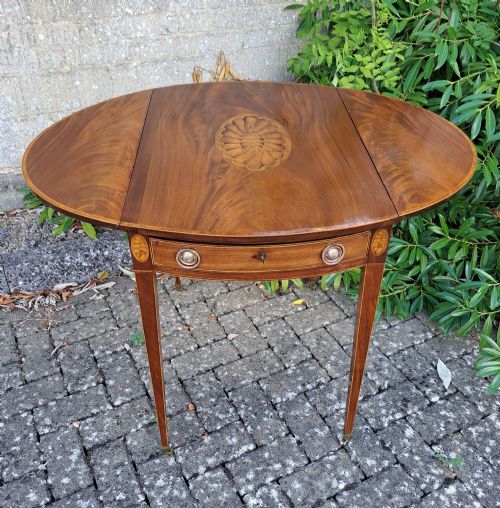
The forms vary from simple rectangular occasional tables and drop-leaf Pembroke tables to multi-tiered stands, corner tables, and quartetto nests. Mahogany and satinwood form the core of the English and French domestic pieces, complemented by imported occasional tables utilising specialised regional techniques.
Makers and workshops range from documented firms like Trevor Page & Co and Liberty & Co to anonymous cabinet makers working in Sheraton Revival, Arts and Crafts, and Moorish styles. Buyers encounter everything from satin walnut oval surfaces to brass-galleried corner tables.
Assessing quality and execution
Quality rests upon the precision of the timber matching and the crispness of the inlay work. Finer examples show meticulous contrast between the background wood and the boxwood or satinwood stringing, whereas simpler pieces rely on painted decoration or minimal banding.
Construction details such as the integrity of drop-leaf mechanisms, the neatness of drawer dovetailing in multi-drawer side tables, and the stability of nested sets separate utilitarian workshop output from superior cabinet work.
Inlaid Wooden End Table Retail Price Guide 2026
Typical asking prices for inlaid wooden end table among the pieces listed under this phrase on Sellingantiques today, from the lower quarter to the upper quarter. They describe what is for sale here now, not the wider market.
Some Edwardian tables came equipped with lift-up tops, presumably for hiding hasty needlework when unexpected callers knocked.
Trevor Page & Co·Liberty & Co·William Birch
The Inlaid Wooden End Table Glossary
- Pembroke table
- A small drop-leaf table with hinged flaps on either side, often fitted with a single drawer.
- Quartetto nest
- A graduated set of four small tables designed to slide neatly one beneath another.
- Marquetry
- Decorative veneer work forming pictorial or geometric patterns using various coloured woods.
- Stringing
- Thin, linear strips of contrasting wood inlaid into channels on a furniture surface to create geometric borders.
- Gallery
- A raised ornamental border, typically pierced brass or wood, fitted around the edge of a tabletop.
Inlaid Wooden End Table: Frequently Asked Questions
What is a Pembroke table?
A Pembroke table is a compact table featuring hinged drop leaves on two opposing sides. They often include a small drawer and were designed to sit easily beside a chair or in the centre of a room.
Cabinet makers produced them in mahogany and satinwood during the Georgian and later periods. The folding flaps allow the surface area to expand when needed.
How do I use an occasional table?
An occasional table serves as a movable surface for lamps, books, or drinks in a sitting room or bedroom. Their compact proportions allow them to fit into corners or beside seating without crowding the room.
Many examples feature nested configurations or lower tiers that offer additional storage space. They work well paired with armchairs or placed against walls as lamp tables.
What is a quartetto nest?
A quartetto nest consists of four graduated tables designed to stack inside one another under the largest top. This form became particularly popular during the Edwardian period in inlaid mahogany.
They provide multiple surfaces for entertaining that store away in a single footprint. Each smaller table slides out independently when needed.
How do I distinguish Edwardian from Georgian pieces?
Georgian tables, dating from the eighteenth century, typically display heavier architectural proportions and fine structural mahogany or satinwood timbers. Edwardian pieces often revive earlier Sheraton styles with lighter framing and more delicate boxwood stringing.
Edwardian furniture also frequently incorporates satinwood inlay and varied occasional table formats like tray tops and music stands. Examining the secondary timbers and interior construction helps confirm the production era.