




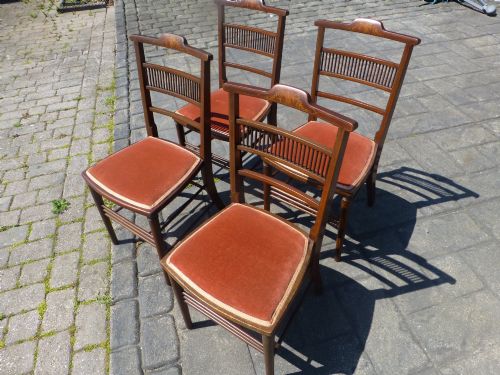

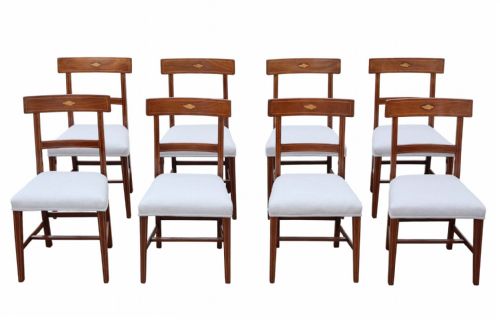


Inlaid Wooden Dining Chairs
Inlaid wooden dining chairs bring warmth and subtle pattern to a room, uniting functional seating with fine cabinet work.
Inlaid Wooden Dining Chairs
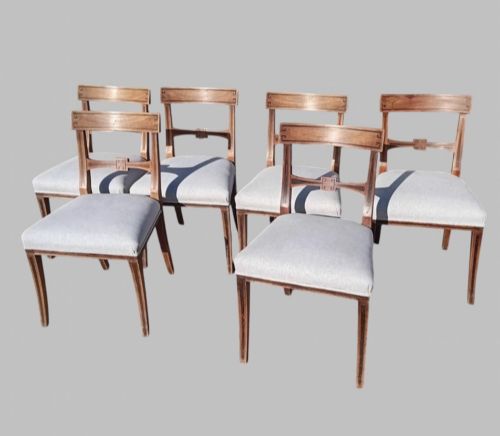
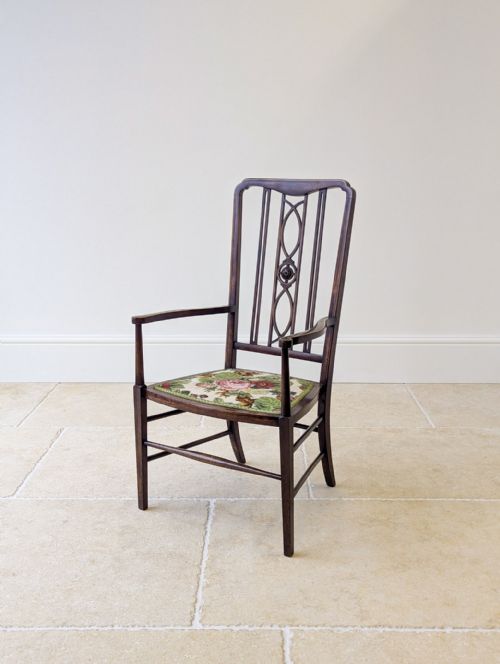
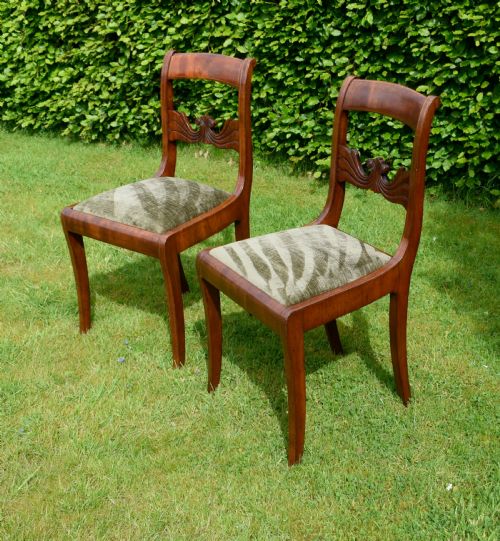
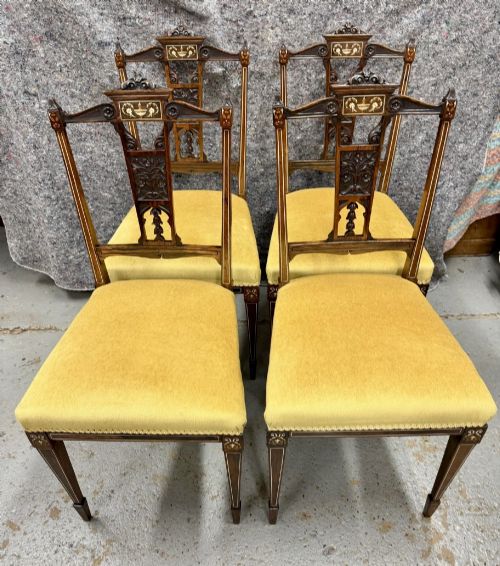
Inlaid wooden dining chairs combine structural timber framing with decorative contrasting wood, shell, or brass motifs set flush into the surface. These pieces appear most frequently in Edwardian, Victorian, and Georgian forms, including matching sets, pairs, and individual carver armchairs or side chairs.
The materials span mahogany, walnut, rosewood, and satinwood, often paired with upholstered drop-in seats in fabric, velvet, or textile. Buyers encounter various regional interpretations, from formal Sheraton Revival designs to country oak and Art Nouveau interpretations.
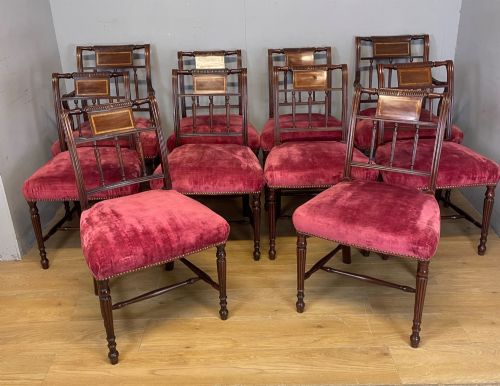
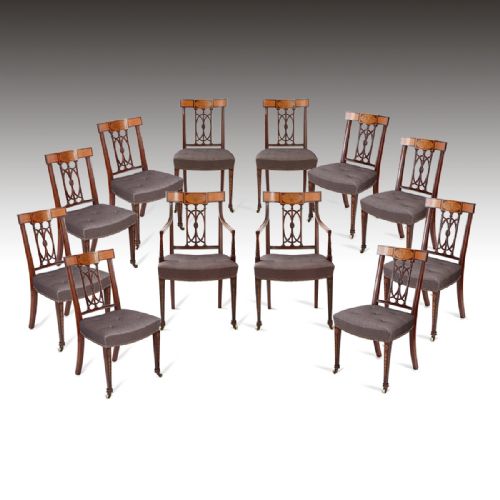
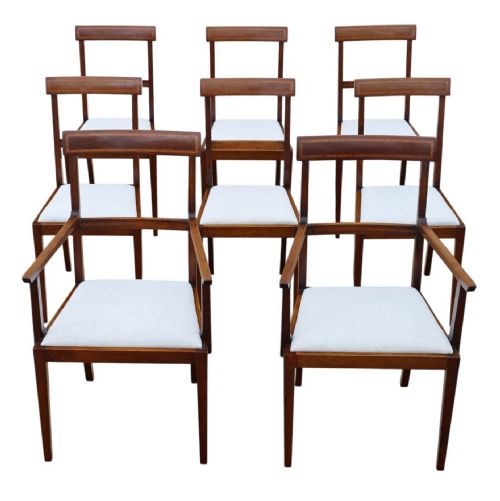
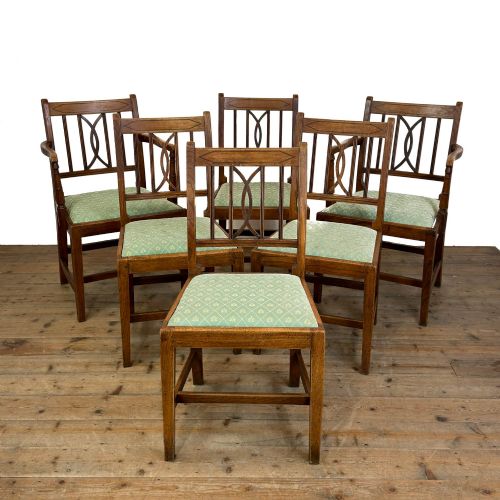
Sets range from small groups of three or four up to twelve matching seats, alongside single elbow chairs and hall chairs. The decorative focus centres on the splat back, top rail, or apron, where intricate wood inlay or marquetry defines the silhouette.
Construction and Materials
Cabinet makers constructed the frames primarily from dense hardwoods like mahogany, walnut, and rosewood, ensuring structural stability for daily dining use. Timber selection governed the base colour and grain movement against which lighter decorative elements stood.
The ornamentation relied on precise hand-cut wood inlay, marquetry, and brass stringing fitted into recesses carved into the primary wood surface. Seats frequently utilised drop-in timber frames webbed and stuffed with textiles, velvet, or patterned fabric.
Inlaid Wooden Dining Chairs Retail Price Guide 2026
Typical asking prices for inlaid wooden dining chairs among the pieces listed under this phrase on Sellingantiques today, from the lower quarter to the upper quarter. They describe what is for sale here now, not the wider market.
Listings feature mahogany, walnut, satinwood, and rosewood, incorporating brass stringing alongside traditional wood inlay.
Evaluating the Craft
The precision of the inlay work separates ordinary production from superior examples, visible in tight joints where contrasting woods meet without gaps or excessive filler. Crisp carving on the splats and vase backs indicates the skill of the original workshop.
Timber selection dictates the overall presence of the chair, with well-figured mahogany or satinwood displaying deep grain patterns that age gracefully. Uniformity across a large set of chairs points to careful initial matching by the cabinet maker.
Lamb of Manchester·Shoolbred
The Inlaid Wooden Dining Chairs Glossary
- Inlay
- A decorative technique where pieces of contrasting wood, brass, or other materials are set into recesses flush with the surface of the primary wood. This method creates geometric or floral patterns across the backsplat or top rail.
- Marquetry
- An elaborate form of inlay assembling small veneers into pictorial or patterned designs across a broader surface. Cabinet makers employed this technique on walnut and satinwood panels.
- Carver
- An armchair designed to sit at the head of a dining table, featuring supportive armrests. These pieces usually match the smaller side chairs in a larger dining set.
- Splat
- The vertical wooden strip down the centre of a chair back providing back support. Makers shaped these into vase and openwork forms.
- Drop-in seat
- An upholstered frame that drops into the wooden seat rails of a chair without permanent fixings. This construction allows easy reupholstery over time.
Inlaid Wooden Dining Chairs: Frequently Asked Questions
How do I care for antique wood inlay?
Keep wooden dining chairs away from direct sunlight and strong heat sources to prevent the timber from drying and the inlay from lifting.
Apply a microcrystalline wax periodically and buff gently with a soft cloth to protect the polished surface.
Can I mix different chair styles around a table?
Pairing carver armchairs at the heads of a table with simpler side chairs along the sides is a traditional arrangement.
Ensure the wood tones and overall period roughly align to maintain visual balance in the room.
How do I distinguish Edwardian from Georgian chairs?
Georgian chairs from the eighteenth century typically feature heavier structural timbers and carved mahogany details like vase splats.
Edwardian interpretations often lean towards lighter satinwood inlay, Sheraton Revival motifs, and delicate proportions.
Are these chairs suitable for daily use?
Solid hardwood frames built with traditional joinery remain robust enough for regular dining when structurally sound.
Check that the joints are tight and the upholstery webbing supports weight comfortably before seating guests.