
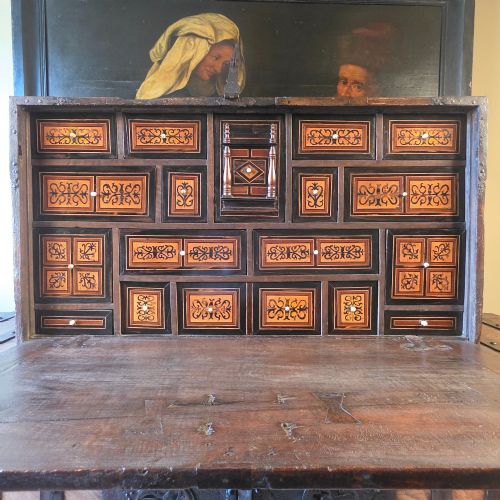
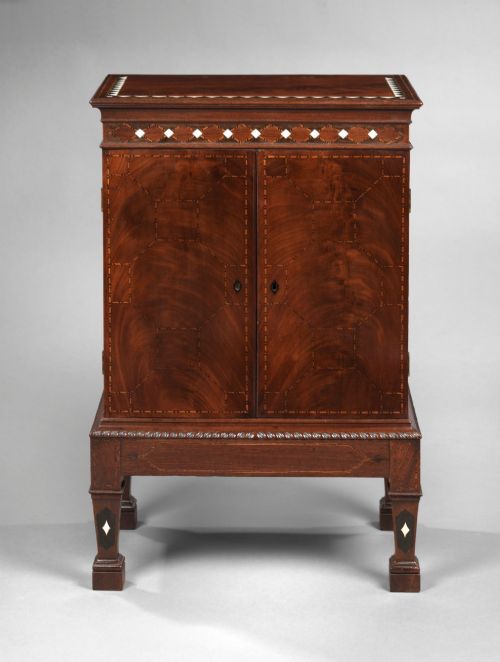
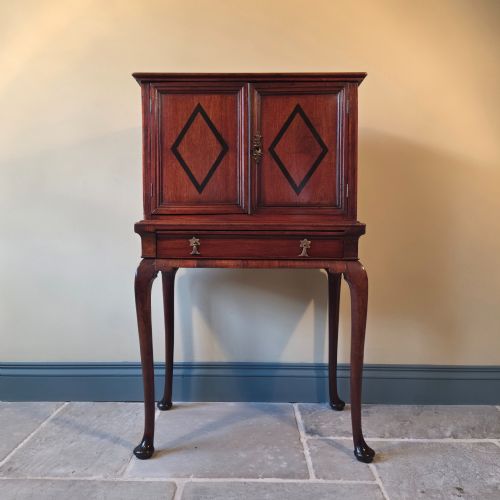
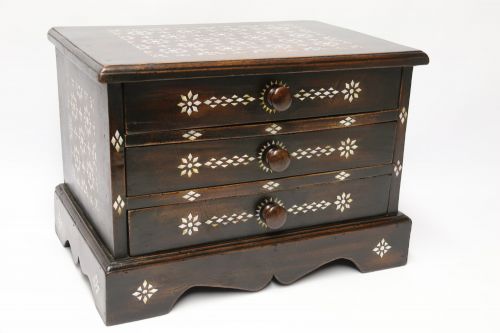

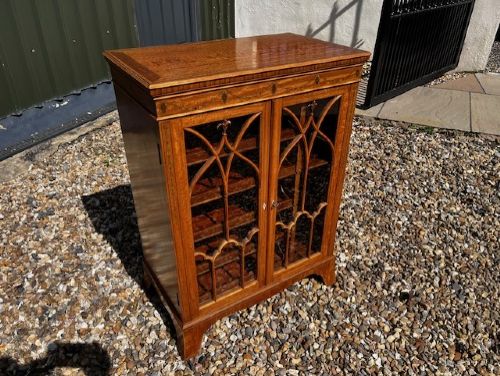
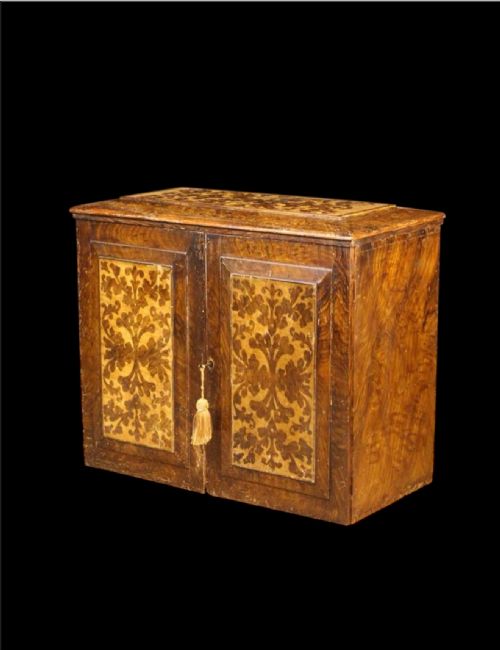


Inlaid Wooden Collectors Cabinet
An inlaid wooden collectors cabinet is a small, partitioned chest designed to hold specimens or treasures, finished with decorative wood or mother of pearl banding.
Inlaid Wooden Collectors Cabinet
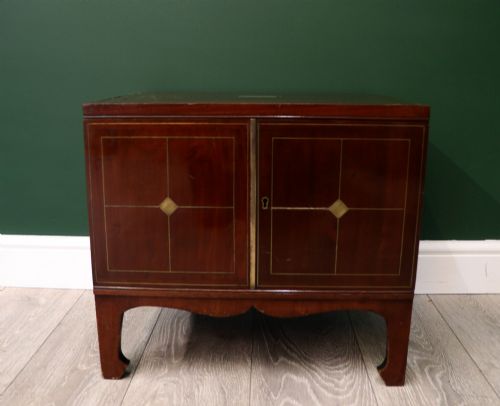
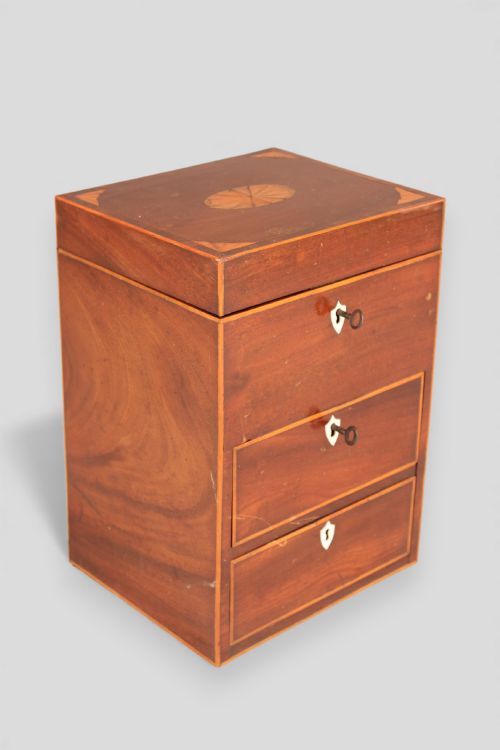
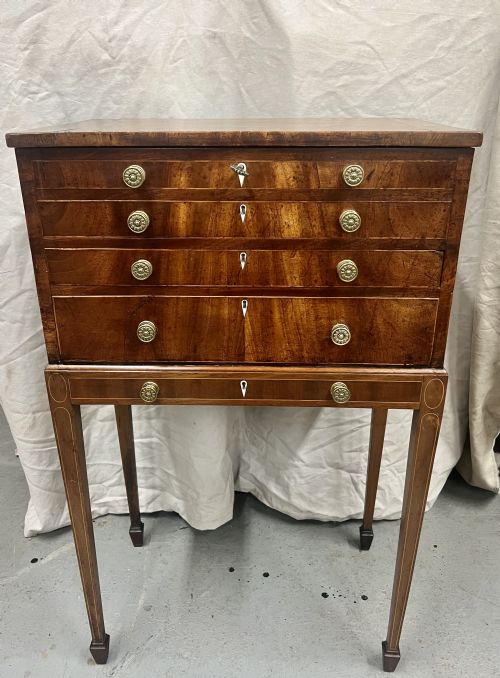
An inlaid wooden collectors cabinet provides compartmentalised storage for small objects, specimens, or documents. When you search for an inlaid wooden collectors cabinet, you encounter forms ranging from table-top chests to substantial pieces raised on stands.
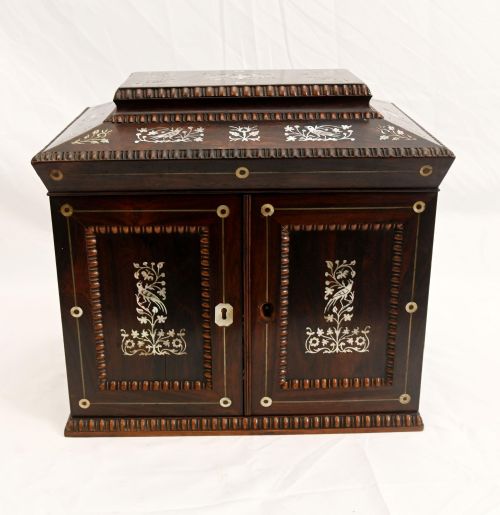
The selections span several centuries, with pieces originating from Georgian, Victorian, and earlier periods. Mahogany and walnut provide the primary carcass structures, frequently enhanced with boxwood, satinwood, or mother of pearl details.
Many items function as table cabinets, miniature chests of drawers, or escritoires. These domestic furnishings offer intricate internal configurations behind secure doors or fall-front panels.
Materials and construction methods
Cabinet makers utilised dense hardwoods such as mahogany, walnut, kingwood, and oak for structural stability. Oyster veneers and parquetry patterns created geometric surface interest across the front and sides.
Inlay and marquetry techniques incorporated contrasting timbers like boxwood and satinwood, alongside bone and brass elements. Craftsmen cut intricate floral or linear motifs into the wood surface and set the decorative materials flush.
Internal elements often featured multiple small drawers or revolving tabernacles, requiring precise joinery. Brass handles, escutcheons, and hinges provided functional hardware that complemented the exterior woodwork.
The inventory includes items from the seventeenth, eighteenth, and nineteenth centuries, featuring brass, bone, and iron hardware alongside timber carcasses.
Assessing craftsmanship and condition
Quality rests in the precision of the marquetry and the choice of primary veneers. Tightly figured grains and clean, sharp lines in the boxwood or satinwood inlay indicate superior workmanship from the maker.
The internal construction of the drawers reveals the standard of the piece, including the fineness of the dovetail joints. Original brass hardware and intact locks also distinguish finer examples from standard production.
Whytock & Reid of Edinburgh
The Inlaid Wooden Collectors Cabinet Glossary
- Marquetry
- A decorative technique where pieces of veneer are applied to a structure to form detailed pictures or ornate patterns. This method frequently employs contrasting woods to achieve pictorial depth.
- Parquetry
- Geometric mosaic woodwork used for repeating patterns on cabinet surfaces. It relies on symmetrical arrangements of wood veneers.
- Oyster veneer
- Circular slices cut from small branches of olive or other woods, showing natural ring patterns. These pieces are fitted together to resemble oyster shells.
- Escritoire
- A small writing cabinet fitted with a sloping lid or fall-front panel. Inside, smaller compartments organise writing materials and papers.
- Tabernacle
- A central architectural feature within a cabinet interior, sometimes revolving. It conceals hidden compartments or small drawers.
Inlaid Wooden Collectors Cabinet: Frequently Asked Questions
What did people store inside these cabinets?
These cabinets originally housed natural history specimens, coins, medals, or jewellery. Owners kept delicate and valuable items organised within the multiple small drawers.
Today, they serve a similar purpose for modern collections or act as striking decorative storage on tabletops and sideboards.
How do I date an inlaid wooden cabinet?
Dating relies on identifying the primary timber, the style of the inlay, and construction methods like dovetailing. Georgian pieces often show simpler mahogany carcasses with restrained stringing, while Victorian examples introduce mother of pearl and varied exotic woods.
Examining the internal drawer construction and secondary woods provides further clues to the manufacturing period.
Are all these cabinets table-top size?
While many examples are designed to sit on tables or desks, several pieces are built as cabinets on stands. These taller formats lift the storage compartments off the floor on dedicated legs or frames.
Miniature chests and escritoires offer similar compact footprints suited for display on standard furniture.
What is the difference between inlay and marquetry?
Inlay involves inserting contrasting materials into recessed spaces carved directly into the solid wood or veneer. It typically creates linear or geometric patterns.
Marquetry covers the entire surface with assembled veneer pieces to form pictorial designs, such as flowers or architectural scenes.