


Small Satinwood Bookcase
A small satinwood bookcase brings fine golden grain and compact proportions to a room, offering practical open shelving or display space without dominating the floor.
Small Satinwood Bookcase
When searching for a small satinwood bookcase, you encounter a range of compact compact forms designed for modest spaces, including open front shelves, revolving bookcase stands, and glazed display cabinets. These pieces predominantly date from the Victorian, Edwardian, and Sheraton Revival periods, alongside earlier 18th-century examples.
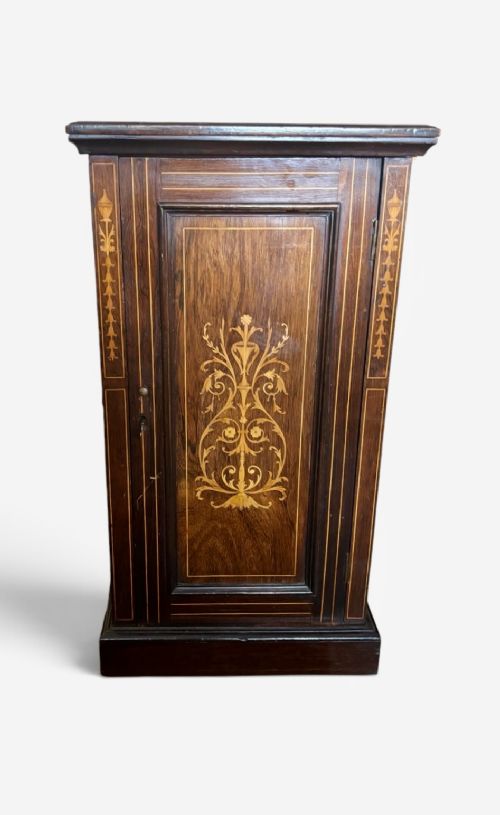
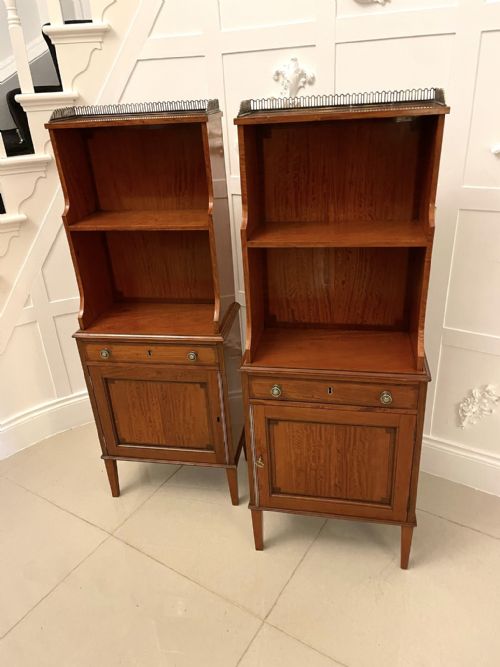
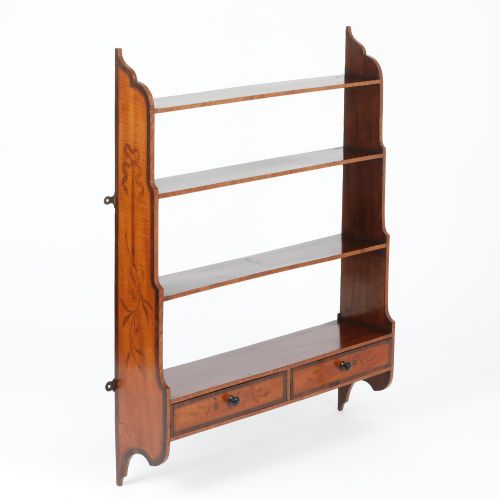
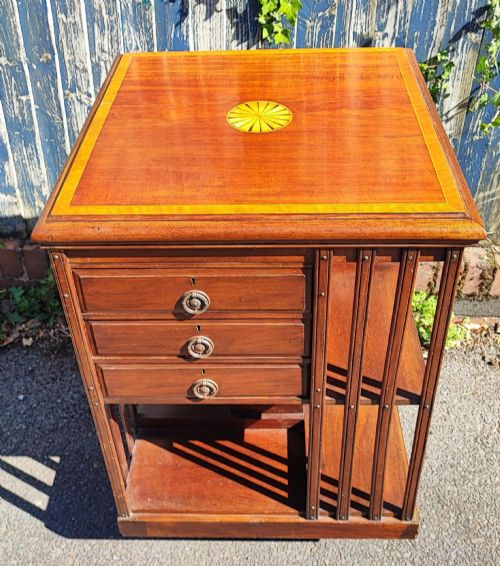
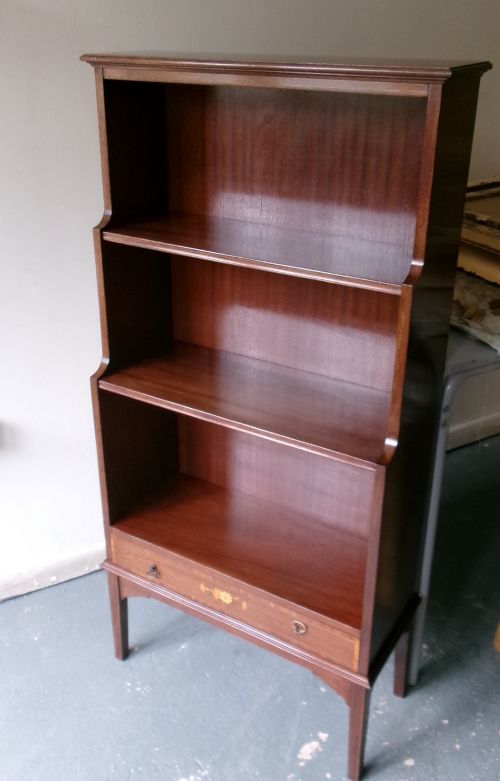
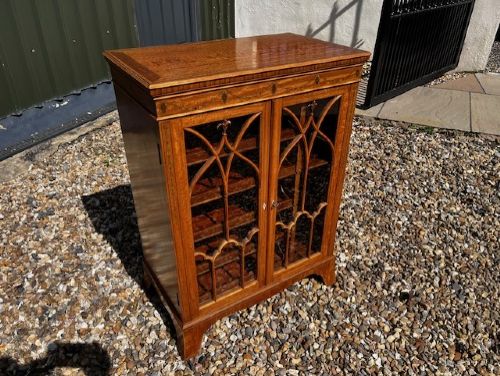
The selection on this page shows how cabinetmakers applied satinwood veneer and crossbanding to carcases of mahogany or solid wood, often enhanced with marquetry and line inlay. Alongside traditional bookcases, the inventory includes hanging waterfall bookshelves, miniature cabinets, and rotating table top designs.
Whether you choose an Edwardian revolving model or a Victorian open cabinet, each piece serves to hold small collections of books or decorative objects while introducing bright timber tones into an interior.
How they were made
Cabinetmakers constructed these pieces using dense timber carcases of mahogany or solid wood, onto which they applied thin veneers of figured satinwood and rosewood. This method allowed workshops to display striking grain patterns across flat surfaces and drawer fronts.
Decoration relied heavily on precise inlay work, including contrasting stringing, marquetry motifs, and crossbanding in darker woods to frame the golden satinwood panels. Brass hinges, handles, and occasional glass doors completed the construction of these refined storage items.
Some revolving bookcases were designed to sit quietly on a table top, letting you spin your evening reading list with a flick of the wrist.
What varies in quality
The standard of a small satinwood bookcase rests on the choice of timber and the precision of its decorative veneer work. Finer examples display meticulously matched satinwood grains and intricate marquetry that run seamlessly across the panels and drawers.
Construction methods also distinguish finer pieces, visible in the tight fit of revolving mechanisms, the delicacy of inlaid friezes, and the overall balance of proportion in miniature or waterfall designs. Lesser pieces rely on simpler construction with minimal banding and standard timber carcases.
Gillows
The Small Satinwood Bookcase Glossary
- Satinwood
- A hard, durable timber with a natural golden sheen and lustrous grain. It was widely used in veneer form during the Sheraton and Edwardian periods.
- Marquetry
- Decorative patterns formed by fitting together small pieces of veneer of different woods and materials. It creates pictorial or geometric designs on cabinet doors and tabletops.
- Crossbanding
- A narrow strip of veneer applied to the border of a panel or shelf so that its grain runs at right angles to the central surface. This technique frames the primary wood.
- Waterfall bookcase
- A set of open shelves that steps back progressively from bottom to top, creating a terraced profile. These are often made to hang on a wall or stand on a base.
- Revolving bookcase
- A low or table top bookstand mounted on a concealed rotating pivot. It allows easy access to volumes from a seated position.
Small Satinwood Bookcase: Frequently Asked Questions
Where should I place a small satinwood bookcase?
These compact pieces fit well in studies, alcoves, or beside seating where floor space is limited. Their bright timber tones suit rooms that benefit from reflective, warm surfaces.
Because satinwood can fade in strong sunlight, position the bookcase away from direct windows to preserve the natural golden colour of the veneer.
How do I care for satinwood veneer?
Dust the surfaces regularly with a soft, dry cloth to prevent dirt accumulation on the polished finish. Avoid using modern aerosol polishes or silicone sprays, which can build up and dull the timber.
Maintain a stable room humidity to prevent the underlying wood from expanding and causing the delicate veneer to lift or crack.
How do I distinguish Edwardian satinwood from earlier pieces?
Edwardian interpretations often revive 18th-century Sheraton styles with lighter mahogany carcases and crisp, machine-cut inlay. They frequently include revolving desk stands and hanging shelves.
Earlier 18th-century and Regency pieces generally display heavier construction, deeper hand-cut dovetails, and more substantial brass or rosewood contrasting details.