


Inlaid Wooden Bookshelf
These inlaid wooden bookshelf pieces combine utility and craftsmanship, offering structured display for volumes while anchoring a room with period character.
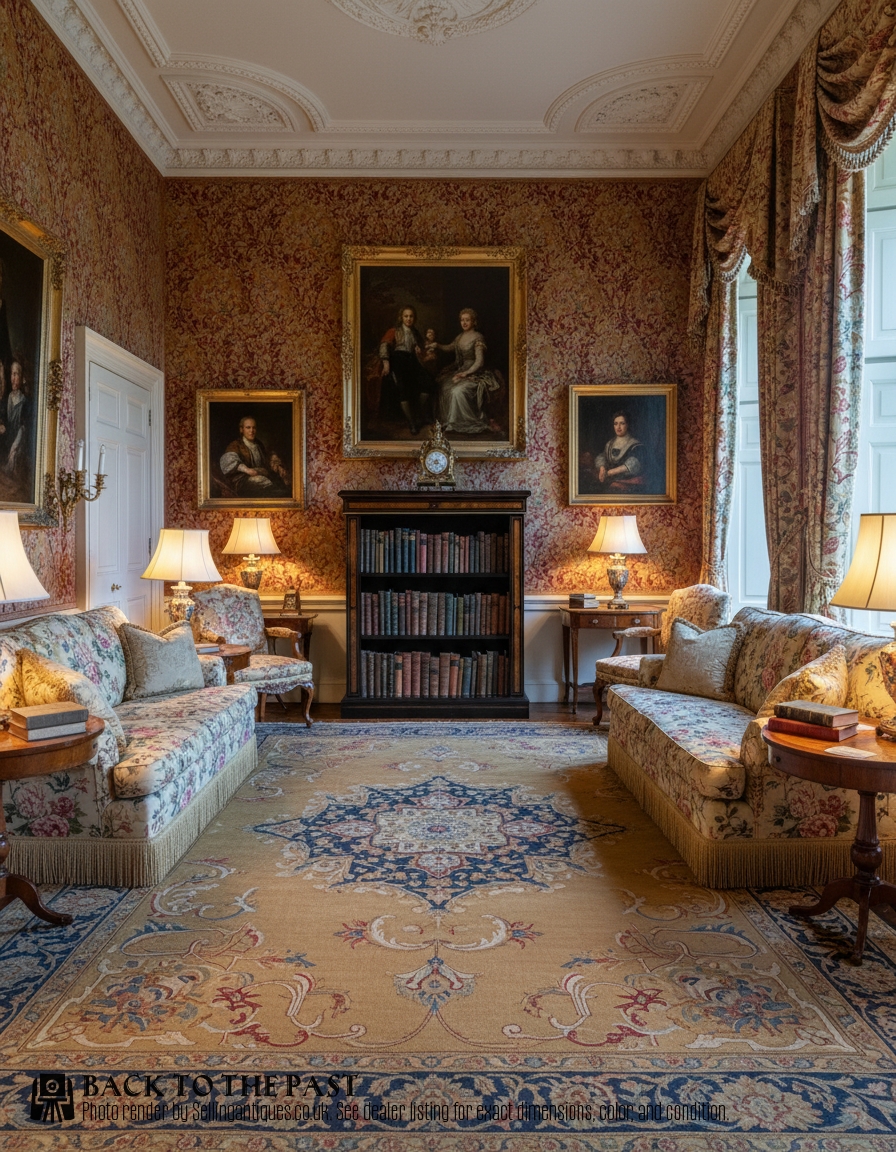
Inlaid Wooden Bookshelf
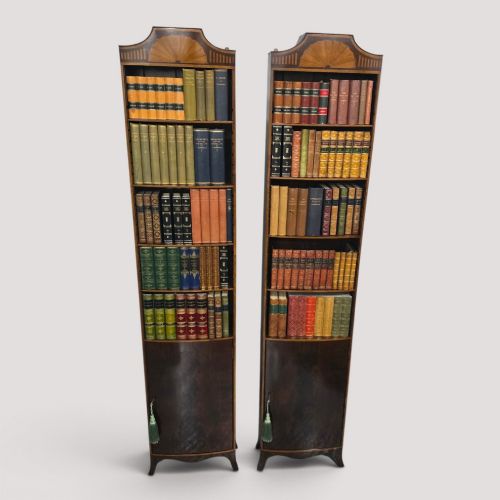
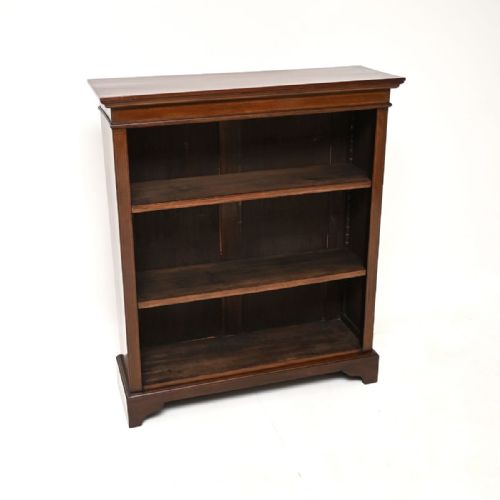
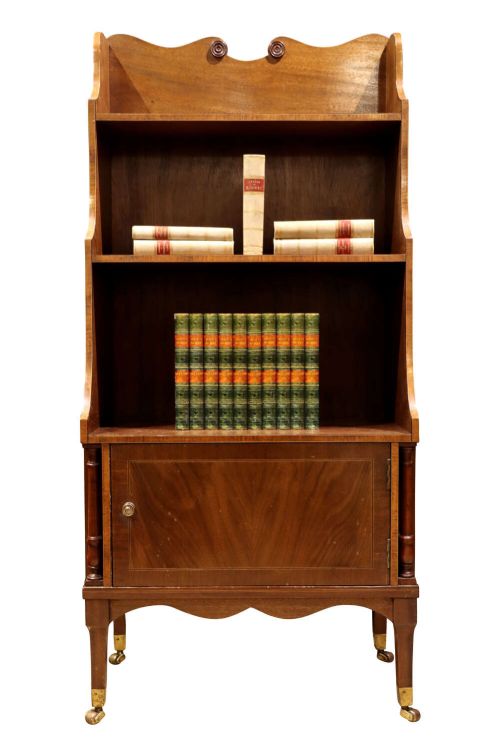
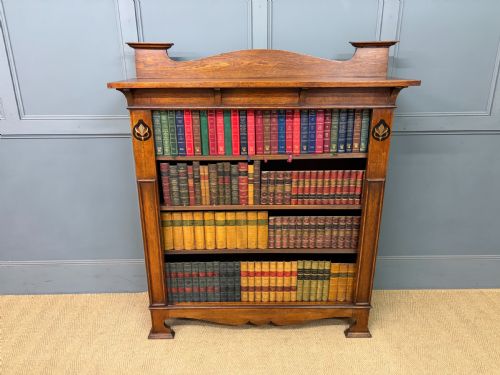
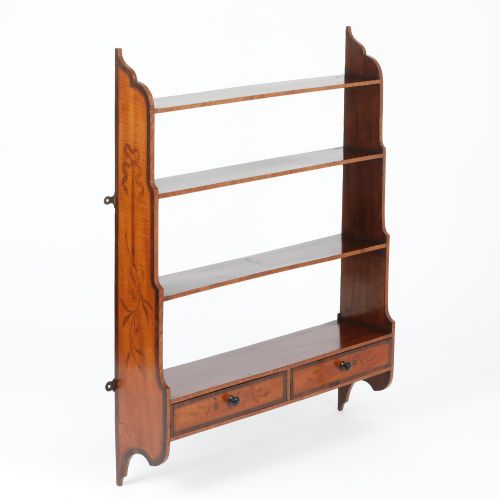
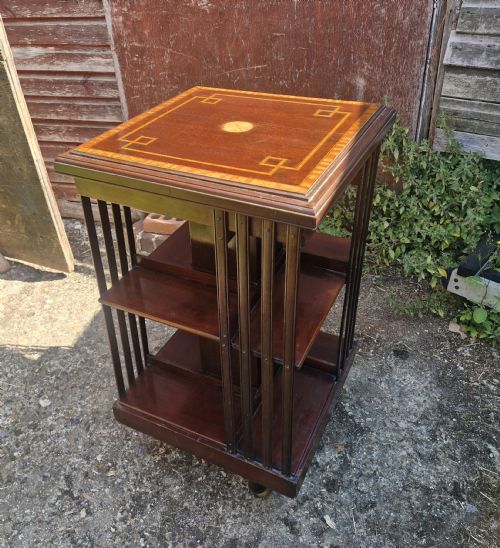
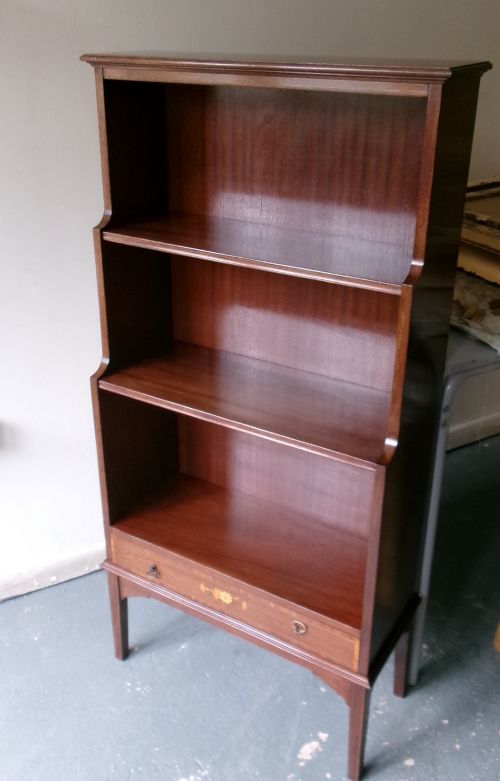
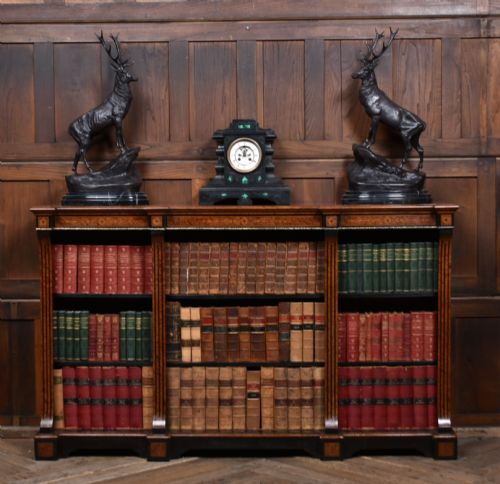
An inlaid wooden bookshelf is primarily encountered in Edwardian and Victorian forms, spanning open bookcases, waterfall tiers, and revolving designs. These pieces range from compact wall shelves and desk accessories to large, tall cabinets equipped with drawers or brass castors.
The materials and styles cluster heavily around mahogany, satinwood, and walnut, often finished with Sheraton Revival marquetry or simpler inlaid friezes. Buyers frequently meet open front configurations and revolving bookstands designed for domestic libraries and studies.
How They Were Made
Makers utilised primary cabinet timbers such as mahogany, oak, walnut, and amboyna, frequently contrasting them with ebonised wood and lighter satinwood accents. Structural elements often incorporated metal fittings and brass castors for mobility.
Decoration relied on marquetry inlay and subtle banding rather than heavy carving, creating crisp geometric or floral patterns across shelves, friezes, and cabinet doors.
Some revolving bookcases turn so smoothly you may spend more time spinning your volumes than actually reading them.
What Varies in Quality
The refinement of the marquetry and the choice of secondary timbers distinguish standard production from superior work. Crispness in the cabinet joints and the integration of contrasting wood veneers dictate the overall visual weight.
Hardware selection, from brass castors to specialised desk slides, signals the care taken during initial construction. The balance between timber selection and delicate inlay defines the success of each piece.
Maple and Co
The Inlaid Wooden Bookshelf Glossary
- Marquetry
- Decorative veneer patterns formed by fitting together small pieces of different coloured woods. This technique creates pictorial or geometric designs on cabinet surfaces.
- Waterfall bookcase
- A set of open shelves that step back progressively from bottom to top. Each tier is narrower than the one beneath it.
- Revolving bookcase
- A compact bookcase mounted on a concealed pivot base. It allows multiple directions of access to books within a small footprint.
- Ebonised wood
- Timber treated to imitate ebony through staining or painting. It provides a stark dark contrast against lighter satinwood or mahogany inlays.
- Frieze
- The flat decorative band running along the upper section of a bookcase beneath the top moulding. It frequently carries the primary inlay work.
Inlaid Wooden Bookshelf: Frequently Asked Questions
What rooms suit an inlaid wooden bookshelf?
These pieces fit naturally into studies, sitting rooms, or hallways where accessible book storage is required without dominating the floor space.
Compact revolving models function well beside armchairs, while tall or wall-mounted versions anchor larger wall expanses.
How do revolving bookcases operate?
A concealed central pivot mechanism allows the entire tier of books to turn smoothly in either direction.
This design lets users browse multiple shelf compartments from a single stationary position.
What timber combinations are common?
Mahogany forms the primary structure for the majority of pieces, frequently paired with lighter satinwood for contrast.
Ebonised wood and walnut also appear, often enhanced by delicate marquetry inlay across the friezes.
How do waterfall shelves differ from standard bookcases?
Waterfall shelves feature a stepped profile where each successive tier recedes from the one below it.
This vertical progression creates a lighter visual appearance compared to the straight upright sides of a conventional bookcase.