

Inlaid Wood Tripod Table
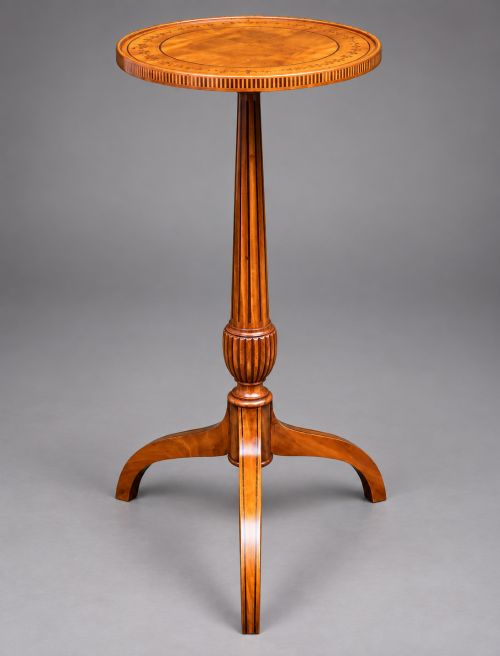
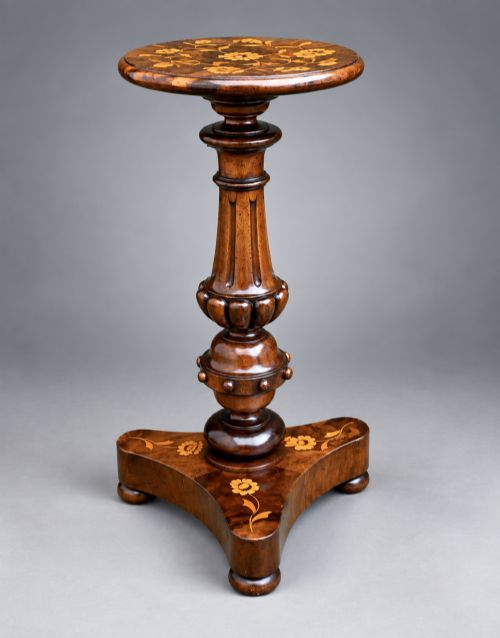
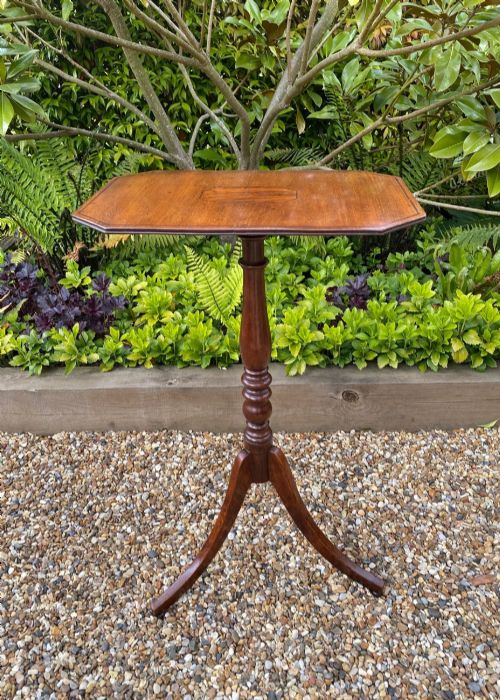
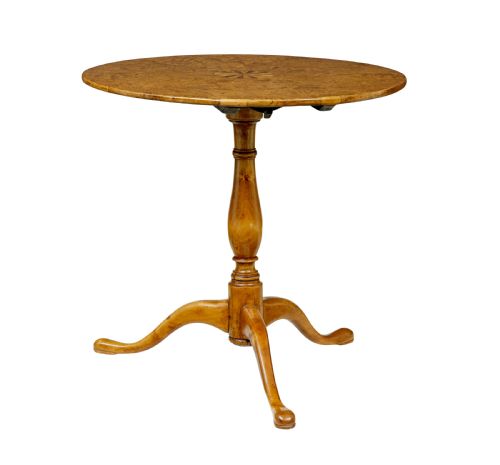
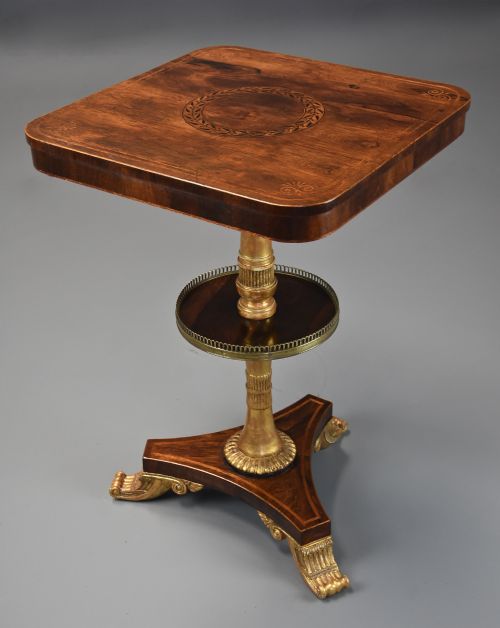
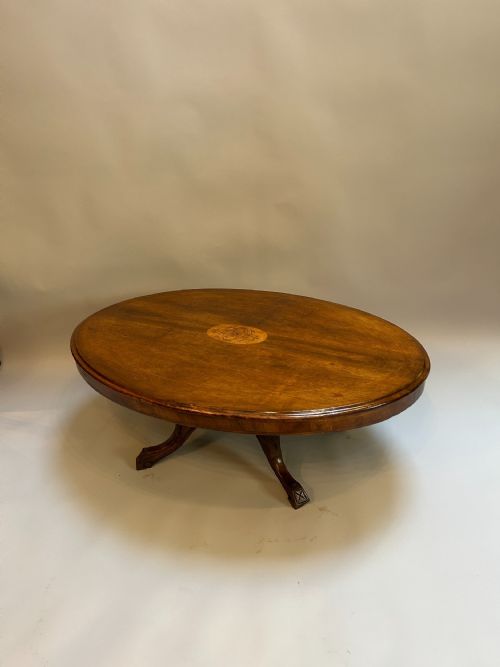
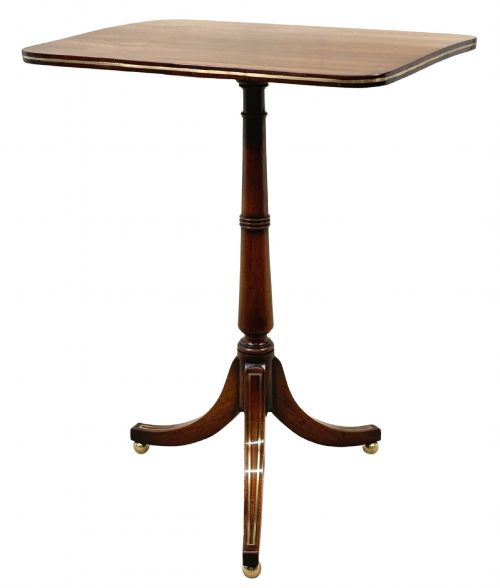
When you search for an inlaid wood tripod table, you are looking at elevated circular supports featuring contrasting timber ornament.
Inlaid Wood Tripod Table
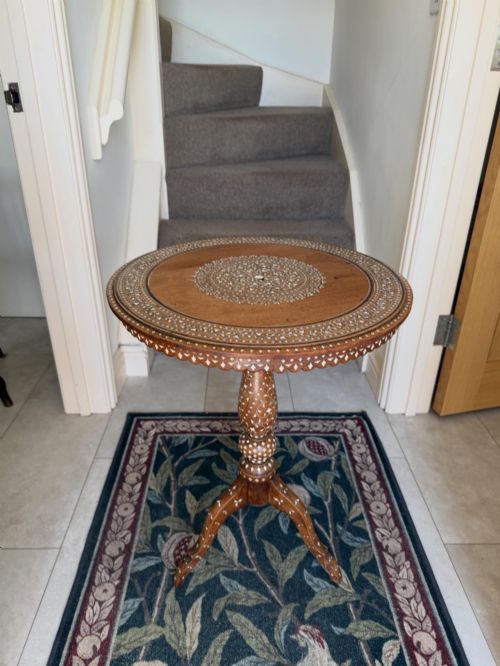
The form encompasses diverse regional origins and decorative styles, ranging from Anglo-Indian and Sorrento work to Swedish birch and English Regency designs. These pieces served practical domestic functions in period interiors, acting as moveable surfaces for lamps, tea, or entertainment.
Surviving pieces span the eighteenth, nineteenth, and early twentieth centuries, reflecting changing domestic tastes in decorative timbers and surface ornament. The combination of a central pillar and three legs provides a stable footing while minimising floor space.
How they were made
Construction relies on solid timbers such as mahogany, walnut, and rosewood for the structural columns and tripod bases, paired with contrasting veneers for the tops. Cabinetmakers shaped the central shafts on lathes and joined the three legs using tenons or dovetails to ensure rigidity.
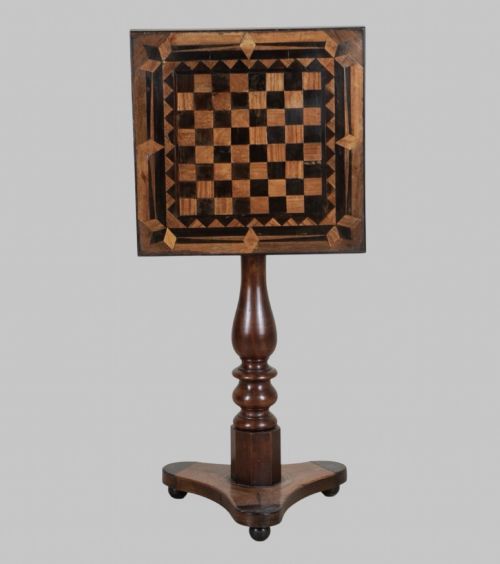
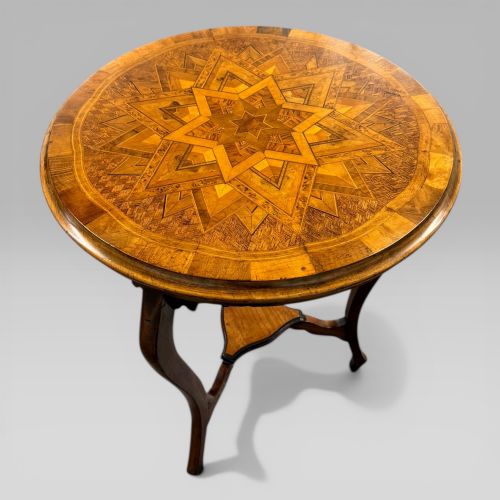
Surface decoration employs marquetry, parquetry, and stringing, utilising boxwood, ebony, brass, and assorted specimen woods to create geometric patterns or pictorial scenes. Inlayers embedded these thin contrasting elements directly into recesses chiselled into the primary timber ground.
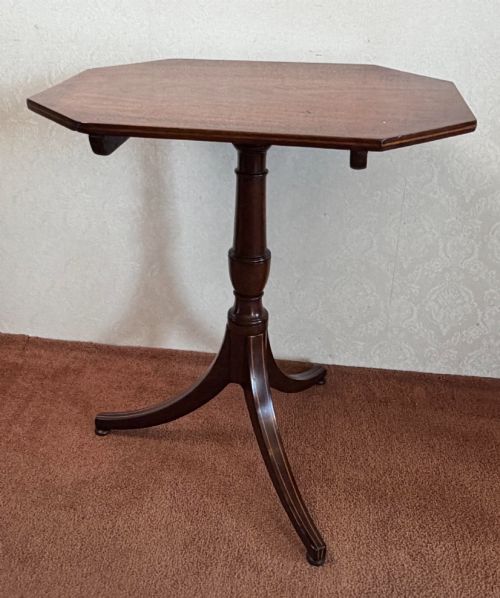
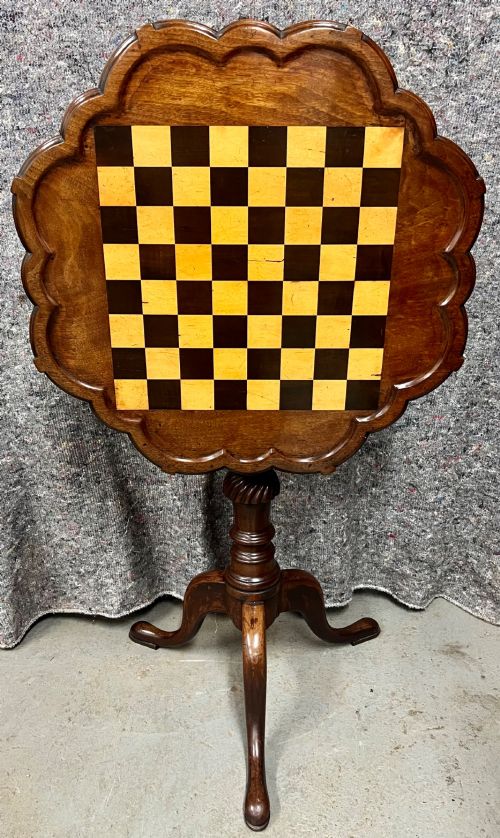
Tilt-top mechanisms frequently connect the circular top to the pedestal block via a brass catch and catch-block, allowing the table to stand flat against a wall when not in use.
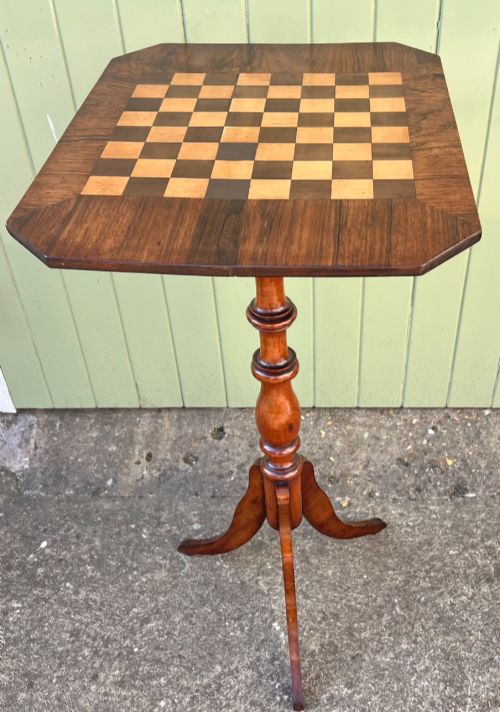
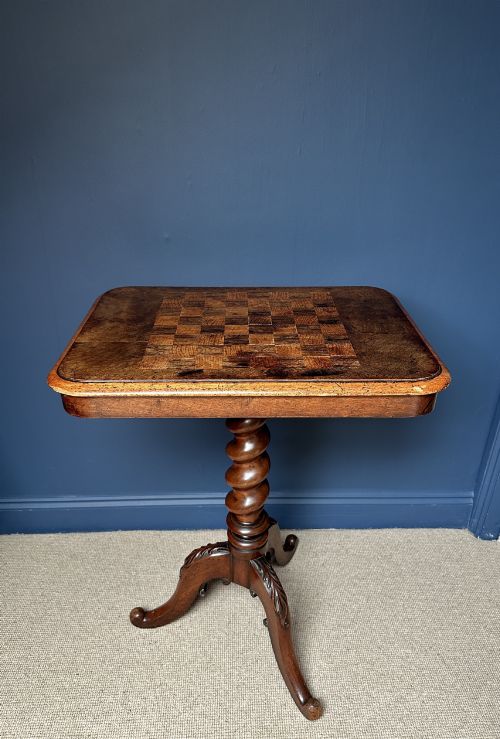
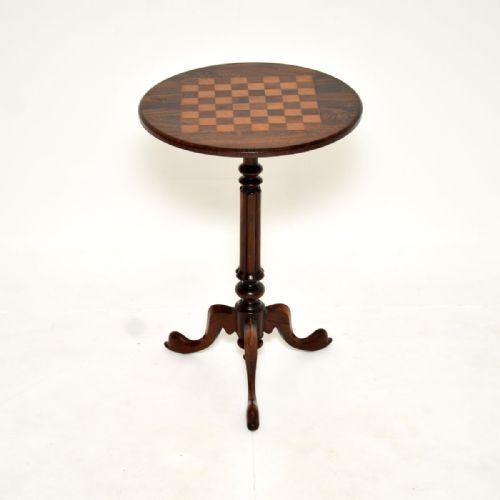
Several tables feature built-in chess boards, ready for unexpected parlour challenges once the tea is cleared.
What varies in quality
Quality rests primarily on the precision of the timber selection and the complexity of the inlay work. Finer examples display tightly figured grains, such as burr walnut, rosewood, or amboyna, matched with intricate multi-wood parquetry or delicate brass stringing.
The architectural balance between the top and the supporting pedestal dictates the overall refinement of the piece. Superior execution is evident in well-proportioned tripod legs terminating in carved feet or brass castors, ensuring the table remains steady and visually cohesive.
Anton Seuffert·Gillow's·George Bullock
The Inlaid Wood Tripod Table Glossary
- Marquetry
- The art of forming decorative patterns from small pieces of veneer laid into a ground wood. This technique creates pictorial or floral designs across the table top.
- Parquetry
- Geometric mosaic woodwork arranged in repeating patterns such as cubes or checkers. It frequently forms the playing surface on chess and games tables.
- Tripod base
- A furniture support consisting of three radiating legs connected to a central column. This configuration prevents rocking on uneven floors.
- Tilt-top
- A hinged tabletop mechanism that pivots ninety degrees for storage. It allows the decorated surface to double as a screen when vertical.
- Specimen woods
- A collection of diverse native and exotic timbers used together to showcase colour and grain variations. Tables utilising these woods often feature sunburst or geometric motifs.
Inlaid Wood Tripod Table: Frequently Asked Questions
What were inlaid wood tripod tables used for?
These tables served multiple functions in period sitting rooms, functioning as moveable surfaces for tea service, lighting, or reading materials. Many examples incorporated integrated chess or draughts boards for parlour entertainment.
Smaller formats often acted as candle stands or wine tables, easily repositioned beside seating areas as social habits required.
How do I care for a wood table?
Protect the polished surfaces from direct sunlight and extreme temperature fluctuations to prevent timber movement and veneer lifting. Regular dusting with a soft, dry cloth maintains the finish without chemical buildup.
Avoid placing damp items directly onto the wood to prevent water rings from forming on the polished polish.
How can I tell a Georgian table from a Victorian one?
Georgian tables generally exhibit restrained classical proportions with simpler mahogany or walnut frames and subtle stringing. Their construction tends to prioritise structural honesty and understated timber figuring.
Victorian examples frequently display denser exotic timbers, heavier pedestal turnings, and more exuberant marquetry or specimen wood tops reflecting industrial-era manufacturing capabilities.
What is a tilt-top mechanism?
The tilt-top mechanism connects the circular tabletop to the central column via a pivoting hinge and a wooden or brass catch. This allowed domestic occupants to tip the surface vertical when the table was pushed against a perimeter wall.
In period rooms, a vertical tilt-top displayed the decorative inlay as a wall panel rather than a horizontal surface.