


Tripod Marquetry Lamp Table
A tripod marquetry lamp table combines practical surface space with intricate inlaid timber work, offering a distinctive decorative centrepiece.
Tripod Marquetry Lamp Table
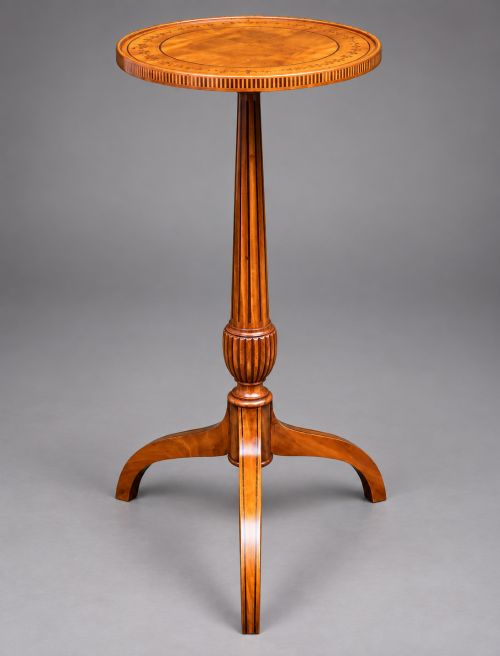
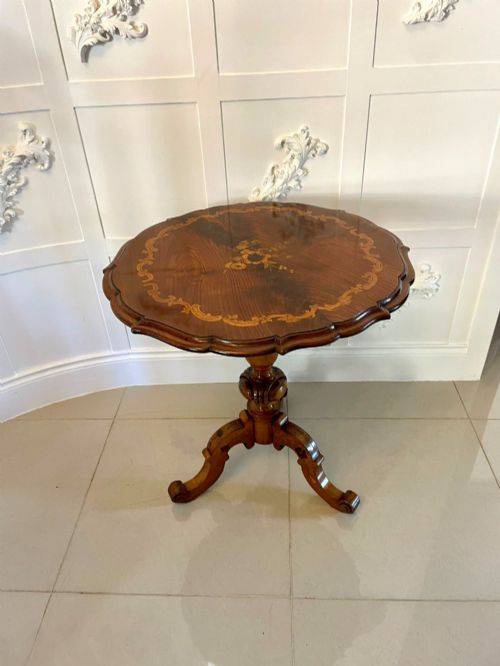
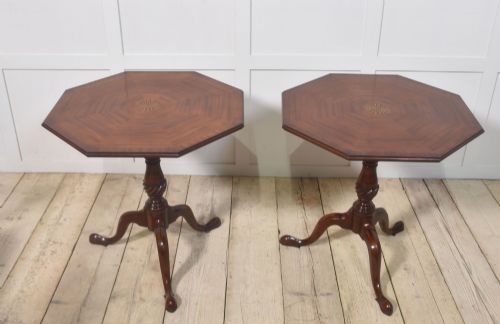
A tripod marquetry lamp table functions primarily as an occasional or wine table, designed with a central pedestal supported by three legs. When you examine the selection here, you encounter forms that span the Victorian era, the Regency period, and the Sheraton Revival style. These tables appear in round, oval, hexagonal, and serpentine shapes, often serving as side tables or dedicated lamp stands.
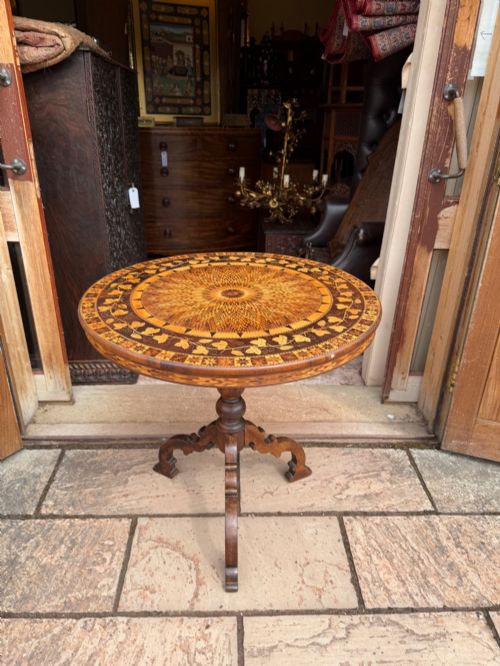
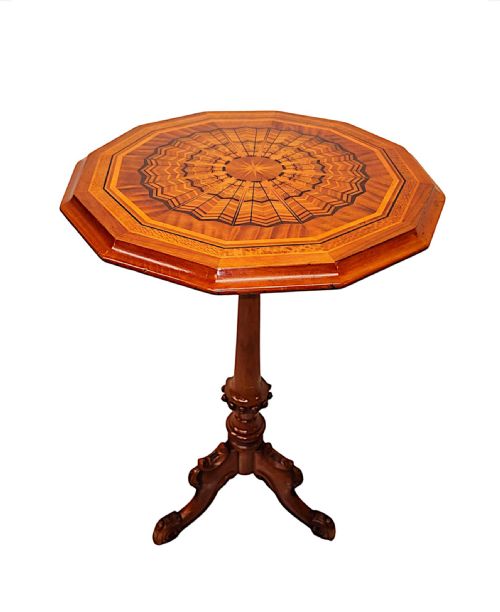
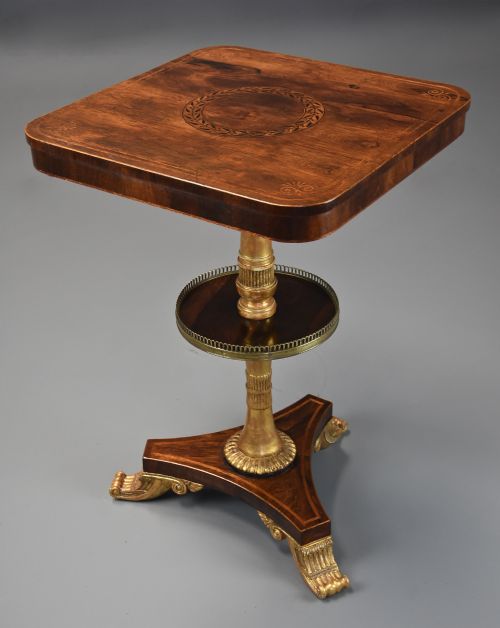
The decorative surface defines these pieces through elaborate wood inlays. Walnut, burr walnut, mahogany, satinwood, and rosewood form the primary foundations, upon which lighter and darker specimen woods create floral, geometric, or sunburst patterns. Italian Sorrento work and Grand Tour influences frequently appear alongside English cabinet-making traditions from the nineteenth century.
Many examples feature tilting mechanisms, allowing the tabletop to fold vertically when not in use. Pedestal bases typically terminate in cabriole or splayed legs, sometimes enhanced with brass details or carved bracket elements. The scale ranges from small wine tables to larger occasional surfaces suited to drawing rooms and reception halls.
Materials and construction methods
Cabinet makers utilised dense primary timbers such as walnut, mahogany, rosewood, and satinwood for the structural carcase and turned pedestals. Burr walnut provided a highly figured, marbled background for the top, while oak frequently served for internal framing or secondary supports. The pedestal shaft was often turned on a lathe, joining securely to a three-legged tripod base.
Marquetry and parquetry ornamentation involved cutting thin veneers of contrasting specimen woods to form pictorial or geometric motifs. These delicate inlays were meticulously fitted into recesses carved into the solid timber or veneered top, then secured with animal glue. Surface finishing relied on traditional French polishing to deepen the natural grain and protect the delicate wood inlay.
Some nineteenth-century makers incorporated secret locking catches beneath the tilt top, ensuring the table stayed firmly horizontal when guests leaned heavily upon it.
Distinctions in craftsmanship and design
The refinement of the marquetry inlay separates standard production from exceptional work. Top tier pieces display precise, tight joints between contrasting specimen woods without excessive filler, creating crisp floral or geometric details. Lesser examples rely on simpler wood inlay or feature minor shrinkage cracks where different timber species react unevenly to ambient humidity.
Structural stability at the tripod junction distinguishes superior cabinet making. A high quality table maintains a rigid connection between the central pillar and the three legs, whereas inferior pieces develop wobble through worn tenons or loose blocks. The turning of the pedestal and the choice of highly figured burr walnut or satinwood also signal the ambition of the original maker.
Gillows·George Bullock
The Tripod Marquetry Lamp Table Glossary
- Marquetry inlay
- An elaborate decorative technique where thin veneers of various coloured woods are assembled to form pictorial designs or patterns. This meticulous craft creates the striking surface imagery seen on Victorian tabletops.
- Tripod base
- A support structure comprising three legs radiating from a central vertical pillar. This design provides stable floor contact on uneven antique flooring.
- Occasional table
- A small, movable table intended for specific, intermittent use rather than central daily dining. These versatile pieces suit placement beside seating or in hallways.
- Specimen wood
- A collection of diverse, often exotic timber species utilised within a single top for their contrasting natural colours and grain patterns. Makers combined these woods to produce sunburst and geometric effects.
- Tilt top
- A hinged mechanism allowing the tabletop to pivot into a vertical position for compact storage against a wall. This historic feature proves useful in smaller domestic interiors.
Tripod Marquetry Lamp Table: Frequently Asked Questions
How were these tables originally used?
These tables served primarily as movable stands for oil lamps, decorative ceramics, or wine glasses in nineteenth-century reception rooms. Their compact footprint allowed servants to reposition them easily beside seating areas as evening needs required.
Tilt top variants were folded away against drawing room walls when floor space was needed for entertaining. They functioned as versatile furniture that moved wherever an additional surface was temporarily required.
What is the difference between marquetry and parquetry?
Marquetry involves arranging varied wood veneers into pictorial or curved motifs such as floral sprays and elaborate scrolls. Artisans cut these intricate shapes by hand to create detailed imagery across the tabletop.
Parquetry relies on geometric arrangements, using regular shapes like squares, triangles, or diamonds to form repeating patterns. Both techniques frequently appear together on nineteenth-century Italian and English surfaces.
How do I distinguish Victorian from Regency examples?
Regency pieces typically exhibit classical restraint, favouring dark rosewood or mahogany with restrained brass stringing and bold, clean architectural lines. Proportions lean toward strict neoclassical geometry and architectural influence.
Victorian interpretations embrace more exuberant decoration, featuring heavy burr walnut, dense floral marquetry, and turned pedestals with ornate carving. These later pieces often incorporate lighter satinwood or multi-wood specimen tops.
Where should I place a tripod lamp table today?
A tripod lamp table suits placement beside a sofa or reading chair where its surface can hold a modern table lamp or beverage. Its compact footprint also makes it ideal for narrow hallways as a decorative accent piece.
Keep these tables away from direct heat sources and strong sunlight to protect the fragile wood veneers and traditional polish. Occasional application of quality wax helps preserve the historic finish of the marquetry.