
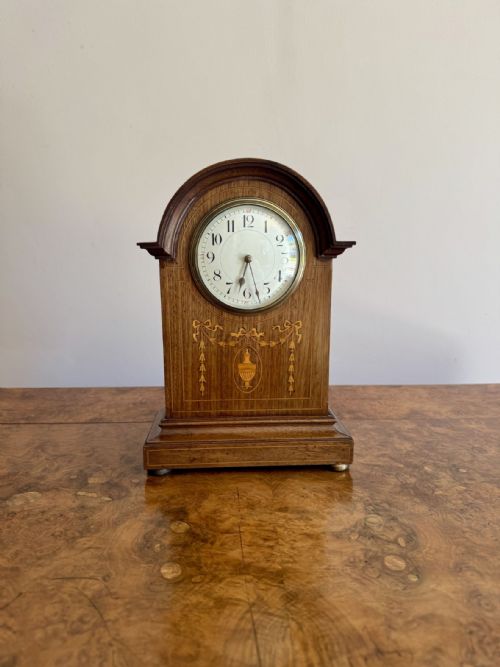


Inlaid Wood Timepiece
An inlaid wood timepiece brings warmth and precision to a room, combining rich timber and delicate marquetry in a functional domestic object.
Inlaid Wood Timepiece
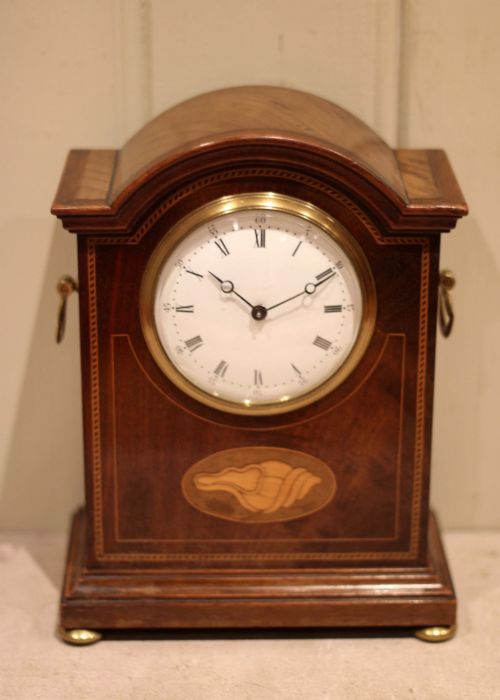
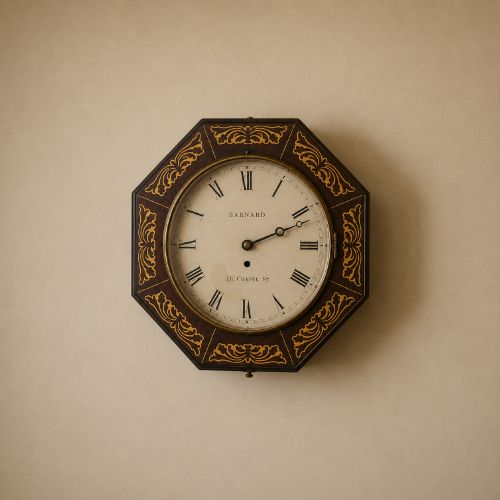
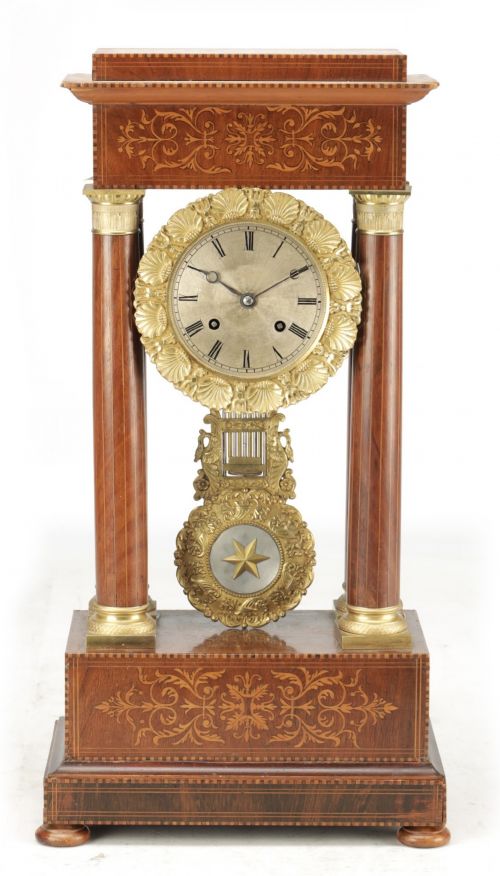
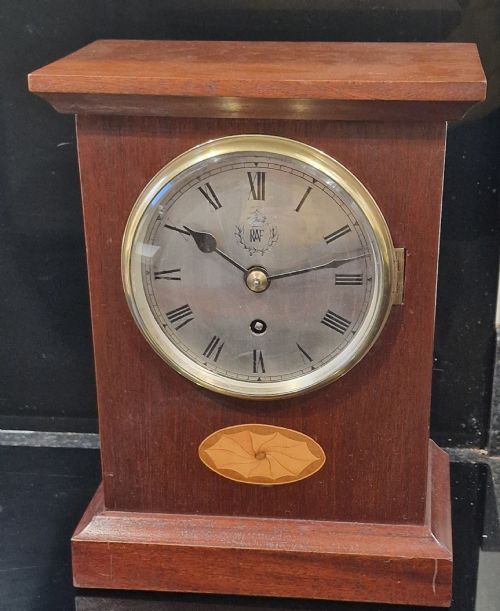
An inlaid wood timepiece combines cabinetmaking and horology, appearing in forms such as mantel clocks, wall clocks, and portico clocks. These pieces span the nineteenth century, the Victorian era, and the Edwardian period, with Edwardian mahogany examples frequently encountered.
Makers utilised dark and light timbers including rosewood, mahogany, and satinwood, embellishing surfaces with contrasting stringing and boxwood inlay. The dial often sits behind glass within brass bezels, driven by movements ranging from standard spring drives to fusee mechanisms.
How they were made
Cabinetmakers constructed the bodies from solid or veneered mahogany and rosewood, cutting recesses into the primary timber to receive contrasting slips of satinwood, boxwood, and lemon wood. Brass and ormolu mounts were cast and applied to frame portico columns or accent dial surrounds.
Movements required precision fitting by clockmakers who mounted fusee or standard gear trains behind enamel dials. Carpenters shaped the timber into balloon, bracket, drop dial, and architectural portico silhouettes to house these mechanical assemblies.
Timepieces occasionally served military duty in officers' messes alongside domestic parlours.
What varies in quality
Quality rests in the crispness of the timber inlay and the depth of the cabinetwork, where finely cut herringbone patterns and contrasting stringing demonstrate superior craftsmanship. The choice of rich rosewood or figured mahogany over plain secondary timbers marks the higher tiers of production.
The sophistication of the internal movement dictates worth, with complex fusee mechanisms and signed maker dials representing superior horological achievement. Heavier brass bezels, cast ormolu mounts, and balanced proportions elevate certain balloon and bracket cases above standard output.
Henry Marc·Paul Garnier·Haley & Milner
The Inlaid Wood Timepiece Glossary
- Fusee
- A conical pulley used in clock movements to maintain even tension on the chain as the mainspring unwinds. This mechanism ensures more consistent timekeeping throughout the power reserve.
- Portico clock
- A monumental clock style featuring architectural columns supporting the movement housing. They often incorporate rosewood, mahogany, and ormolu mounts.
- Drop dial
- A wall clock design where the circular dial sits above an elongated wooden case that houses the pendulum. They appear frequently in nineteenth-century mahogany and rosewood.
- Stringing
- A narrow strip of contrasting timber inlaid into the surface of a cabinet to form decorative borders. It frequently outlines Edwardian and Victorian mahogany clock cases.
- Marquetry
- The art of applying decorative veneer pieces to a structure to form pictorial or geometric patterns. It adorns French mantel clocks alongside rich rosewood timbers.
Inlaid Wood Timepiece: Frequently Asked Questions
How do I wind an antique timepiece?
Wind the movement using the appropriate key inserted into the dial aperture, turning it gently until resistance indicates full tension. Take care not to overwind the spring, as this can damage the internal gearing.
Ensure the clock rests on a level surface before starting the pendulum. Minor adjustments to the pendulum bob regulate the speed if the clock gains or loses time.
Where should I place a wooden clock?
Position the piece away from direct sunlight, radiators, and damp walls to protect the delicate wood veneer and inlay. Stable indoor temperatures prevent the timber and glue from drying and cracking over time.
Mantel clocks sit securely on stable shelves or mantelpieces, while wall clocks require sturdy fixings into solid masonry or wall studs to support their weight.
How do I date a mahogany clock?
Examine the style of the case, the timber selection, and the construction methods used inside the housing. Edwardian pieces often display lighter satinwood inlay on mahogany, whereas Regency examples feature bold brass stringing.
Look for signature engravings on the dial or movement backplate, which frequently name the maker or retailer. These inscriptions provide the most reliable indication of production dates.
What is the difference between a clock and a timepiece?
A timepiece refers specifically to a clock that indicates the hours and minutes without a striking mechanism for the hours. This makes them mechanically simpler while retaining the same decorative cabinetry.
Clocks with striking trains contain additional gear trains and hammers to sound bells or gongs. Timepieces operate quietly, relying entirely on visual observation.