

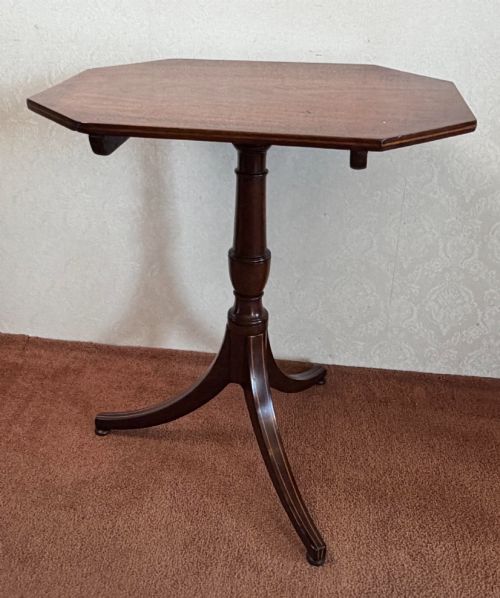
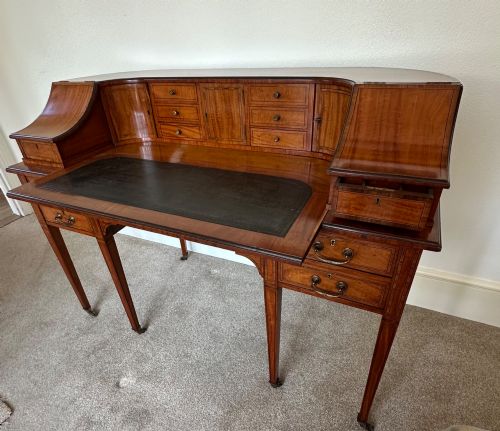
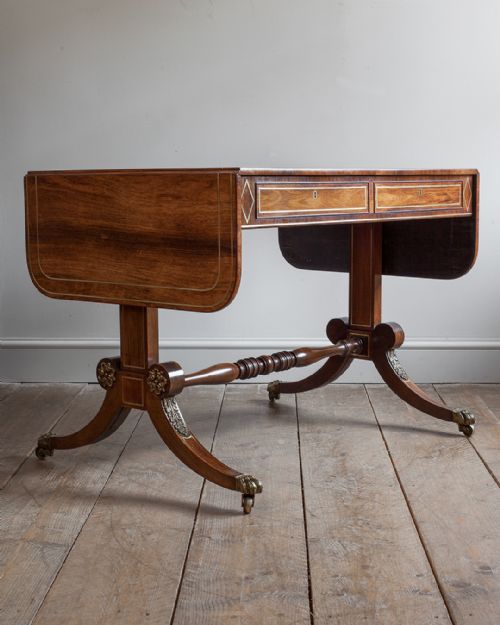
Inlaid Wood Pedestal Table
An inlaid wood pedestal table brings surface detail and single-pillar support together, offering a compact footprint for a lamp or a book.
Inlaid Wood Pedestal Table
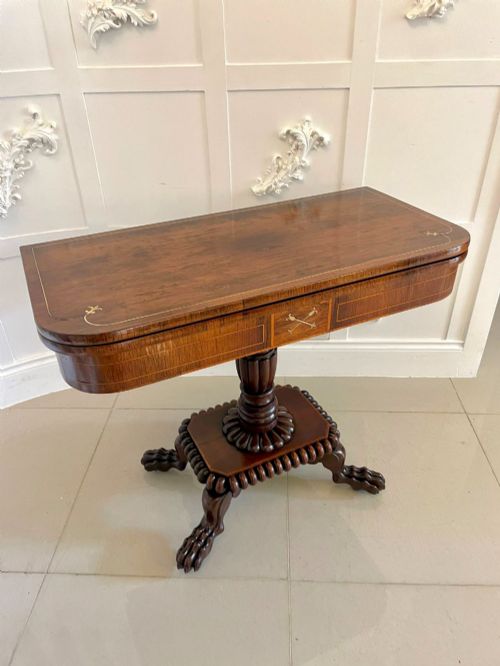
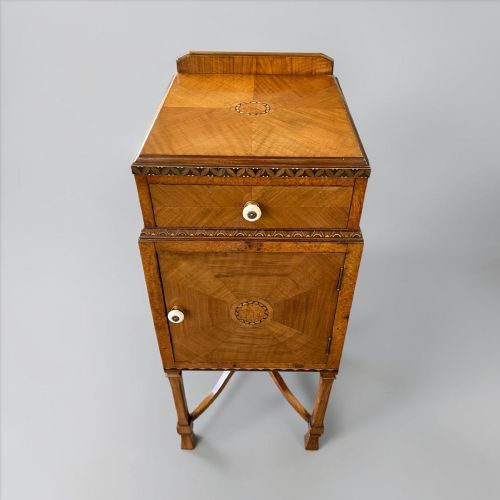
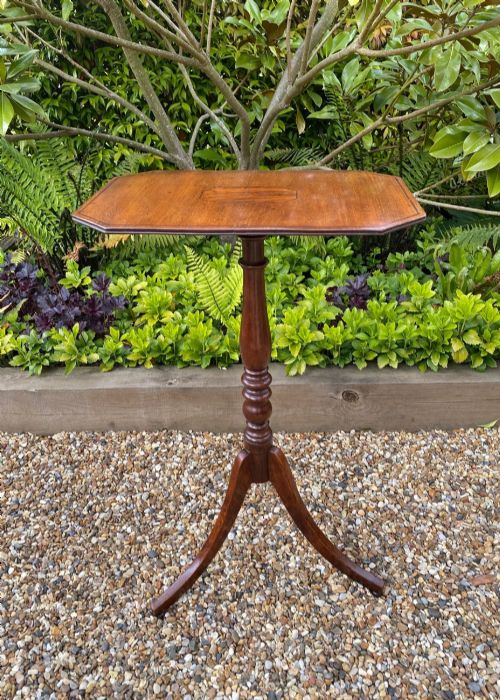
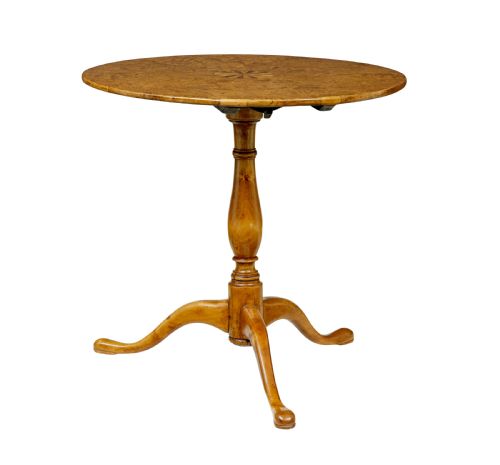
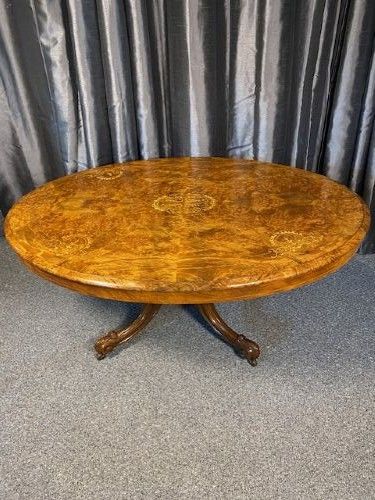
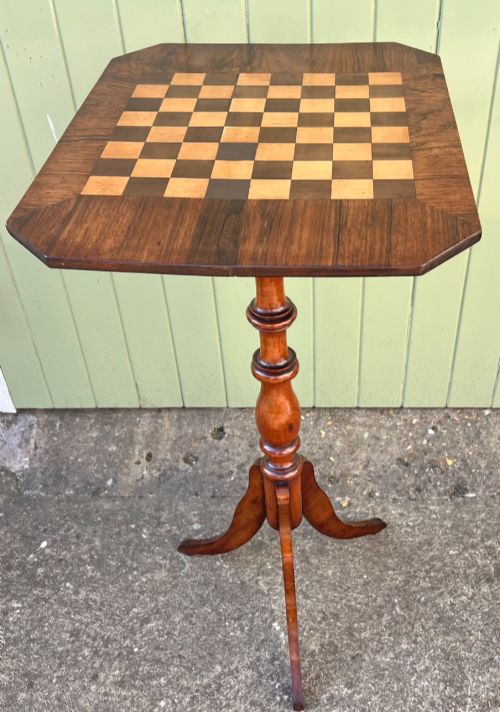
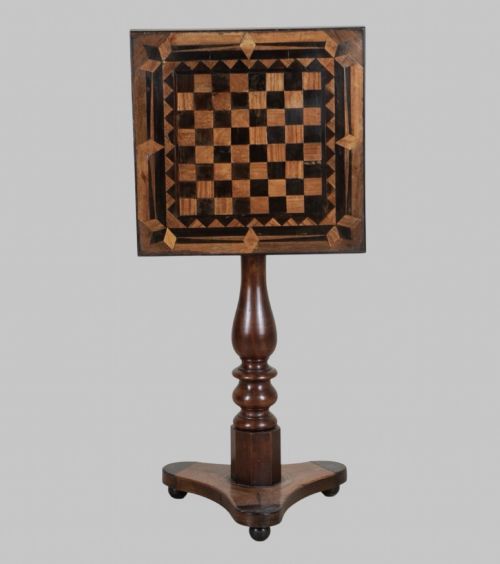
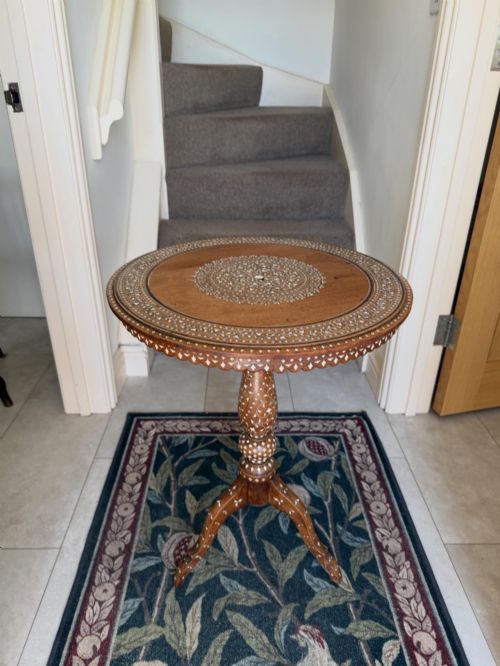
An inlaid wood pedestal table is a singular support piece topped with decorative marquetry, parquetry, or stringing. The listings show forms ranging from compact wine tables and tripod stands to card tables, occasional tables, and centre tables.
The materials span mahogany, rosewood, walnut, satinwood, and yew, accented by contrasting timbers like boxwood and ebony. Historical periods on this page stretch from the Georgian and Regency eras through the Victorian, Edwardian, and Art Deco periods.
Buyers meet examples featuring brass stringing or intricate floral and geometric marquetry. These tables served various domestic functions historically, from tea service and games to bedside storage and display.
How they were made
Cabinet makers utilised dense native and exotic timbers as a ground, incorporating contrasting veneers for geometric or pictorial marquetry. Brass inlay and brass stringing appeared frequently during the Regency period, cut precisely into rosewood or mahogany surfaces.
Pedestal bases required solid turned or carved central columns supported by tripod legs or platform bases for stability. Boxwood and satinwood banding were hand-fitted into channelled recesses to frame the table tops.
A Swiss Black Forest table brings carved forest fauna into the parlour, proving that even a small occasional stand can tell a woodland story.
What varies in quality
Quality rests in the precision of the timber selection and the sharpness of the inlay cut. Superior examples display closely matched grain figures in walnut or mahogany, paired with flush, tightly fitted brass or contrasting wood stringing.
The joinery of the central pillar to the base and the weight distribution of the feet determine structural integrity. Finer pieces demonstrate meticulous hand-carving on the pedestal shaft and well-balanced proportions across the top.
George Bullock·Jackson and Graham·Morant and Co London·Egan Workshop·Gill and Reigate
The Inlaid Wood Pedestal Table Glossary
- Marquetry
- The art of forming decorative patterns from pieces of wood veneer arranged on a structural background. It differs from plain inlay by covering the entire surface in a pictorial or geometric mosaic.
- Parquetry
- A geometric mosaic of wood pieces used for floors and table tops. It relies on repeating angular shapes like squares, triangles, and lozenges.
- Stringing
- Thin lines of contrasting timber or brass inlaid into channels cut into the surface of the wood. It serves to outline panels, drawer fronts, and table edges.
- Pedestal table
- A table supported by a single central pillar resting on a footed base. This design maximises legroom and floor efficiency.
- Tripod base
- A support structure featuring three legs radiating from a central column. It ensures stability on uneven floors.
- Satinwood
- A lustrous, hard timber native to Ceylon and India, ranging from yellow to gold in hue. Cabinet makers utilised it extensively for contrasting banding and bright veneering.
Inlaid Wood Pedestal Table: Frequently Asked Questions
Where should I place a pedestal table?
A pedestal table fits easily beside a sofa or in the corner of a room as a lamp stand.
Its single central column allows chairs to tuck underneath without knocking into corner legs.
How do I care for rosewood and mahogany?
Keep wooden tables away from direct sunlight and heat sources to prevent the veneers from drying out and cracking.
Dust regularly with a dry cloth and apply occasional clear wax to maintain the finish.
What is brass stringing?
Brass stringing is thin wire inlaid into narrow channels cut directly into the timber surface.
Regency makers utilised this technique to outline table borders and create geometric contrast against dark rosewood.
How do I date an inlaid table?
Dating relies on combining the timber species, the style of the pedestal base, and the motif of the inlay.
Georgian and Regency pieces lean towards brass and satinwood on rosewood, while Edwardian versions favour lighter mahogany settings.