




Inlaid Wood Drinks Cabinet
These inlaid wood drinks cabinets bring together centuries of cabinet-making craft to serve a very civilised home ritual.
Inlaid Wood Drinks Cabinet
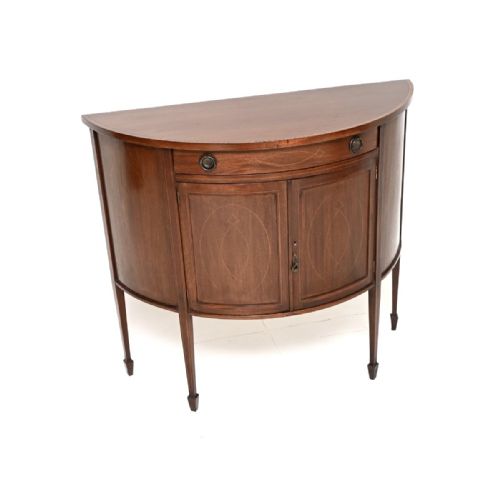
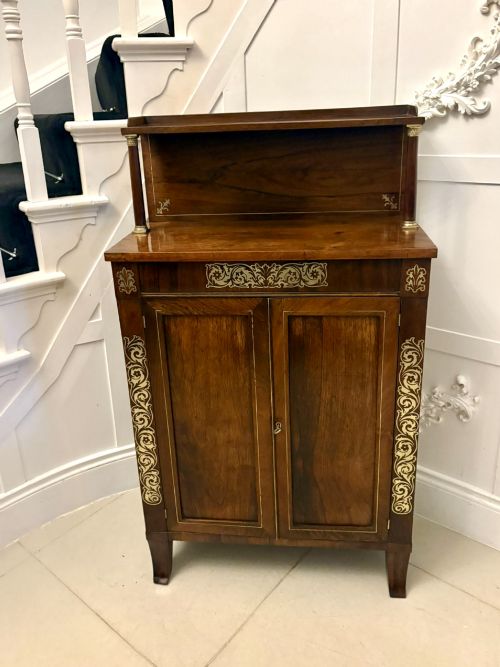
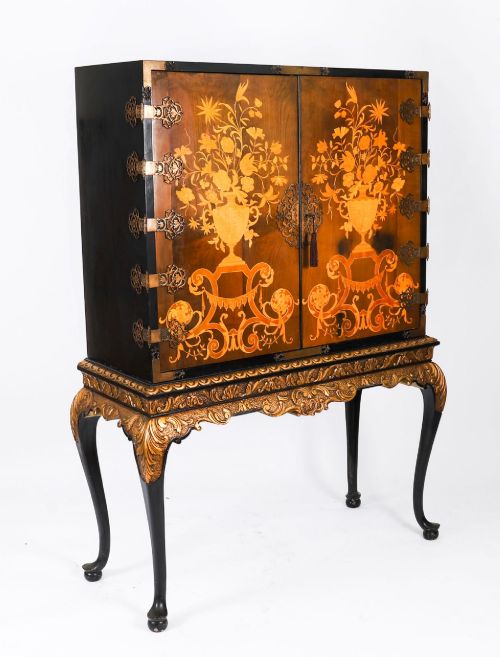
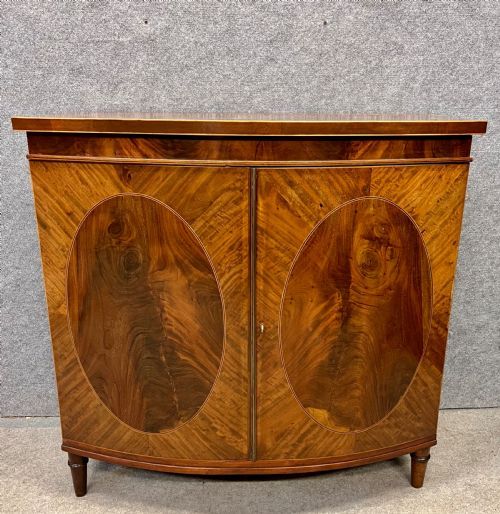
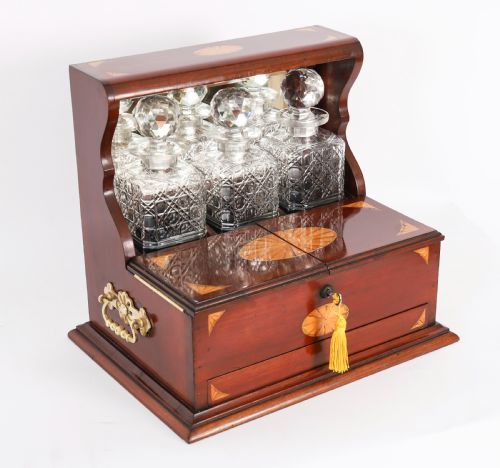
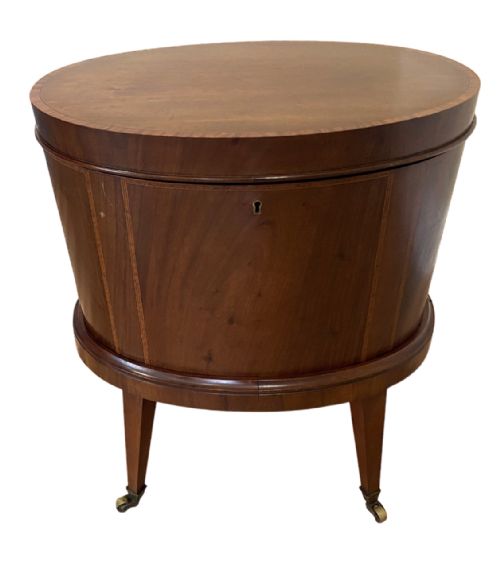
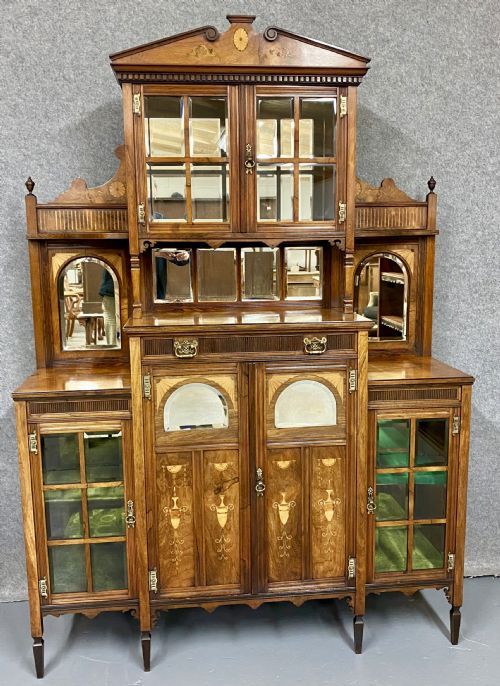
An inlaid wood drinks cabinet is a piece of furniture designed to store and serve beverages, appearing on this page across forms such as cocktail cabinets, cellarettes, side cabinets, and drinks tables. These pieces draw on a rich variety of historic periods including the Georgian era, the Regency period, the nineteenth century, the Edwardian period, and the 1930s. Buyers searching for an inlaid wood drinks cabinet will find everything from formal cellarettes and wine coolers to cocktail cabinets on stands.
The stylistic influences span Sheraton, Regency, Victorian, Edwardian, Queen Anne Revival, Swedish Grace, and Louis XVI Revival designs. Side cabinets and chiffoniers often double as serving surfaces or bottle storage depending on their internal layout. Cellarettes from earlier periods reflect the specific dining customs of their time, while 1930s cocktail cabinets cater to a distinct era of home entertaining.
How they were made
Metalwork played a structural and decorative role, with brass fittings, handles, and mounts securing the timber frames and protecting corners. Glass also appears, particularly in twentieth-century cocktail cabinets where mirrored interiors or glass panels complement the polished wood exterior. Simulated rosewood surfaces demonstrate how makers achieved exotic grain patterns through paint and staining when scarce timbers were unavailable.
Inlaid Wood Drinks Cabinet Retail Price Guide 2026
Typical asking prices for inlaid wood drinks cabinet among the pieces listed under this phrase on Sellingantiques today, from the lower quarter to the upper quarter. They describe what is for sale here now, not the wider market.
The listings on this page span the early nineteenth century through to the 1930s, featuring materials like mahogany, rosewood, walnut, and giltwood.
What varies in quality
The distinction between tiers of quality rests on the precision of the timber selection and the execution of the inlay work. Finer examples display seamless integration of satinwood or marquetry veneers that sit flush with the surrounding mahogany or rosewood body. Lesser pieces might show simplified construction methods where decorative motifs are painted rather than inlaid into the wood grain.
Hardware and internal fittings also mark the division between standard production and high craftsmanship. Superior cabinets incorporate heavy cast brass mounts, original locking mechanisms, and fitted interiors designed specifically for glassware or bottles. The fluidity of the silhouette, such as the crispness of a serpentine curve or the stability of a cabinet on stand, reflects the underlying competence of the workshop.
Gillows
The Inlaid Wood Drinks Cabinet Glossary
- Cellarette
- A low cabinet or box designed to hold bottles of wine, frequently lined with lead or compartmentalised for ice. These objects sat beneath the dining table or beside the sideboard during formal meals.
- Tantalus
- A locked frame holding decanters that displays their contents while preventing unauthorised access to the liquor. They usually incorporate a security bar secured by a small key.
- Marquetry
- The art of applying pieces of veneer to a structure to form decorative patterns and pictures. Craftsmen cut contrasting woods to fit precisely together before gluing them to the carcass.
- Demi-lune
- A half-moon or semicircular shape utilised for sideboards and small cabinets. This design allowed furniture to sit flush against a wall while saving floor space in smaller rooms.
- Chiffonier
- A low sideboard or cabinet with drawers and shelves, popular during the nineteenth century. It developed from simpler storage pieces into a decorative item for the parlour.
Inlaid Wood Drinks Cabinet: Frequently Asked Questions
What is the difference between a cellarette and a cocktail cabinet?
A cellarette is a traditional piece from the Georgian or Regency periods designed primarily for storing wine bottles near the dining table. They are often low to the ground and heavily compartmentalised.
In contrast, a cocktail cabinet is typically a taller twentieth-century form meant for mixing drinks, often featuring fold-down serving flaps and mirrored interior compartments.
How do I identify a 1930s cocktail cabinet?
Twentieth-century pieces from the 1930s often incorporate dramatic marquetry, black lacquer, or Swedish Grace influences. They frequently stand on tall legs or frames and feature specialised internal fittings for glassware.
Older nineteenth-century cabinets rely more heavily on solid mahogany or rosewood with restrained satinwood inlay rather than pictorial veneer work.
Were these cabinets used for dining room storage?
Many of these pieces, such as chiffoniers and side cabinets, served as auxiliary storage in dining rooms for silver, linen, and bottles. They provided a surface for serving food and displaying decorative ceramics during meals.
Drinks tables and tantalus sets were similarly stationed where guests gathered, bringing the hospitality directly into the drawing room.
How do I care for inlaid wood surfaces?
Inlaid wood requires protection from direct sunlight and sudden humidity changes to prevent the delicate veneers from lifting or splitting. Regular dusting with a soft cloth and occasional waxing help maintain the finish.
Avoid placing damp glasses directly on the polished timber tops to prevent water rings from forming on the antique surfaces.