




Inlaid Wood Dresser
An inlaid wood dresser brings warmth and intricate detail into a room through contrasting timbers and meticulous craftsmanship.
Inlaid Wood Dresser
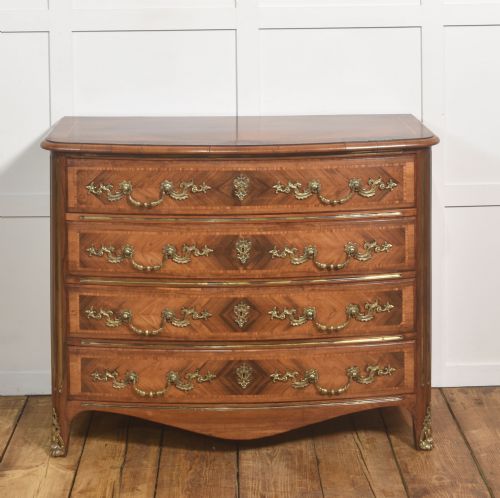
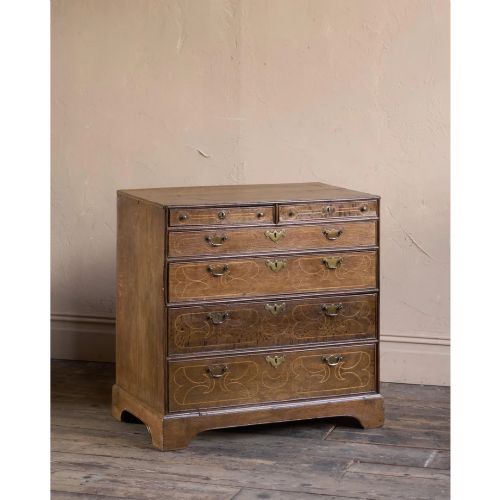
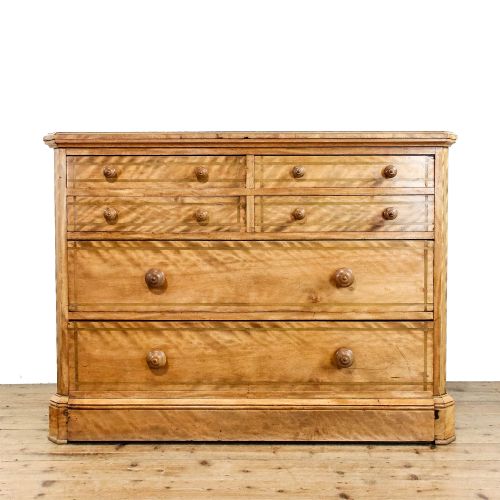
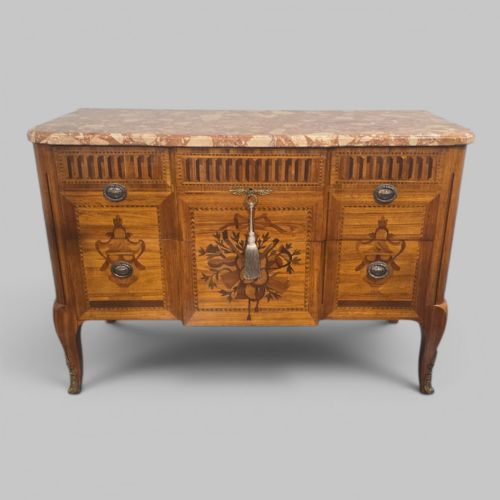
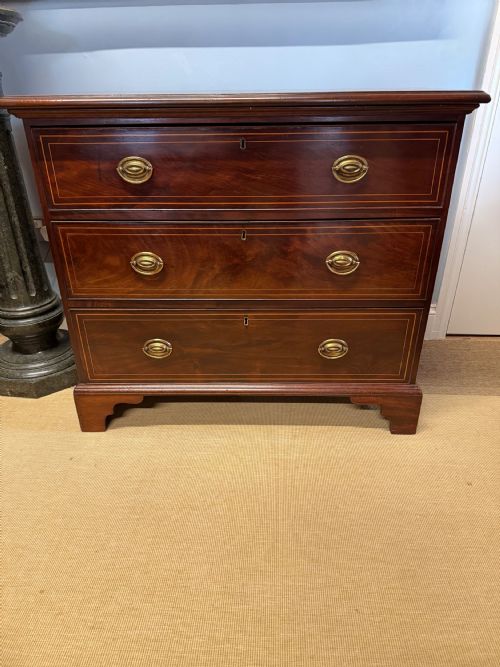
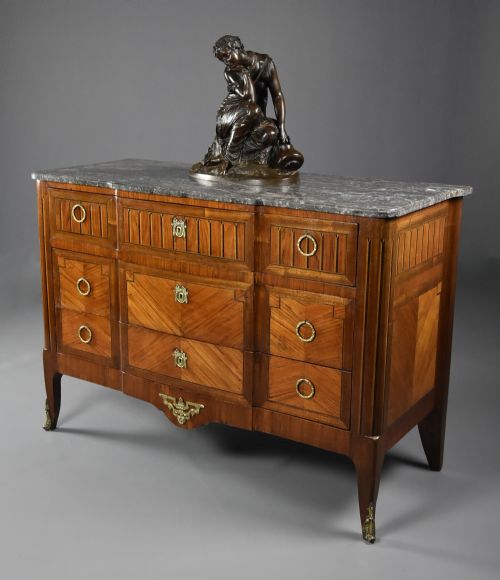
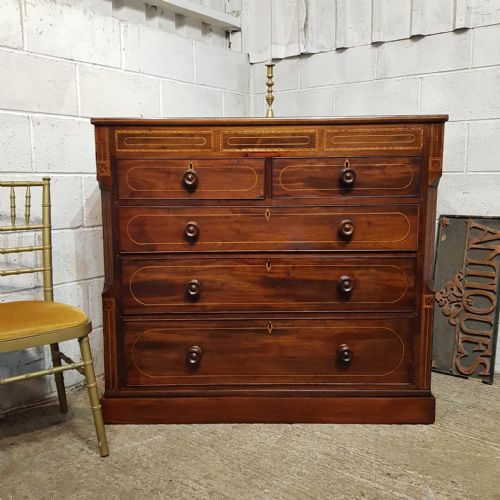
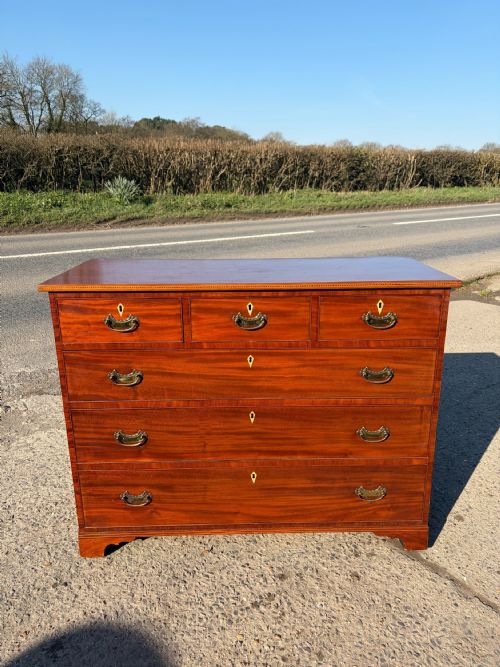
When you search for an inlaid wood dresser, you enter a category defined primarily by chests of drawers, sideboards, and commodes spanning multiple centuries. The pieces range from seventeenth-century walnut and oak constructions with floral marquetry to nineteenth-century satinwood and mahogany designs.
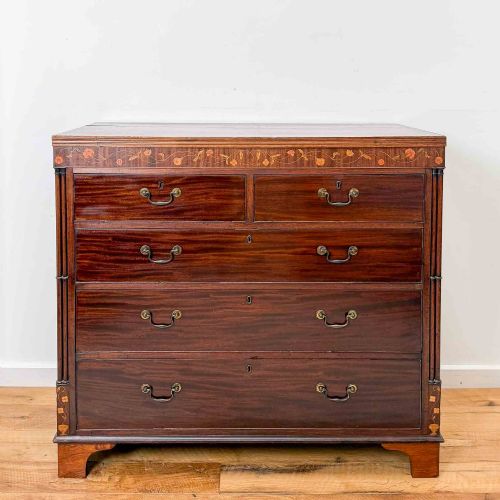
Buyers most frequently encounter nineteenth-century and Victorian examples on this page, alongside Georgian and Edwardian variations. These items serve as functional storage units while displaying elaborate surface decoration.
Origins stretch across British, French, and Swedish workshops, incorporating regional timber choices such as birch, burr elm, and yew alongside standard cabinet woods.
Judging execution
Quality rests on the precision of the timber matching and the crispness of the inlay work. Finer examples show seamless integration of contrasting woods without visible gaps or excessive filler.
The choice of primary timber and secondary framing woods indicates the grade of the piece, with dense burrs and well-figured mahogany commanding attention for their depth of grain.
Early makers occasionally hid tiny geometric wooden puzzles inside secret compartments of these chests to outwit curious guests.
Mawer & Stephenson
The Inlaid Wood Dresser Glossary
- Marquetry
- Decorative veneer work arranged in pictorial patterns. Artisans cut different coloured woods to form elaborate floral or landscape scenes.
- Bowfront
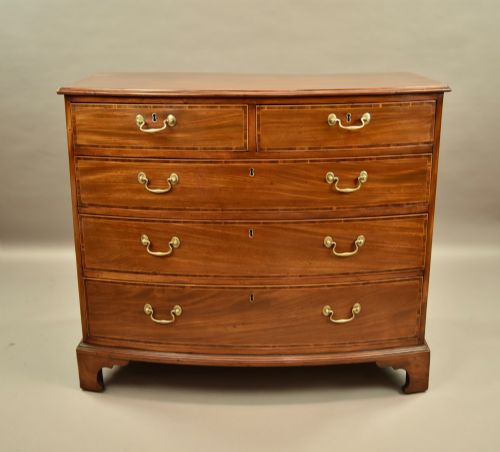
- A convex curved cabinet front. This curved shape gained popularity during the Georgian and Regency periods.
- Stringing
- A narrow line of contrasting inlay. It frames drawer fronts and panels on eighteenth and nineteenth-century furniture.
- Tallboy
- A tall chest of drawers standing upon another chest or a stand. This form provides substantial vertical storage.
- Commode
- A low French-style chest of drawers or cabinet. Many examples feature serpentine fronts and marble tops.
Inlaid Wood Dresser: Frequently Asked Questions
What periods do these pieces span?
The selection includes items originating from the seventeenth century through to the Edwardian era and early twentieth century. Key periods represented are Georgian, Victorian, and Regency.
Craftsmen across these centuries utilised distinct regional timbers and evolving decorative styles, moving from seventeenth-century floral marquetry to nineteenth-century satinwood and mahogany.
How do I identify a marquetry chest?
Marquetry involves detailed veneer work where pieces of wood form pictures or decorative motifs on the surface. Look closely at the drawer fronts for floral or geometric designs created using contrasting timbers.
Unlike simple painted decoration, true marquetry relies entirely on the natural grain and colour of different woods fitted together.
What woods were commonly used?
Primary woods include mahogany, walnut, oak, and satinwood, which formed the structural carcase and exterior surfaces. Boxwood, ebony, and maple frequently appear as contrasting elements for inlay and stringing.
More unusual pieces incorporate birch, burr elm, yew, and rosewood depending on the origin and period of manufacture.
Where should I place a sideboard?
These large storage items suit dining rooms, hallways, or living spaces where surface area and drawer storage are useful. Ensure the room has sufficient clearance for doors and drawers to open fully.
Keep wooden items away from direct heat sources and strong sunlight to protect the fragile veneers and inlay work over time.