


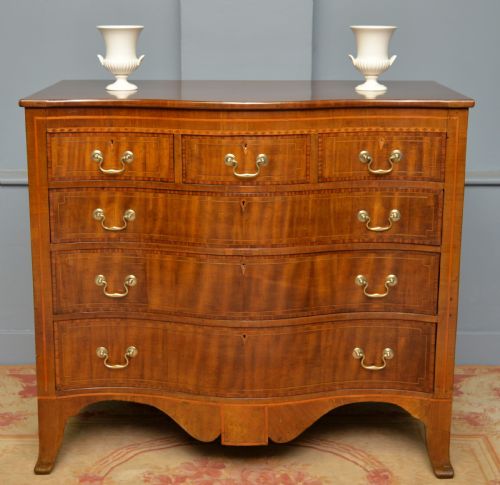


Inlaid Blanket Chest
An inlaid blanket chest holds centuries of domestic storage history, offering timber grain and decorative detail that anchors a traditional room.
Inlaid Blanket Chest
An inlaid blanket chest encompasses sturdy oak coffers, mule chests, and maritime trunks designed to secure textiles and household valuables. Pieces spanning the seventeenth to the nineteenth centuries appear frequently, reflecting English, Welsh vernacular, and continental workshops.
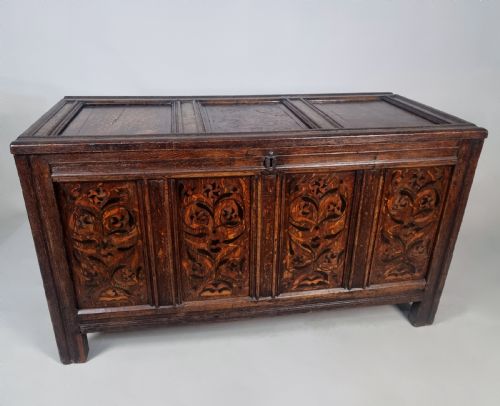
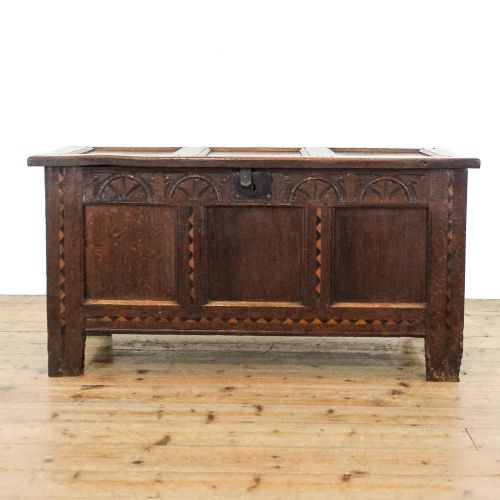
Early examples include seventeenth-century oak coffers embellished with marquetry and arcaded panels, whilst eighteenth-century Georgian and Welsh pieces often incorporate internal drawers or lidded tills.
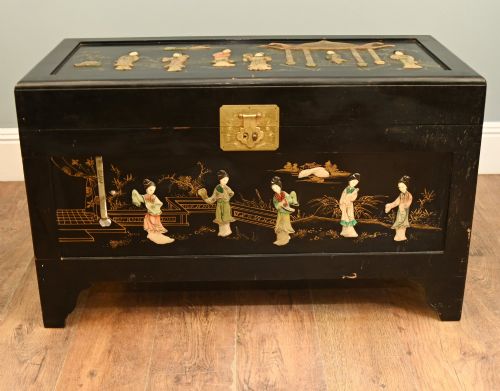
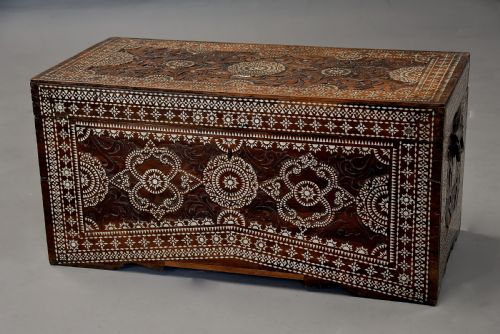
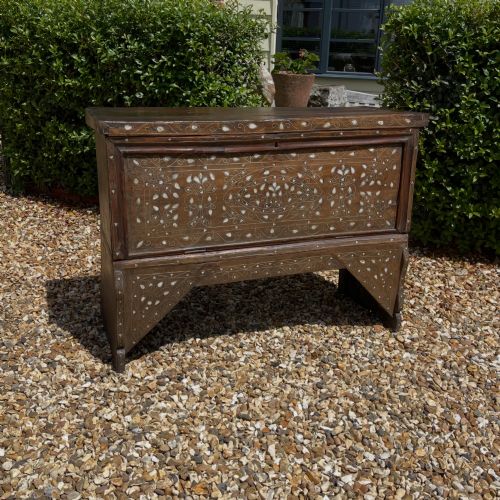
Nineteenth-century trunks bring exotic hardwoods and mother-of-pearl decoration from Middle Eastern and Asian origins, widening the scope beyond domestic oak.
Materials and Construction
Makers relied primarily on native timber like oak, walnut, and mahogany, constructing heavy frames with pegged joints and panelled lids to withstand seasonal movement.
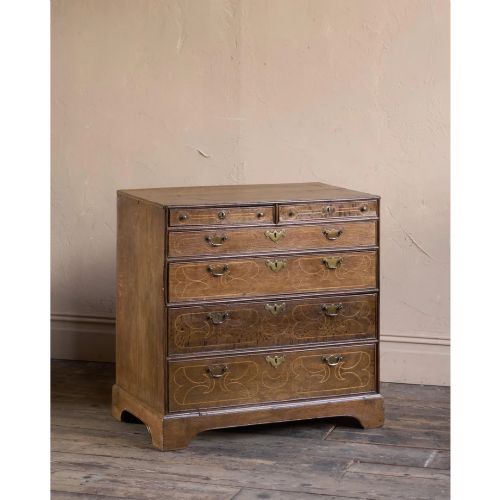
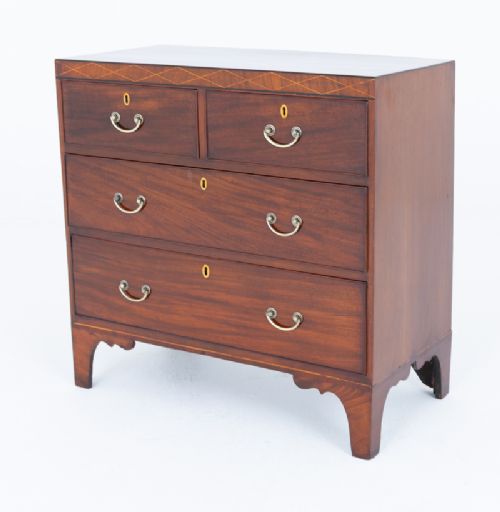
Surface enrichment relied on contrasting fruitwood inlay, marquetry, and occasional bone or brass mounts, creating intricate geometric or floral patterns across the front panels.
A tiny Welsh coffor bach hides miniature treasures just like its larger sibling.
Distinguishing Quality
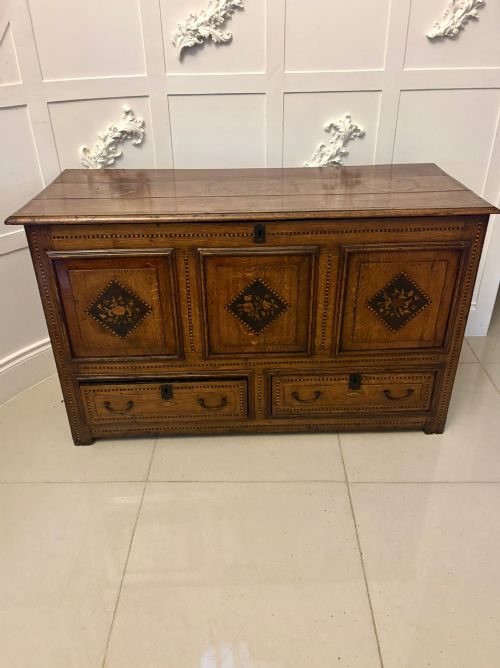
The sophistication of the timber selection and the precision of the inlay separate utilitarian vernacular boxes from pieces made for wealthier households. Integrated lower drawers, as seen in mule chests, and intact original hinges or stands elevate a piece's structural integrity.
Depth of carving and subtlety in contrasting woods demonstrate the maker's hand, whereas heavy restoration or replaced panels diminish historical cohesion.
The Inlaid Blanket Chest Glossary
- Mule chest
- A storage chest fitted with one or more drawers at the base beneath the main compartment. This form bridges the traditional coffer and the modern chest of drawers.
- Coffor bach
- A small Welsh tabletop or miniature chest used for keeping valuables or linens. These scaled-down pieces mirror the construction of larger blanket boxes.
- Marquetry
- Decorative veneer work arranged in pictorial or geometric patterns using various coloured woods. Craftsmen applied these patterns to enrich plain timber surfaces.
- Arcaded
- A decorative motif featuring a series of rounded arches carved into wood panels. This architectural detail frequently dates seventeenth-century English joinery.
- Till
- A small internal compartment or lidded box built inside a larger chest. It kept small items separate from bulk blankets.
Inlaid Blanket Chest: Frequently Asked Questions
How were blanket chests originally used?
These pieces stored woolen blankets, household linen, and valuable garments away from damp stone floors and insects in early homes. Their flat lids also served as extra seating or tabletops in communal living spaces.
Over time, lower drawers were added to mule chests to allow access to stored textiles without needing to lift the heavy top lid.
How do I date an antique oak coffer?
Examine the construction methods, tool marks, and wood patination visible on the interior and underside of the lid. Hand-riven boards, pegged joints, and contemporary hinges point to seventeenth or eighteenth-century origin.
Inlay styles and regional vernacular characteristics, such as Welsh oak framing, help narrow down the decade of manufacture.
Can I use an antique chest as a coffee table?
Their sturdy flat lids and substantial proportions make them suitable for use as occasional tables or display surfaces in a sitting room. Ensure the surface finish is protected from moisture and heavy impacts.
Keep internal storage accessible by avoiding heavy objects permanently placed on top of the lid.
What is the difference between a coffer and a mule chest?
A coffer consists of a single deep compartment accessed solely by lifting the lid from the top. A mule chest incorporates one or two drawers beneath the main box section.
This drawer addition represents an early evolution towards modern drawer storage whilst retaining traditional top-loading space.