

Inlaid Wood China Cabinet
An inlaid wood china cabinet brings together timber, glass and careful marquetry to showcase treasured ceramics and glass.
Inlaid Wood China Cabinet
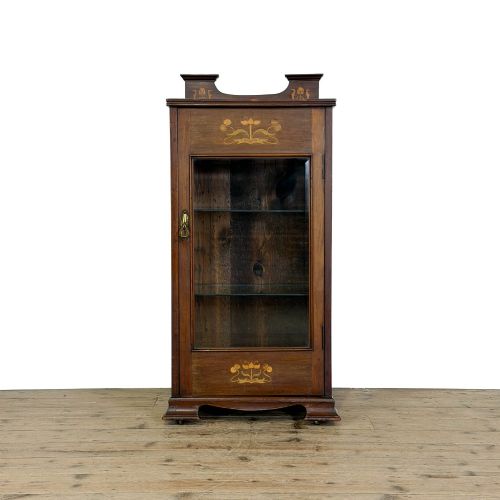
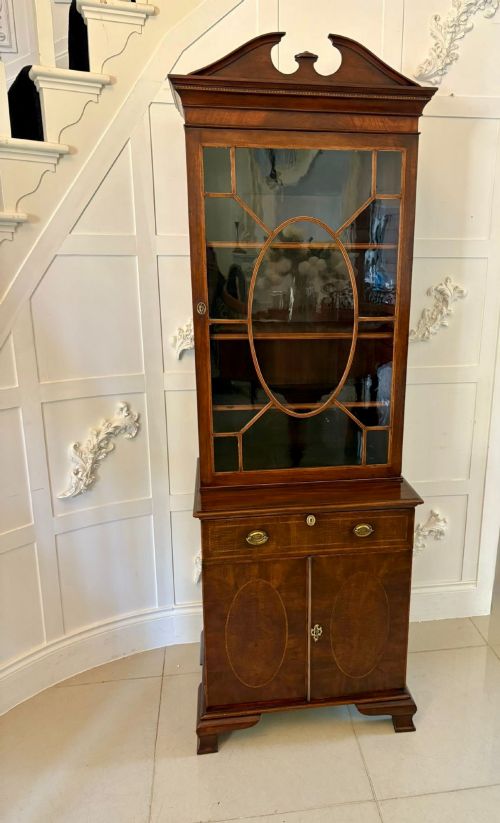
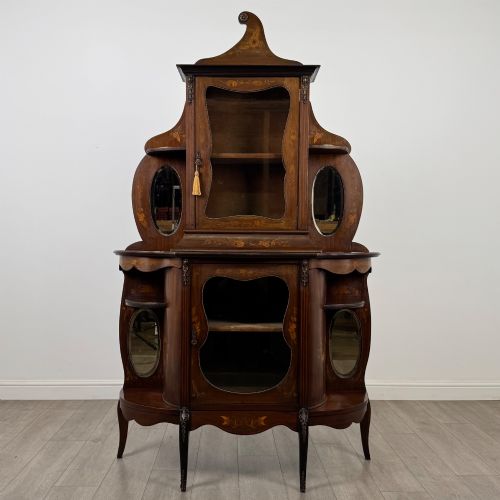
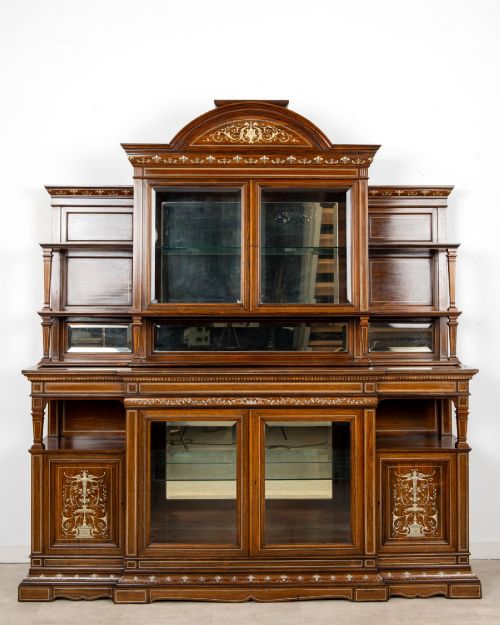
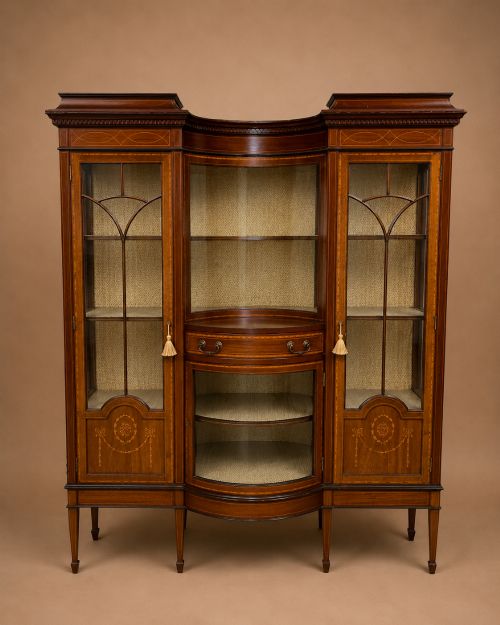
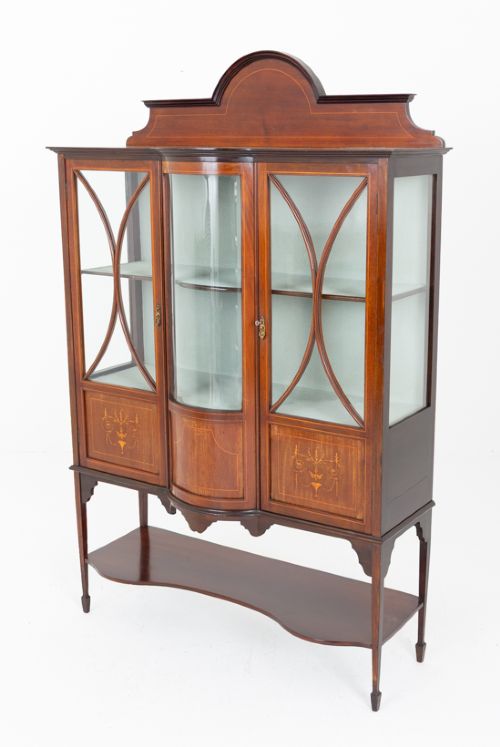
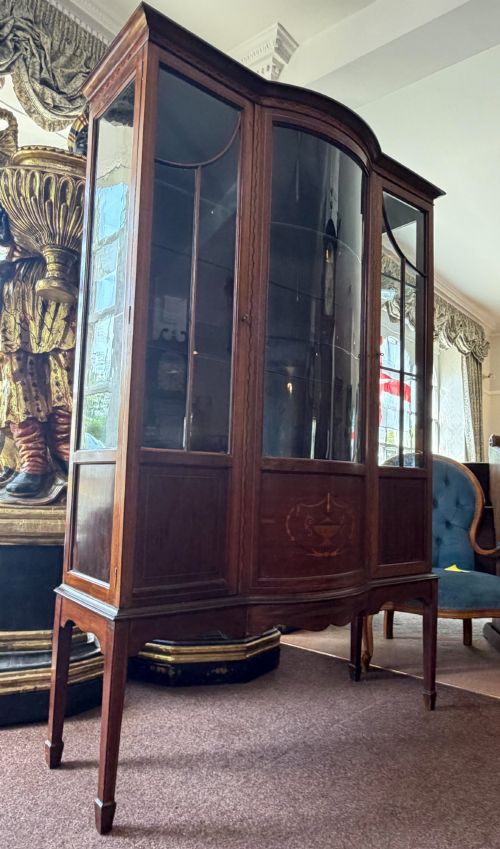
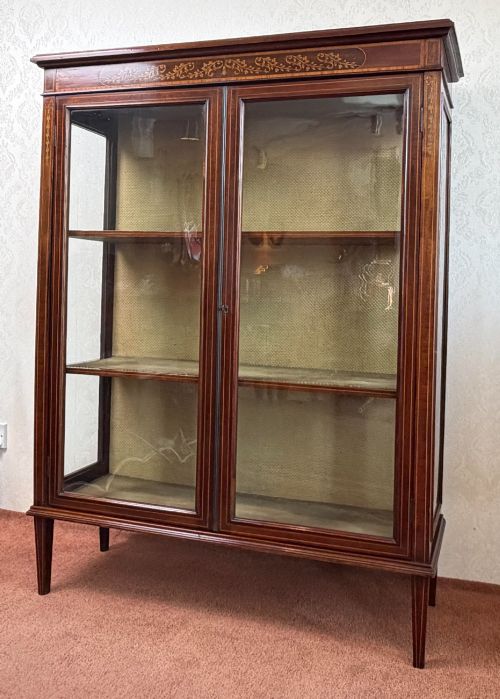
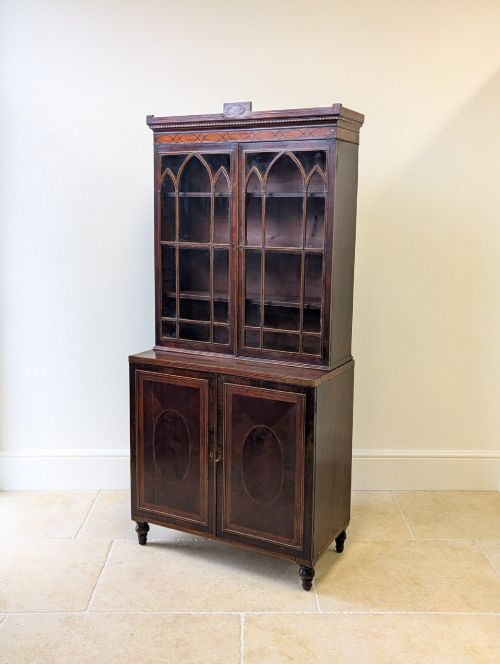
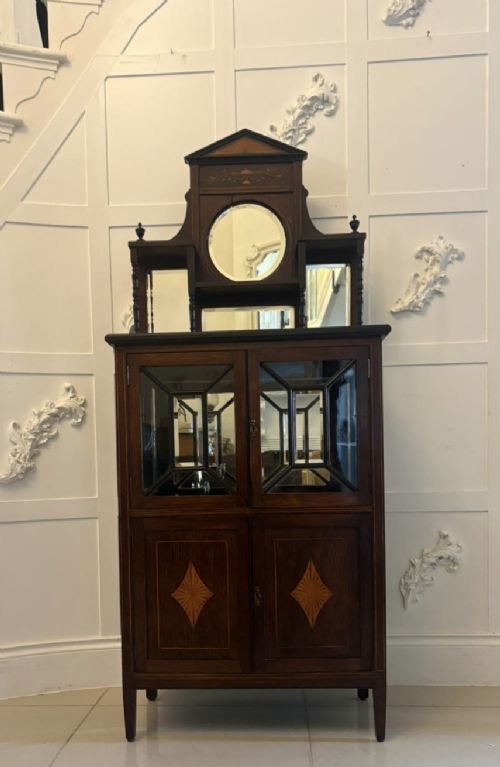
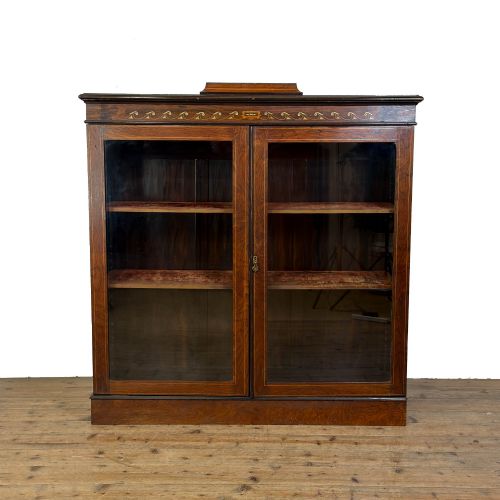
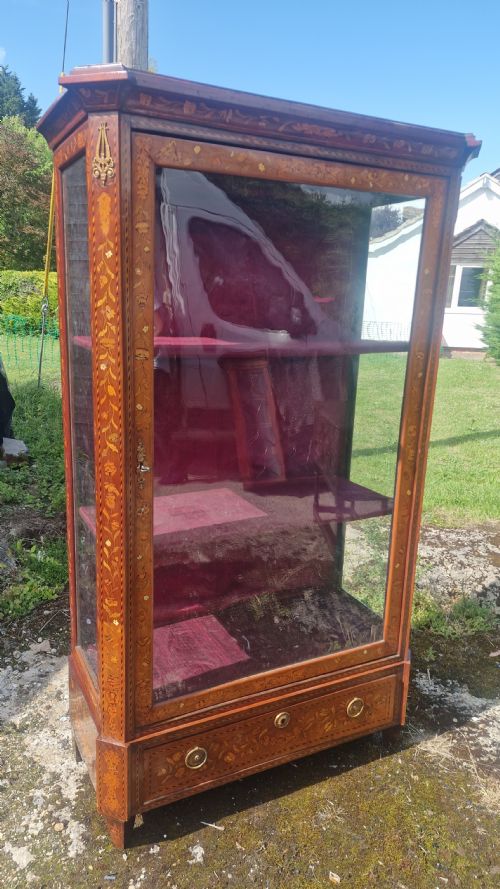
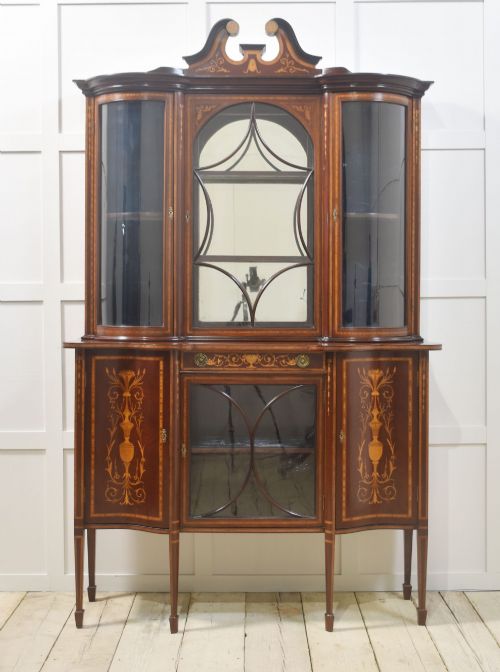
When you search for an inlaid wood china cabinet, you encounter display furniture spanning from the Georgian and Victorian eras through to the Edwardian period. The pieces on this page are predominantly mahogany, walnut, rosewood or satinwood cabinets featuring glazed doors, mirrored backs and delicate wood inlay.
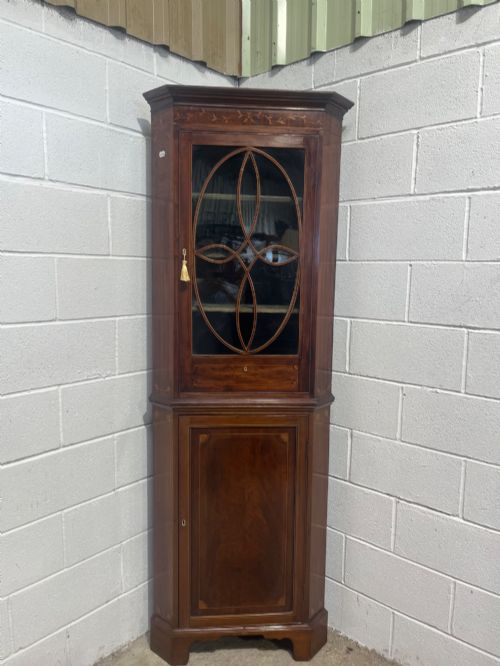
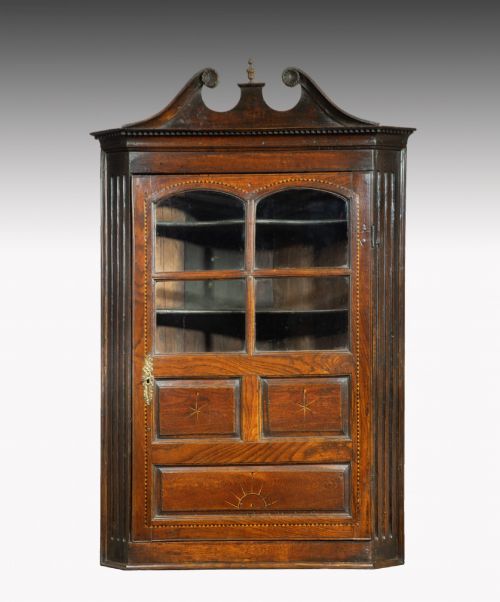
The form ranges from floor-standing display cabinets and bow-front vitrines to corner cupboards and bookcases combined with display compartments. Edwardian and Sheraton Revival examples are most common, often displaying symmetrical classical motifs alongside fine stringing.
Materials and construction methods
Cabinet makers utilised dense primary timbers such as mahogany and rosewood for the main structure, often applying finely figured veneers to the external surfaces. Satinwood, boxwood and various contrasting timbers were then cut into delicate patterns for inlay and marquetry decoration.
Glass panels were fitted into wooden door frames to protect the interior shelves, occasionally accompanied by internal mirrors to reflect light through the displayed objects. Brass hardware such as hinges, escutcheons and keyplates completed the assembly.
Some Edwardian display cabinets hide tiny mirrored ledges inside, designed to reflect the underside of teacups so no painted mark goes unseen.
Distinguishing quality in cabinet work
The standard of an inlaid wood china cabinet rests upon the crispness of the timber preparation and the precision of the inlay work. Finer pieces show seamless joints in the contrasting woods, where the stringing and floral marquetry sit flush with the surrounding veneer.
Structural harmony also separates the output of standard workshops from distinguished cabinet makers. Superior examples maintain balanced proportions across serpentine or bow fronts, with substantial timber framing behind the decorative surfaces ensuring stability for the glazed doors.
Collinson & Lock·Waring & Gillow·Edwards & Roberts
The Inlaid Wood China Cabinet Glossary
- Marquetry
- Decorative patterns formed by fitting together small pieces of veneer into wooden panels. This technique allowed cabinet makers to create elaborate floral or geometric designs across the front of a piece.
- Vitrine
- A glass-fronted display cabinet designed specifically for showing porcelain and small curiosities. The term originates from the French word for glass.
- Stringing
- Thin lines of contrasting wood inlaid into the surface of furniture to create geometric borders. It is a defining feature of Sheraton Revival and Edwardian pieces.
- Serpentine
- A curved shape that undulates outward in the centre and inward at the sides. This contour requires skilled carpentry to execute cleanly on cabinet doors.
- Escutcheon
- A protective plate surrounding a keyhole, often cast in brass. These details help anchor the period aesthetic of nineteenth-century cabinetry.
Inlaid Wood China Cabinet: Frequently Asked Questions
What is an inlaid wood china cabinet used for?
These cabinets were designed to protect and display fine porcelain, ceramic collections and glassware within formal reception rooms. The glazed doors and mirrored backs allowed light to circulate and illuminate the interior contents.
Today, owners utilise them for similar display purposes or as statement storage pieces in dining rooms and sitting rooms. The enclosed shelving keeps dust away from delicate items while maintaining full visibility.
How do I distinguish Edwardian from Victorian cabinets?
Victorian cabinets often feature deeper, richer timber tones like rosewood or burr walnut alongside heavier carved details and robust proportions. They reflect a nineteenth-century taste for substantial presence and rich grain patterns.
Edwardian and Sheraton Revival pieces tend to be lighter in appearance, frequently utilising bright mahogany or satinwood with delicate painted or inlaid decoration. They draw upon eighteenth-century neoclassical symmetry with restrained elegance.
Where should I place a corner cabinet?
Corner cupboards and display cabinets are specifically built to fit directly into the ninety-degree angle of a room. This makes them practical for utilising dead space without crowding the main floor area.
Placing one in a dining room corner draws the eye upward and turns an unused junction into a focal point for displaying collection pieces.
How do I care for antique veneer and inlay?
Maintain a stable room environment away from direct sunlight and sudden temperature shifts to prevent the timber and delicate inlay from drying out or warping. Consistent humidity protects the glue beneath the veneer.
Dust the surfaces gently with a dry, soft cloth and avoid chemical polishes that can degrade the traditional wax finish over time.