


Inlaid Wood Barometer
An inlaid wood barometer measures atmospheric pressure while displaying decorative cabinetmaking.
Inlaid Wood Barometer
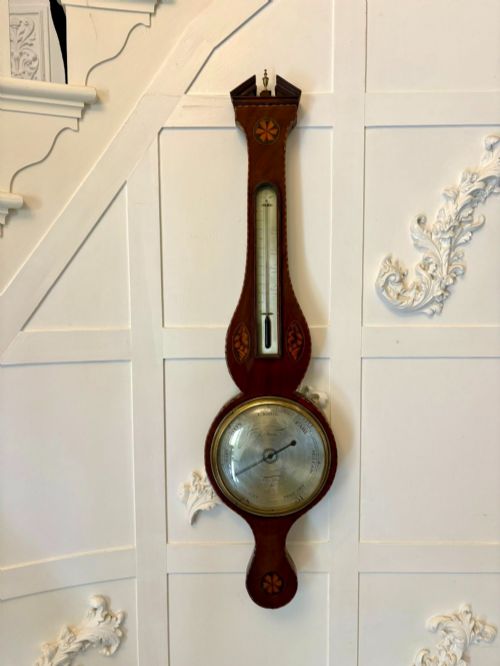
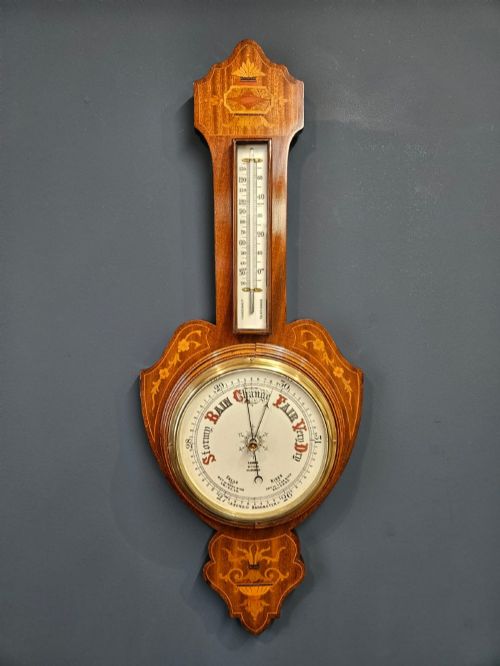
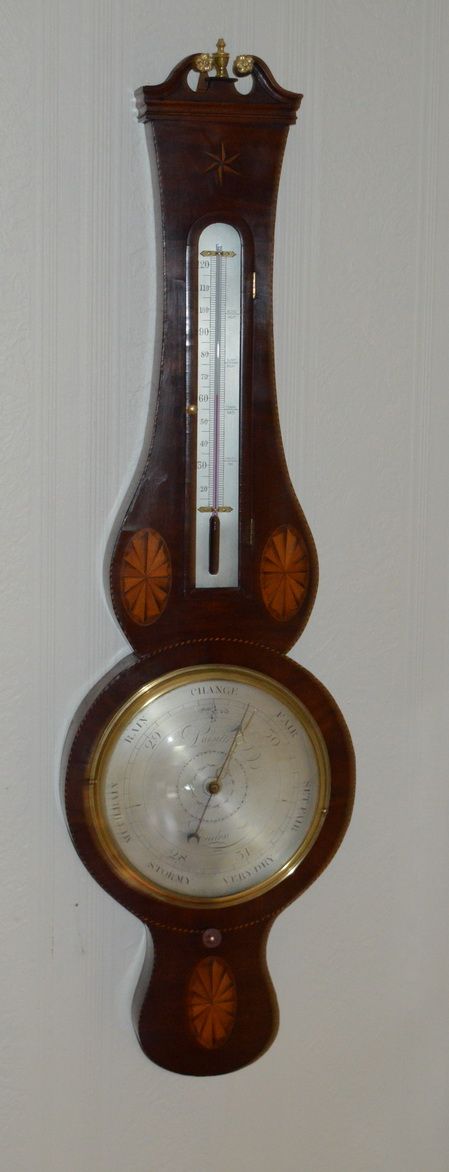
An inlaid wood barometer combines a weather-measuring instrument with decorative cabinetmaking, most commonly taking the form of a banjo or wheel barometer. These pieces span periods from the Georgian and George III eras through the Victorian, Edwardian, and Art Nouveau periods.
The selections on this page are dominated by rosewood and mahogany banjo barometers, often embellished with fruitwood, boxwood, or mother of pearl inlay. Stick barometers and desk or wall formats also appear alongside wheel configurations.
Makers recorded in the trade include traditional instrument houses such as Fagioli of Clerkenwell London, Luisetti of London, Charles Aiano, London, A. Pozzoby London, and D. Cattaneo & Co of Leeds. These domestic weather instruments reflect shifting domestic tastes from strict neo-classical formality to curved Edwardian and floral art nouveau idioms.
How they were made
Cabinetmakers constructed the main bodies from dense timbers like mahogany and rosewood, applying contrasting veneers and stringing in boxwood, fruitwood, and satinwood. Mother of pearl was frequently inlaid into the wood surface to create shimmering geometric or floral motifs.
Precision brass components, silvered metal dials, and protective glass bezels housed the delicate internal mercurial tubes or aneroid mechanisms. These materials were combined by specialist instrument makers and cabinetmakers working in tandem.
Many Victorian owners tapped the glass gently before reading the weather, hoping to coax the reluctant needle into action.
What varies in quality
Quality rests in the crispness of the cabinetwork and the delicacy of the wood inlay. Sharply executed boxwood and fruitwood stringing against dark rosewood indicates superior craftsmanship.
The sophistication of the internal mechanism also sets pieces apart, from standard mercury tubes to complex four-glass setups and combined thermometer or barograph assemblies. Retaining signed dials from known makers elevates the integrity of the piece.
Fagioli of Clerkenwell London·Luisetti of London·Charles Aiano, London·D. Cattaneo & Co of Leeds
The Inlaid Wood Barometer Glossary
- Banjo barometer
- A wall barometer shaped like a banjo, featuring a circular dial at the top and a long trunk below.
- Aneroid barometer
- An instrument that measures air pressure using an expanding metal capsule rather than liquid mercury.
- Marquetry
- Decorative veneer work formed by fitting together small pieces of wood, shell, or ivory into a larger design.
- Silvered metal
- A brass or copper dial treated with a silver solution to provide a bright, matte reading surface.
- Stick barometer
- A tall, narrow wall instrument where the mercury tube remains visible along its length.
Inlaid Wood Barometer: Frequently Asked Questions
What is an inlaid wood barometer?
An inlaid wood barometer is a domestic weather glass housed in a decorative wooden case decorated with contrasting wood veneers or shell inlay.
These pieces typically measure atmospheric pressure using mercury or aneroid movements while functioning as wall furniture.
How do I date an inlaid wood barometer?
Dating relies on the casework style, dial layout, and wood selection, moving from Georgian mahogany stick shapes to Victorian rosewood banjo formats and Edwardian designs.
Signed metal dials and specific inlay patterns such as shell motifs or stringing also help place the piece in its period.
Where should I hang a wood barometer?
Barometers should be hung on interior walls away from direct sunlight, central heating radiators, and damp conditions to protect the wood case and glass.
Secure wall fixings are essential because these instruments carry heavy hardwood bodies and protective glass bezels.
What is the difference between mercury and aneroid?
Mercurial barometers use a column of liquid mercury balanced against atmospheric pressure in a visible glass tube.
Aneroid barometers use a sealed flexible metal box that expands and contracts with air pressure changes, operating without liquid.