


Inlaid Walnut Foyer Table
An inlaid walnut foyer table anchors an entrance hall with rich timber grain and precise marquetry detail.
Inlaid Walnut Foyer Table
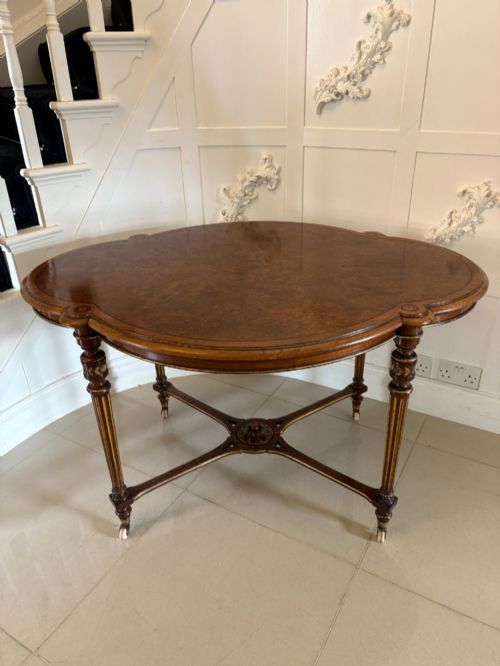
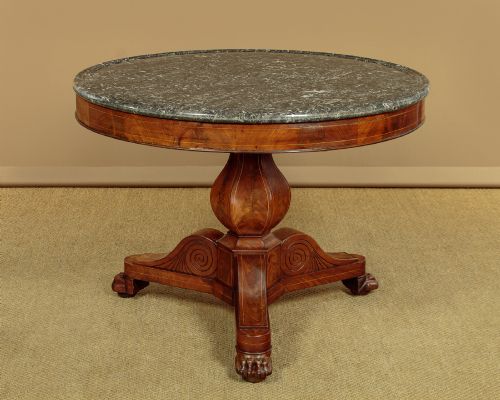
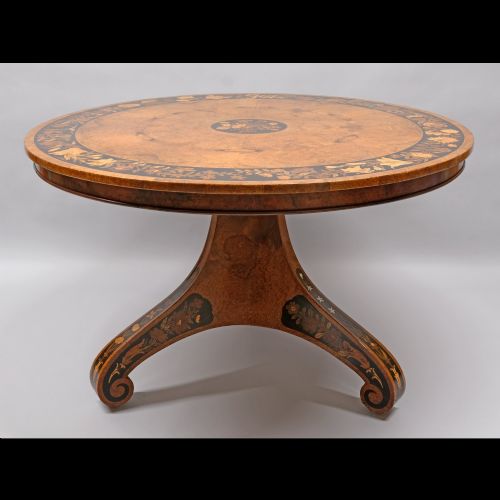
An inlaid walnut foyer table typically takes the form of a centre table, occasional table, or hall table designed for prominent placement in a grand hallway or entrance space. These pieces draw upon Victorian, Regency, and Neoclassical styles, spanning periods from the mid-nineteenth century into the early twentieth century.
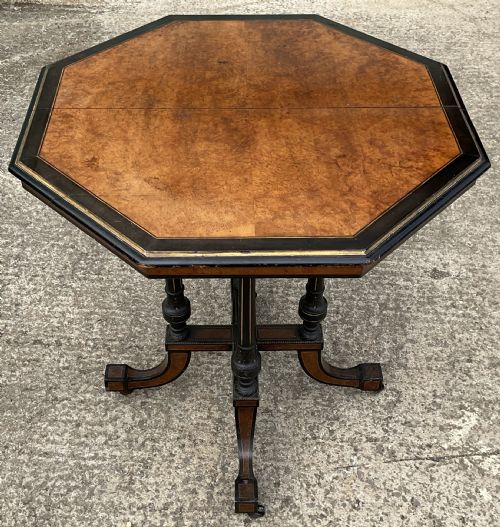
The materials centre on walnut and burr walnut, frequently enhanced by boxwood inlay, marquetry, and specimen marble tops. Buyers encounter circular, oval, and octagonal configurations supported by pedestals, basket bases, or carved frames.
Italian, French, and British workshops produced these items, ranging from compact occasional tables to large dining-convertible centre pieces. The selection reflects diverse European stylistic influences, including French Second Empire and Italian Neoclassical designs.
Materials and Construction
Cabinet makers utilised solid walnut and highly figured burr walnut veneers over secondary timbers to construct the foundational carcase and tabletops. Burr walnut provided complex, swirling grain patterns suited for prominent display.
Surface decoration relied on marquetry inlay and boxwood stringing, creating intricate geometric or floral motifs across the timber. Selected examples incorporated contrasting ebonised woods or coromandel alongside brass elements.
Table tops frequently featured inset purple or specimen marble slabs, mounted onto carved pedestals or multi-pillar basket bases. Joinery methods combined traditional cabinet-making practices with precision timber cutting for the intricate inlay work.
Some nineteenth century tables double as secret conversation starters by hiding your dropped keys in an eight-sided embrace.
Factors of Quality
The depth of figure in the burr walnut veneer and the crispness of the marquetry inlay determine the visual impact of the piece. Superior examples display seamless alignment in the wood grain and meticulous execution of boxwood and wood inlays.
Structural integrity of the pedestal base, leg carving, and the secure fitting of heavy marble or parquetry tops distinguish finer workshops from standard production. The integration of secondary woods and the precision of the joinery reveal the maker's hand.
Holmes Baldock·Holland and Sons·James Winter
The Inlaid Walnut Foyer Table Glossary
- Burr walnut
- A specialised timber cut from the abnormal growth knots of a walnut tree, yielding highly figured and swirling grain patterns. Cabinet makers prized this wood for veneering prominent table surfaces.
- Marquetry
- The art of applying small pieces of veneer to a structure to form decorative patterns and pictorial designs. Artisans used diverse woods and tinted elements to create contrast.
- Gueridon
- A small decorative French table, often supported by a central pillar or figures. These pieces frequently feature marble tops and intricate woodwork.
- Parquetry
- A geometric mosaic of wood pieces used for decorative floors and tabletops. This technique creates repeating patterns using contrasting timber tones.
- Specimen marble
- A tabletop composed of various coloured marbles assembled in geometric or pictorial arrangements. Italian workshops specialised in this decorative stonework.
Inlaid Walnut Foyer Table: Frequently Asked Questions
Where should I place an inlaid walnut foyer table?
These tables suit entrance halls, reception rooms, and central gallery spaces where they can be viewed from multiple angles. Freestanding pedestal designs function effectively as focal points when positioned in open areas.
Ensure adequate clearance around the perimeter of the table to allow comfortable movement and visibility of the marquetry and base construction.
How do I clean a marble top table?
Use a soft, damp cloth with mild, pH-neutral soap to wipe the marble surface gently. Avoid acidic cleaners, vinegar, or abrasive sponges that can etch or dull the stone.
Dry the surface thoroughly with a clean microfiber cloth to prevent water spots and maintain the polish of the marble.
How do I care for burr walnut veneer?
Keep walnut furniture away from direct sunlight and heat sources to prevent the wood from drying out and the veneer from lifting. Apply a quality microcrystalline wax periodically to nourish the timber and protect the finish.
Dust the surface regularly with a soft, dry cloth, following the direction of the wood grain rather than using silicone-based polishes.
How do I distinguish Victorian from Regency styles?
Regency pieces generally exhibit cleaner architectural lines, classical proportions, and restrained brass or wood ornamentation inspired by ancient Rome and Greece. Victorian examples often display heavier carving, more elaborate marquetry, and complex pedestal or basket bases.
Examining the secondary timbers, construction joints, and specific inlay motifs helps confirm the manufacturing period of the piece.