




Inlaid Walnut Etagere
An inlaid walnut etagere brings tiered elegance and fine marquetry directly into a Victorian drawing room or modern interior.
What an inlaid walnut etagere is
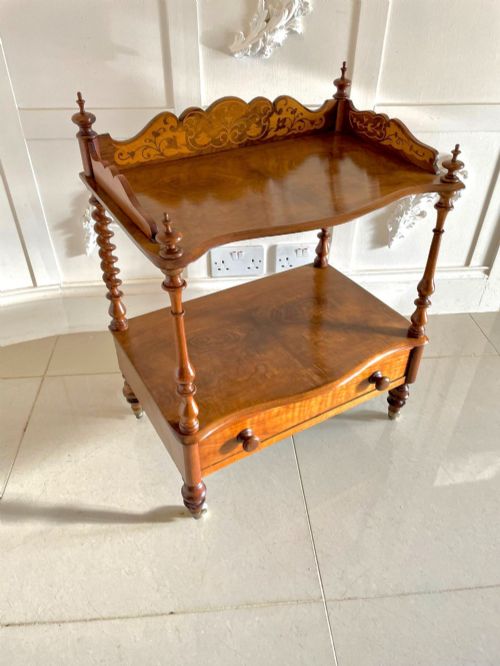
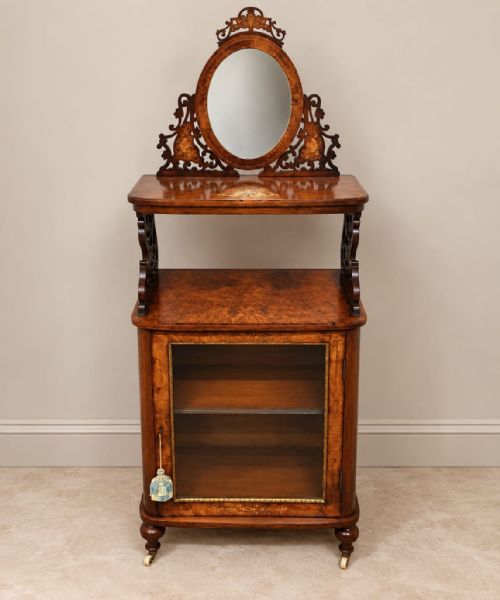
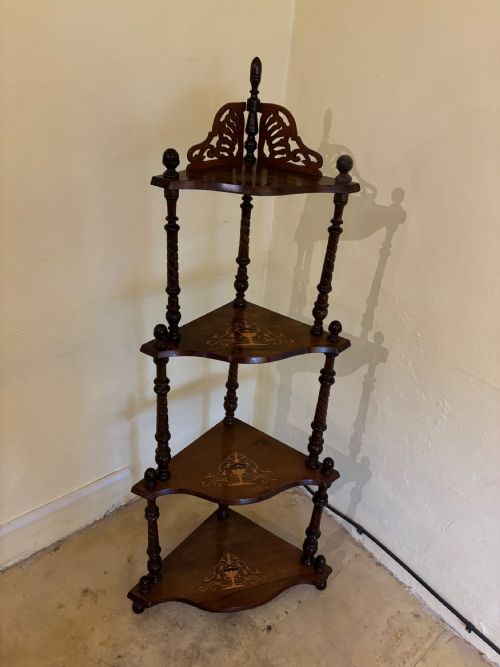
An inlaid walnut etagere is a multi-tiered display piece designed to hold ornaments, books or small objects, appearing primarily in Victorian and Edwardian forms. The evidence shows these multi-tiered items frequently taking the shape of corner whatnots, standing étagères, and occasional tables with marquetry work.
Most pieces seen on this page date from the mid to late nineteenth century, spanning decades from the eighteen-fifties through to eighteen-ninety. Buyers will encounter both freestanding multi-tiered stands and corner configurations designed to utilise room perimeters effectively.
Origin variations include English Victorian designs and French Rococo influenced pieces, reflecting the international taste for highly decorative occasional furniture during this period. The underlying framework remains consistently rooted in walnut, paired with contrasting decorative timbers.
How they were made
The foundational structure relies upon walnut, frequently selected as burr or figured timber to create rich, natural patterning across the tiers and tabletops. Cabinet makers added contrast using boxwood, fruitwood, and satinwood for detailed marquetry and linear stringing.
Additional hardware and structural support often incorporated turned wood columns, brass elements, and occasional gilt bronze mounts, particularly on French inspired examples. Multiple tiers were secured with upright supports or corner columns to distribute weight across the shelves.
Retail Price Guide 2026
Typical UK retail prices for inlaid walnut etagere, calculated from the Sellingantiques database of over a million retail prices indexed since 2003. This retail price guide relies exclusively on Sellingantiques data; no external sources or auction records are used, so the figures do not describe the wider market.
Listings feature walnut, burr walnut, and mahogany timbers enhanced by boxwood, fruitwood, and marquetry inlay.
What varies in quality
Quality reveals itself in the complexity of the marquetry inlay and the choice of timber figure, such as highly figured burr walnut against plain grain. Finer examples display meticulous botanical or geometric patterns executed in contrasting exotic woods rather than simpler stringing.
Construction methods and secondary details also separate standard production from superior pieces, seen in the choice of turning, the weight of brass fittings, and the stability of multi-tiered shelving joints.
The Inlaid Walnut Etagere Glossary
- Etagere
- A piece of furniture consisting of a set of open shelves for displaying small objects. This form became popular during the nineteenth century for drawing rooms.
- Marquetry
- Decorative woodwork in which delicate pieces of wood, shell or ivory are fitted into a veneer to form patterns. Craftsmen utilised this technique extensively on walnut tabletops and tier surfaces.
- Burr walnut
- Wood taken from a walnut tree growth where the grain has grown in a deformed, swirling manner. It yields highly decorative veneers prized for fine cabinet work.
- Corner whatnot
- A multi-tiered shelving unit specifically constructed to fit into the corner of a room. These pieces maximise display space in domestic interiors.
Frequently Asked Questions
What is an etagere used for?
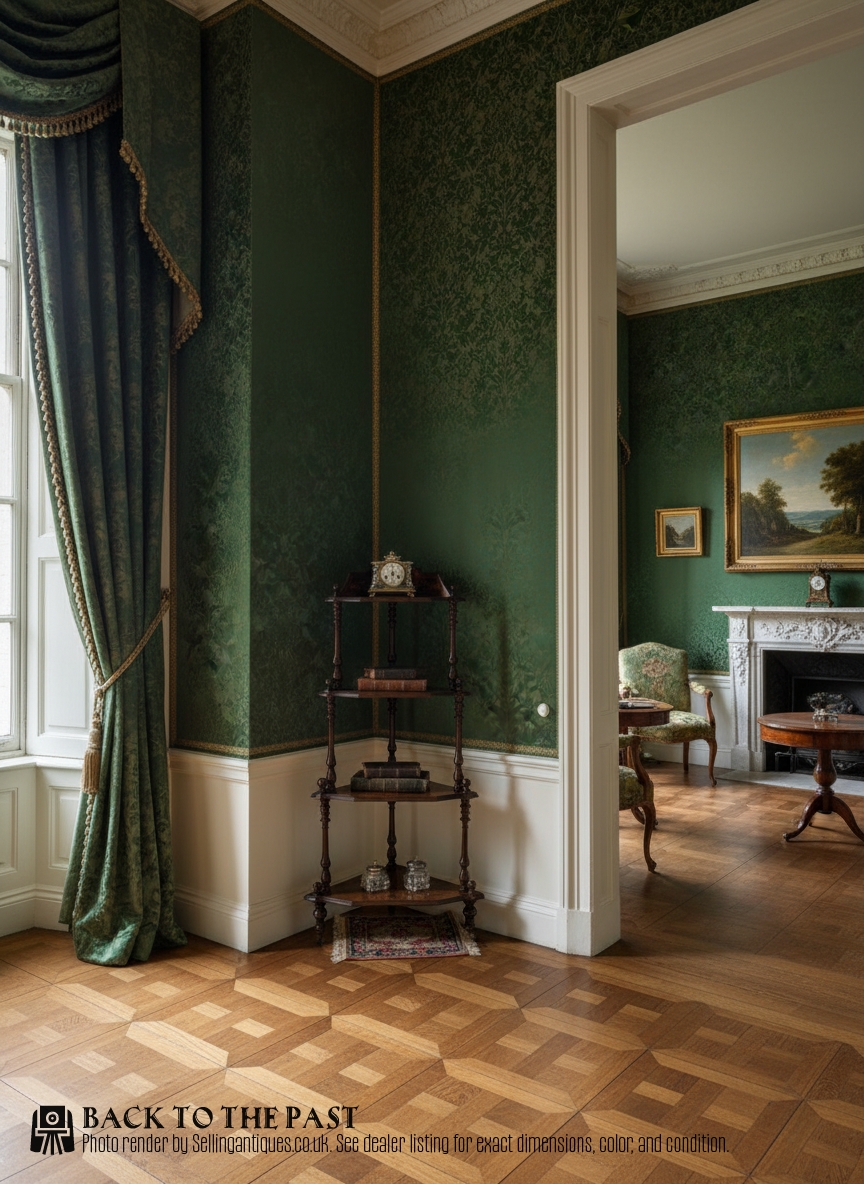
An etagere serves as an open display stand for ornaments, small clocks, and decorative ceramics. The multiple tiers allow owners to arrange collections visibly from various angles in a reception room.
Historically, these pieces occupied drawing rooms and parlours where hosts displayed their finest small possessions to visiting guests.
How do I date an inlaid walnut etagere?
Dating relies on examining the timber preparation, the style of the turning on the upright supports, and the specific motifs used in the inlay work. Pieces from the mid-Victorian era often feature heavier architectural framing.
Later Victorian and Edwardian examples frequently show lighter proportions and refined boxwood stringing patterns that align with changing aesthetic preferences.
Where should I place a corner whatnot?
A corner whatnot fits neatly into ninety-degree room angles, making efficient use of space that standard rectangular tables cannot occupy. They work effectively in smaller reception rooms or hallways.
Positioning them away from direct heat sources protects the walnut veneer and prevents the marquetry inlay from lifting over time.
What distinguishes French etageres from English ones?
French etageres often incorporate Rococo influences, featuring curved silhouettes, kidney-shaped tiers, and occasional gilt bronze mounts alongside walnut and marquetry. English variants tend toward more linear formats, such as four-tier corner stands and rectangular tables.
Both traditions utilise contrasting fruitwood and boxwood inlays, but the overall cabinet work reflects the distinct design schools of the continent versus Britain.