




Inlaid Walnut End Tables
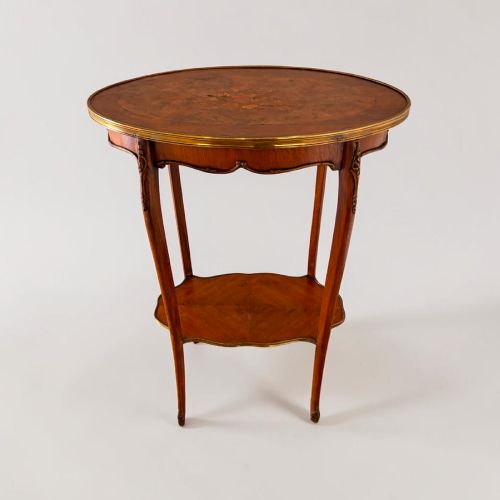
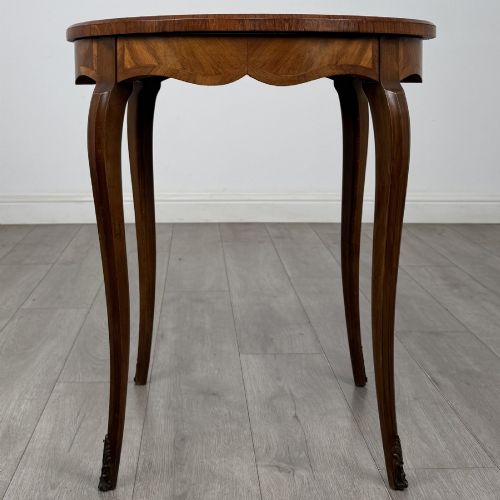
Inlaid walnut end tables bring rich grain and detailed banding beside a chair, offering practical surface space with antique character.
Inlaid Walnut End Tables
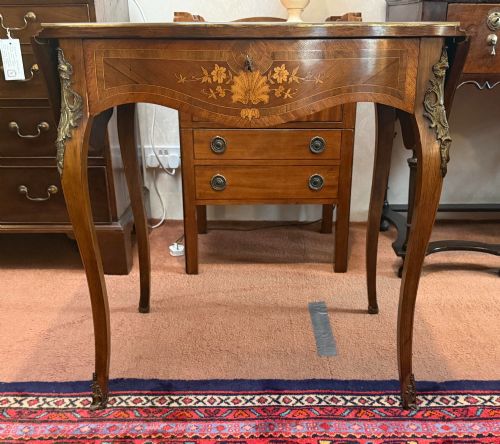
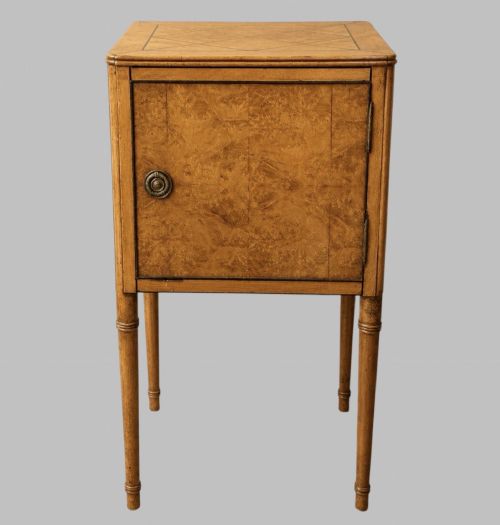
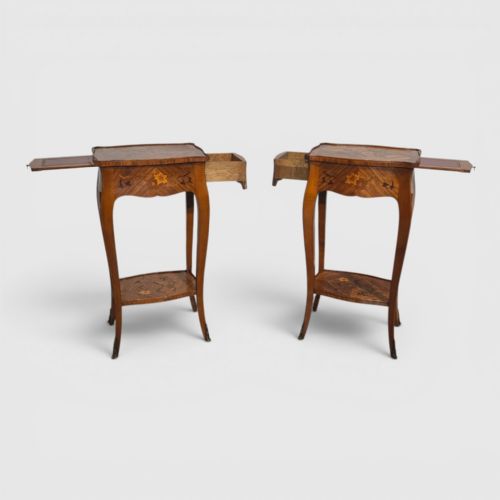
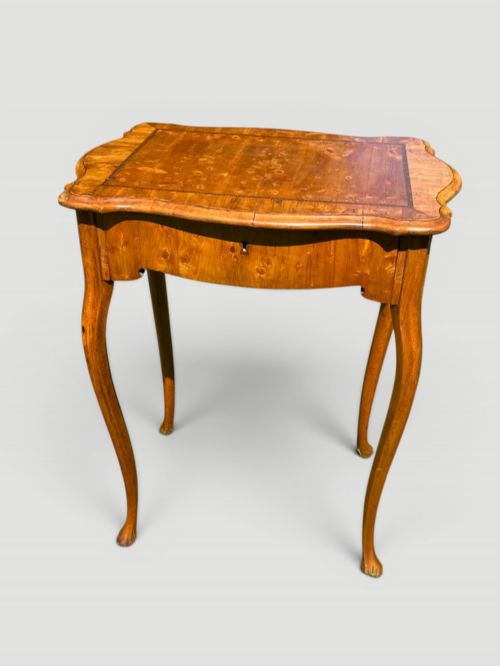
Inlaid walnut end tables encompass a varied group of occasional, side, bedside, and lamp tables shaped by nineteenth and early twentieth century cabinet makers. Walnut and burr walnut form the primary foundation, often highlighted with intricate marquetry and parquetry patterns.
Buyers encounter forms ranging from Victorian chess top designs and kidney-shaped bedside pieces to French revival nesting sets and Syrian octagonal tables. The selection draws on diverse stylistic influences including Louis XV, Art Deco, and Georgian traditions.
These tables serve primarily beside seating or beds, providing compact surfaces combined with ornamental surface decoration. Their varied proportions and forms reflect the domestic requirements of the eighteenth, nineteenth, and early twentieth centuries.
Materials and construction
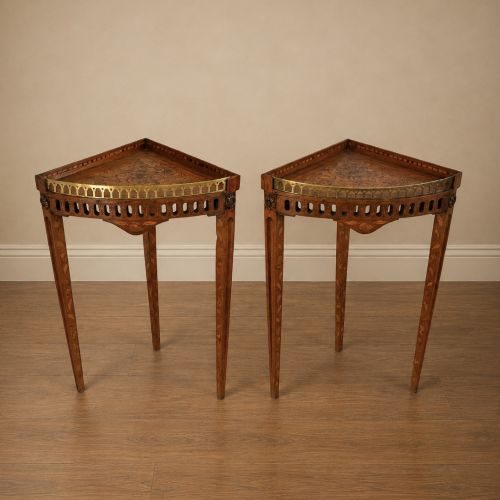
Makers utilised solid walnut and figured burr walnut veneers over secondary timbers, applying contrasting woods like satinwood and kingswood for linear banding and pictorial marquetry. Details such as mother-of-pearl, bone, and brass galleries frequently accent the primary timber surfaces.
Parquetry and floral inlay demand precise geometric cutting and fitting of individual wood veneers into the walnut background. Ormolu mounts and brass furnishings complete the construction of finer revival and decorative examples.
Inlaid Walnut End Tables Retail Price Guide 2026
Typical asking prices for inlaid walnut end tables among the pieces listed under this phrase on Sellingantiques today, from the lower quarter to the upper quarter. They describe what is for sale here now, not the wider market.
Several tables double as chess boards or nesting sets, proving historical cabinet makers loved furniture that multitasks.
Distinguishing quality
The refinement of the surface decoration largely determines the standing of an individual table. Crispness in the marquetry cutting and the choice of highly figured burr walnut set finer examples apart from simpler production.
The integration of secondary materials, such as cast brass galleries, fine ormolu mounts, and delicate mother-of-pearl or bone elements, indicates greater ambition in the original workshop. Structural integrity in veneered tops and nesting mechanisms also marks superior execution.
Walter Carter Harrods
The Inlaid Walnut End Tables Glossary
- Marquetry
- Decorative patterns formed by fitting together small pieces of veneer into a wood ground. This technique creates pictorial or floral designs across table tops.
- Parquetry
- A geometric mosaic of wood pieces used for decorative floors and furniture surfaces. It appears frequently in repeating patterns on table tops.
- Burr walnut
- Wood taken from a tree growth or burl, yielding swirling, highly figured grain patterns. Cabinet makers prized this material for prominent display surfaces.
- Ormolu
- Gilt bronze mounts applied to furniture for decorative effect. It frames and accents the woodwork on revival pieces.
- Gallery
- A raised ornamental border surrounding the edge of a table top. It often incorporates pierced brass or metalwork.
Inlaid Walnut End Tables: Frequently Asked Questions
What rooms suit these tables?
These compact tables fit easily beside armchairs, sofas, or beds, providing a convenient surface for lamps and books.
Their decorative wood grains and inlaid tops also allow them to function as freestanding accent pieces in hallways and reception rooms.
How do I clean inlaid surfaces?
Dust surfaces regularly with a soft, dry cloth to prevent dirt accumulation in the fine veneer joints.
Apply a microcrystalline wax periodically to nourish the walnut and protect the delicate marquetry without using harsh chemical polishes.
Are nesting tables practical?
Nesting sets offer multiple surface options while occupying the floor space of a single small table.
They pull out easily for entertaining and tuck away neatly when extra room is needed.
How are different periods told apart?
Georgian and Victorian examples often display heavier proportions and formal marquetry, while Edwardian and Art Deco pieces lean toward streamlined or kidney-shaped forms.
Material combinations like mother-of-pearl or exotic revival styles point to specific nineteenth-century design movements.