





Extending Side Tables
Extending side tables bring flexible surfaces and rich timber character to any room, offering clever mechanisms for daily use and entertaining.
Extending Side Tables
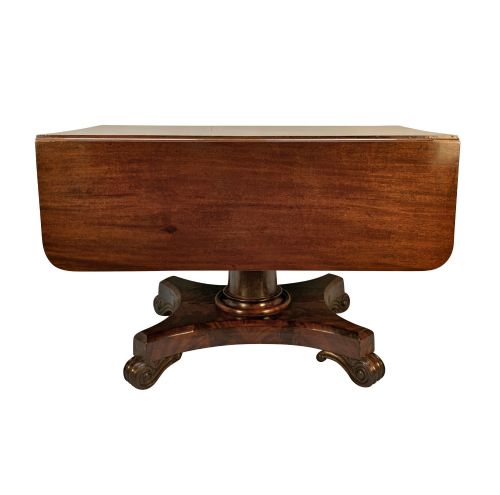
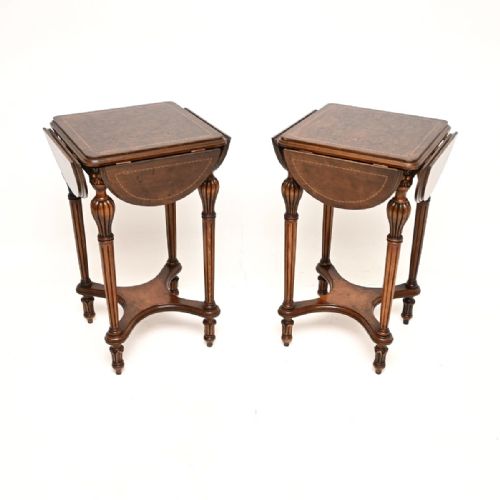
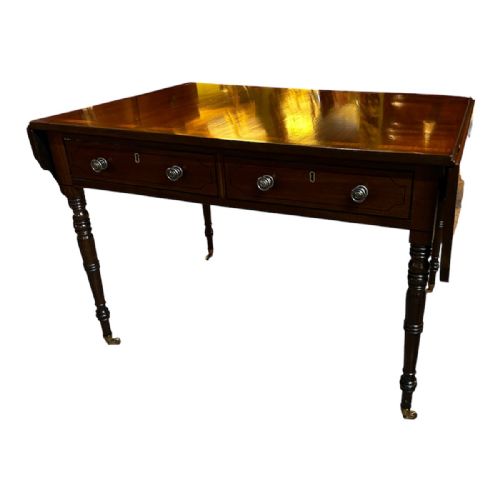
Extending side tables are versatile pieces designed to adapt their surface area through clever mechanisms such as drop leaves, gatelegs, or pull-out sections. When you search for extending side tables, you meet compact items that expand to serve multiple functions in a room.
The selections span significant historical periods, running from eighteenth-century Georgian designs through Regency, Victorian, and Edwardian eras into the twentieth century. Mahogany dominates the offerings, accompanied by rosewood, walnut, satinwood inlay, and marquetry.
Form and utility merge across these examples, taking shape as console tables, drop-leaf tables, sofa tables, and writing desks. Most variants lean toward traditional English country house aesthetics, French Empire influences, and Victorian styles.
How they were made
Cabinet makers utilised dense hardwoods such as mahogany and rosewood as the structural foundation for these pieces. These durable timbers provided the stability needed for drop leaves and extending console mechanisms.
Decorative surfaces often incorporated contrasting materials, applying satinwood inlay and intricate marquetry patterns across tabletops. Brass components frequently served both structural and ornamental roles on hinges, castors, and fittings.
Extending Side Tables Retail Price Guide 2026
Typical asking prices for extending side tables among the pieces listed under this phrase on Sellingantiques today, from the lower quarter to the upper quarter. They describe what is for sale here now, not the wider market.
Listings span several centuries, encompassing Georgian, Regency, Victorian, and Edwardian eras alongside mid-twentieth-century traditional items.
What varies in quality
The division between standard pieces and finer examples rests on the selection of timber grain and the precision of the joinery. Superior items display harmonious figuring in the mahogany or rosewood, whilst lesser pieces use more uniform or patched veneer.
Mechanisms dictate the daily utility of an extending table, where smooth folding leaves and stable drop-leaf brackets show superior construction. Finer workshops ensured that hinges, gateleg supports, and sliding frames operated without resistance or wobble.
The Extending Side Tables Glossary
- Drop leaf table
- A table with a fixed central section and hinged flaps that fold down at the sides. These leaves can be raised and supported to increase the usable surface area.
- Sofa table
- A narrow occasional table traditionally placed in front of a sofa, frequently featuring drop leaves and drawers. Regency examples often incorporate stretcher bases or pillar supports.
- Marquetry
- The art of applying decorative pieces of veneer to a structure to form intricate designs or pictures. This technique often employs varied coloured woods and shell.
- Console table
- A table fixed to a wall or freestanding against it, designed to stand flat against a vertical surface. Some historic versions were adapted to pull out or extend for dining.
- Pembroke table
- A small form of drop-leaf table with hinged flaps on two opposite sides, typically featuring one or two small drawers. It gained popularity during the Georgian and Regency periods.
Extending Side Tables: Frequently Asked Questions
What is an extending side table?
An extending side table is a versatile piece of furniture designed to sit against a wall or beside seating while offering mechanisms to increase its surface area when needed. These tables utilise drop leaves, gatelegs, or sliding frames to expand their top dimensions.
Historically constructed from timbers such as mahogany and walnut, they served multiple functions ranging from writing desks to auxiliary dining surfaces. Their adaptable nature made them essential items in traditional home interiors.
How do I use one in a modern home?
These pieces fit naturally into living rooms, hallways, or studies where floor space requires flexible furniture solutions. Kept in their closed position, they function as console surfaces or lamp tables against a wall.
When hosting guests or requiring extra workspace, simply raise the leaves or extend the frame to create a larger surface. Their historic timber tones also add warmth and character to contemporary room schemes.
How do I identify a Regency extending table?
Regency pieces often display classical architectural influences, featuring rich mahogany or rosewood veneers paired with brass accents. Look for refined proportions, saber legs, or pillar supports characteristic of the early nineteenth century.
Makers of this era frequently integrated clever folding or sliding mechanisms to maximise utility without sacrificing elegance. The joinery and timber selection provide key clues to this distinct period of design.
What materials are common in these tables?
Mahogany serves as the primary timber across the vast majority of pieces, valued for its strength and deep reddish-brown tone. Walnut, rosewood, and satinwood also appear frequently, often utilised for contrasting borders and decorative veneers.
Metal components are typically restricted to brass for castors, hinges, and drawer pulls. Occasional variants incorporate wrought iron elements or ceramic details depending on the manufacturing period.