
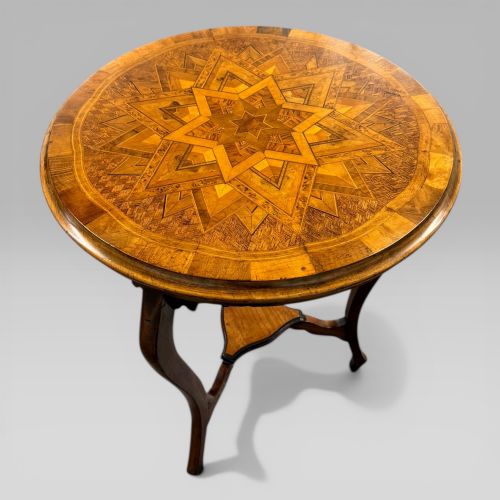


Inlaid Timber Side Table
An inlaid timber side table brings patterned woods and rich tones to a room, offering a functional surface with decorative detail.
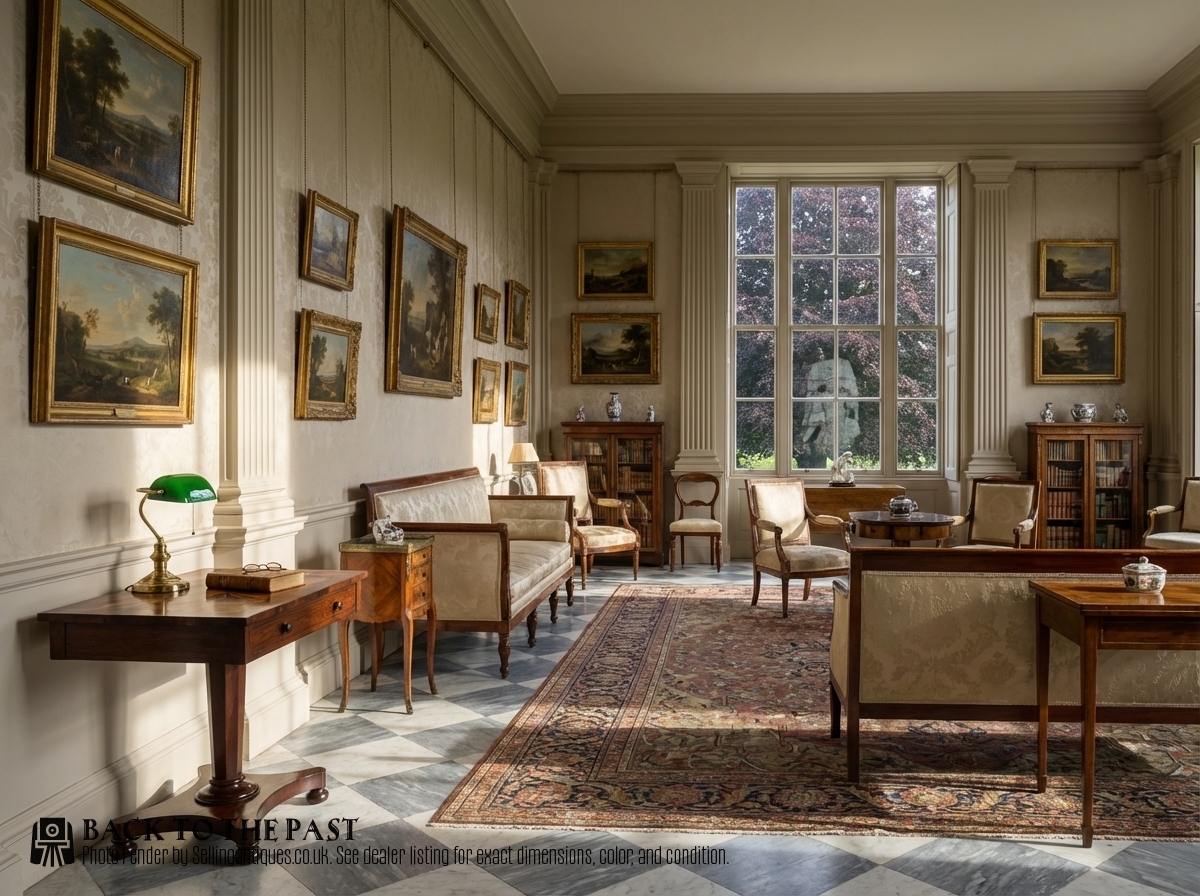
Inlaid Timber Side Table
An inlaid timber side table appears across the nineteenth century and the Georgian period, taking forms such as occasional tables, lamp tables, and small sideboards. These pieces combine structural timber with contrasting wood veneers, creating decorative surfaces suited for sitting rooms and halls.
Makers utilised various timber types including mahogany, walnut, satinwood, and rosewood, alongside native timbers and specialist specimen woods. The resulting pieces range from simple occasional tables to elaborate specimen wood creations and Chinese export furniture.
Materials and Construction
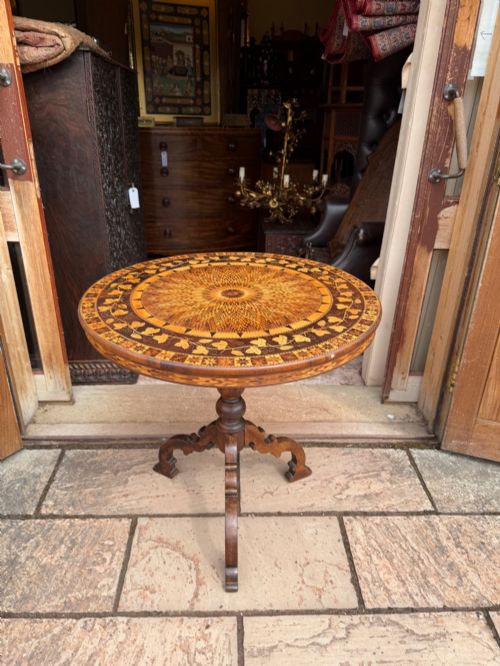
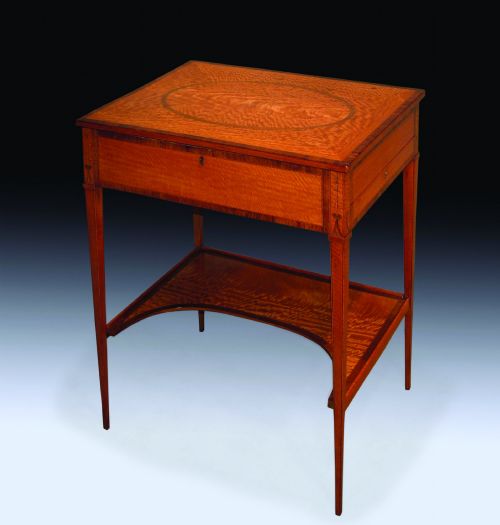
Makers constructed these tables using a timber carcase of mahogany, oak, or walnut, applied with finely cut veneers of satinwood, rosewood, and diverse specimen timbers. Geometric parquetry and intricate marquetry formed sunburst motifs, floral patterns, and pictorial scenes upon the tops.
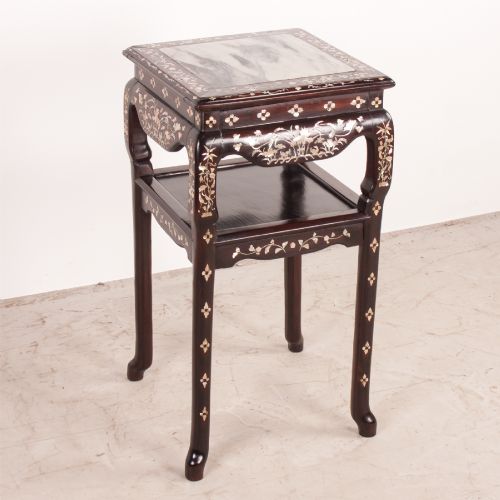
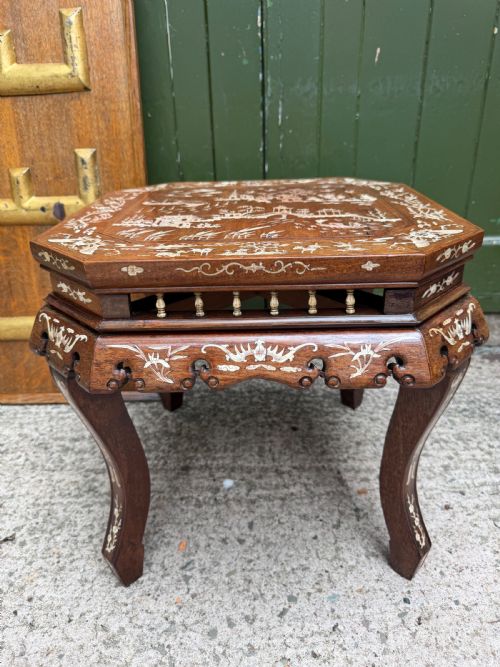
Additional detail frequently involved brass mounts, mother of pearl inlay, and marble inserts, particularly on nineteenth-century and Italian Sorrento examples. Joinery relied on traditional cabinet-making methods appropriate to each period style, from Georgian Sheraton designs to Victorian occasional pieces.
One unusual survivor plays tunes while holding your tea.
Assessing Quality and Execution
Quality rests upon the precision of the inlay work and the selection of timber figures, where tight grain and balanced contrast elevate a piece. Finer examples display meticulous alignment in geometric parquetry and careful retention of original surface patination across the timber.
Structural integrity also distinguishes finer work, seen in stable pedestals, well-fitted joints, and unwarped top panels. Pieces attributed to documented makers or specific regional traditions, such as New Zealand specimen work, command particular attention for their specialised craftsmanship.
Anton Seuffert·William Norrie
The Inlaid Timber Side Table Glossary
- Inlay
- A technique where pieces of contrasting material are inserted into a recessed wooden surface to form a pattern or picture. This method provides the primary decoration on the top surfaces of these tables.
- Marquetry
- Elaborate veneer work arranged in pictorial or decorative designs using various tinted woods and natural materials. It differs from parquetry by forming complex figurative or scrollwork motifs rather than repeating geometric tiles.
- Parquetry
- Geometric mosaic woodwork arranged in repeating patterns such as cubes, chequers, or basket weaves. This technique frequently covers the tabletops of nineteenth-century occasional and lamp tables.
- Specimen timber
- Wood collected for its distinct natural colour, grain, or regional origin, often displayed together in sample tables. New Zealand and Black Forest makers utilised native varieties to showcase botanical diversity.
- Satinwood
- A hard, durable timber with a characteristic golden-yellow sheen and smooth texture, highly favoured by Georgian and later cabinet makers. It provides a bright contrasting background for darker woods in inlaid borders.
Inlaid Timber Side Table: Frequently Asked Questions
What periods do these inlaid tables come from?
The pieces span from the Georgian era through the Victorian period and into the early twentieth century. Examples include eighteenth-century Sheraton designs alongside nineteenth-century specimen tables and Edwardian occasional pieces.
Stylistic shifts across these decades moved from formal mahogany and satinwood proportion to more eclectic Victorian and Edwardian revival interpretations, including Chinese export pieces and Sorrento work.
How were these tables used originally?
These pieces functioned as occasional tables, lamp stands, dressing tables, and small serving furniture in domestic interiors. Their decorative tops made them suitable for displaying small objects or serving drinks in reception rooms.
Larger variants like bowfront sideboards and wine coolers served dining rooms, while smaller plant stands and window tables filled corners and lit spaces near seating.
How should I care for an inlaid timber table?
Maintenance requires keeping the piece away from direct sunlight and steady heat sources to protect the delicate veneers and natural wood adhesives. Gentle dusting with a dry cloth preserves the finish without harming the inlay.
Occasional application of appropriate wax polish maintains the moisture and sheen of antique timbers like rosewood, mahogany, and satinwood.