


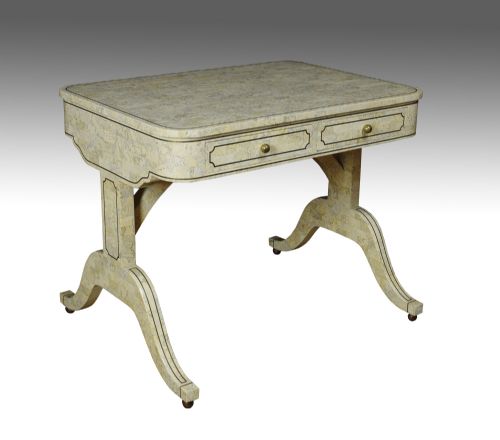

Inlaid Stone Table
An inlaid stone table brings heavy mineral colour and precise geometric or floral hardstone work into a room.
Inlaid Stone Table
An inlaid stone table relies on a solid mineral top set into wood or stone, with forms spanning occasional tables, centre tables, and larger dining pieces. These surfaces bring together contrasting hardstones, marbles, and slates, creating detailed panels that sit upon supportive bases.
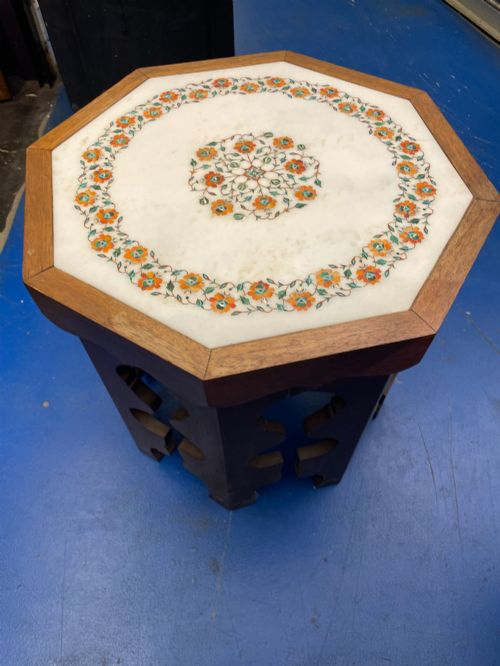
The Victorian period and the late nineteenth century dominate the examples found here, alongside Italian workshops and Anglo-Indian production. Buyers regularly encounter occasional and centre tables featuring intricate specimen tops or pietra dura work.
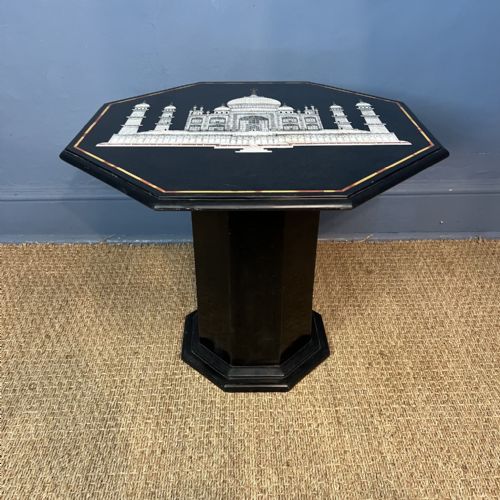
Continental revivals and Grand Tour souvenirs sit alongside Indian craftsmanship, offering everything from black marble Taj Mahal scenes to geometric mosaic patterns. Each piece uses the natural variation of stone to create permanent, decorative surfaces.
Materials and construction
Makers used marbles, slates, and semi-precious stones cut thinly and bedded into a ground of black marble, slate, or wood. Pietra dura techniques required precise sawing and fitting of stones such as malachite, lapis, and jasper to form pictorial or geometric motifs.
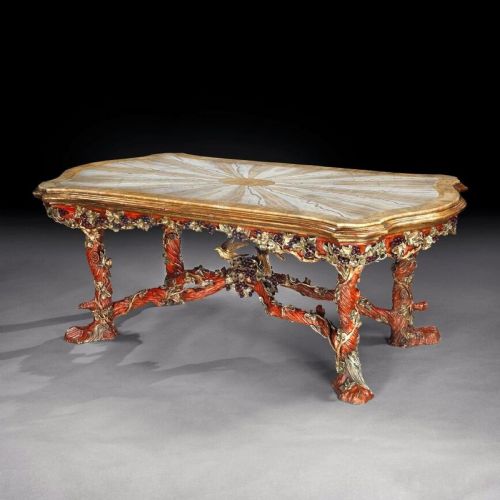
Support structures utilise mahogany, ebonised wood, burr walnut, and brass, matching the weight of the stone tops. Bases range from carved polychrome wood to cast metal and simple wooden frames designed to bear heavy mineral slabs.
Some Victorian house guests spent entire rainy afternoons identifying every different geological specimen packed into a single tabletop.
Judging quality in hardstone furniture
The supporting base must match the ambition of the top, using sound timbers and stable joinery to support the substantial weight of the marble or slate. Finer pieces show careful attention to carving and finish on the woodwork, ensuring structural harmony.
Amleto Bertoni·Woodley family·Johnstone and Jeanes
The Inlaid Stone Table Glossary
- Pietra dura
- An Italian term for the technique of inlaying cut and fitted semi-precious stones into a contrasting background slab to create pictorial designs.
- Specimen marble
- A table top assembled from numerous distinct geological samples of marble and mineral, often collected during the Grand Tour.
- Garniture
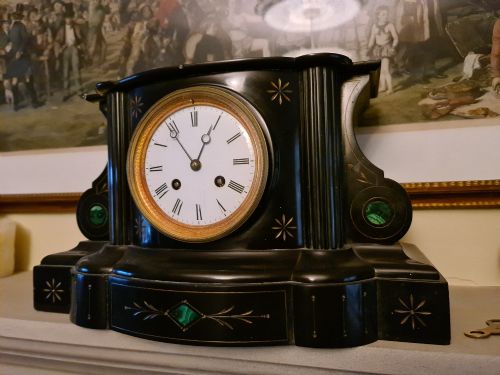
- A set of matching decorative objects, typically comprising a clock and flanking ornaments, often executed in block marble.
- Ebonised
- Wood finished with a dark stain or polish to imitate expensive ebony, frequently used to frame colourful stone inlays.
- Malachite
- A green copper carbonate mineral used in thin slices or panels for its distinctive banded patterns.
Inlaid Stone Table: Frequently Asked Questions
How do I clean an inlaid stone table?
Dust the surface regularly with a soft, dry cloth to prevent grit from scratching the polished mineral top. Avoid abrasive cleaners, vinegar, and acidic substances which can etch marble and damage the stone inlay.
For deeper cleaning, use a damp cloth with a neutral pH soap, then dry the surface thoroughly. Protect the stone from direct heat and heavy impacts that might crack the fitted mosaic panels.
Are these tables heavy?
Mineral tops made of solid marble, slate, and semi-precious stones add substantial weight to the overall furniture piece. Moving these items usually requires two people to lift the top separately from the base where possible.
Ensure that floors and rug placements can support the concentrated weight of a stone-topped table. Proper weight distribution prevents the legs from sinking into softer carpets or antique flooring.
What is the difference between mosaic and pietra dura?
Pietra dura involves carefully shaping hard stones like jasper and malachite to fit flush into a dark background slab, forming pictorial scenes or scrolls. Mosaic work often utilises smaller, uniform geometric tesserae to build up repeating patterns and architectural borders.
Both techniques require immense skill, but pietra dura generally points to specialised Florentine or Italian workshops working with high-value decorative stones.
Where were these tables made?
Production locations range widely across nineteenth-century European workshops, particularly in Italy and France, alongside British cabinet makers. Indian workshops also produced distinctive white and black marble pieces featuring inlaid semi-precious stones.
Grand Tour travellers frequently brought back Italian specimen tables, while domestic makers utilised imported stones for local Victorian interiors.