
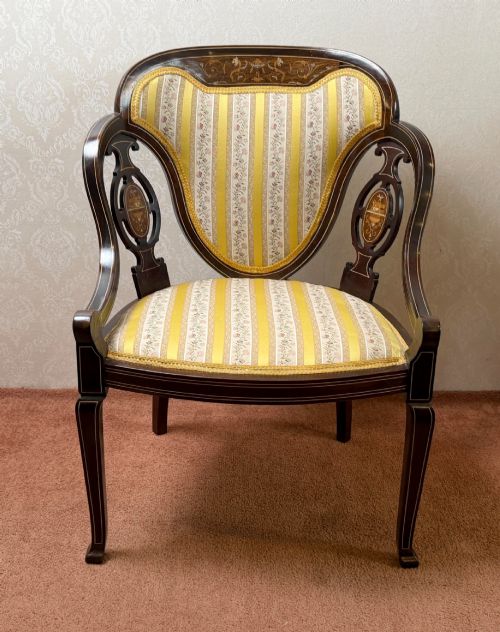
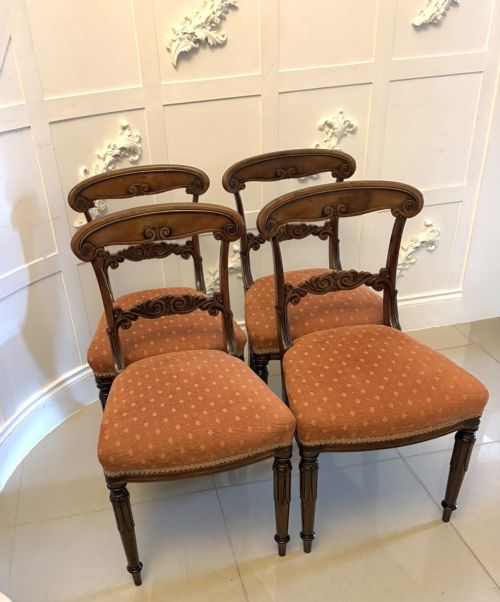
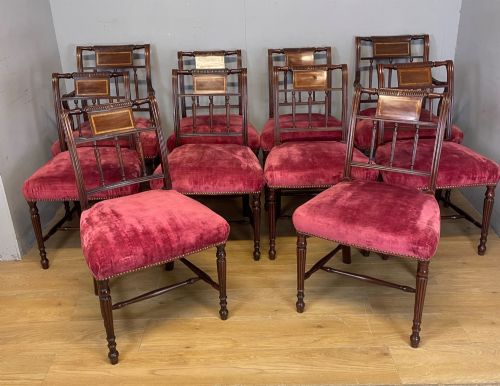
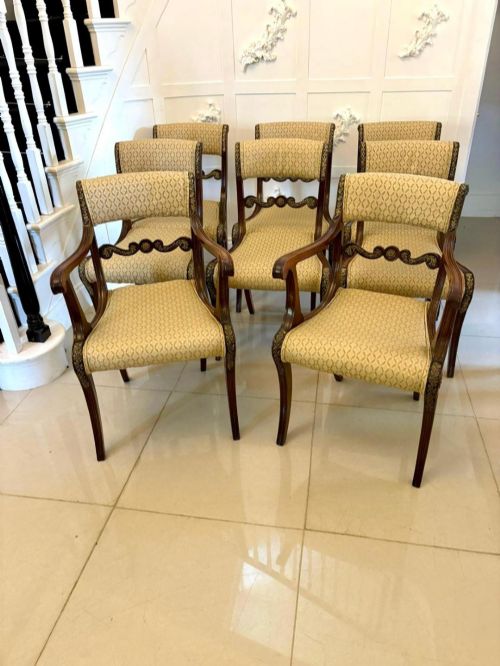

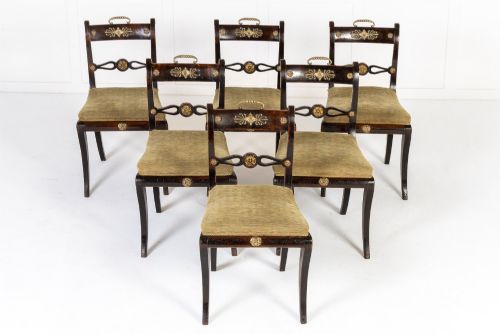
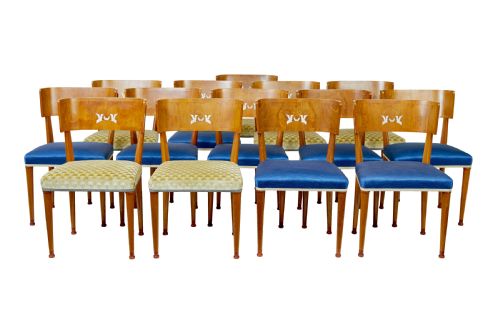
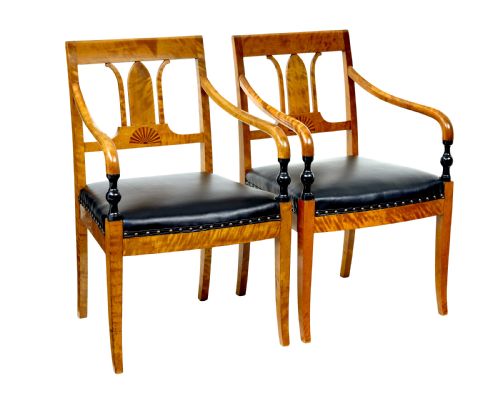
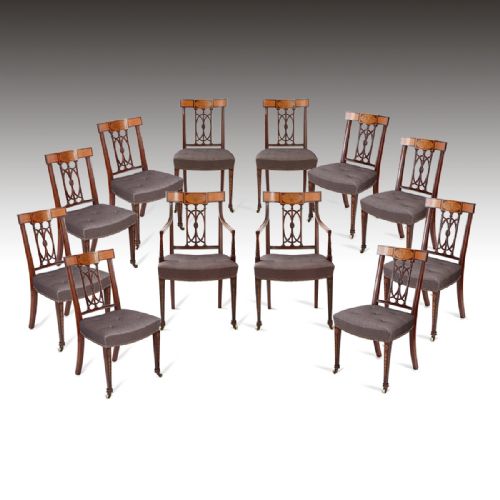
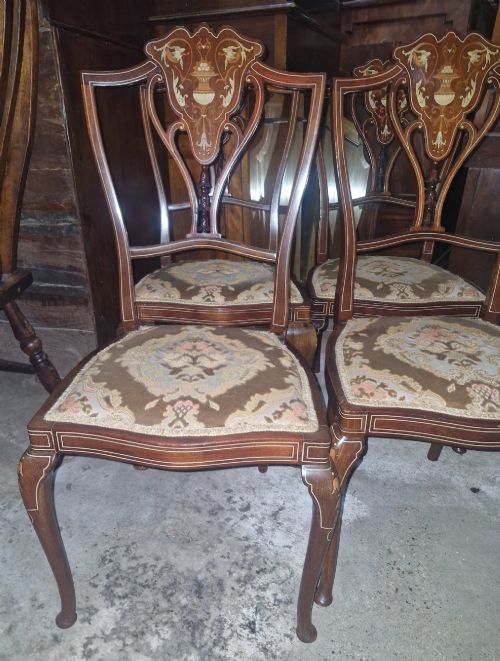
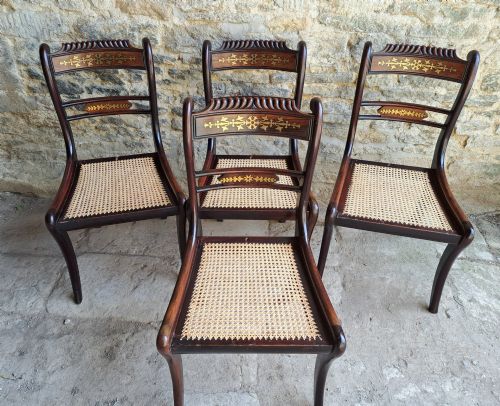
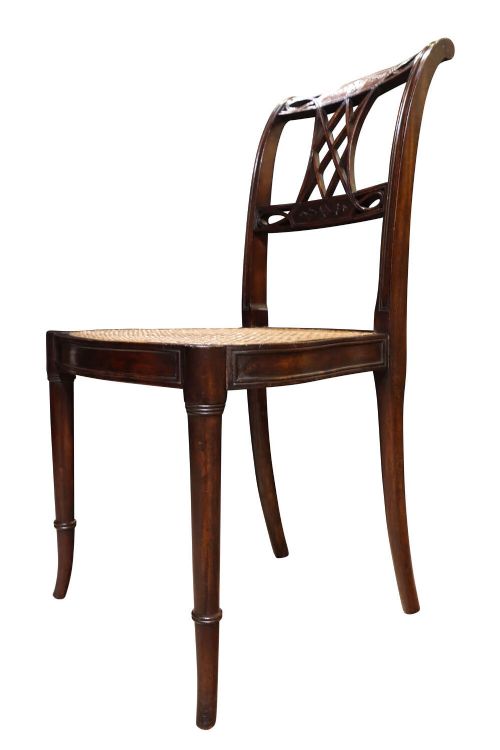
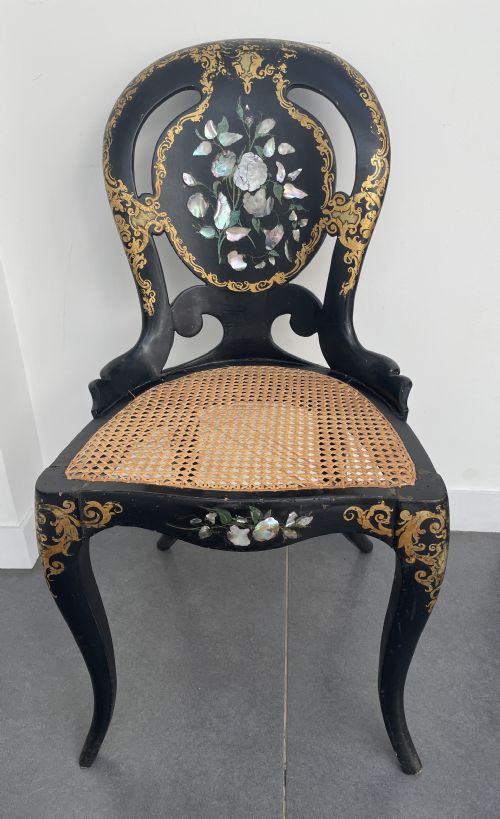
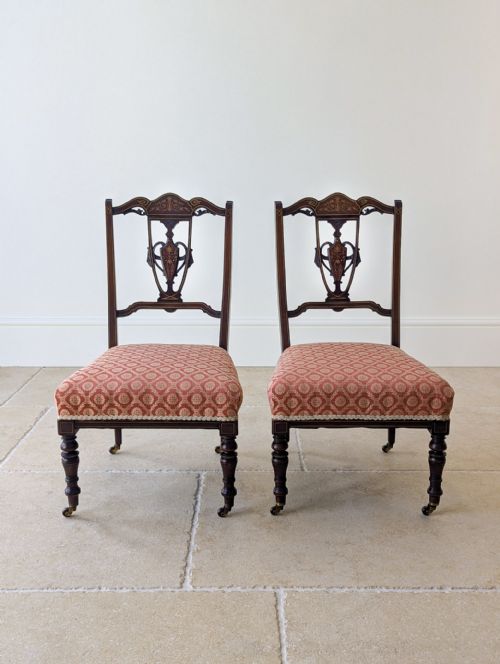
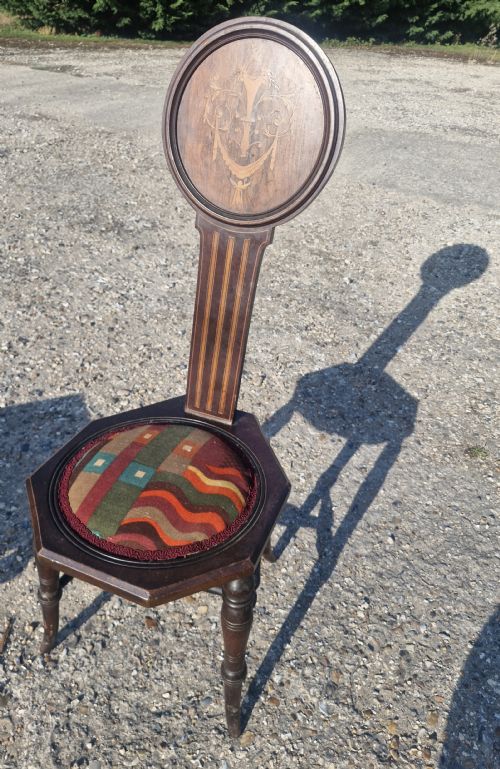
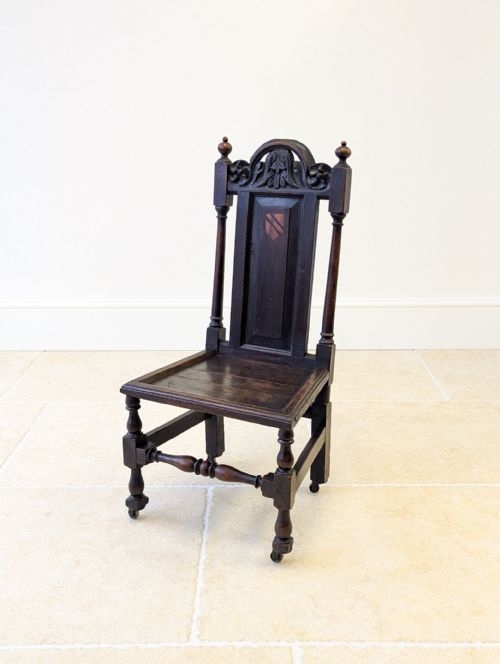
Inlaid Side Chair
When you search for an inlaid side chair, you find an adaptable form built across centuries using contrasting timbers and meticulous detail.
Inlaid Side Chair
An inlaid side chair is a light, movable seat without arms designed for use at a table, desk, or against a wall in a parlour or bedroom.
The selections span from the Georgian and Regency periods through the Victorian era to the Edwardian Sheraton Revival, alongside occasional twentieth-century examples.
Buyers encounter single examples, pairs, and matching sets, utilising mahogany, rosewood, walnut, and satinwood foundations.
How they were made
Cabinetmakers built these seats using solid foundational timbers like mahogany, oak, and walnut, frequently applying fine veneers to primary display surfaces.
Decorative elements rely on wood inlay, marquetry, and contrasting stringing, alongside brass inlay set directly into the timber or mother of pearl accents.
Upholstery includes traditional fabric and velvet coverings, cane seating panels, and structural elements shaped through scroll carving or steam bending.
Some nineteenth-century examples incorporate hidden musical movements inside the woodwork, turning a simple parlour seat into an acoustic novelty.
What varies in quality
The standard of a piece depends on the precision of the cabinetmaking and the crispness of the timber jointing.
Higher quality examples feature intricate, tightly fitted marquetry and varied contrasting timbers rather than superficial printed or painted decoration.
Original surface patination and intact structural framing distinguish superior examples from heavily restored alternatives.
The Inlaid Side Chair Glossary
- Inlay
- A technique where pieces of contrasting wood, metal, or shell are set into a recessed surface to form a flat decorative pattern.
- Marquetry
- Elaborate veneer work arranged in pictorial or geometric patterns across the entire surface of the furniture.
- Stringing
- Thin lines of contrasting wood inlay used to outline panels, legs, and borders on cabinet furniture.
- Sheraton Revival
- A late nineteenth and early twentieth-century style drawing inspiration from the lighter neoclassical designs of the eighteenth century.
- Side chair
- A small, armless chair intended primarily for dining or occasional use around a room.
Inlaid Side Chair: Frequently Asked Questions
Where did people use side chairs?
These chairs served multiple functions throughout the home, appearing around dining tables, beside desks, and along hallway walls.
Lighter bedroom and salon versions also functioned as movable seating for dressing tables or occasional parlour gatherings.
How do I date an inlaid chair?
Dating relies on combining the timber choices, structural framing methods, and stylistic revival cues visible across the piece.
Georgian and Regency items display different proportions and brass or satinwood detailing compared to Edwardian Sheraton Revival examples.
Are these chairs comfortable for daily use?
Most examples function well for dining or desk work, though period seat heights and rigid wooden backs differ from modern seating.
Padded upholstery and sprung or cane panels provide varying degrees of support depending on the specific model.
What is the difference between inlay and marquetry?
Inlay involves inserting contrasting materials into cut-out cavities within a solid wood or veneered base.
Marquetry covers larger surface areas with assembled jigsaw-like sheets of veneer to create complex pictorial or symmetrical designs.