
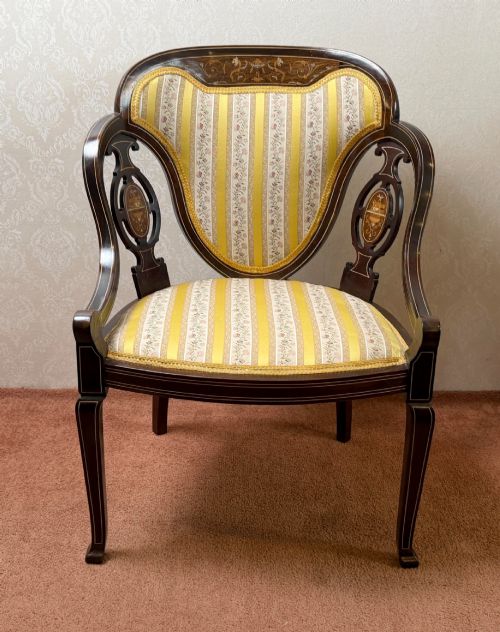
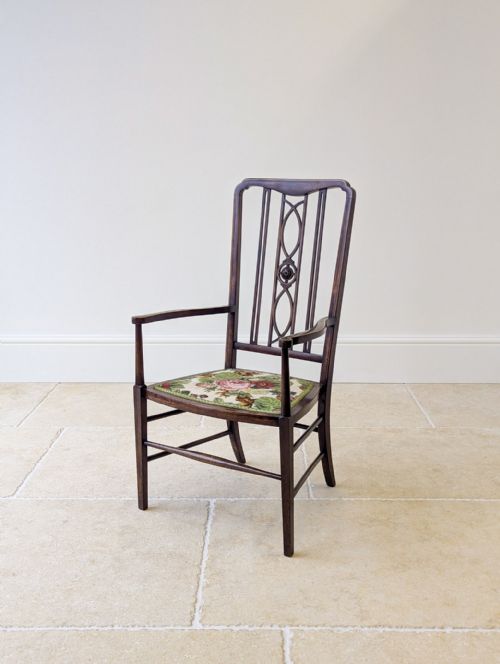
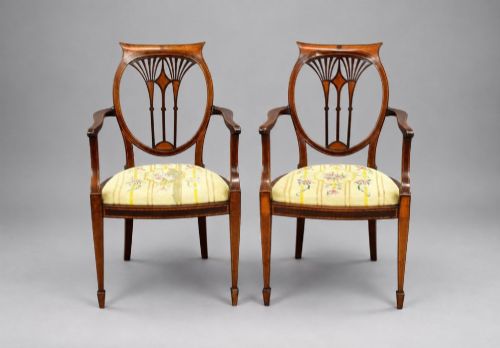
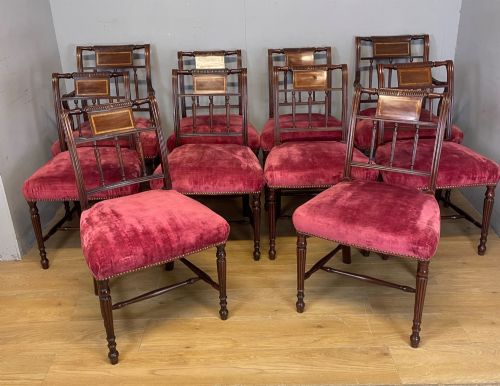
Edwardian Inlay Chairs
Edwardian inlay chairs combine crisp cabinetwork with delicate stringing, offering a practical seat and a decorative touch for the home.
Edwardian Inlay Chairs
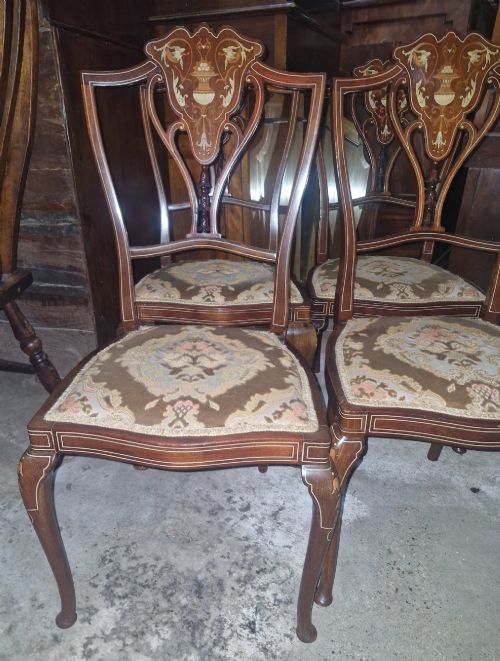
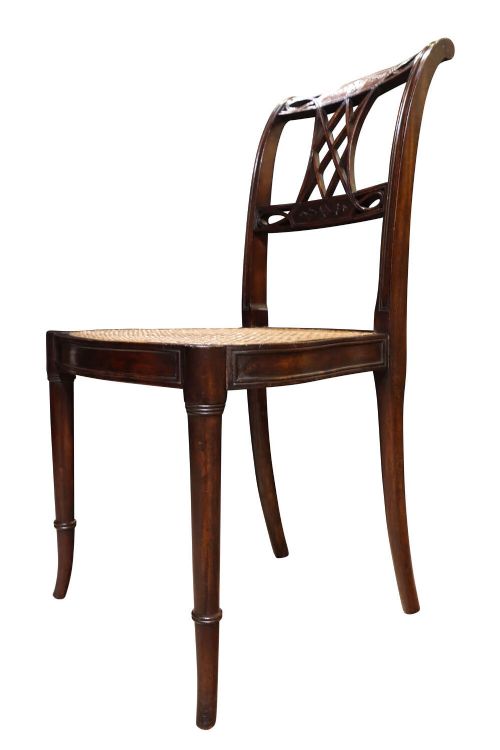
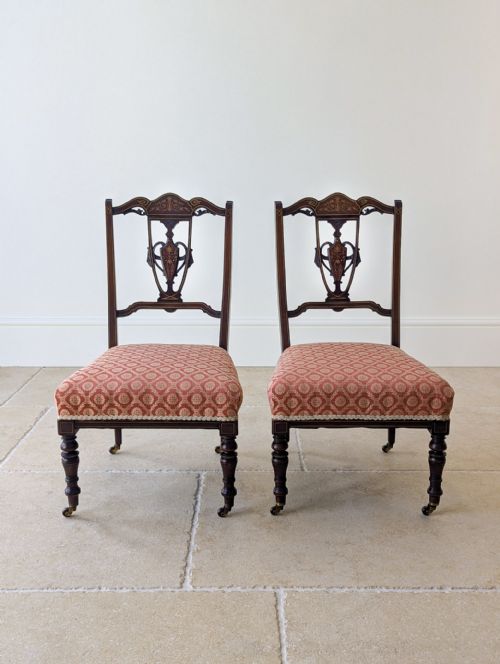
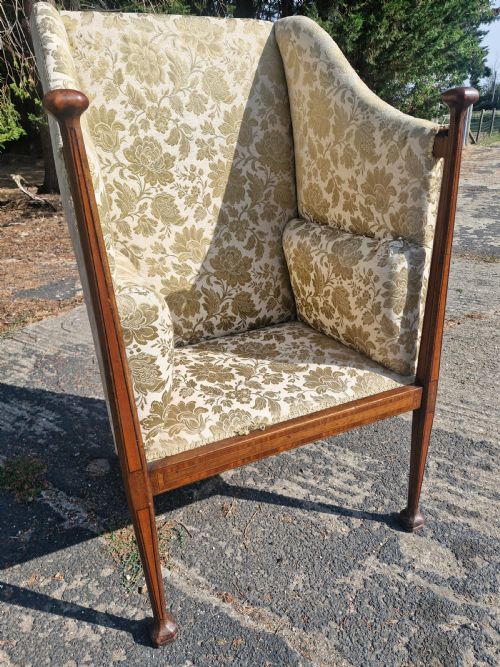
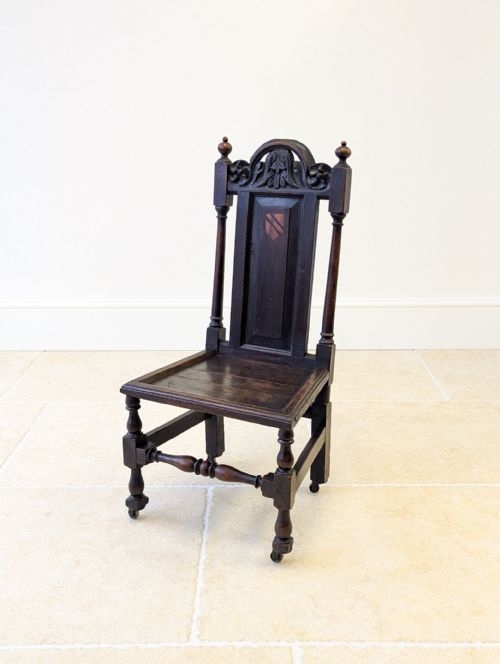
Edwardian inlay chairs are primarily seating pieces produced during the Edwardian era and surrounding decades, spanning salon chairs, dining chairs, and occasional armchairs. The form relies heavily on mahogany and satinwood structures embellished with contrasting wood details.
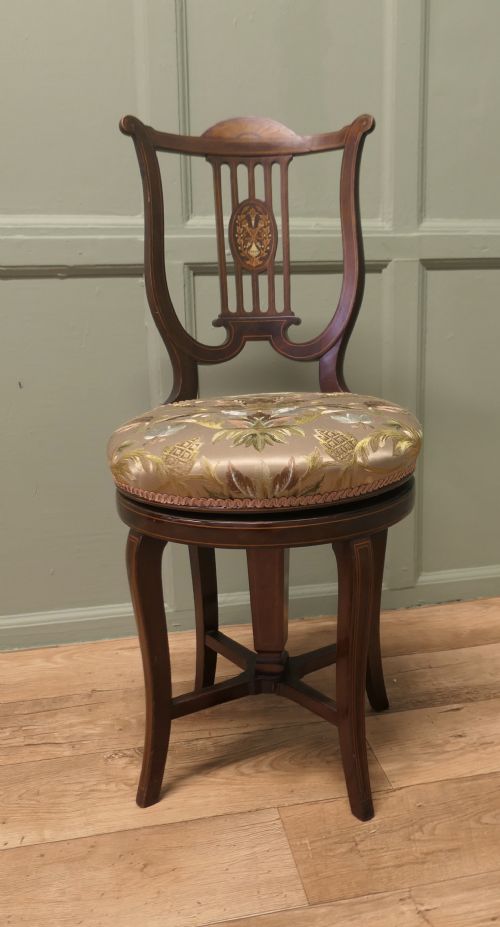
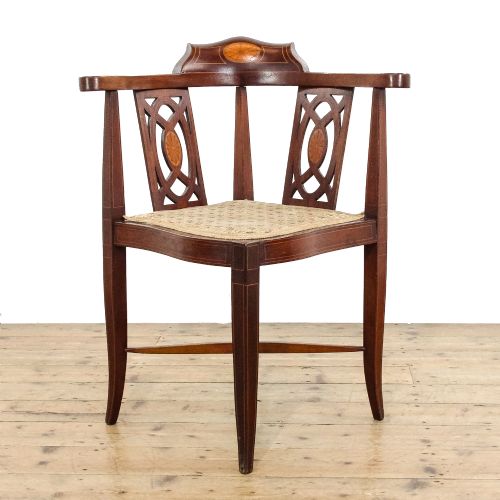
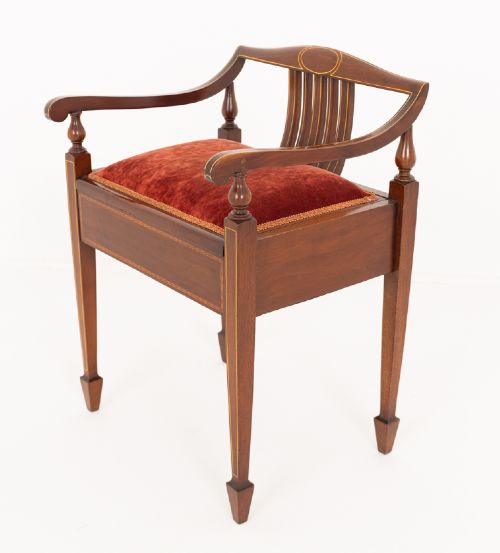
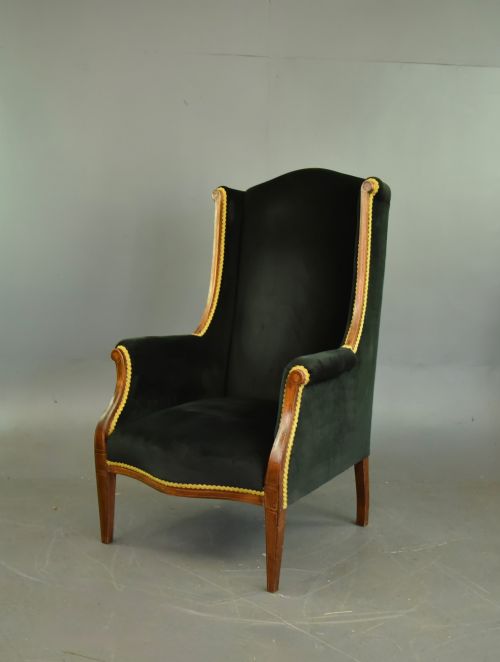
Buyers encounter numerous variations on this page, ranging from single bedroom chairs and pairs of carvers to full sets of dining chairs. Forms extend beyond standard seats to include corner chairs, nursing chairs, piano stools, and occasional chairs.
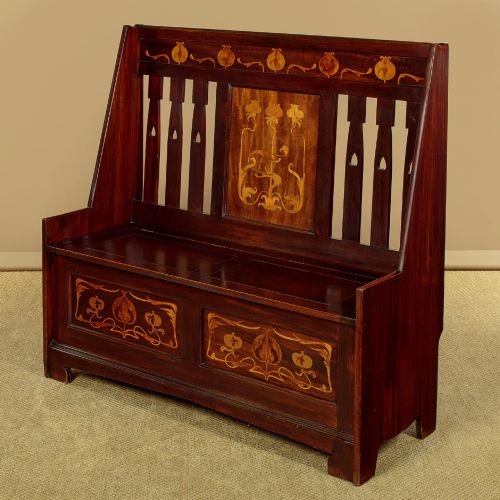
The aesthetic leans heavily on Sheraton Revival influences, though examples also surface in Art Nouveau and Arts and Crafts styles. The common thread uniting these objects is the integration of fine inlay work upon a timber frame.
How they were made
Cabinetmakers constructed the frames predominantly from mahogany, satinwood, and occasionally oak or rosewood, shaping them through turning and joinery. These timbers provided a stable base for both structural integrity and decorative surface treatments.
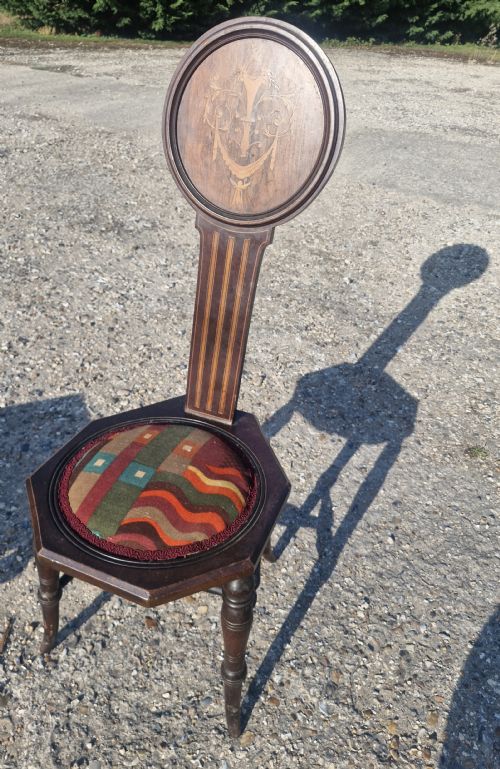
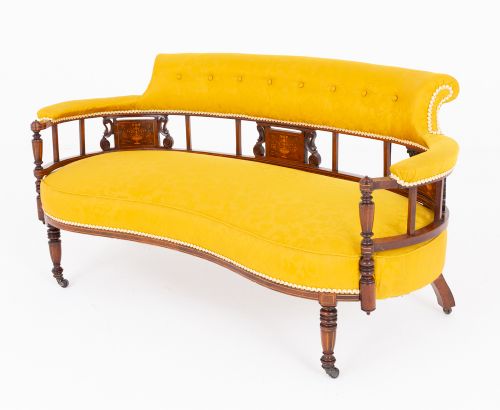
Decoration relied on wood inlay, marquetry inlay, boxwood inlay, and bone elements set flush into the primary timber. Artisans also utilised stringing to outline panels and legs, contrasting dark woods with lighter species for visual definition.
Upholstery completed many of the designs, incorporating fabric, velvet, and cane seating inserts. Brass hardware appeared on specific moving forms like piano stools and desk chairs.
Spinning chairs and harpist stools show how Edwardian seating adapted to specific domestic hobbies and musical pursuits.
What varies in quality
The crispness of the cabinetwork and the precision of the inlay separate standard examples from finer pieces. Sharp mitres in the frame and tight, gap-free fitting of the boxwood or satinwood stringing indicate superior workshop execution.
Timber selection dictates the overall presence of the chair, with highly figured mahogany and richly toned satinwood commanding greater visual depth. The integration of marquetry motifs requires careful hand-cut execution rather than mass-produced stamping.
Structural robustness in the joints and the original condition of the timber surfaces govern the longevity of the piece. Uniformity across matched sets of dining or salon chairs remains a key determinant of desirability.
James Shoolbred & Co.·Cowtan & Sons
The Edwardian Inlay Chairs Glossary
- Inlay
- A technique where pieces of contrasting material are inserted into a recessed bed on a timber surface to form a design. This method creates flat, decorative patterns across chair backs and rails.
- Marquetry
- Elaborate pictorial or geometric inlay assembled from various veneers to cover a larger surface area. It differs from simple stringing by forming complete ornamental pictures or scrolls.
- Stringing
- Very narrow lines of contrasting wood inlay used to outline panels, legs, or rails. It provides a subtle linear border characteristic of Sheraton Revival furniture.
- Satinwood
- A durable, yellowish timber prized for its lustrous grain and reflective quality. Makers utilised it extensively for contrasting panels and decorative banding.
- Sheraton Revival
- A late nineteenth and early twentieth-century design movement inspired by the neoclassical furniture of George Sheraton. The style employs slender proportions, tapered legs, and delicate inlay.
- Corner Chair
- A seat designed to fit into the corner of a room, featuring a diagonal front leg and a curved back rail supported by turned columns.
Edwardian Inlay Chairs: Frequently Asked Questions
How do I identify Edwardian inlay chairs?
Look for light wood stringing, satinwood banding, and mahogany frames typical of the early twentieth century. The proportions tend to be lighter and more slender than preceding Victorian seating.
Check for Sheraton Revival motifs such as shield backs, tapered legs, and symmetrical floral or urn inlays.
Are these chairs suitable for daily dining use?
Many Edwardian dining and salon chairs were built for daily use and remain structurally robust. However, delicate occasional chairs and antique upholstered pieces require more mindful handling.
Consider the joint stability and frame construction before selecting chairs for heavy everyday service.
What is the difference between inlay and marquetry?
Inlay generally refers to individual pieces of wood or bone fitted into carved recesses to create lines or simple shapes. Marquetry involves assembling complex veneer patterns to form pictorial or scrollwork designs.
Both techniques appear frequently on Edwardian seating to elevate the surface decoration.
How should I care for satinwood and mahogany?
Maintain timber surfaces by keeping them away from direct heat sources and strong sunlight, which can fade light woods like satinwood. Apply appropriate wax polishes sparingly to preserve the natural lustre.
Avoid excessive moisture and check upholstered elements regularly for wear.