
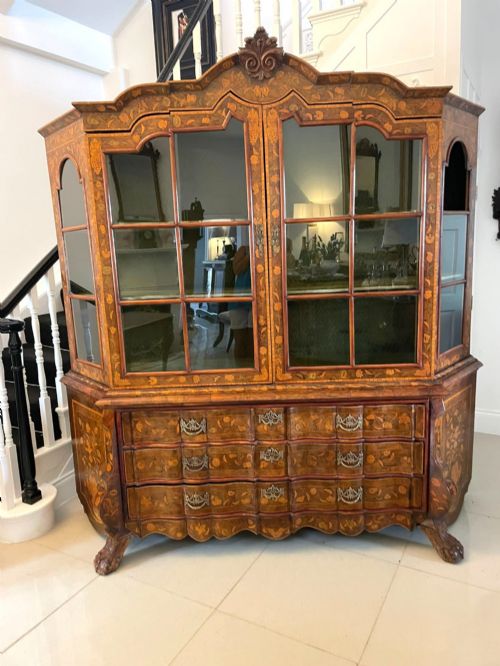
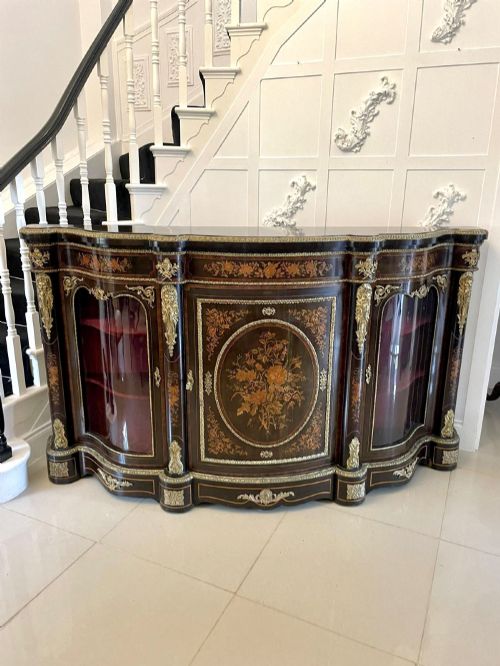
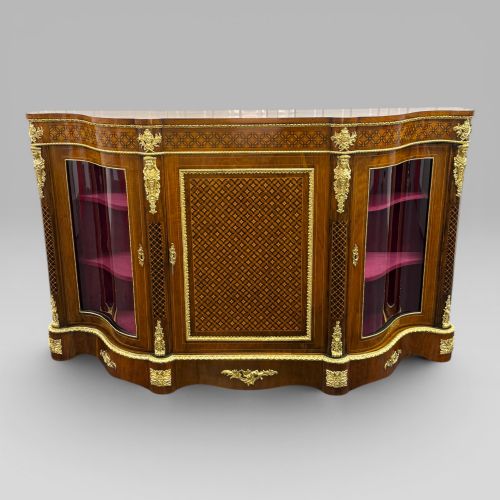
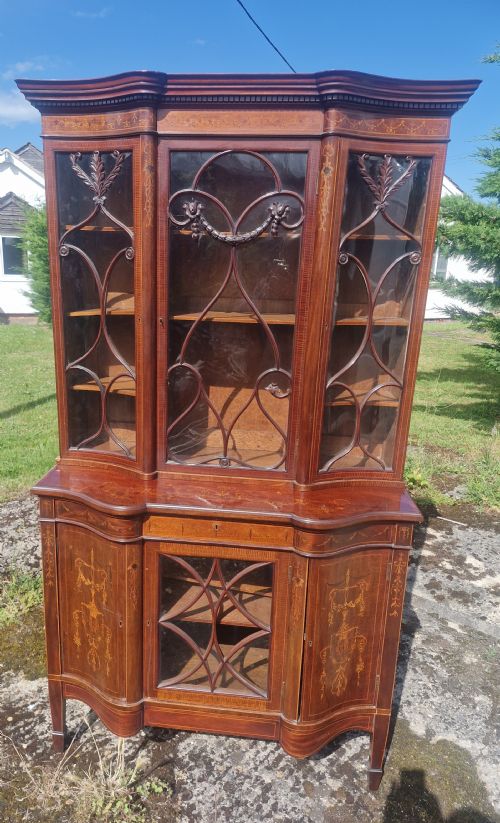


Inlaid Serpentine Glass Cabinet
An inlaid serpentine glass cabinet unites fluid cabinet-making with intricate floral marquetry, offering a refined stage for prized possessions.
Inlaid Serpentine Glass Cabinet
An inlaid serpentine glass cabinet represents a sophisticated category of nineteenth and early twentieth-century display furniture. Buyers seeking an inlaid serpentine glass cabinet will encounter notable forms including credenzas, sideboards, vitrines, and corner cabinets spanning the Victorian and Edwardian eras. These pieces combine curved wooden facades with glazed viewing areas designed to showcase decorative objects.
The prevailing examples on this page date predominantly from the Victorian and Edwardian periods, employing rich timbers such as walnut, mahogany, satinwood, and kingwood. Makers of these cabinets utilised flowing serpentine fronts to create movement, framing the glass doors with polished timber and elaborate inlay work.
Materials and construction techniques
Cabinet-makers constructed these pieces using dense carcases of mahogany, walnut, or satinwood, often veneered with choice cuts of kingwood and burr walnut. The distinctive serpentine curves required expert timber bending and shaping to achieve the undulating front profile without compromising structural integrity.
Surface decoration relies heavily on floral marquetry and fruitwood inlay, complemented by cast ormolu mounts that highlight key architectural junctions. Glazing is fitted into slender timber or brass-framed doors, while internal shelving provides dedicated space for display.
The listings span Victorian and Edwardian periods from 1860 to 1910, utilising primary woods including mahogany, walnut, satinwood, and kingwood.
Distinguishing factors in craftsmanship
Quality in these cabinets rests upon the precision of the marquetry and the fluidity of the serpentine contour. Finer examples display meticulous fruitwood and floral inlay work that sits completely flush with the surrounding veneer, alongside substantial fire-gilded ormolu mounts rather than plain cast brass.
The calibre of the underlying timber heavily influences value, with figured walnut, rich mahogany, and finely grained satinwood marking superior workshops. Cabinet-making pedigree also plays a role, with documented pieces by makers such as Edwards and Roberts demonstrating exceptional joinery in the internal framing and door alignment.
Edwards and Roberts·Maison Gagneau
The Inlaid Serpentine Glass Cabinet Glossary
- Serpentine
- A furniture front profile characterised by a central convex curve flanked by two concave curves. This undulating shape requires advanced woodworking skill to execute properly.
- Marquetry
- The art of applying small pieces of veneer to a structure to form decorative patterns and pictures. Floral motifs are especially common on these cabinets.
- Ormolu
- Gilded bronze mounts applied to furniture edges and corners for ornamentation. They provide metallic contrast against the polished timber surface.
- Credenza
- A low cabinet, frequently featuring glazed side compartments and a central door. They serve as prominent display and storage items in principal rooms.
- Vitrine
- A glass-fronted display cabinet designed specifically for the exhibition of porcelain and small artefacts. The glass panels permit all-round visibility of the contents.
Inlaid Serpentine Glass Cabinet: Frequently Asked Questions
Where should I place a serpentine glass cabinet?
These cabinets suit principal reception rooms, hallways, or dining spaces where their curved profiles and glazed doors can be fully appreciated. Positioning them away from direct sunlight protects vulnerable timber veneers and historic finishes.
Ensure the floor is level so the doors hang true and latch correctly within their frames. Adequate clearance is necessary for opening glazed doors without obstruction from surrounding furniture.
How do I care for the wood and ormolu?
Dust the cabinet regularly with a soft, dry cloth to prevent particulate accumulation on the delicate marquetry and mounts. Avoid applying modern silicone-based polishes, which can penetrate aged timber finishes and cause long-term discolouration.
Maintain a stable indoor environment free from extreme humidity fluctuations to prevent timber movement or veneer lifting. Professional conservation wax applied sparingly preserves the natural lustre of the mahogany, walnut, or satinwood.
How do I distinguish Victorian from Edwardian pieces?
Victorian cabinets, particularly those from the mid to late nineteenth century, often feature heavier figured walnut, darker tones, and robust ormolu mounts. Their stylistic cues frequently draw on French revivalism and elaborate floral marquetry.
Edwardian examples tend towards lighter satinwood and mahogany constructions, reflecting Sheraton Revival influences with more restrained inlay and slender proportions. Cabinet feet and internal shelving also display lighter scantlings suited to turn-of-the-century interiors.
What items are suitable for display inside?
Glass cabinets historically housed prized collections of porcelain, glassware, miniatures, and silver objects. The internal glass or wooden shelving safely supports delicate ceramics and small decorative pieces.
Overloading the shelves should be avoided to protect the historic framing of the interior. Curating a selective arrangement maintains visual balance behind the glazed doors.