
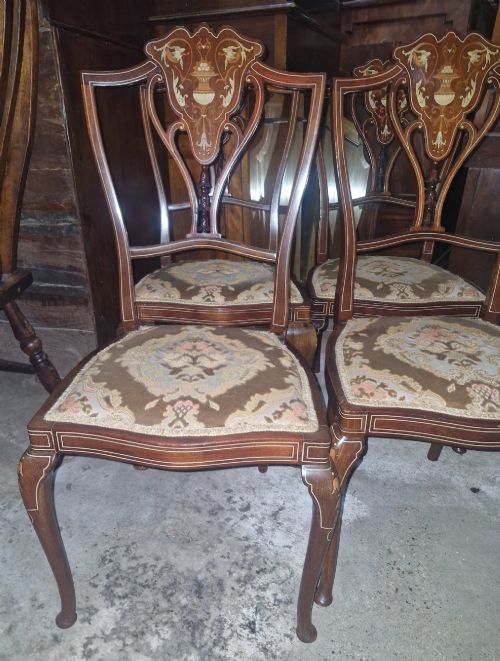
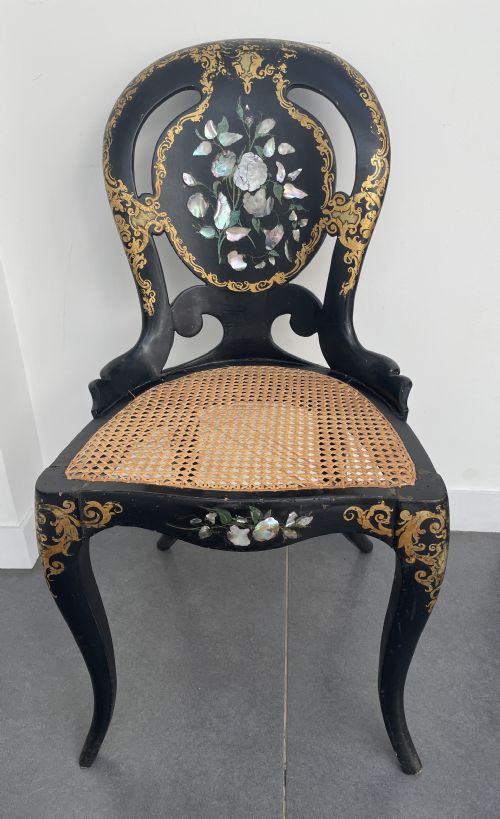
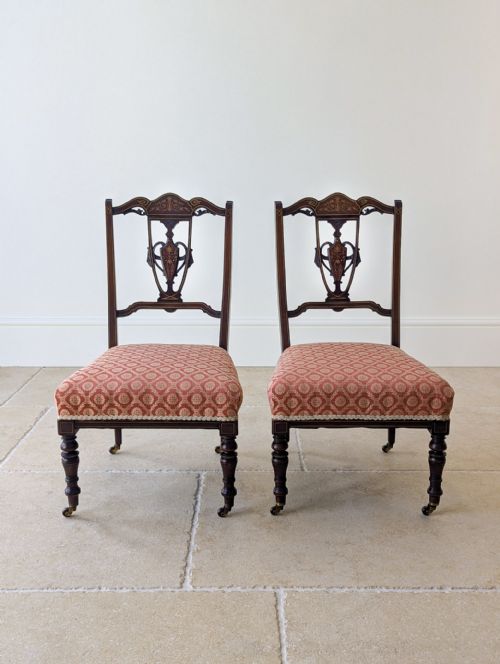
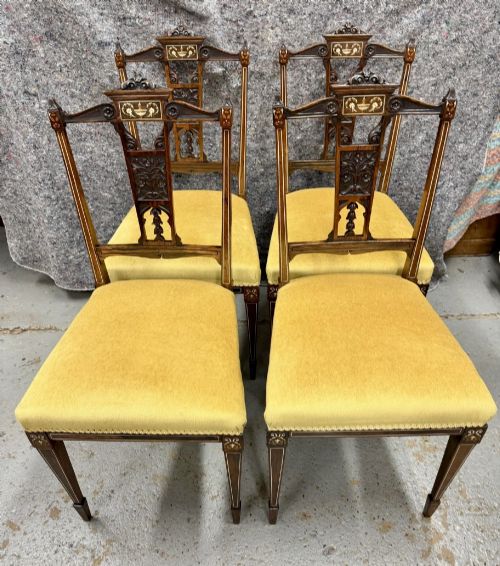
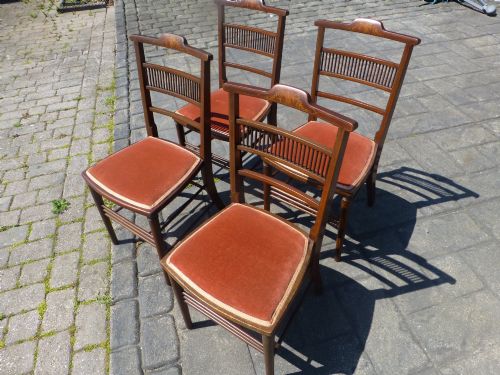


Inlaid Salon Chairs
Inlaid salon chairs bring decorative warmth to a reception space, combining slender timber frames with precise floral or geometric wood ornamentation.
Inlaid Salon Chairs
When searching for inlaid salon chairs, buyers encounter formal seating designed primarily for reception rooms and parlours during the late nineteenth and early twentieth centuries. These decorative seats typically appear as single occasional chairs, matched pairs, or larger sets intended to furnish formal entertaining spaces alongside matching settees.
The dominant aesthetic belongs to the Edwardian period and late Victorian era, with Sheraton Revival styling influencing much of the output. Pieces range from open armchairs and tub seats to compact side chairs and corner chairs constructed for lighter domestic use rather than heavy dining.
How they were made
Cabinetmakers constructed the structural frames using dense timbers such as mahogany and rosewood, often turned or shaped to create slender profiles. Surface decoration relied heavily on contrasting veneers, incorporating satinwood, boxwood, and mother of pearl into precise marquetry and string inlay motifs.
Upholstered elements frequently utilised silk, velvet, or contemporary fabric to pad seats and backs. Frame assembly combined traditional joinery with detailed veneer work set flush into the primary timber.
Listings feature mahogany, rosewood, and satinwood foundations ornamented with marquetry, string inlay, and mother of pearl details.
What varies in quality
The distinction between standard and superior pieces rests upon the crispness of the timber inlay and the density of the marquetry work. Elaborate floral arrangements utilising diverse contrasting woods require significantly greater skill than basic linear stringing.
Frame selection equally dictates standing, where richly grained rosewood or finely figured mahogany elevates a piece above standard walnut or mixed secondary timbers. Original upholstery detailing and structural rigidity further separate mass-produced output from finer artisanal commissions.
The Inlaid Salon Chairs Glossary
- Marquetry inlay
- Decorative veneer work assembled to form pictorial or geometric patterns on the surface of furniture. It differs from simple banding by creating complex pictures using various tinted woods.
- Sheraton Revival
- A late nineteenth-century design movement inspired by the neoclassical furniture of George Sheraton. It relies on symmetrical geometry, slender proportions, and delicate contrasting inlay.
- Tub armchair
- A seating form featuring a rounded, enclosed back that flows continuously into low arms. This configuration provided comfortable support in formal parlour settings.
- String inlay
- Thin lines of contrasting timber embedded into grooves cut into the primary wood surface. This technique creates simple geometric borders around panels and chair rails.
Inlaid Salon Chairs: Frequently Asked Questions
Where were inlaid salon chairs used?
These chairs furnished fashionable nineteenth and early twentieth-century drawing rooms and reception spaces where hosts entertained guests. Their lighter frames allowed them to be repositioned easily around a room as needed.
Unlike heavy dining furniture, these seats prioritised decorative elegance and refined occasional use over heavy daily service.
How do I identify Edwardian examples?
Edwardian pieces frequently display lighter mahogany or rosewood frames paired with refined neoclassical or Sheraton Revival motifs. The inlay work often uses satinwood and boxwood to create delicate floral swags and urns.
Proportions tend to be slender and graceful, reflecting the lighter domestic interior styles popular around the turn of the twentieth century.
What is the difference between side chairs and armchairs?
Side chairs lack arms and were designed to stand compactly against walls or around occasional tables when not occupied. Armchairs feature supportive side rests and often served as principal seats within matching parlour suites.
Both forms shared identical decorative vocabularies and inlay patterns when produced as part of larger matching sets.
How should I care for upholstered salon chairs?
These historic seats require placement away from direct sunlight and strong heat sources to prevent the timber veneers and delicate fabrics from drying out. Regular dusting with a soft dry cloth protects the polished wood surfaces.
Professional conservation is recommended for antique silk or velvet upholstery to preserve the original textile integrity.