
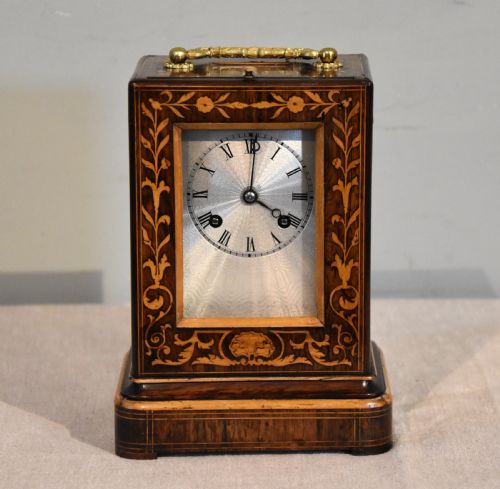


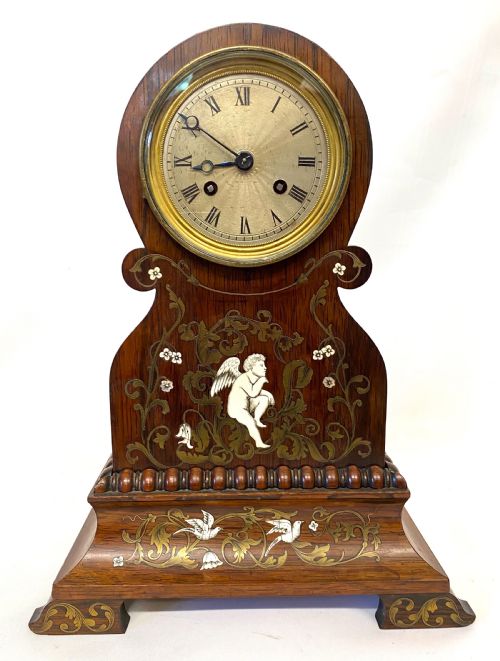


Inlaid Rosewood Timepiece
An inlaid rosewood timepiece offers rich grain and precise craft, bringing classic warmth and mechanical charm to any room.
Inlaid Rosewood Timepiece
An inlaid rosewood timepiece combines dark, richly figured timber with contrasting stringing and marquetry, serving as both a functional clock and a striking decorative object. When people search for an inlaid rosewood timepiece, they encounter a range of forms spanning mantel clocks, portico clocks, and wall-mounted drop-dial clocks.
Most examples originate from the nineteenth century, encompassing Regency, Victorian, and French periods. Buyers frequently meet mantel and portico formats featuring delicate brass, lemonwood, boxwood, or satinwood inlay alongside enamel dials and glassbezels.
Wall-mounted variants also appear, including octagonal and fusee London wall clocks housed in rosewood cases. These pieces showcase a blend of British and French workshop traditions, often incorporating Ormolu mounts or silvered metal details.
How they were made
Cabinetmakers constructed the foundational cases from solid rosewood or applied dense rosewood veneers over secondary timbers. They then painstakingly channelled the timber to embed fine stringing and intricate marquetry using contrasting materials such as lemonwood, boxwood, and satinwood.
Metal ornamentation played a crucial role in the construction of these timepieces, with cast brass, ormolu, and silvered metal integrated into the bezels, dial surrounds, and architectural columns. Enamel or metal dials were fitted behind protective glass doors, completing housings designed to protect the mechanical movements within.
Listings feature nineteenth-century rosewood timepieces utilising brass, lemonwood, and ormolu across French and British styles.
What varies in quality
The refinement of the cabinetry and the precision of the contrasting inlay separate standard examples from finer works. Crispness in the botanical or geometric marquetry and the harmonious integration of boxwood or lemonwood lines indicate superior workshop execution.
The sophistication of the hardware and dial architecture also distinguishes different grades of these timepieces. Heavy cast ormolu mounts, finely rendered enamel or silvered dials, and named maker signatures on the movement or face elevate the stature of the piece.
Henry Marc·Kleyser of London·Dumont·Malecot of Paris·J Fisher Esq
The Inlaid Rosewood Timepiece Glossary
- Portico clock
- A mantel clock featuring a distinctive architectural case supported by four columns, often associated with French nineteenth-century design. These structures frequently incorporate rosewood veneer and contrasting stringing.
- Fusee
- A conical pulley used in clock movements to maintain even driving force as the mainspring unwinds. This mechanism is commonly found in higher-grade British wall clocks.
- Marquetry
- The art of applying decorative pieces of veneer to a structure to form intricate pictorial or geometric patterns. Makers utilised woods like lemonwood and boxwood within rosewood grounds.
- Ormolu
- Gilded bronze ornamentation applied to furniture and clock cases. It provides a bright metallic contrast against dark rosewood surfaces.
- Drop-dial clock
- A wall-mounted timepiece featuring an extended lower wooden case designed to enclose a pendulum swing. These clocks often utilise rosewood surrounds with brass bezel frames.
Inlaid Rosewood Timepiece: Frequently Asked Questions
How do I wind my timepiece?
Most mechanical timepieces require a key inserted into the dial face to tension the mainspring at regular intervals. Care must be taken not to over-wind the movement.
Consult the specific winding requirements of the escapement to ensure consistent timekeeping without placing undue stress on the internal brass gears.
Where should I place a portico clock?
Portico clocks suit stable, flat surfaces such as mantelpieces, heavy sideboards, or dedicated display consoles. Their architectural framing benefits from adequate space to be viewed from the front.
Keep these timepieces away from direct sunlight and damp environments to protect the rosewood veneer and delicate stringing from warping.
How do I identify a Regency period clock?
Regency pieces often display restrained classical proportions, robust rosewood cases, and precise brass inlay work. The overall design language draws on ancient Roman and Greek motifs interpreted through early nineteenth-century British or French aesthetics.
Examining the interior movement and construction methods helps confirm the era alongside the exterior stylistic cues.
Can I hang a rosewood wall clock on any wall?
Wall clocks require secure mounting directly into wall studs or appropriate masonry fixings to support their weight. Rosewood and glass housings demand a stable vertical surface to prevent operational strain on the movement.
Ensure the location experiences minimal vibration from doors or heavy foot traffic to keep the pendulum swinging evenly.