
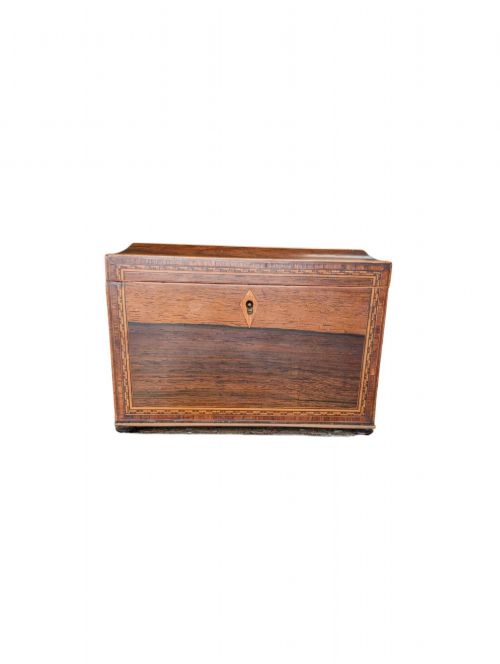
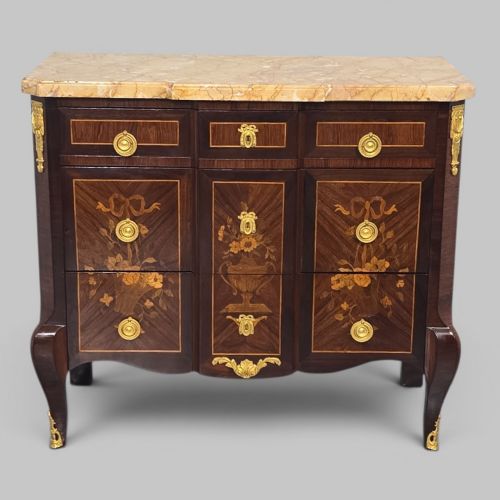


Inlaid Rosewood Storage
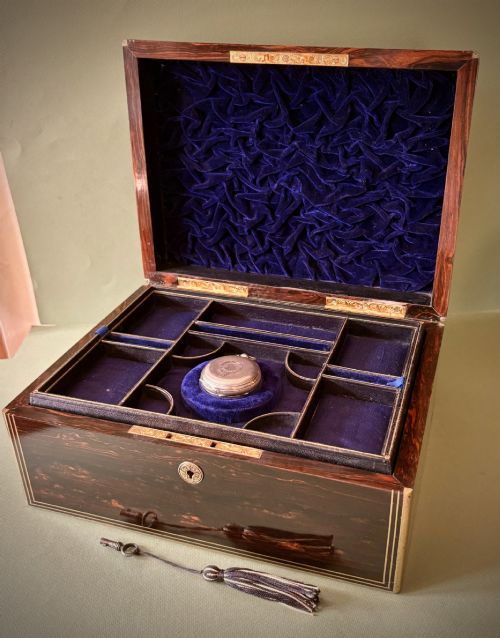
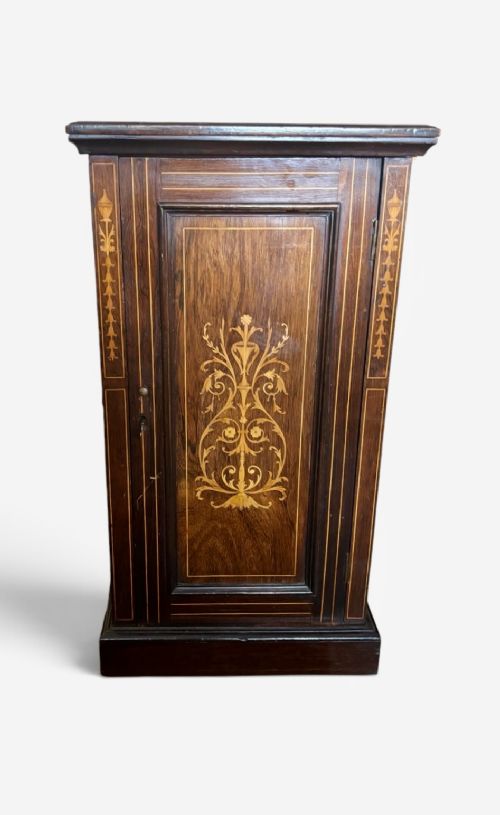
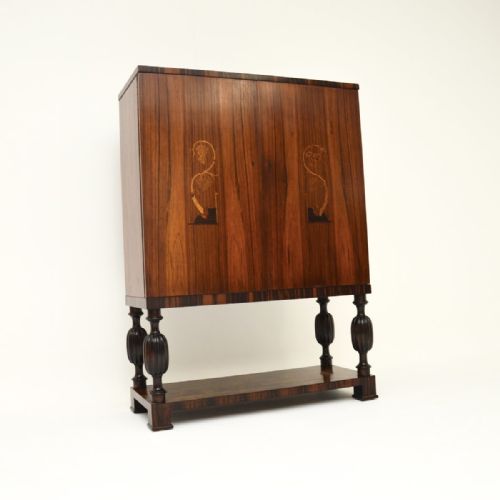
These pieces of inlaid rosewood storage combine rich timber with precise contrast work, offering practical containment for valuables and papers.
Inlaid Rosewood Storage
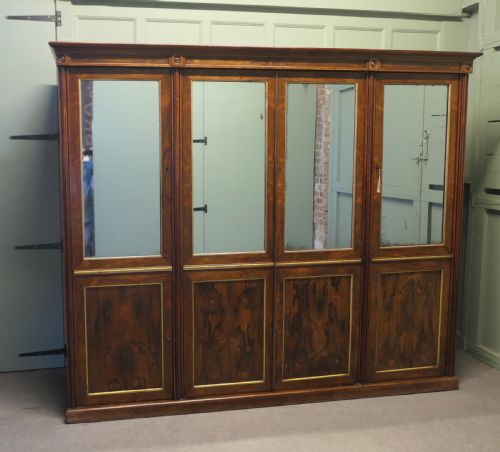
Inlaid rosewood storage spans a variety of domestic containers and larger furniture, ranging from small desktop caddies to substantial cabinets and wardrobes. Buyers encounter items produced across the Regency and Victorian eras, alongside later twentieth-century examples.
Smaller portable items such as tea caddies, sewing boxes, and trinket cases appear frequently alongside larger furnishings like chiffoniers, music cabinets, and chests of drawers. These objects originate from English, French, and Swedish workshops.
The phrase encompasses both functional storage for personal items and decorative display pieces designed to anchor a room. Each form reflects the specific domestic habits of its period of manufacture.
Materials and technique
Construction relies heavily on dense rosewood as a primary dark timber, often paired with contrasting lighter woods such as satinwood and boxwood for detailed inlay. Brass banding, mother-of-pearl, and ormolu mounts add further metallic contrast to surfaces.
Marquetry and parquetry techniques create intricate geometric patterns and pictorial scenes across lids, doors, and drawer fronts. Cabinetmakers set these contrasting veneers into the rosewood ground using traditional hot animal glues.
Tunbridge ware pieces utilise thousands of tiny tinted wood blocks assembled to form mosaic pictures, applied directly to the core structure of boxes and caddies.
Materials recorded across the inventory include rosewood, boxwood, satinwood, brass, mother-of-pearl, and marble.
Distinctions in manufacture
The finesse of the inlay work separates ordinary items from superior examples, with tighter joints and more complex pictorial designs demanding greater skill. Precision in cutting contrasting satinwood and boxwood dictates the sharpness of geometric and floral motifs.
The choice of rosewood grain and the matching of veneer patterns across multiple drawers or cabinet doors indicate the care taken by the original maker. Substantial brass hardware and intact internal fittings contribute to the integrity of the piece.
Edwards and Roberts
The Inlaid Rosewood Storage Glossary
- Marquetry
- Decorative veneer work forming pictorial patterns or scenes using various coloured woods. Craftsmen cut these designs from thin sheets of timber and fit them together before gluing.
- Parquetry
- Geometric mosaic woodwork arranged in regular patterns like cubes, stripes, or chequers. This technique provides durable and decorative surfaces for box lids and cabinet doors.
- Sarcophagus
- A monumental coffin shape with a domed lid, commonly adopted for nineteenth-century tea caddies and documentation boxes. These vessels often feature lion mask handles and paw feet.
- Tunbridge Ware
- Woodware decorated with mosaic patterns made from tiny segments of different coloured woods glued together. The method creates detailed images of flowers, butterflies, or geometric borders.
- Chiffonier
- A low sideboard or cabinet developed in the Regency period featuring enclosed shelving below. They frequently incorporate brass inlay and mirrored doors.
Inlaid Rosewood Storage: Frequently Asked Questions
What is a sarcophagus tea caddy?
A sarcophagus tea caddy is a small lidded box shaped like an ancient stone coffin, featuring a pitched or domed lid. These containers held expensive loose leaf tea safely under lock and key.
Craftsmen built them in rosewood and embellished them with brass inlay or carved paw feet to sit prominently on a table or sideboard.
How do I care for rosewood furniture?
Rosewood requires stable indoor humidity away from direct sunlight to prevent the dense timber from drying or splitting. Regular dusting with a soft, dry cloth preserves the polished surface.
Avoid applying silicone polishes, as they build up over the delicate marquetry and inlay work over time.
What distinguishes Regency rosewood cabinets?
Regency cabinets in rosewood typically feature clean architectural lines, brass stringing, and brass lattice grilles on glazed doors. The timber choice emphasises dark, heavily grained surfaces contrasted with metallic mounts.
These pieces served as sideboards or chiffoniers in formal dining rooms and drawing rooms.
What was a music cabinet used for?
Music cabinets provided specialised storage for sheet music, scores, and songbooks in nineteenth-century drawing rooms. They incorporated internal drop-front shelves or vertical compartments to keep paper organised.
Cabinetmakers housed these utility pieces in decorative rosewood cases with marquetry panels to match other reception room furniture.