


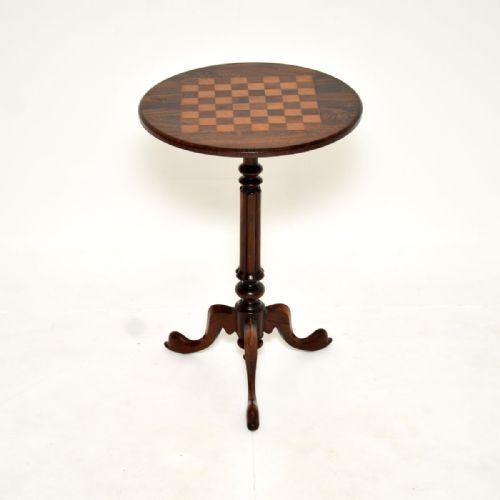
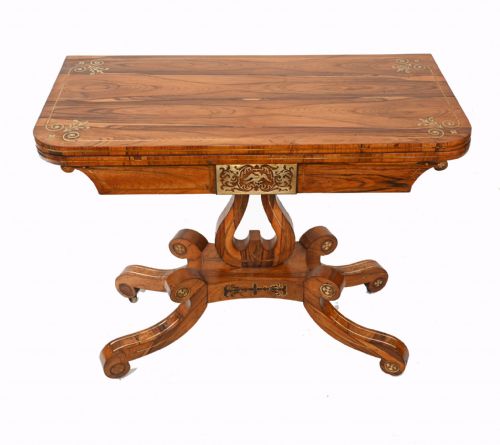
Inlaid Rosewood Gaming Table
An inlaid rosewood gaming table brings rich timber and intricate contrasting details into a room, serving as both a practical surface for play and a striking centrepiece.
Inlaid Rosewood Gaming Table
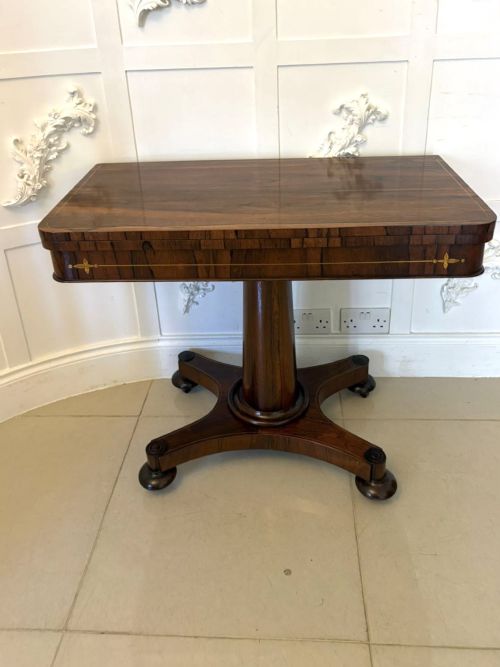
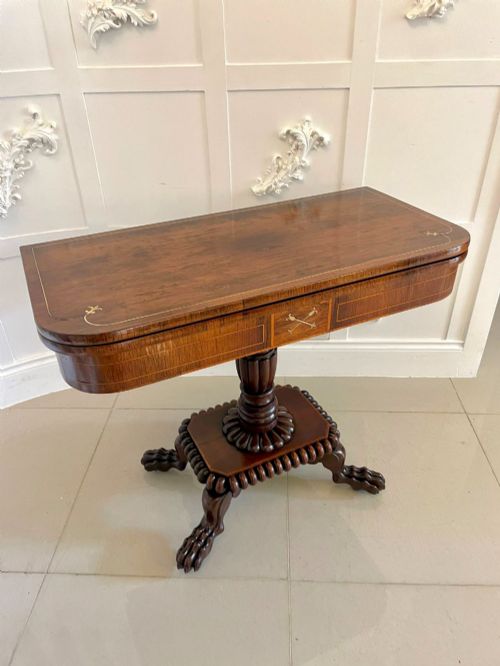
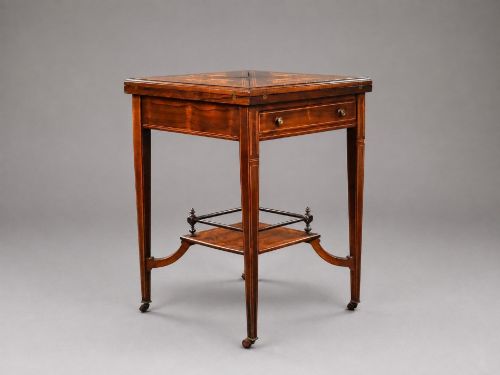
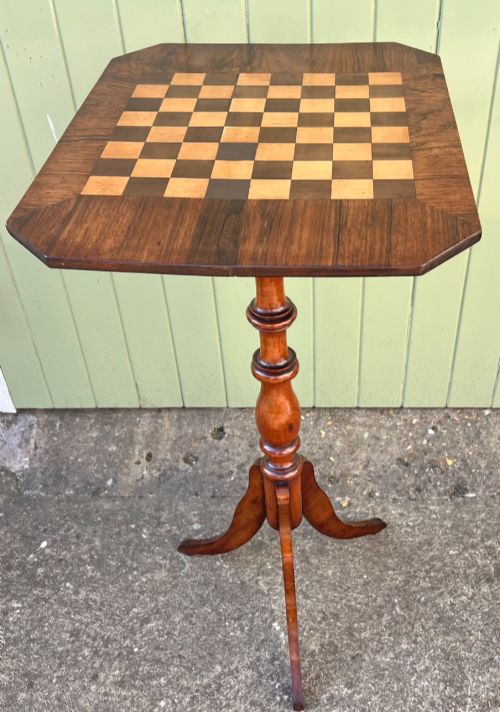
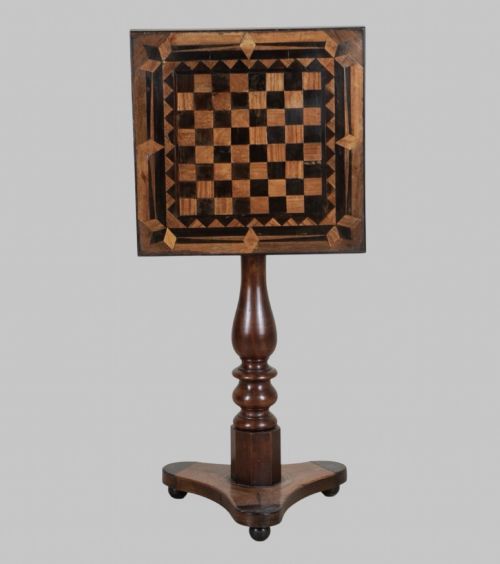
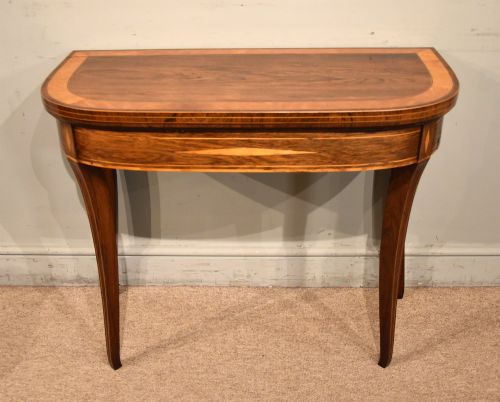
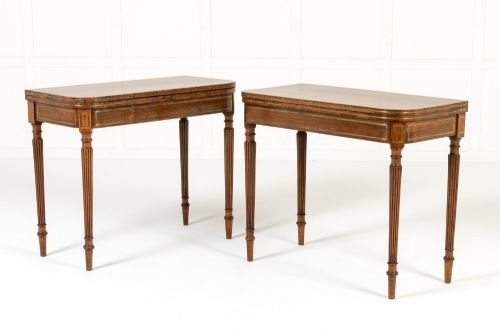
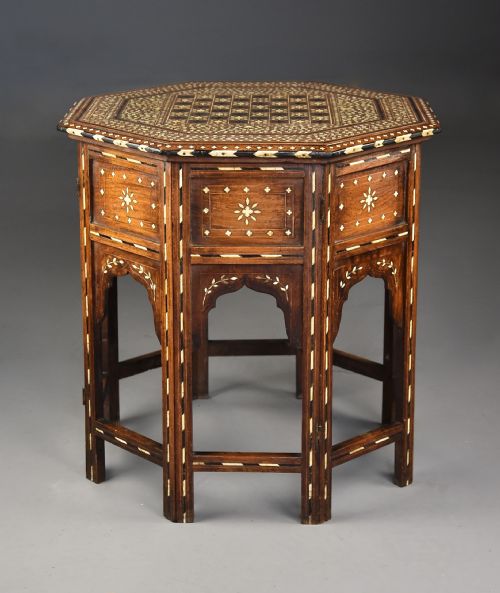
An inlaid rosewood gaming table is a dual-purpose item designed for card games, chess or general use, frequently taking the form of a fold-over card table, an envelope table with pivoting leaves, or a specialised chess and backgammon board.
The pieces appearing on this page span the Georgian, Regency, Victorian and Edwardian periods, alongside nineteenth-century examples and specific years such as eighteen-ninety and nineteen-hundred.
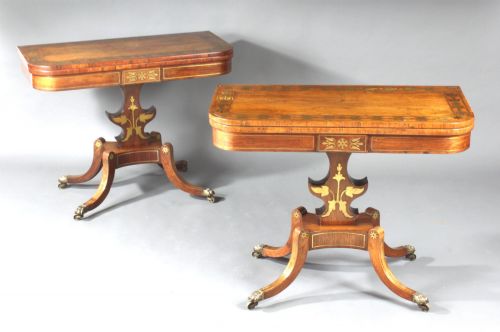
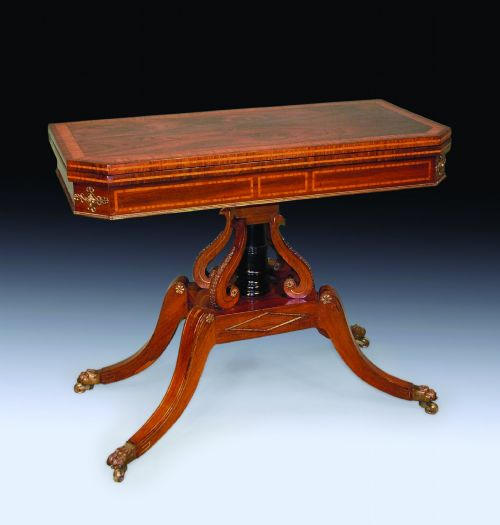
Buyers will most commonly encounter Regency and nineteenth-century card and games tables featuring rosewood timbers enhanced by contrasting wood inlays or brass work.
How they were made
Cabinet makers utilised dense rosewood as the primary dark timber, often selecting figured grains for the tops and facades to catch the light.
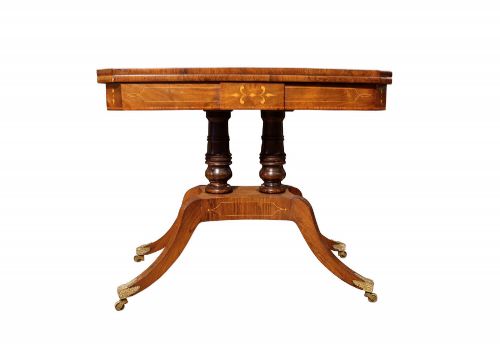
Contrasting details were achieved through meticulous inlay work using lighter woods such as satinwood and boxwood, alongside polished brass stringing and mounts.
Structural elements incorporated mahogany, ebony, and ormolu, while finishing touches included brass sabots, castors, and pedestal or scroll bases.
Some nineteenth-century tables hide entire chess and backgammon boards inside nesting tables, proving that clever compact living is hardly a modern invention.
What varies in quality
The distinction between tiers rests upon the precision of the cabinet work, particularly the crispness of the brass and light-wood inlay set into the dark rosewood ground.
Superior examples demonstrate refined proportions in their pedestals, supports and swivel or fold-over mechanisms, maintaining stability and smooth movement across generations of use.
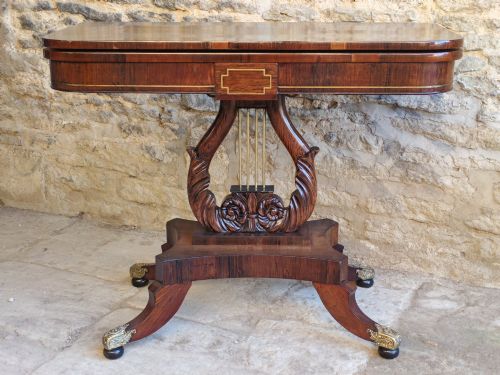
The choice of secondary timbers and the subtlety of carved details, such as lyre supports or scroll bases, further separate standard workshop production from master cabinet maker output.
George Bullock·Maple and Co.·George Oakley·Gillows
The Inlaid Rosewood Gaming Table Glossary
- Card Table
- A specialised table featuring a hinged top that folds open to reveal a baize-lined surface for playing cards. These surfaces were folded flat against a wall when not in use.
- Envelope Table
- A clever square card table design where four triangular flaps pivot and fold over each other like an envelope to conceal or reveal the playing surface.
- Stringing
- Thin lines of contrasting wood or metal inlaid into channels cut into the surface of the timber to create geometric borders and panels.
- Ormolu
- Gilded bronze mounts and decorative elements applied to the corners, friezes and pedestals of fine furniture.
- Sabot
- A metal sleeve or shoe fitted to the foot of a table leg to protect the timber and add decorative weight.
- Lyre Support
- A pedestal base carved in the stylized shape of an ancient musical instrument, popular during the Regency period.
Inlaid Rosewood Gaming Table: Frequently Asked Questions
How do I use an envelope table?
The top of an envelope table consists of four triangular leaves that pivot outward from the centre to open.
Rotating the top section often causes all four flaps to move simultaneously, revealing a baize-lined interior for card games.
What games were these tables used for?
These tables accommodated card games such as whist, as well as board games like chess and backgammon.
Removable boards or reversible tops allowed a single table to serve multiple pastimes.
How do I identify a Regency period table?
Regency tables typically feature dark rosewood combined with precise brass inlay, brass mounts, and scroll or pedestal bases.
They reflect classical influences popular in the early nineteenth century, often utilising lyre supports and brass castors.