




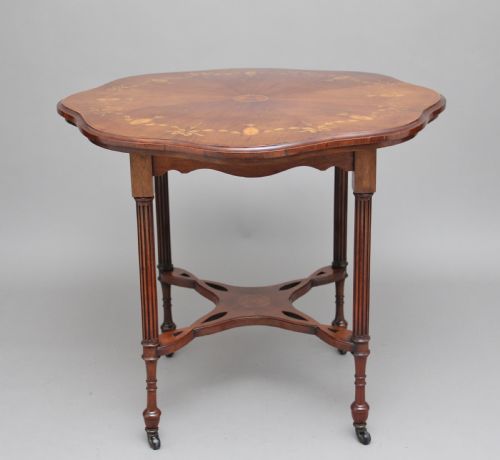


Inlaid Rosewood Foyer Table
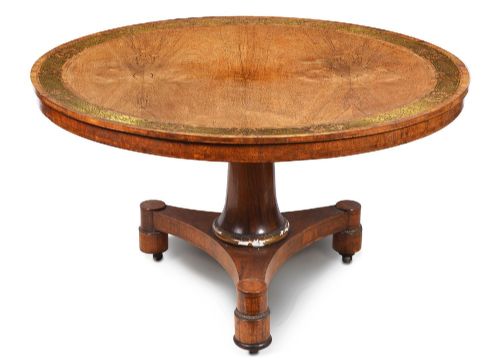
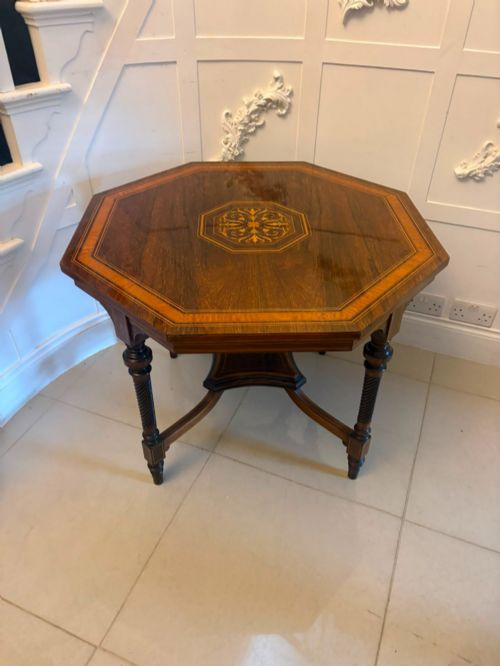
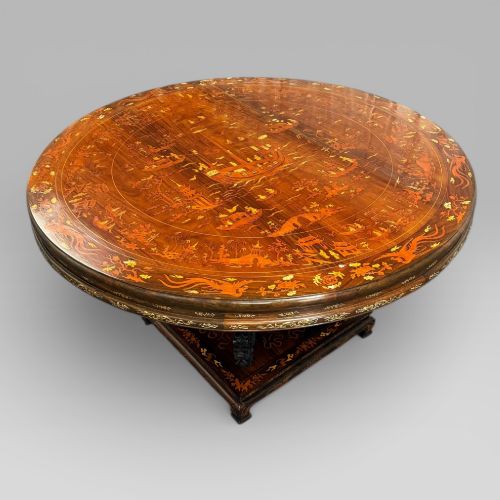
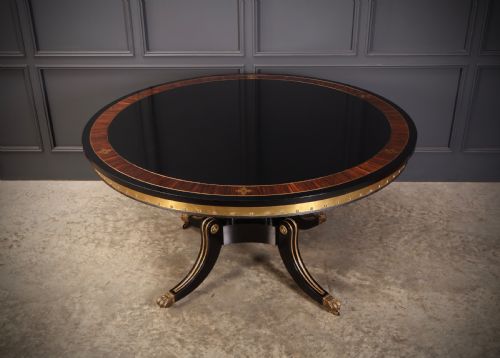
These inlaid rosewood foyer table examples bring striking timber grain and precise decorative banding to an entrance hall.
Inlaid Rosewood Foyer Table
An inlaid rosewood foyer table serves as a functional centrepiece within a hallway, offering a surface for display while establishing the character of a room. Buyers searching this phrase encounter pieces that predominantly function as centre tables constructed from rich tropical timber.
The selection on this page draws heavily from Victorian and Regency periods, alongside specific examples from the nineteenth century and the early twentieth century. Common forms include round, octagonal and breakfast tables designed to stand free within a space rather than against a wall.
Stylistic influences range from British classical revivals and French parquetry traditions to Chinese export craftsmanship. This variety means a buyer might select a substantial George IV rosewood design or an ebonised round table with brass work.
How they were made
Cabinet makers utilised dense rosewood timber as the primary structural and visual base, often laying fine wood veneer over a secondary carcass. This dark foundation provided the necessary contrast for detailed ornamental work.
Decoration relied heavily on intricate marquetry and parquetry, incorporating satinwood and fruitwood inlay to form floral motifs or geometric patterns. Artisans also embedded brass stringing and mother of pearl elements directly into the timber surface.
Inlaid Rosewood Foyer Table Retail Price Guide 2026
Typical asking prices for inlaid rosewood foyer table among the pieces listed under this phrase on Sellingantiques today, from the lower quarter to the upper quarter. They describe what is for sale here now, not the wider market.
Current listings feature rosewood combined with brass, satinwood, fruitwood, and mother of pearl across Victorian, Regency, and Qing Dynasty styles.
What varies in quality
The standard of execution in the wood inlay and marquetry dictates the visual success of the piece. Crisp lines in satinwood and fruitwood demonstrate a higher level of workshop skill than blurred or unevenly seated floral motifs.
The choice of secondary materials and structural joinery further separates standard production from exceptional cabinet work. Precision in the application of brass stringing and the stability of the rosewood veneer define the overall durability of the table.
Edwards & Roberts
The Inlaid Rosewood Foyer Table Glossary
- Marquetry
- Decorative veneer work arranged in pictorial or floral patterns across a surface. It differs from parquetry through its use of curved and naturalistic pictorial designs.
- Parquetry
- Geometric mosaic woodwork used to cover floors or furniture surfaces. Artisans assemble small blocks of timber to create repeating angular patterns.
- Stringing
- Thin lines of contrasting wood or metal inlaid into channels cut into the furniture surface. This technique outlines drawers, borders and table tops.
- Ebonised wood
- Timber treated with a chemical stain or finish to imitate ebony. This process darkens softer woods to achieve a dense black appearance.
- Centre table
- A freestanding table designed to be viewed from all sides rather than pushed against a wall. These pieces typically occupy the middle of a room or a large hallway.
Inlaid Rosewood Foyer Table: Frequently Asked Questions
Where should an inlaid rosewood foyer table go?
These tables are designed as freestanding centrepieces suitable for placement in the middle of a spacious hallway or entrance vestibule. They provide a surface for decorative objects while allowing circulation space around all sides.
Because they feature detailed marquetry or brass inlay on the top surface, placing them where overhead lighting catches the timber grain enhances their visual impact.
How do I care for rosewood veneer?
Rosewood surfaces require protection from direct sunlight and excessive heat sources to prevent the timber from drying out or fading. Regular dusting with a soft, dry cloth maintains the polish without building up residue.
Applying specialised wax sparingly helps preserve the moisture and natural lustre of the wood veneer and inlaid sections. Avoid using modern silicone sprays or abrasive cleaning agents.
What is the difference between marquetry and parquetry?
Marquetry involves cutting various wood veneers and materials like mother of pearl to create pictorial scenes, scrolls or floral compositions. The designs follow organic and curved lines across the table top.
Parquetry relies on geometric shapes such as squares, triangles and diamonds to form repeating mathematical patterns. Both techniques adorn the surface of nineteenth century tables.
How do I identify a Regency period table?
Regency tables, dating from the early nineteenth century into the reign of George IV, typically feature classical architectural proportions and restrained ornamentation. Cabinet makers frequently utilised brass stringing and inlay against dark rosewood.
Structural elements often include central pedestal columns supported by splayed legs with brass paw feet and castors. These design choices reflect the neoclassical influence popular during that era.