

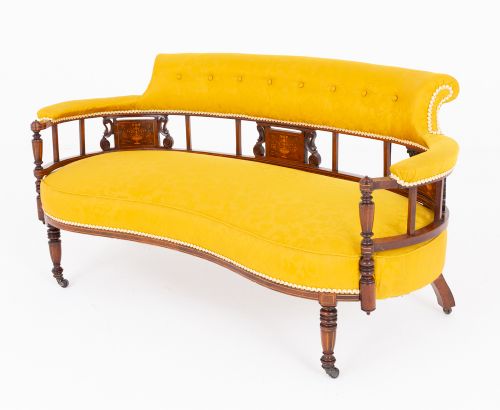


Inlaid Parlour Sofa
An inlaid parlour sofa brings refined Victorian and Edwardian craftsmanship into a room, offering elegant seating with contrasting wood details.
Inlaid Parlour Sofa
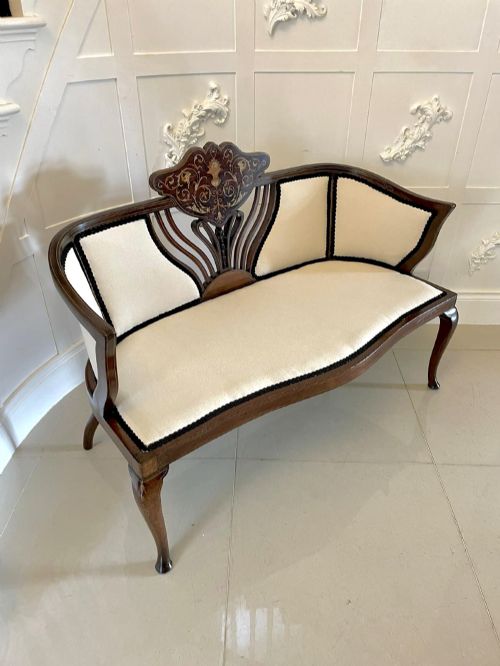
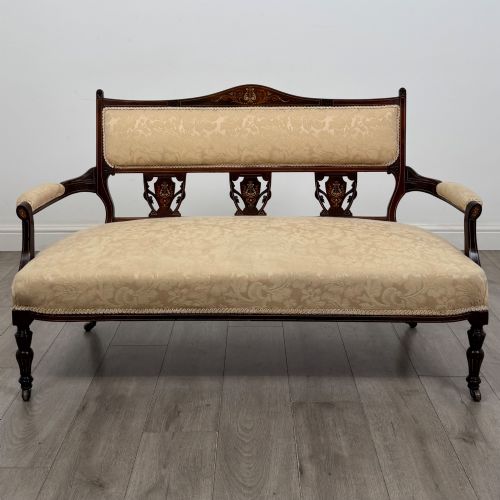
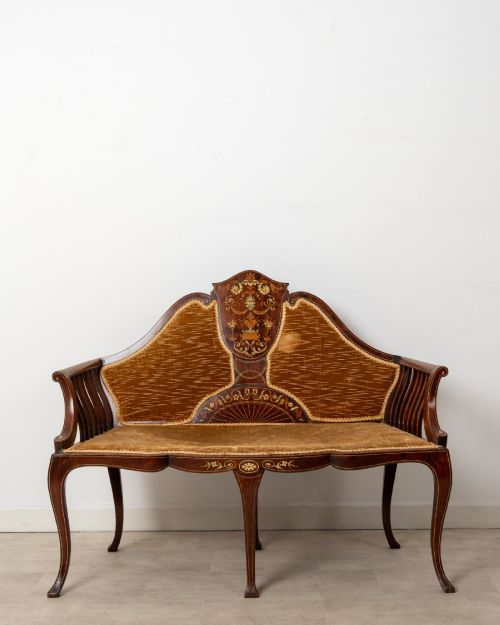
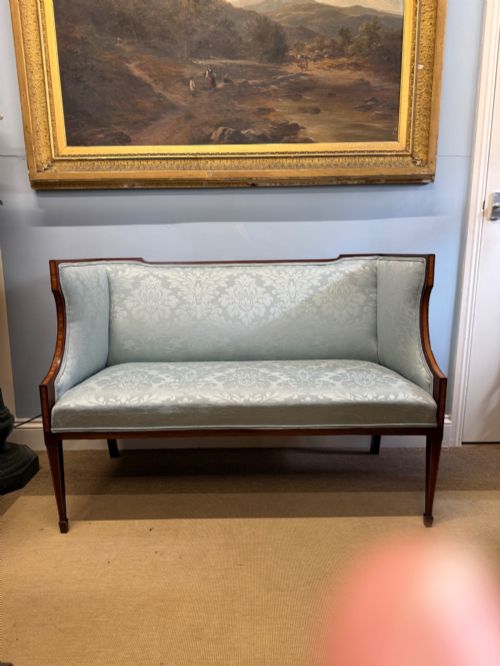
An inlaid parlour sofa represents the decorative seating produced during the nineteenth and early twentieth centuries, spanning the Victorian and Edwardian periods. Buyers searching for an inlaid parlour sofa encounter settee and salon seating forms fashioned from rich timbers.
The pieces on this page originate predominantly from the Victorian, late Victorian, and Edwardian eras, with examples recorded from eighteen-eighty through nineteen-ten. Mahogany and rosewood form the backbone of these selections, often enriched with contrasting satinwood or boxwood details.
Most entries take the form of two-seater settees and salon sofas, occasionally accompanied by broader parlour suites or matching chairs. These seating options served formal reception rooms and drawing rooms where visual elegance mattered.
How they were made
Cabinet makers utilised dense hardwoods such as mahogany, rosewood, and burr walnut as the primary structural foundations for these settees. Skilled artisans then applied contrasting veneers and stringing using lighter materials like satinwood, boxwood, and occasionally bone.
Marquetry and inlay techniques required precise hand-cutting of recesses into the base timber to receive delicate botanical or geometric motifs. Upholstery completed the construction, with many frames supporting sprung seats and fabric coverings suited to formal domestic interiors.
Some Edwardian sofas incorporate subtle bone inlay alongside satinwood stringing for extra detail.
What varies in quality
The sophistication of the timber preparation and the crispness of the inlay define the upper tier of these pieces. Fine examples display sharply executed satinwood or boxwood stringing set flush into rich mahogany or rosewood grain.
Proportion and structural retention also set examples apart, as well-balanced salon settees demonstrate superior cabinet work compared to simpler forms. The integrity of the original frame and the refinement of carved or inlaid details dictate the overall character.
James Shoolbred
The Inlaid Parlour Sofa Glossary
- Inlay
- A decorative technique where pieces of contrasting wood, bone, or other materials are inserted into recessed portions of a base timber. This creates a flush, patterned surface across the backrests and rails.
- Satinwood
- A durable tropical hardwood known for its yellowish-gold colour and lustrous sheen. It appears frequently in stringing and contrasting panels on Edwardian furniture.
- Stringing
- Thin, narrow lines of contrasting wood inlay used to outline panels and structural borders. It provides delicate linear definition on mahogany and rosewood frames.
- Settee
- A medium-length upholstered seat with a back and arms, designed for multiple persons. These pieces form the primary seating category within parlour and salon suites.
- Marquetry
- Elaborate veneer patterns applied to furniture surfaces to create pictorial or decorative designs. Artisans cut various wood types together to form intricate geometric or floral scenes.
Inlaid Parlour Sofa: Frequently Asked Questions
What is an inlaid parlour sofa?
An inlaid parlour sofa is a nineteenth or early twentieth-century wooden settee featuring decorative wood veneers or contrasting stringing. These pieces were designed for formal reception rooms and drawing spaces.
They combine structural hardwood frames in mahogany or rosewood with delicate satinwood or boxwood inlays. Most examples function as two-seater settees with upholstered seats and backs.
How do I tell Victorian from Edwardian pieces?
Victorian pieces tend to utilise heavier dark timbers such as rosewood and burr walnut, often featuring deeper carving and substantial proportions. They reflect the ornate tastes of the mid to late nineteenth century.
Edwardian items frequently display lighter mahogany frames with refined satinwood stringing and airier proportions. The aesthetic shifts toward Sheraton Revival influences and brighter, more restrained decoration.
How were parlour sofas used originally?
These sofas served as formal seating in the principal reception rooms of Victorian and Edwardian homes. They were intended for polite conversation and entertaining visitors in the parlour or drawing room.
Often paired with matching salon armchairs or centre tables, they formed part of a coordinated suite. Their placement emphasised the social status and decorative taste of the household.
How do I live with an antique settee?
Living with an antique parlour sofa involves placing it away from direct sunlight and strong heat sources to protect the polished wood and delicate inlays. Gentle dusting and careful handling preserve the timber surfaces.
Many examples retain or require traditional upholstery, making them suitable for daily sitting when treated with care. They anchor a room as statement seating while integrating easily into traditional or eclectic interiors.