
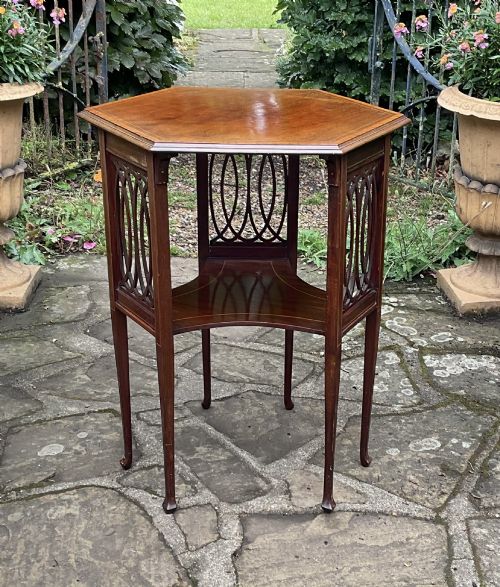
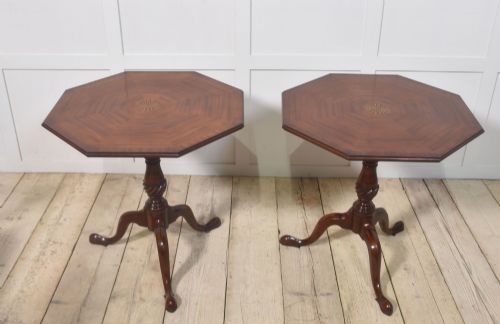
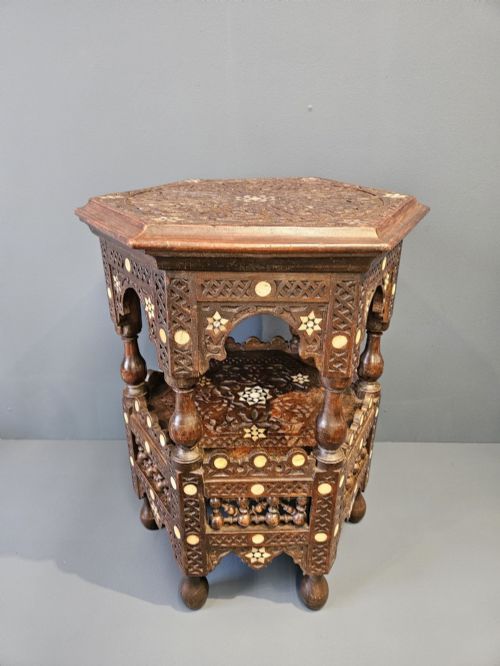


Inlaid Octagonal Lamp Table
An inlaid octagonal lamp table brings geometric precision and rich timbers to a corner, offering a compact surface for illumination and display.
Inlaid Octagonal Lamp Table
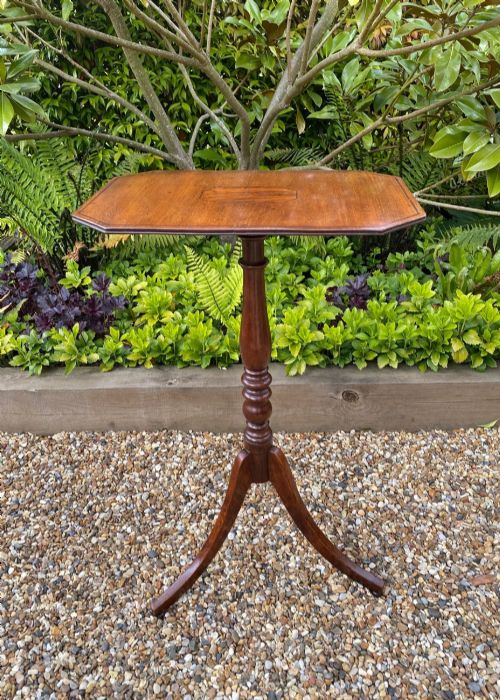
An inlaid octagonal lamp table provides a distinct eight-sided surface designed to hold lighting or display decorative items within a room. These small tables appear frequently from the Victorian and Edwardian eras, alongside pieces originating from nineteenth-century Anglo-Indian workshops.
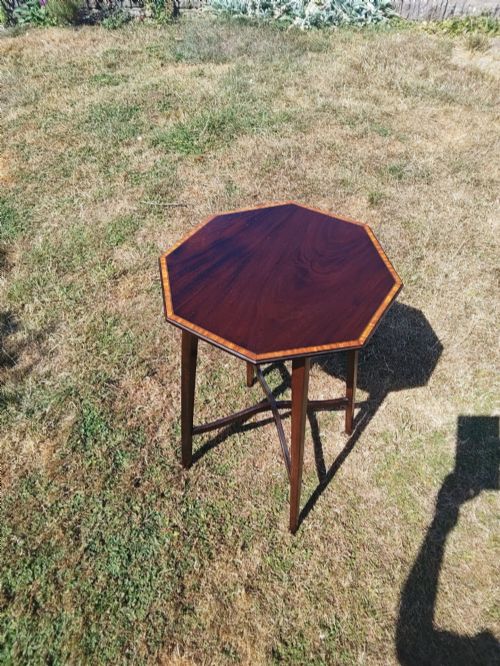
The form crosses paths with occasional tables, side tables, and wine tables, sharing similar proportions and heights suited to domestic seating. Mahogany, rosewood, and satinwood form the foundation of most examples encountered on this page, often paired with contrasting timber inlays.
Makers adapted the geometric format across various stylistic movements, including Aesthetic Movement ebonised designs and Moorish Revival carved woodwork. Buyers seek them out for their ability to fit snugly into corners while offering decorative wood craftsmanship.
How they were made
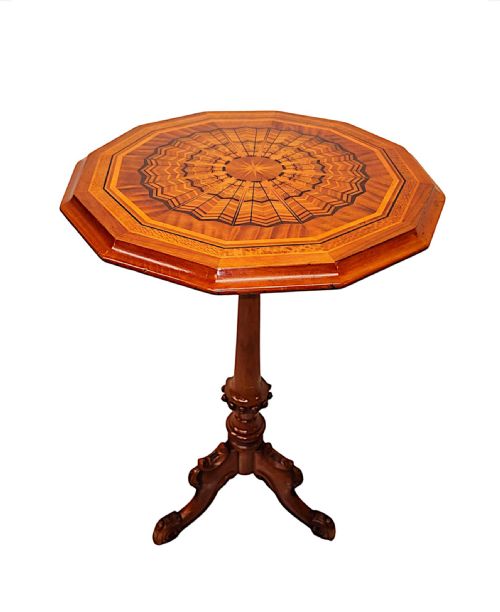
Cabinetmakers utilised dense hardwoods such as mahogany, rosewood, and walnut for the primary structure, providing a stable frame capable of supporting intricate surface decoration. Tops frequently feature contrasting veneers and detailed wood inlay executed in boxwood, ebony, and satinwood.
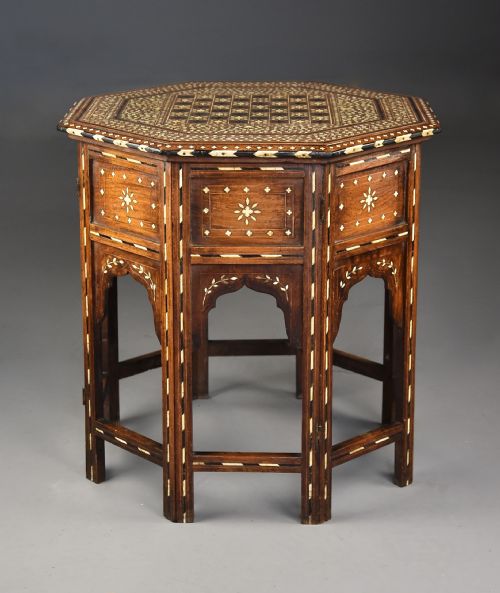
Inlay techniques required precise cutting of contrasting timbers to create geometric patterns, central stars, or compass rose motifs set flush into the main panel. Anglo-Indian examples incorporate intricate surface carving alongside inlay, reflecting regional woodworking traditions distinct from British cabinetmaking.
Several Edwardian sewing tables retain their original silk baskets beneath the octagonal top, designed for stray threads and mending.
What varies in quality
Quality reveals itself in the crispness of the geometric cutting and the deliberate choice of figured timbers for the octagonal top. Superior examples display tightly fitted wood inlay with harmonious contrasts between the central field and the bordering veneers.
The stability of the sub-frame and the retention of original surface polishes dictate the standing of a table. Finer pieces maintain clean joinery at the eight-sided corners and subtle secondary detailing such as turned pedestals or tiered platforms.
Gillows·Collinson and Lock
The Inlaid Octagonal Lamp Table Glossary
- Inlay
- A technique where pieces of contrasting timber, brass, or shell are fitted into depressions within a solid wood surface to form a decorative pattern. This method creates flat ornamentation across table tops.
- Octagonal
- Having eight sides and eight angles, forming a symmetrical geometric shape used primarily for table tops. This format differentiates these pieces from standard circular or square designs.
- Lamp table
- A small, sturdy table designed specifically to support a lighting fixture beside seating furniture. The surface area accommodates a base without occupying excessive floor space.
- Specimen wood
- Furniture constructed using numerous different ornamental timbers, often arranged to showcase natural variations in colour and grain. These tops frequently display geometric or mosaic patterns.
- Tunbridge inlay
- A meticulous form of mosaic woodworking originating from Kent, creating pictorial or geometric designs from thousands of tiny tinted wood prisms. It appears on nineteenth-century surfaces.
Inlaid Octagonal Lamp Table: Frequently Asked Questions
Where should I place an octagonal table?
An octagonal table fits naturally into room corners or beside a reading chair where a round or square table might feel too rigid. Its eight-sided geometry breaks up the straight lines of modern upholstery.
The compact surface provides adequate room for a reading lamp or a small arrangement without obstructing pathways through the room.
How do I date an inlaid lamp table?
Dating relies on identifying the underlying timber choice, the style of the leg supports, and the nature of the surface inlay. Victorian examples often feature rosewood or burr walnut with bold geometric motifs.
Edwardian pieces tend to utilise lighter mahogany frames paired with delicate boxwood stringing and satinwood banding, reflecting changing domestic tastes.
Were these tables strictly for lamps?
Historical uses varied widely depending on the height and internal fittings of the specific piece. Many served as occasional tables for holding books, sewing implements, or tea services.
Some variations include silk baskets or lower tiers designed for needlework and small domestic items rather than illumination alone.
What distinguishes Anglo-Indian tables?
Anglo-Indian pieces from Hoshiarpur combine traditional regional carving techniques with the octagonal table format demanded by nineteenth-century British households. They feature dense overall floral or geometric carving.
These tables utilise native hardwoods and intricate bone or light wood inlay, creating a distinct texture compared to standard British cabinetwork.