

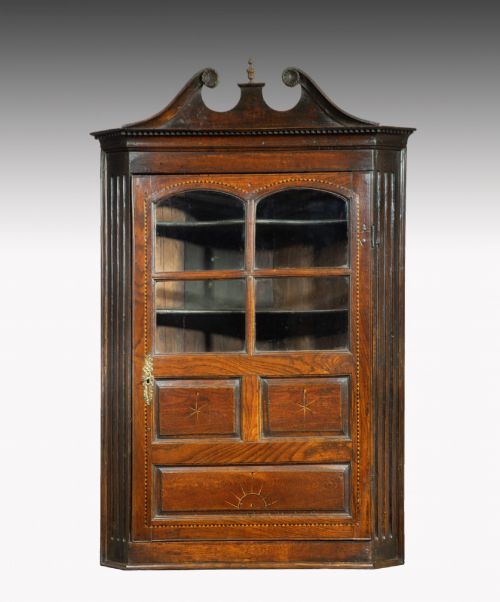
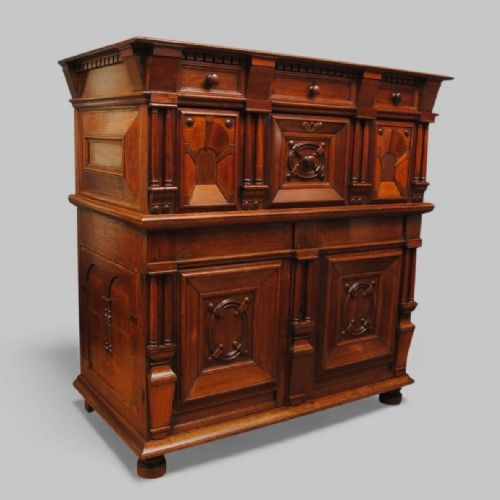


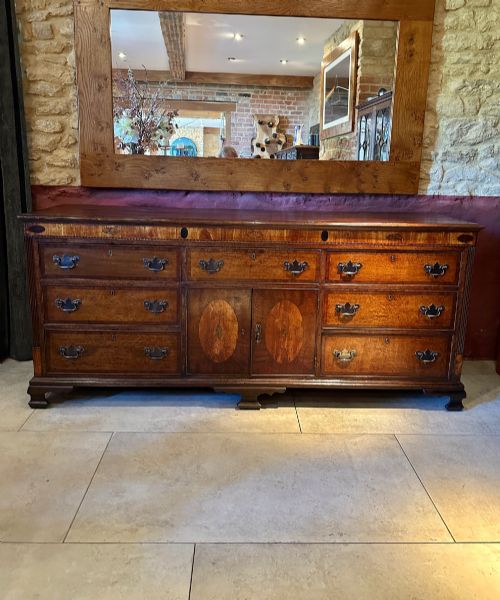


Inlaid Oak Storage Cabinet
An inlaid oak storage cabinet brings together sturdy timber and precise decorative banding, offering both reliable utility and quiet character.
Inlaid Oak Storage Cabinet
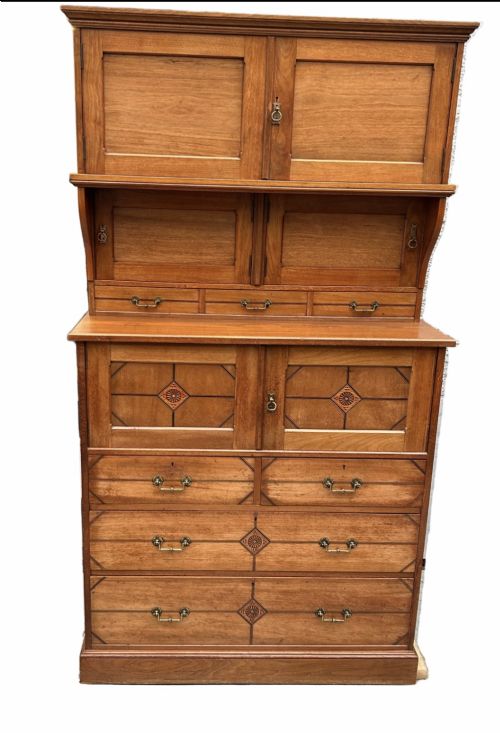
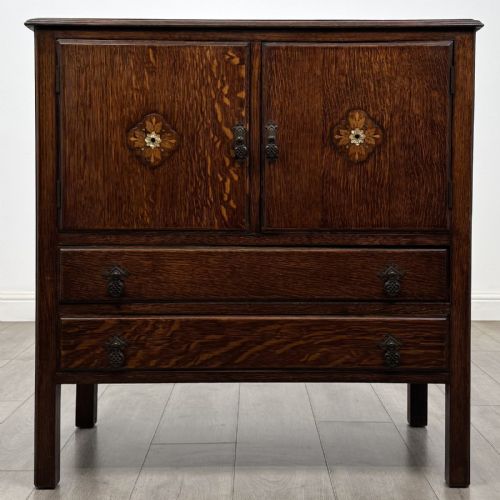
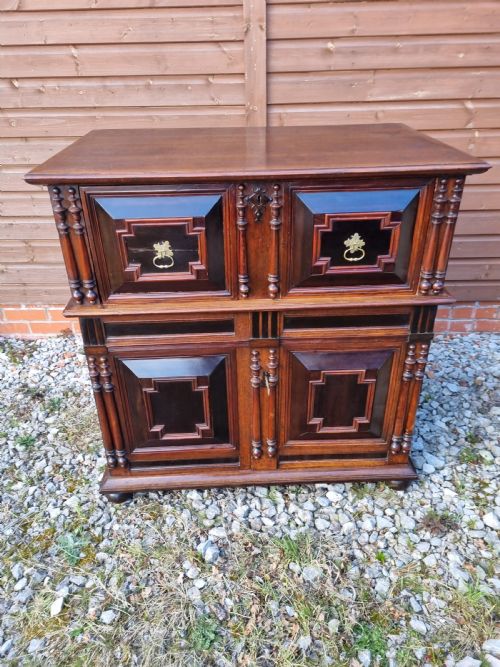
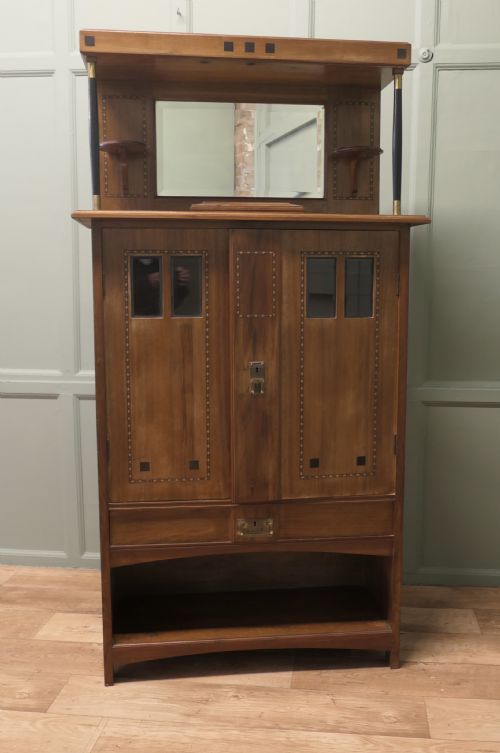
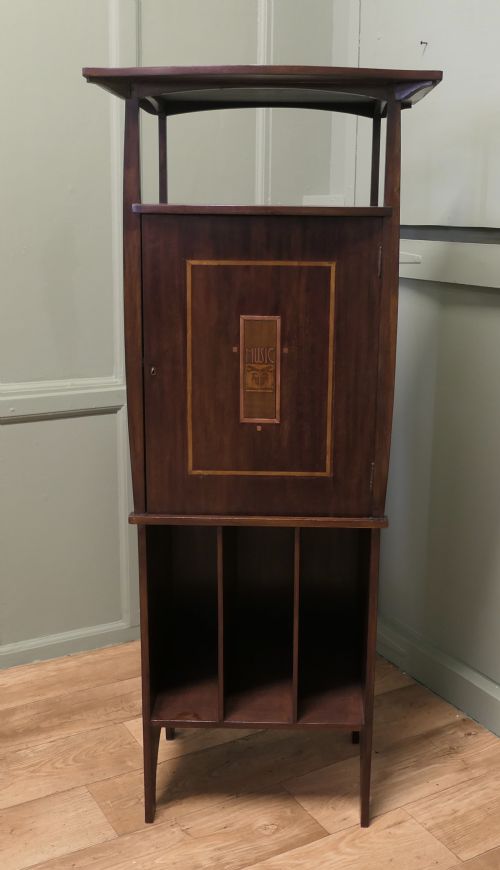
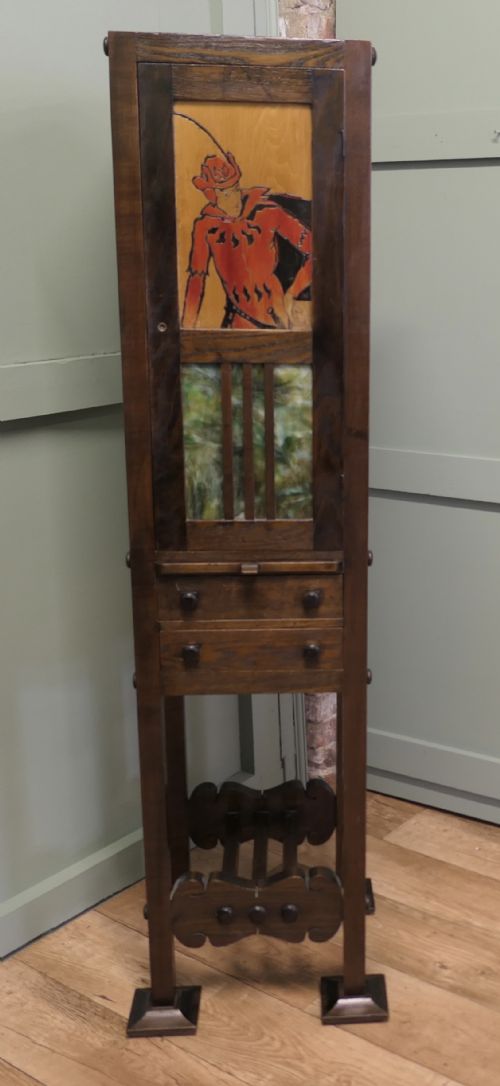
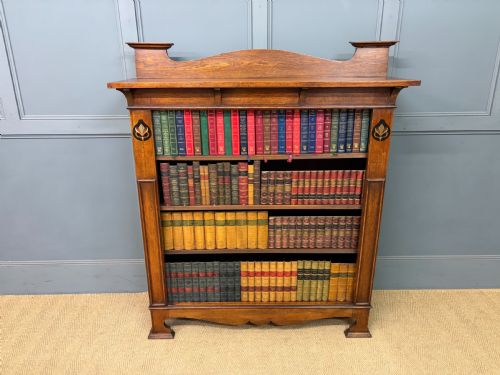
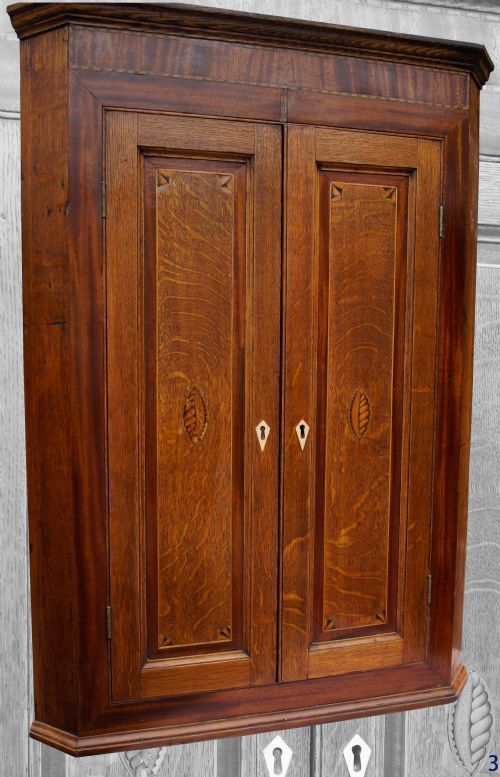
An inlaid oak storage cabinet encompasses a range of robust forms designed to hold possessions securely while displaying the natural grain and figured patterns of the timber. Pieces matching this search phrase span centuries of cabinetmaking, featuring corner cupboards, hanging corner units, tall storage chests, and fitted dresser bases.
The versions most frequently encountered on this page date from the Georgian period through to the late nineteenth and early twentieth centuries. These encompass regional British styles, including Welsh and Lancashire vernacular pieces, alongside movement-led designs from the Arts and Crafts and Aesthetic eras.
Makers and workshops utilised various secondary woods and contrasting bandings to enhance the primary oak structure. Whether configured as a tall cabinet, a low chest of drawers, or a wall-mounted cupboard, each example serves the fundamental purpose of enclosed storage.
What varies in quality
The caliber of an inlaid oak storage cabinet rests upon the crispness of its joinery and the precision of the contrasting inlay work. Superior examples demonstrate tight, flush mitres in the decorative banding and careful grain matching across the panels.
Proportion and structural integrity separate standard utility pieces from finer commissions, particularly where drawer linings remain solid and backboards are original. The refinement of secondary details, such as carved mouldings or bespoke brasswork, further distinguishes the range.
Inlaid Oak Storage Cabinet Retail Price Guide 2026
Typical asking prices for inlaid oak storage cabinet among the pieces listed under this phrase on Sellingantiques today, from the lower quarter to the upper quarter. They describe what is for sale here now, not the wider market.
Represented periods span from the seventeenth century through the Georgian era to Victorian and Arts and Crafts designs.
H Ogden of Manchester·Shapland and Petter·GM Elwood·JS Henry
The Inlaid Oak Storage Cabinet Glossary
- Marquetry
- The art of applying fitted veneers to a structure to create pictorial or geometric patterns. This technique appears across various panels and drawer fronts.
- Quarter-sawn
- Timber cut radially through the growth rings, producing a stable board with distinctive figuring. This cut was favoured for high-quality oak furniture.
- Escutcheon
- A protective plate surrounding a keyhole, often fashioned from brass. It guards the surrounding wood from wear caused by repeated use of the key.
- Dovetail
- A joint formed by interlocking wedge-shaped fingers, prized for its tensile strength. It is commonly found securing the corners of drawer boxes.
- Stringing
- Thin lines of contrasting wood inlay used to outline panels or borders. This linear decoration frames the primary timber surfaces.
Inlaid Oak Storage Cabinet: Frequently Asked Questions
What is an inlaid oak storage cabinet?
An inlaid oak storage cabinet is a piece of furniture built primarily from oak and decorated with contrasting wood veneers or lines. These items range from wall-hanging corner cupboards to multi-drawer chests and dresser bases.
Designed to keep items organised and out of sight, they combine functional storage with decorative craftsmanship suited to domestic interiors.
How should I care for an oak cabinet?
Maintain the timber by keeping the cabinet away from direct heat sources and sudden humidity changes. This prevents the oak panels and inlay work from warping or cracking over time.
Apply a traditional wax polish occasionally to nourish the surface and preserve the natural sheen of the wood.
Where were these cabinets placed originally?
These cabinets served various rooms depending on their specific form, such as dining parlours, bedrooms, or entrance halls. Corner cupboards utilised awkward angles in smaller spaces, while tall chests held linens and clothing.
Larger dresser bases and display cabinets functioned in reception spaces for storing and showing household wares.
How do I distinguish between periods?
Dating relies on observing construction methods, hardware types, and stylistic motifs present on the piece. Seventeenth-century examples often feature heavy geometric mouldings and dark patination, whereas Georgian pieces favour cleaner lines.
Later Victorian and Arts and Crafts pieces incorporate specific movement aesthetics, distinctive brass handles, and varied marquetry patterns.