

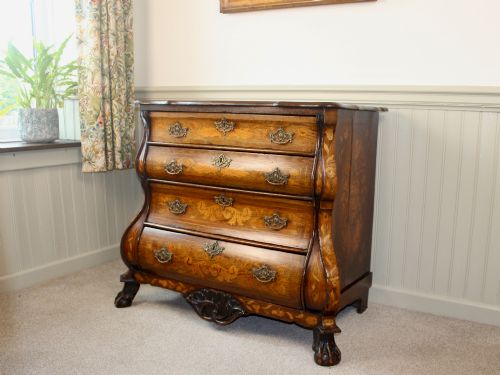


Inlaid Oak Commode
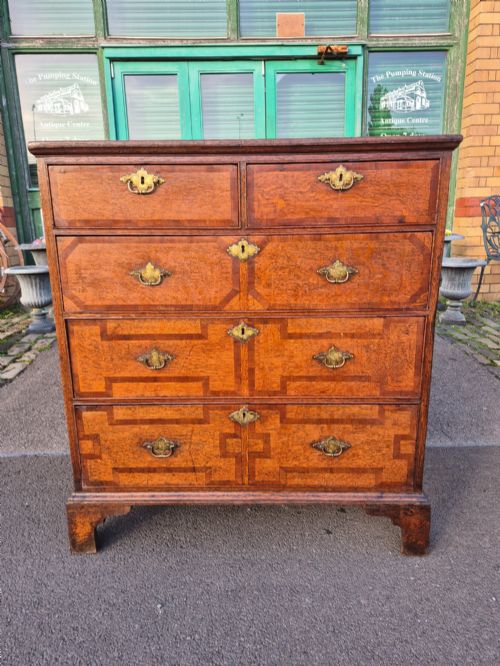
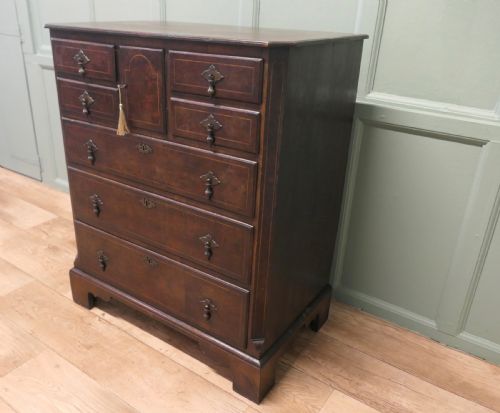
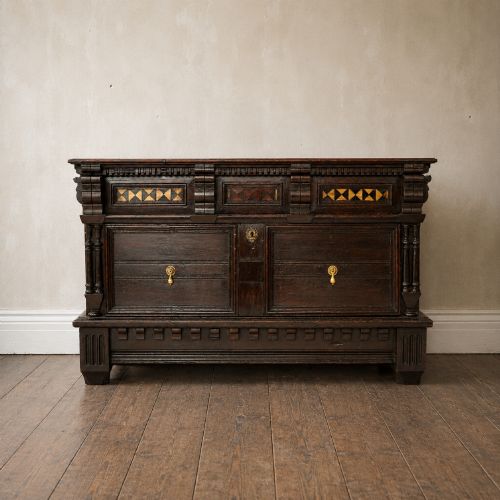
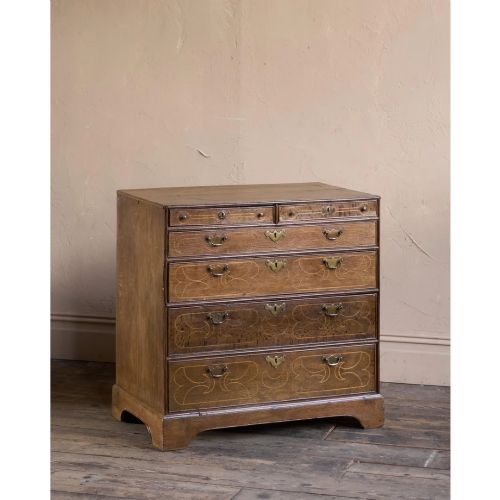
An inlaid oak commode is a solid timber chest of drawers carrying decorative wood or marquetry work.
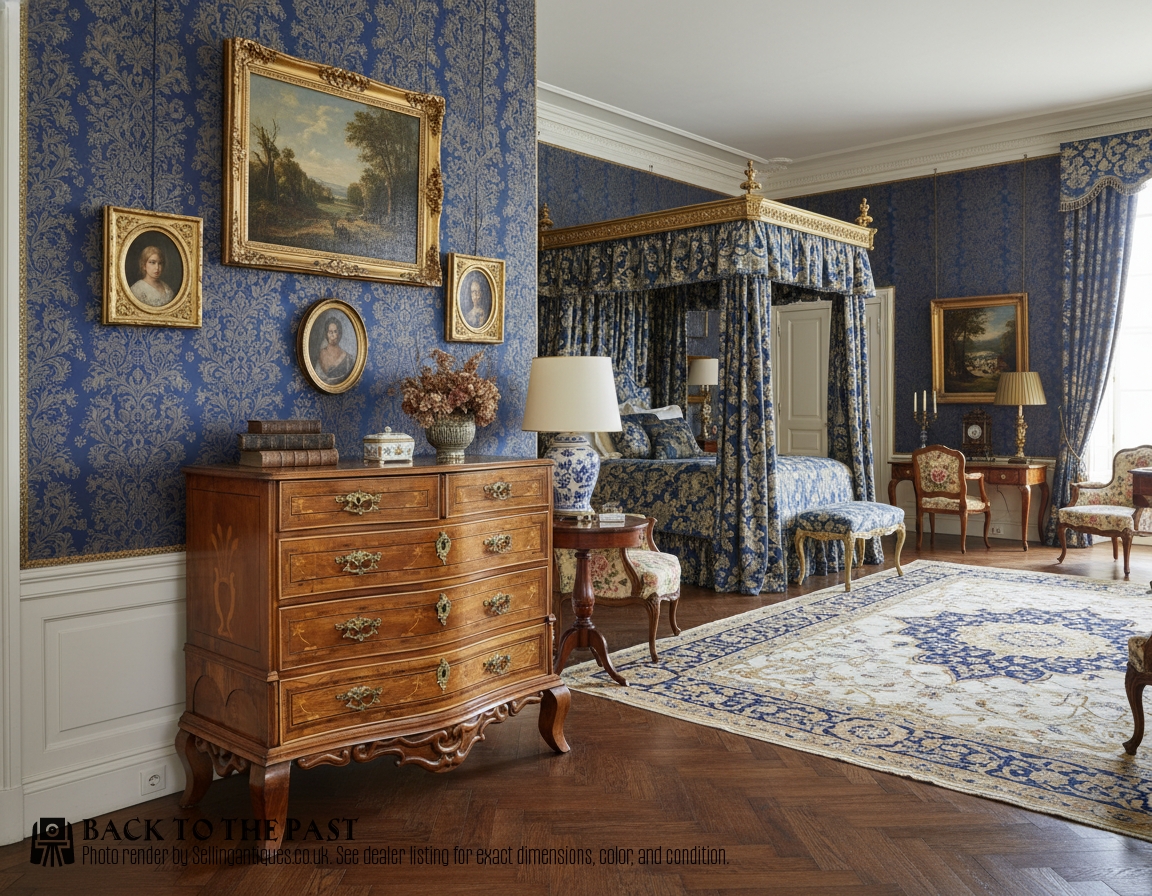
Inlaid Oak Commode
When you search for an inlaid oak commode, you encounter substantial timber furniture spanning from the seventeenth century through to the Edwardian period, often catalogued interchangeably as chests of drawers. The seventeenth and eighteenth-century examples display robust construction methods alongside intricate decorative surfaces.
You are most likely to meet pieces finished with marquetry inlay, wood inlay, or oyster veneer upon the oak carcase, sometimes combined with walnut or mahogany. Regional variations stretch across British, Dutch, and Swedish workshops, bringing different decorative vocabularies to the same foundational form.
Construction and materials
Cabinet makers utilised solid oak for the primary structural carcase, applying secondary woods such as walnut and mahogany for facing and drawer construction. Decorative surfaces relied on fruitwood inlay, marquetry, and oyster veneer to create patterned grain effects across the drawer fronts and top panels.
Brass hardware, including drop handles and escutcheons, was fitted to secure the drawers and accent the dark timber tones. Joinery techniques from the seventeenth century onward involved precise board construction and two-part carcase building to support the heavy timber weight.
Inlaid Oak Commode Retail Price Guide 2026
Typical asking prices for inlaid oak commode among the pieces listed under this phrase on Sellingantiques today, from the lower quarter to the upper quarter. They describe what is for sale here now, not the wider market.
The listings span from the seventeenth century to the Edwardian era, incorporating oak, walnut, mahogany, and fruitwood inlay.
Judging the work
The sophistication of the surface decoration sets finer pieces apart, particularly the precision of the fruitwood inlay and marquetry patterns integrated into the oak. The choice of secondary veneers, such as well-matched oyster veneer or burr walnut, indicates higher workshop standards.
Structural integrity and the retention of original brass hardware heavily influence the standard of a piece. Finer examples maintain their original two-part construction and secret drawer configurations without extensive timber replacement.
The Inlaid Oak Commode Glossary
- Oyster veneer
- Circular slices cut from small branches or roots, arranged to create an oyster-shell pattern across the surface of the timber. This technique is typical of seventeenth-century cabinet making.
- Marquetry inlay
- Elaborate pictorial patterns formed by fitting contrasting pieces of wood veneer into a prepared ground. It appears frequently on Dutch and later Georgian furniture.
- Fruitwood inlay
- Decorative work utilising timber from fruit-bearing trees, valued for its fine grain and pale colour contrast against darker oak backgrounds. It provides delicate detail on drawer fronts.
- Two-part chest
- A piece of furniture built in two distinct vertical sections, designed for ease of transport during the seventeenth and eighteenth centuries. The upper section typically rests securely upon the lower base.
- Bombe
- A swelling, convex contour on the front and sides of a chest of drawers. This curved form requires advanced joinery and is seen in Dutch Baroque pieces.
Inlaid Oak Commode: Frequently Asked Questions
How do I date an oak chest?
Look closely at the construction methods, handle types, and secondary timbers used within the drawers. Seventeenth-century examples often display heavy framework and two-part carcases, while later nineteenth-century pieces show different dovetailing and veneer choices.
Compare the surface decoration and the style of the feet or base moulding against known periods like William and Mary or Georgian. Regional variations from Dutch or Swedish makers also provide clear chronological markers.
What is oyster veneering?
Oyster veneering involves slicing small branches or roots diagonally to reveal circular or oval patterns that resemble oyster shells. Craftsmen laid these pieces closely together to cover the main oak carcase with decorative grain.
This technique creates a striking visual texture across the top and drawer fronts of seventeenth-century furniture. It requires patience and precision to lay each small section without gaps.
Where should I place a commode?
These solid timber chests require stable indoor environments away from direct heat sources and strong sunlight to protect the oak and delicate veneers. Placing them in hallways, bedrooms, or reception rooms allows them to function as practical storage while remaining a focal point.
Ensure the floor is level so the two-part carcases and heavy drawers operate smoothly. Avoid damp spaces that can damage the fruitwood inlay and brass hardware.
Are these pieces functional storage?
The deep drawers provide robust storage for clothing, linens, or household items. Many examples incorporate multiple graduated drawers, and some even feature secret compartments for security.
Routine use is entirely appropriate provided the drawer runners are treated with care. The solid oak construction ensures durability across centuries of domestic service.