


Inlaid Mahogany Wall Cabinet
These mahogany wall cabinets bring practical storage and rich timber grain to domestic interiors.
Inlaid Mahogany Wall Cabinet
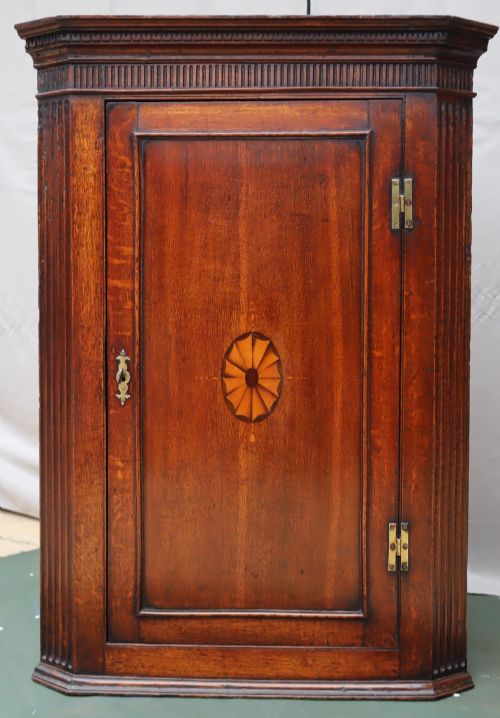
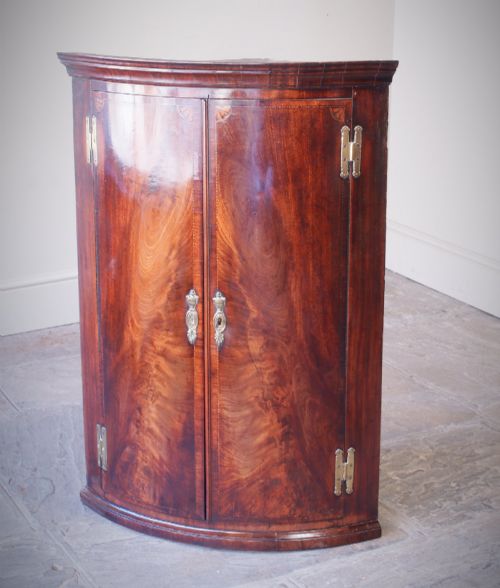
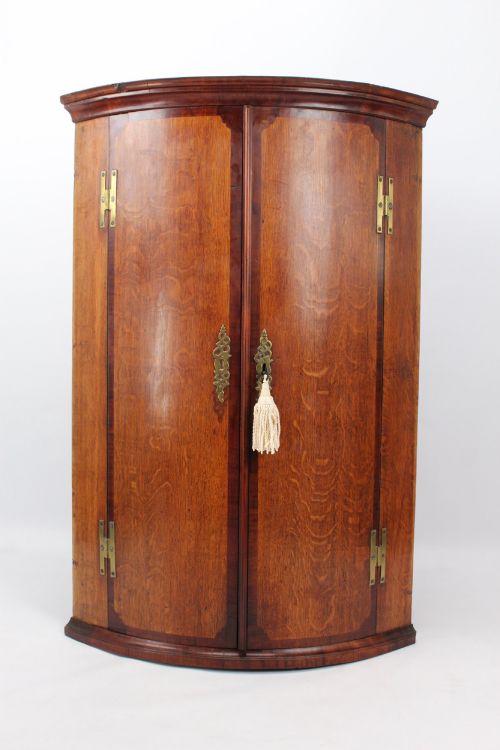
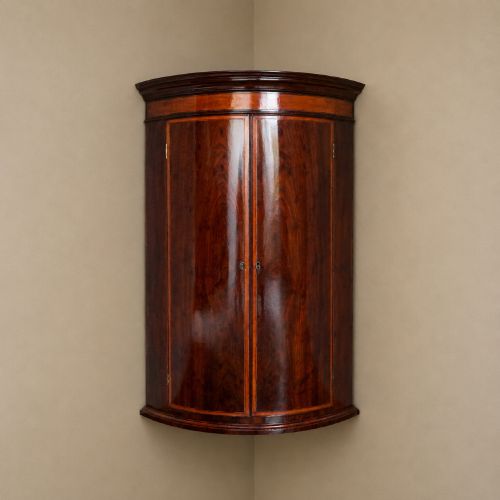
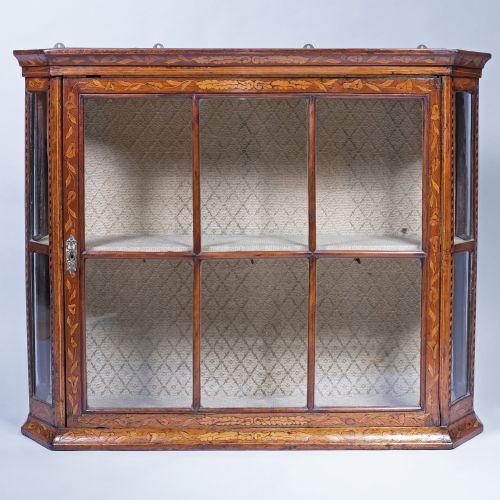
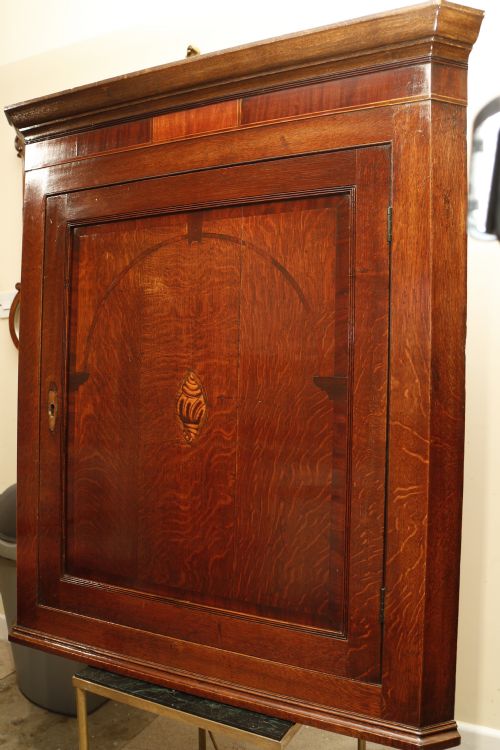
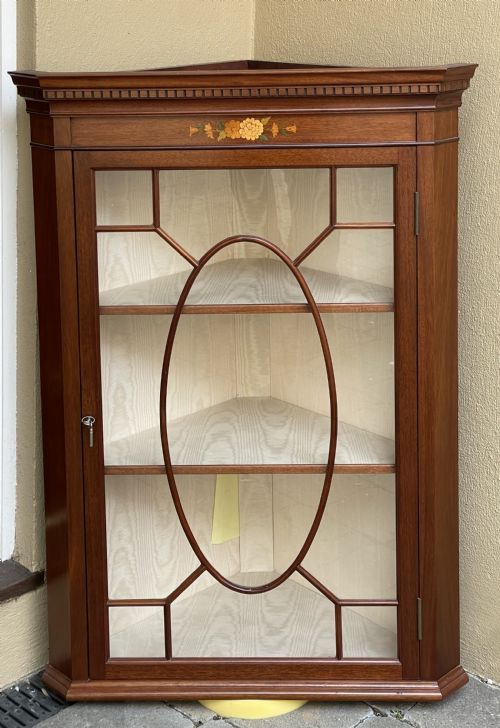
An inlaid mahogany wall cabinet provides enclosed wall storage, most frequently taking the form of a hanging corner cupboard or a flat-backed wall-mounted display case. When you examine an inlaid mahogany wall cabinet on this page, you meet pieces originating predominantly from the Georgian and Edwardian eras, alongside later revivals.
The majority of these pieces adopt a bow front to soften the corners of a room, while others present flat facades with glazed or solid timber doors. Surviving examples demonstrate how cabinet makers utilised dense tropical timber to create sturdy storage designed to be hung securely upon domestic walls.
Materials and Technique
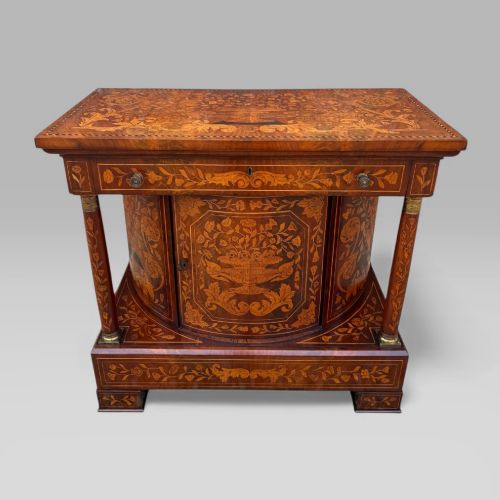
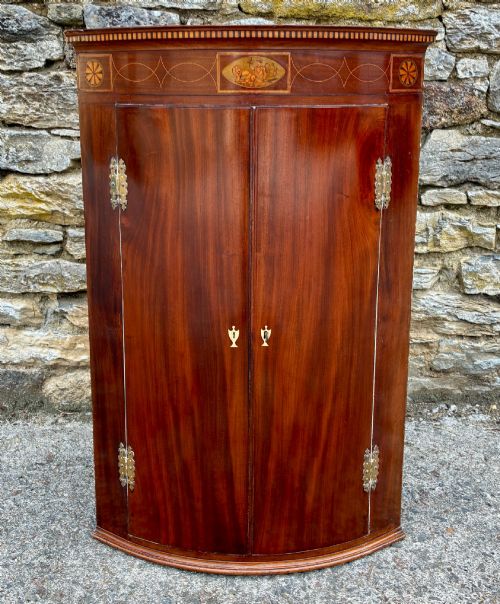
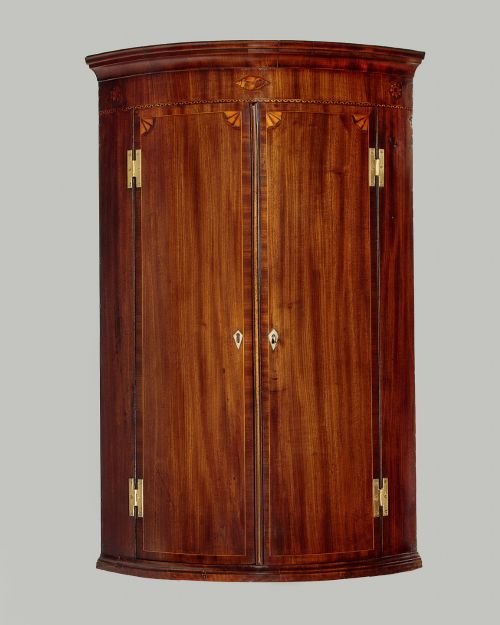
Makers constructed these cabinets using solid mahogany carcasses, often enriched with contrasting boxwood and satinwood inlay or marquetry details. Crossbanding and stringing lines trace the borders of doors and cornices, requiring precise hand woodworking and cabinet making skills.
Glazed doors utilise timber framing to hold individual panes of glass, whilst internal shelving provides tiered space for display. Brass H-hinges and escutcheons complete the construction, serving both a structural and decorative purpose on the exterior faces.
Several miniature display cabinets exist in the records, built perfectly to scale as if homes were being furnished for mice.
Design and Execution
The standard of an inlaid mahogany wall cabinet rests upon the crispness of its marquetry work and the choice of timber figure, such as flame or plum pudding mahogany. Finer examples display meticulous geometric stringing and balanced proportions that reflect the aesthetic ambition of the period.
Subtleties in brasswork, timber selection for secondary woods like oak, and the integration of astragal glazing bars distinguish standard utility pieces from higher grade examples produced during the Georgian and Edwardian periods.
The Inlaid Mahogany Wall Cabinet Glossary
- Bow front
- A convex curved cabinet front that projects outward from the wall. This shape helps soften interior room angles while offering deeper internal space.
- Marquetry
- Decorative patterns formed by fitting together thin veneers of different coloured woods. Artisans use this technique to create floral or geometric motifs on cabinet doors.
- Astragal
- Moulding profiles used to hold panes of glass within a glazed door frame. These slender wooden bars divide windows into smaller lights.
- Crossbanding
- A strip of veneer applied across the grain of the main surface to form a border. It frames drawer fronts and cabinet doors with a contrasting linear direction.
- Escutcheon
- A protective plate surrounding a keyhole. They are typically cast from brass and fitted flush into the timber door.
Inlaid Mahogany Wall Cabinet: Frequently Asked Questions
Where should I hang a corner cabinet?
These cabinets suit empty room corners where floor space is limited, allowing you to utilise vertical areas effectively.
Position them at eye level to ensure easy access to internal shelves and to display stored items correctly.
How do I clean mahogany wood?
Dust the exterior regularly with a dry, soft cloth to prevent particle buildup on the polished timber surface.
Apply a traditional beeswax polish occasionally to nourish the mahogany grain and maintain its natural sheen.
Can these hold heavy items?
Internal shelving is designed for standard tableware, glassware, or books rather than heavy decorative loads.
Ensure the wall fixings engage securely with structural wall studs or masonry plugs to support the weight safely.
How do I identify a Georgian piece?
Examine the construction methods, secondary timbers such as oak, and the style of brass hardware used on the doors.
Georgian cabinets typically display hand-cut joinery and specific decorative motifs like boxwood stringing characteristic of the eighteenth century.