
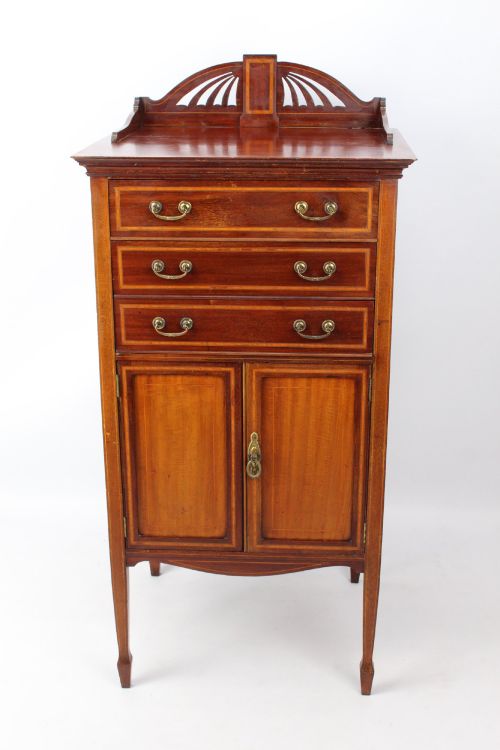
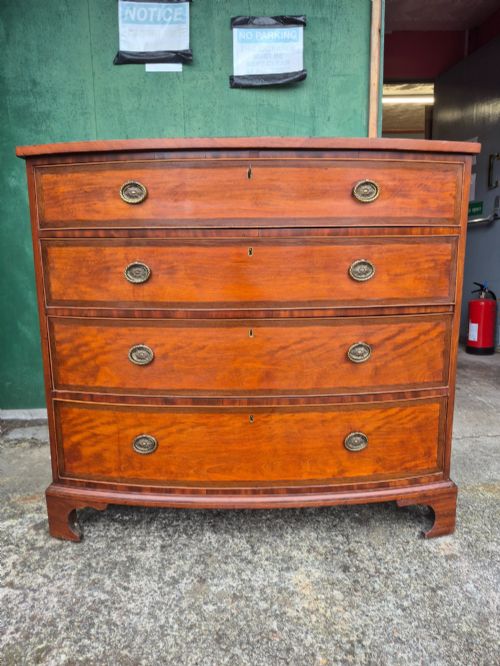
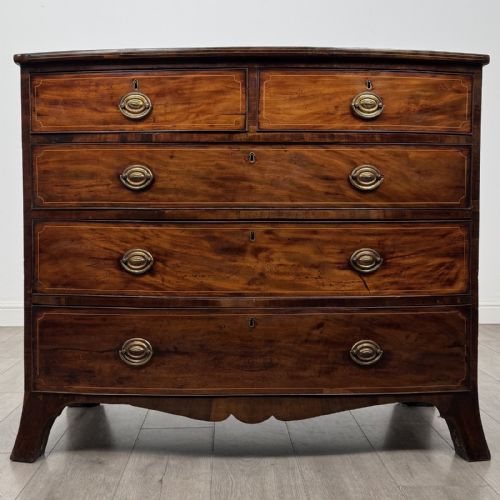
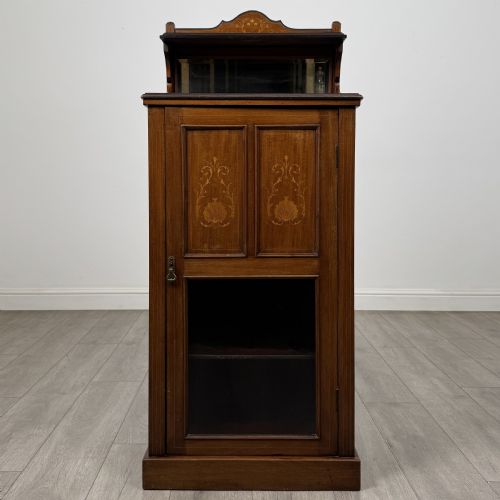
Inlaid Mahogany Storage Chest
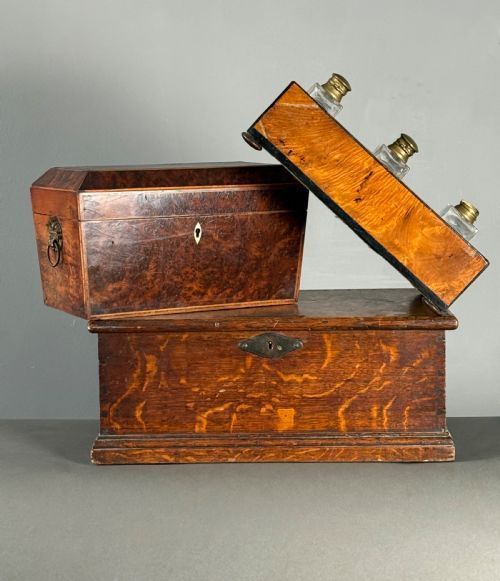
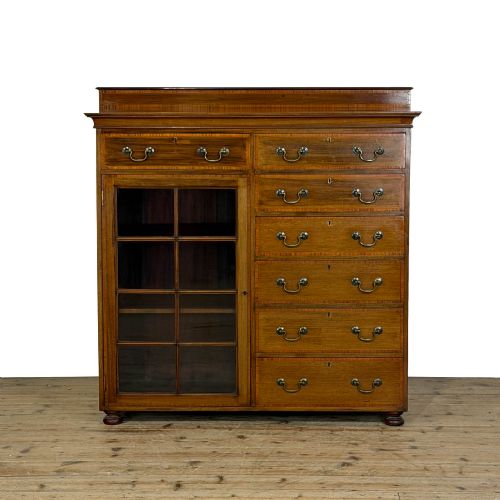
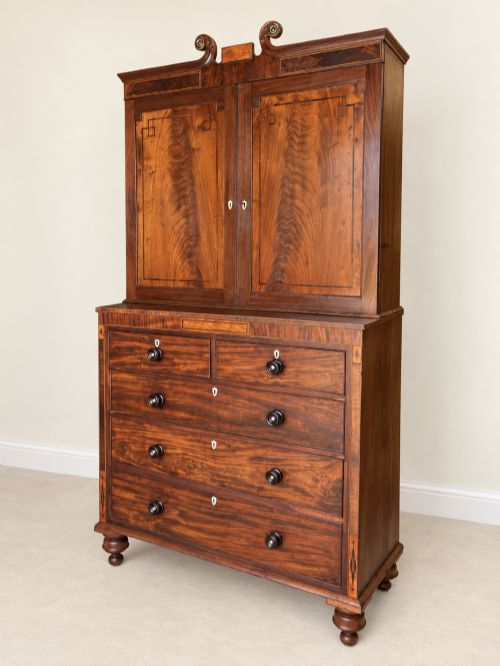
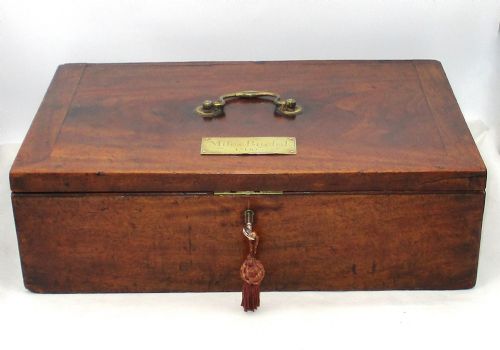
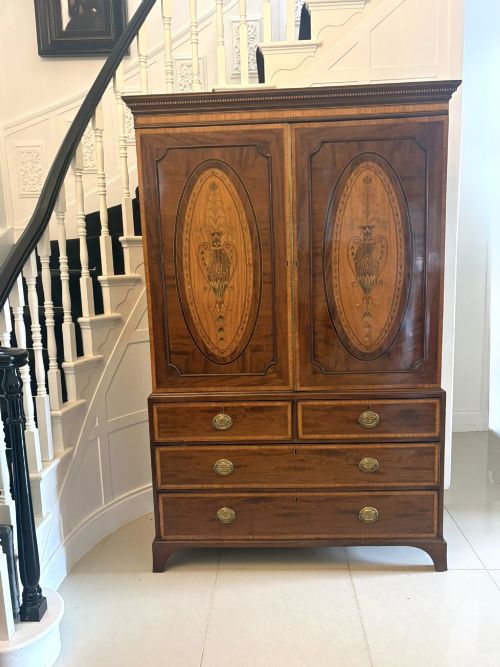
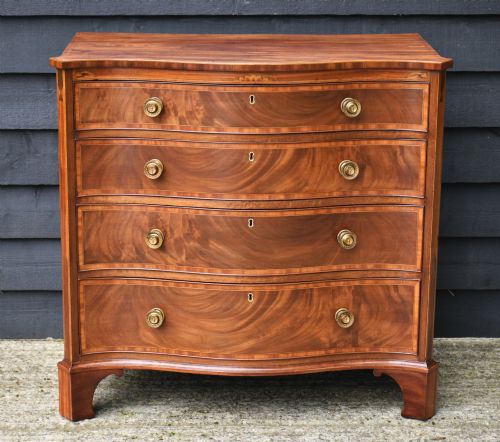
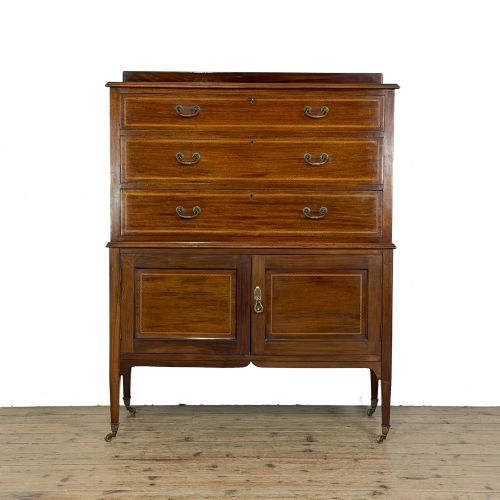
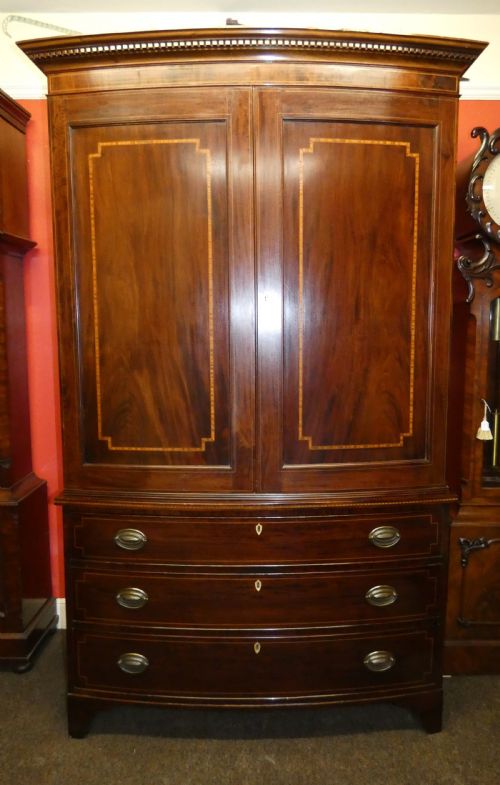
These inlaid mahogany storage chest examples range from Georgian linen presses to Edwardian music cabinets, built for holding linens, documents, and valuables.
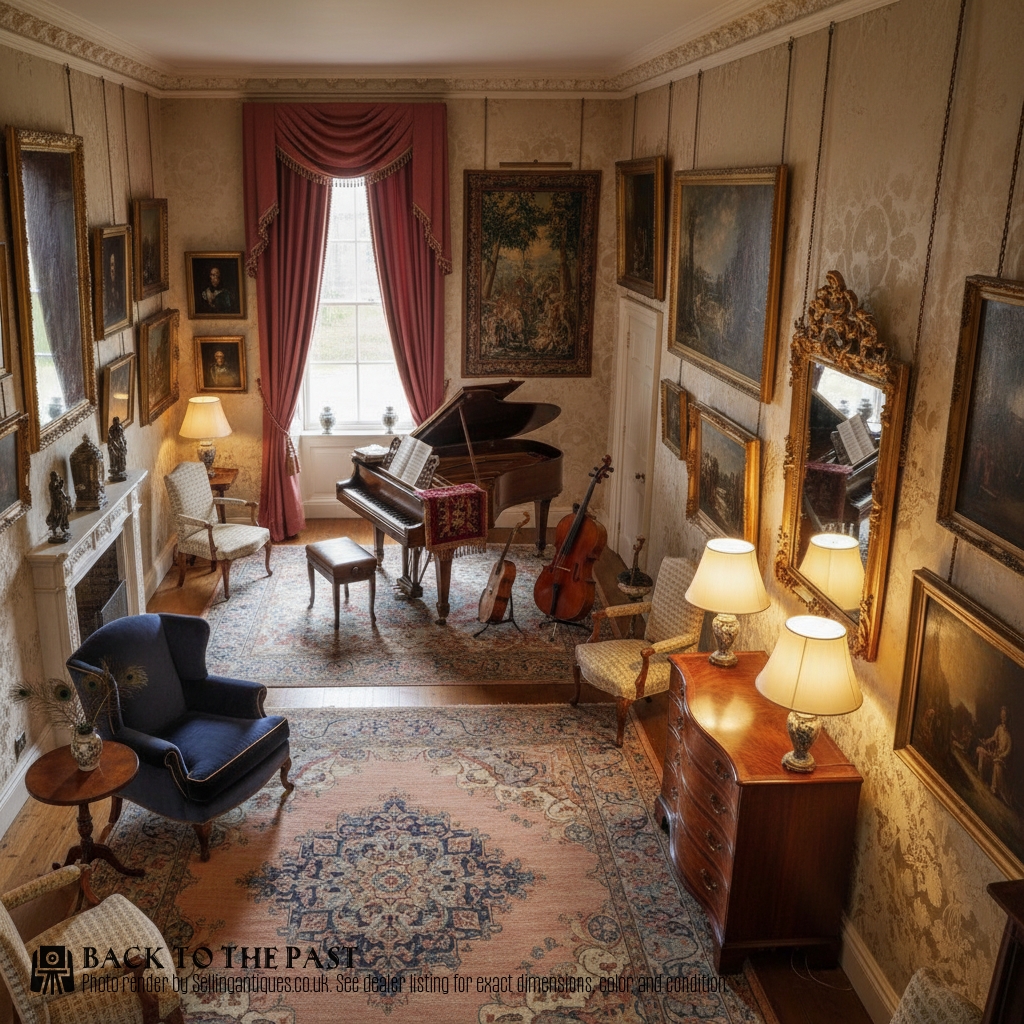
Inlaid Mahogany Storage Chest
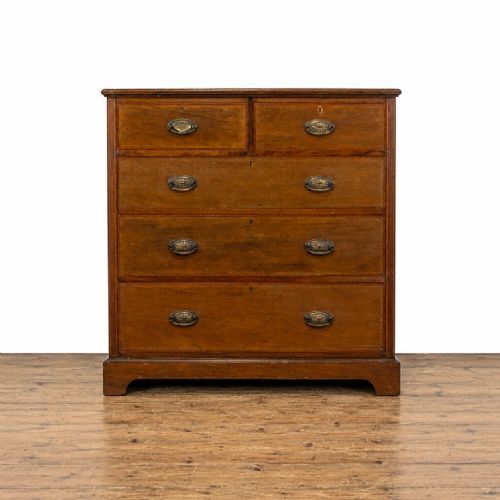
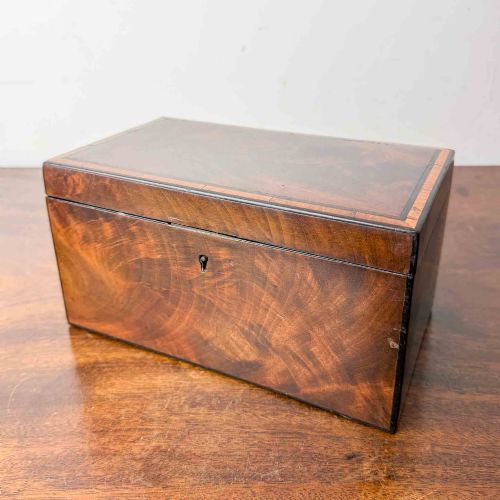
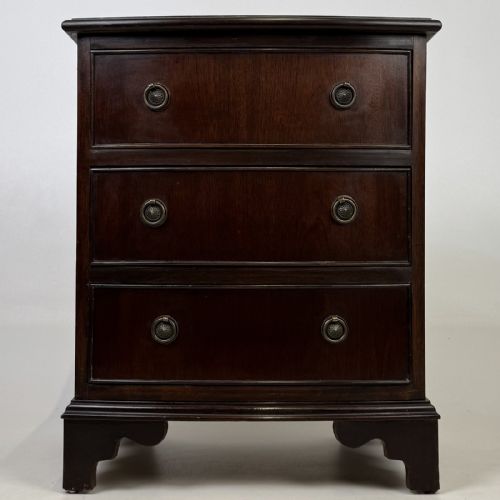
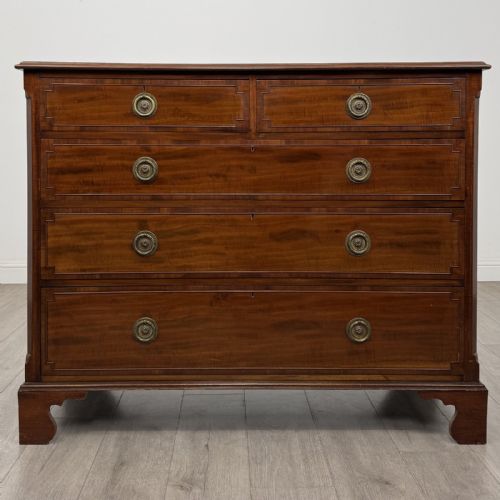
An inlaid mahogany storage chest encompasses functional timber furniture produced across the Georgian, Regency, Victorian, and Edwardian periods. Buyers searching for an inlaid mahogany storage chest encounter varied forms, including large linen presses, tall chests of drawers, bow-fronted bedroom pieces, and smaller tabletop boxes. Georgian and George III examples frequently exhibit serpentine fronts or satinwood line inlay, whilst later Edwardian and Victorian iterations display refined crossbanding and slender proportions.
The practical purpose of these items dictates their interior configuration, moving from deep linen press wardrobes with internal sliding trays down to compact collector cabinets and tea caddies. Pieces originating from the eighteenth and nineteenth centuries prioritise solid timber construction combined with veneered drawer fronts, designed specifically to secure garments, documents, or household silver. The selection typically leans towards chest of drawers configurations and substantial linen presses rather than smaller storage boxes.
Materials and Construction
Makers utilised dense primary timbers such as flame mahogany and fiddleback mahogany, paired with contrasting secondary woods for decorative effect. Surfaces display intricate banding and stringing executed in satinwood, boxwood, and ebony, creating crisp geometric or floral motifs against the dark grain of the base timber.
Cabinetmakers employed traditional joinery techniques, housing drawers within dovetailed carcasses and incorporating brass hardware including campaign handles and escutcheons. Inlay work involved carefully cutting contrasting veneers into recesses carved directly into the mahogany surface, securing them with animal glues common to the period.
Listings span the Georgian, Regency, Victorian, and Edwardian eras, incorporating brass, satinwood, and ebony elements.
Markers of Quality
The standard of a piece rests upon the crispness of the timber selection and the precision of the contrasting inlay work. Superior examples combine highly figured flame mahogany with meticulously balanced satinwood or ebony stringing that remains intact across panelled doors and drawer fronts.
Structural integrity and original hardware further distinguish finer items from simpler utilitarian furniture. Pieces retaining original brass mounts, well-fitted internal sliding trays, and unwarped dovetailed drawer boxes represent the higher echelon of period cabinetmaking.
Druce & Co·Holtzapffel and Co
The Inlaid Mahogany Storage Chest Glossary
- Mahogany
- A durable tropical hardwood imported from the West Indies and Central America, prized for its rich reddish-brown colour and stable grain. It served as the primary structural and surface timber for high-end British cabinetmaking.
- Inlay
- A decorative technique where spaces are carved into a solid wood surface and filled with contrasting materials like satinwood, boxwood, or ebony to form patterns. This differs from veneering by setting the ornament directly into the body timber.
- Linen Press
- A large double-door storage cabinet featuring internal sliding trays or shelves above a chest of drawers base. They were originally designed to store household linens flat under pressure.
- Crossbanding
- A decorative border of veneer laid around the perimeter of a drawer front or table top so that the grain runs at right angles to the central panel. It frames the primary timber with a contrasting geometric border.
- Serpentine Front
- A cabinet or chest front featuring a curving profile that bulges outward in the centre and recedes in sweeping curves towards the corners. This complex shape required advanced woodworking skill.
Inlaid Mahogany Storage Chest: Frequently Asked Questions
What is a linen press?
A linen press is a tall storage furniture piece featuring upper doors enclosing sliding trays, mounted over a base of drawers.
They were built to keep household textiles flat and organised before modern wardrobes became common.
How do I date a mahogany chest?
Dating relies on examining the timber grain, drawer construction details, and the style of brass handles used.
Georgian pieces often feature hand-cut dovetails and oak drawer linings, whereas Edwardian items display machine-sawn components.
What is satinwood inlay?
Satinwood inlay is a contrasting decorative wood veneer inserted into carved channels on the mahogany surface.
It creates pale geometric lines and decorative motifs that stand out sharply against the darker background timber.
Where were these chests used?
These chests were placed in bedrooms, dressing rooms, and hallways of large British homes for daily storage.
Smaller boxes and caddies sat atop tables in drawing rooms to hold tea, documents, or jewellery.