

Inlaid Mahogany Shelves
These inlaid mahogany shelves bring together rich timbers and fine banding, offering practical storage with distinct period character.
Inlaid Mahogany Shelves
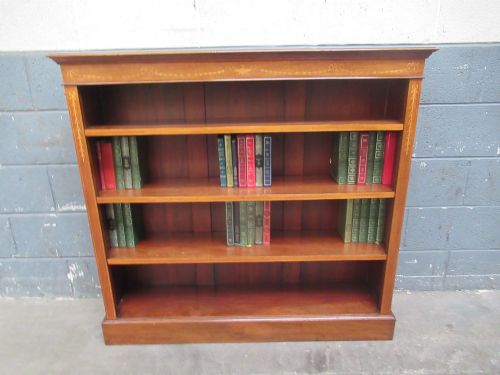
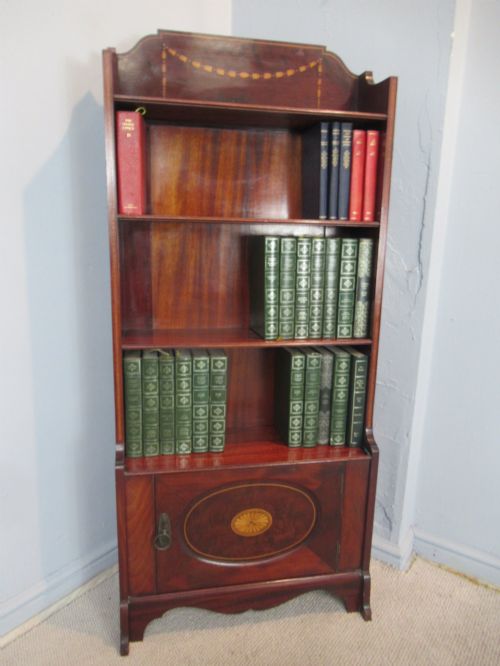
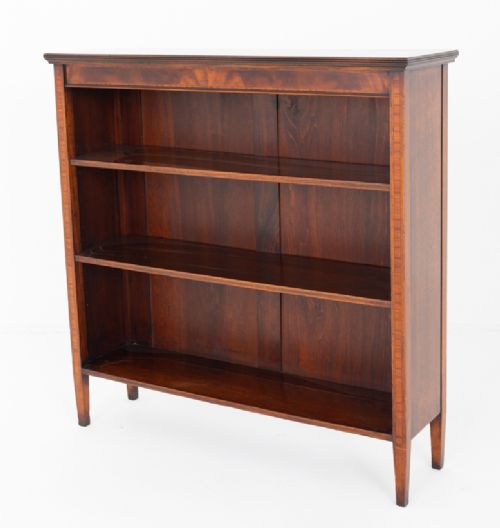
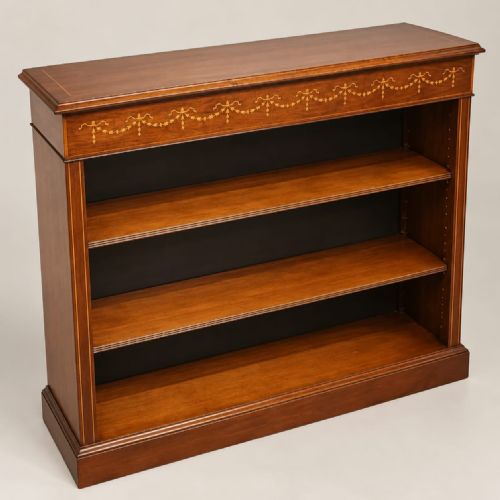
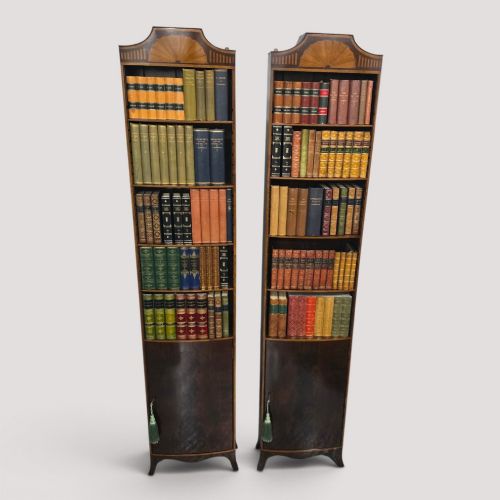
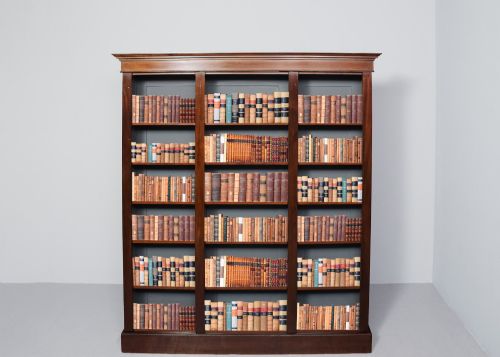
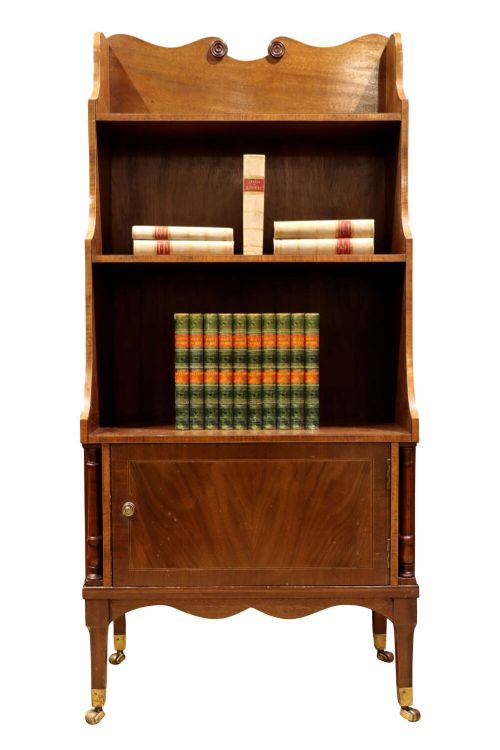
When buyers search for inlaid mahogany shelves, they encounter wall-mounted units, standing open bookcases, and waterfall bookshelves originating from periods such as the Edwardian era, the Victorian age, and the late nineteenth century. These pieces serve primarily to display books and decorative objects while introducing warmth and structural interest to a room.
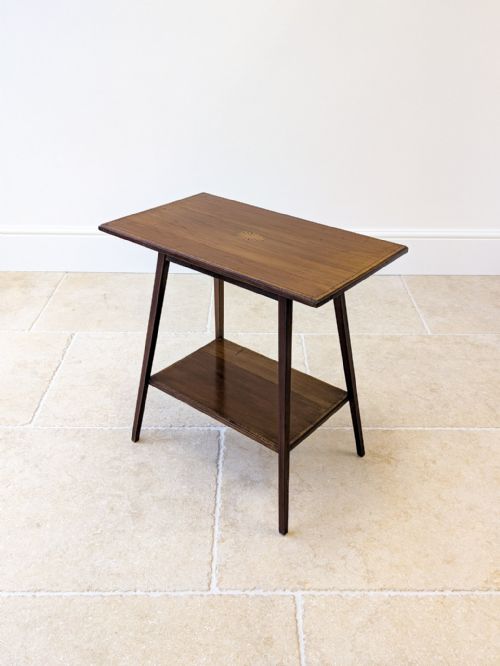
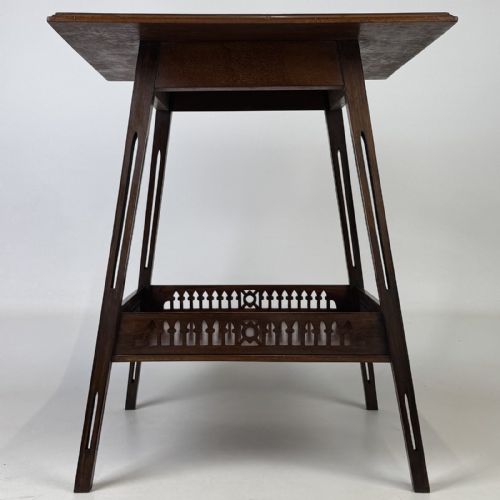
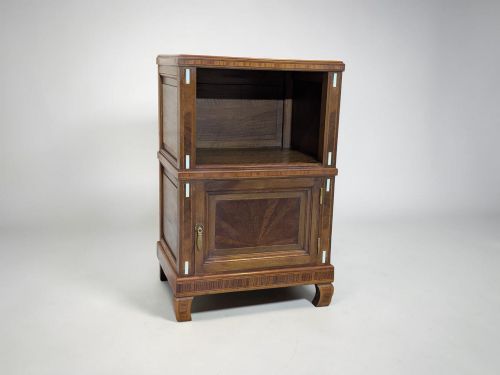
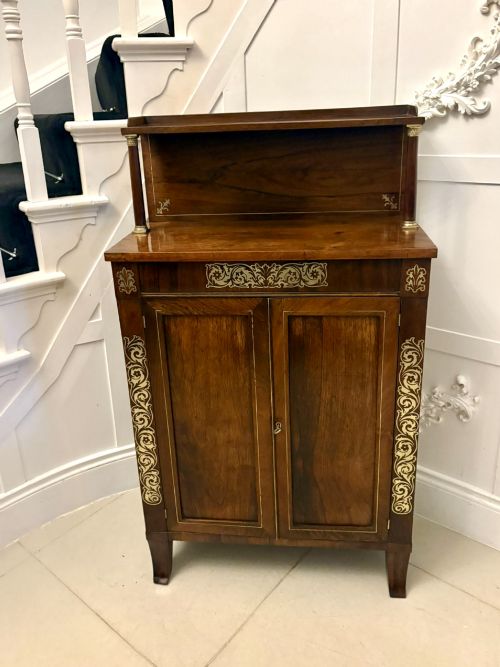
The versions most commonly met on this page date from the Edwardian period and employ open formats or narrow standing configurations. Alongside dedicated bookshelves, the evidence includes related furniture forms incorporating shelving, such as side cabinets, display cabinets, and bureau desks.
The designs draw on Georgian, Regency, and Sheraton Revival styles, reflecting an enduring interest in classical symmetry and delicate decorative contrast. Makers utilise mahogany as the primary timber, embellished with lighter contrasting woods to define edges and panel borders.
How they were made
Cabinetmakers constructed these shelves using solid mahogany or mahogany veneers applied to secondary structural timbers, ensuring stability for load-bearing book storage. Selected pieces incorporate brass castors for mobility or brass hardware to accent the darker grain.
Decorative surface detail relies on precision wood inlay, frequently utilising satinwood and boxwood to create contrasting stringing, banding, and geometric or floral motifs. This technique highlights cornices, drawer fronts, and shelf edges, requiring considerable skill to inset contrasting timbers flush with the mahogany surface.
Inlaid Mahogany Shelves Retail Price Guide 2026
Typical asking prices for inlaid mahogany shelves among the pieces listed under this phrase on Sellingantiques today, from the lower quarter to the upper quarter. They describe what is for sale here now, not the wider market.
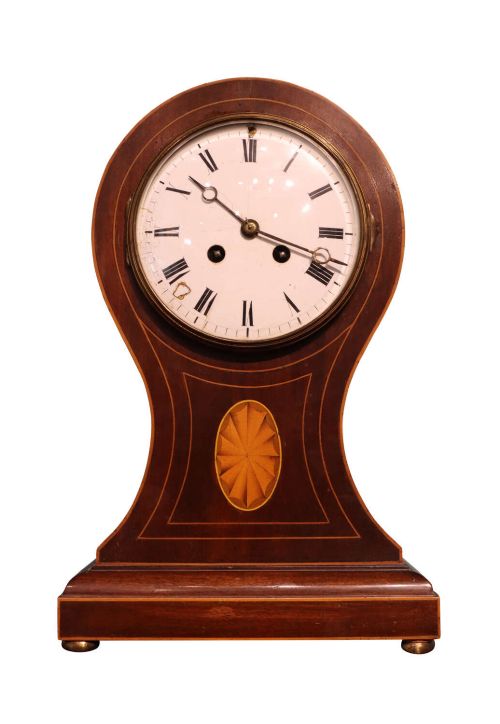
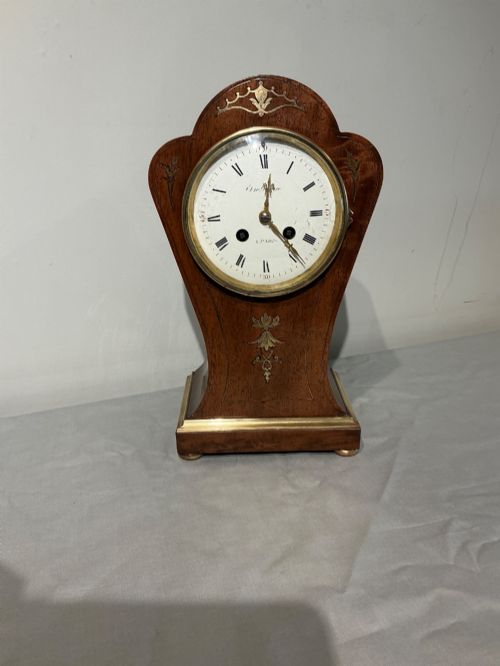
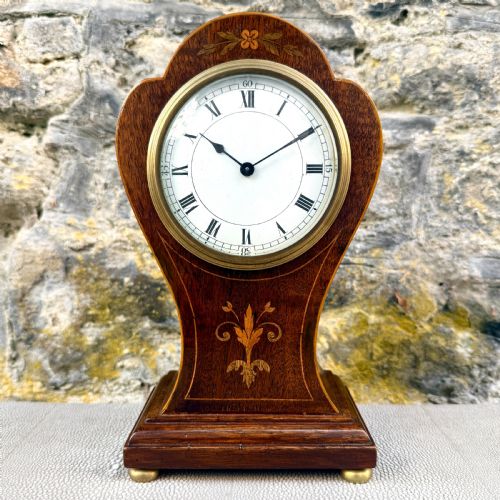
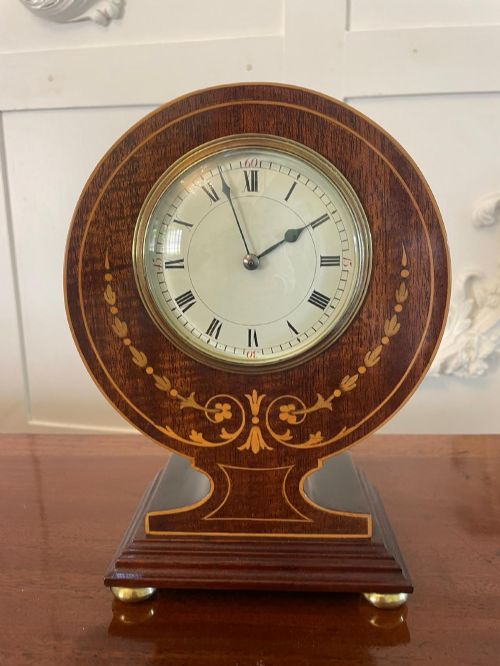
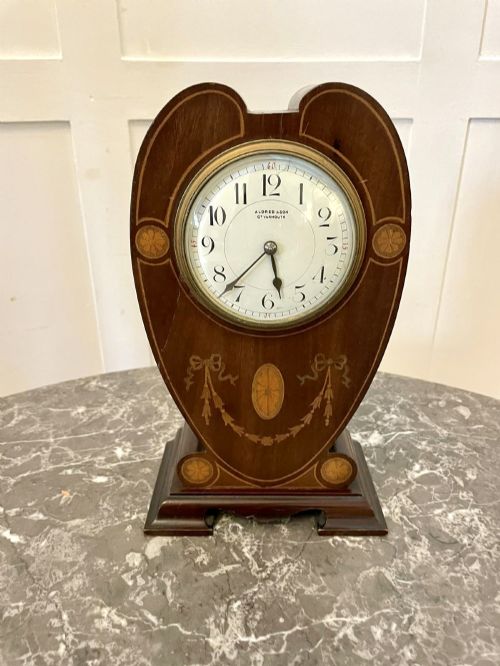
Several items double as timepieces, proving that Edwardians enjoyed watching the minutes tick away while selecting a book.
What varies in quality
Quality in these pieces is dictated by the crispness of the joinery and the finesse of the wood inlay work. Superior examples display tightly fitted mitres, smooth running drawers where applicable, and meticulously balanced timber grain across visible surfaces.
The distinction between standard production and finer workshops lies in the complexity and precision of the satinwood or boxwood banding. Finer pieces demonstrate deliberate proportioning, elegant vertical scaling in standing bookcases, and restrained decorative motifs that complement rather than overwhelm the mahogany.
Trevor Page & Co·EDWARDS and ROBERTS·Gillows
The Inlaid Mahogany Shelves Glossary
- Mahogany
- A durable tropical hardwood valued for its rich reddish-brown colour and fine grain. It forms the structural and visual foundation for the majority of these pieces.
- Inlay
- A decorative technique where small pieces of contrasting timber, such as satinwood or boxwood, are inserted into recesses cut into the mahogany surface. This creates flat patterns and framed borders.
- Waterfall bookcase
- A standing set of open shelves where each successive shelf steps back from the one below it, creating a profile resembling descending water. This form appears frequently in late Victorian and Edwardian examples.
- Sheraton Revival
- A late nineteenth and early twentieth-century style inspired by the furniture designs of Thomas Sheraton. It is characterised by neoclassical restraint, slender proportions, and delicate inlay work.
- Banding
- A narrow strip of contrasting wood veneer applied around the edges of shelves, tabletops, or door panels. It serves to frame the primary timber and add linear definition.
Inlaid Mahogany Shelves: Frequently Asked Questions
What periods do these shelves date from?
The pieces span the late nineteenth century through the Edwardian era and into the early twentieth century. Stylistic revivals also introduce earlier design influences from the Georgian and Regency periods.
Buyers encounter variations in construction and decoration that reflect these shifting eras, from ornate Victorian waterfall cabinets to lighter Edwardian open bookcases.
How should I care for mahogany shelves?
Maintain the wood by keeping the shelves away from direct heat sources and strong sunlight, which can fade the mahogany and dry out the timber. Regular dusting with a soft, dry cloth preserves the polished finish.
Avoid silicone-based sprays, opting instead for traditional beeswax occasionally applied to nourish the timber and protect the inlaid banding.
Are the shelves adjustable?
Certain standing bookcases and display cabinets feature adjustable shelving supported by traditional wooden racks or metal pins. Other wall-mounted and waterfall configurations employ fixed shelves integral to the structural frame.
Checking the specific description helps determine whether shelf heights can be altered to accommodate varied book sizes.
What is the difference between Edwardian and Victorian pieces?
Victorian examples generally present heavier proportions, deeper timber tones, and robust construction intended for formal nineteenth-century interiors. Edwardian pieces often exhibit lighter scaling, brighter mahogany finishes, and refined Sheraton Revival influences.
Both periods utilise fine wood inlay, but Edwardian designs frequently lean towards airier, more delicate silhouettes.