

Inlaid Mahogany Pedestal Table
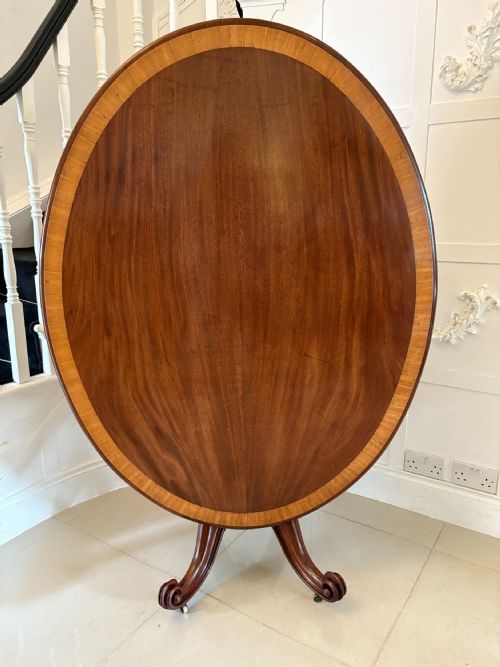
These inlaid mahogany pedestal table designs combine rich timbers with precise contrasting stringing, offering a practical centrepiece that anchors a room.
Inlaid Mahogany Pedestal Table
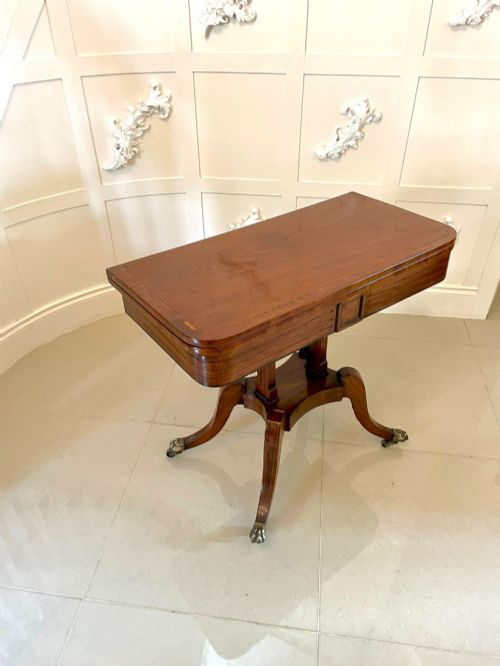
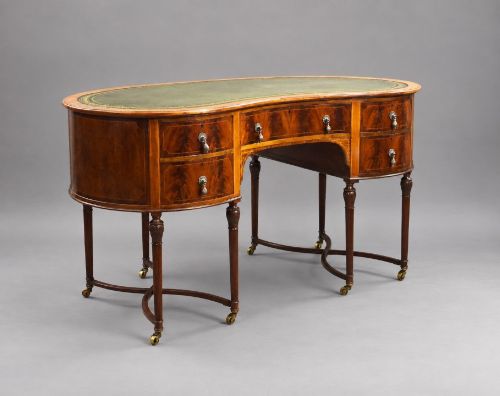
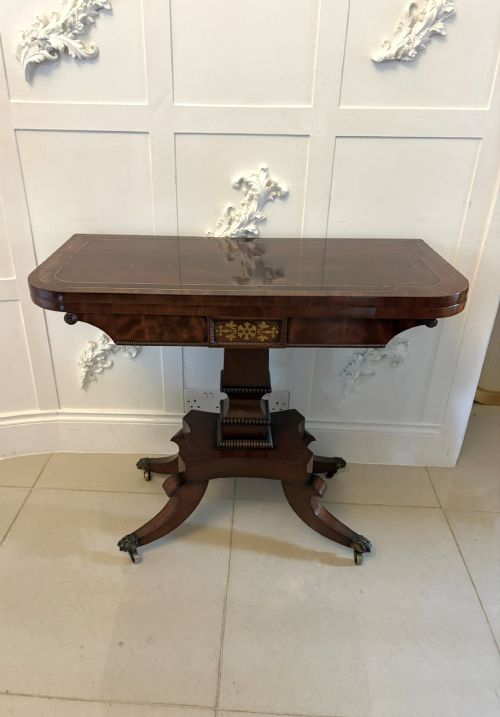
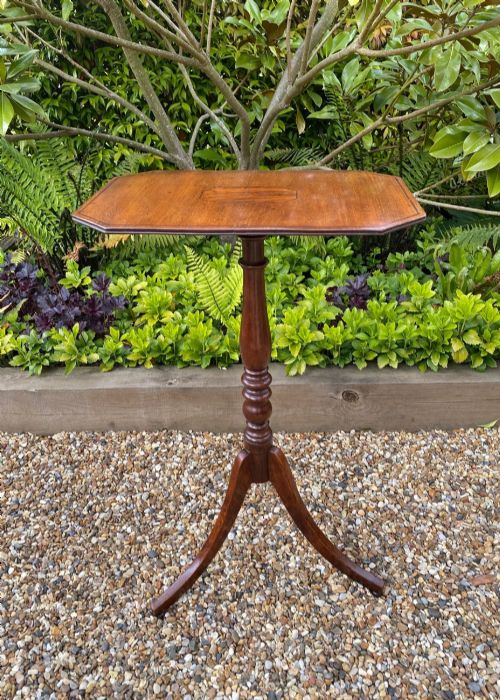
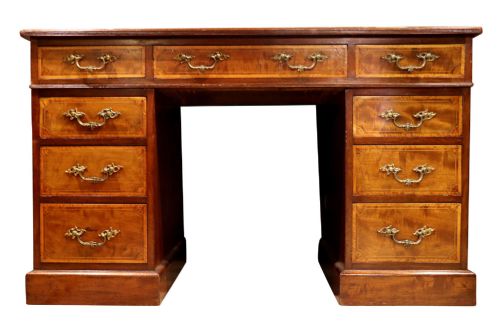
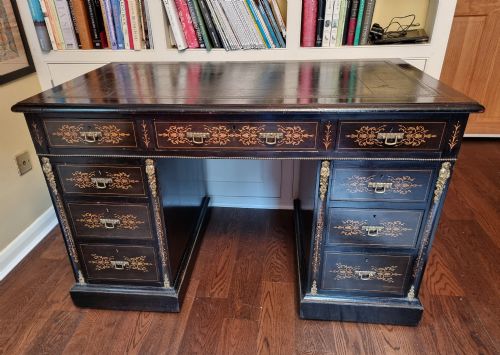
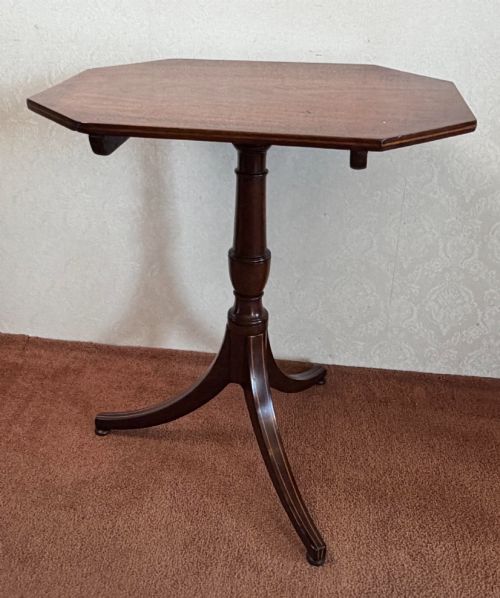
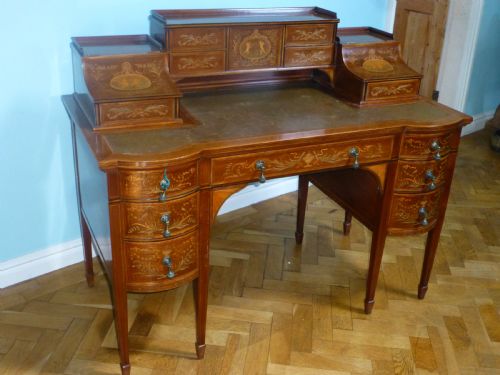
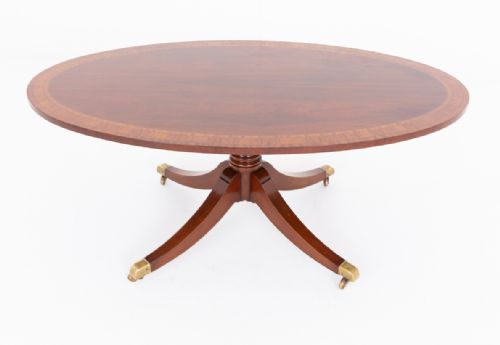
An inlaid mahogany pedestal table brings together a central column support and a timber top decorated with contrasting decorative lines, appearing across periods from the Georgian era through to the Edwardian years. You will frequently encounter compact wine tables, card tables with fold-over tops, and larger pedestal desks matching this search phrase.
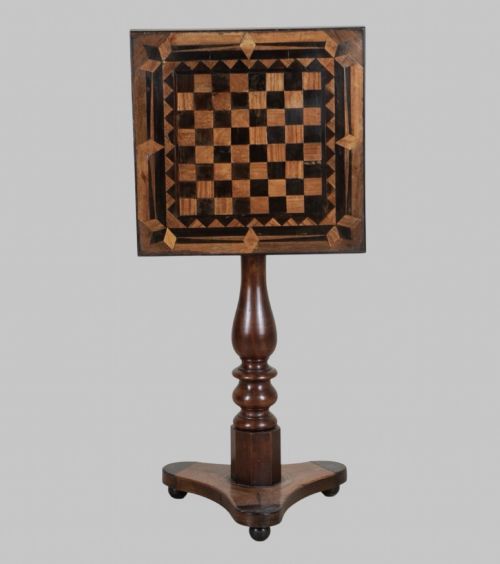
The selection ranges from early nineteenth-century Regency examples with brass banding to later Sheraton Revival and Edwardian pieces finished with delicate marquetry. These forms served various historical functions, from holding candles and wine to providing a stable surface for writing and games.
Materials and Technique
Cabinetmakers built these pieces using solid mahogany and figured timber veneers, applying contrasting lines of satinwood, boxwood, and ebony into recessed channels. Brass details, including stringing, banding, and castors, appear alongside leather writing inserts on desk surfaces.
Makers utilised traditional joinery for the pedestals, turning solid wood columns and securing them to tripod or platform bases. Marquetry work involved cutting intricate floral or geometric motifs from fine wood veneers and fitting them flush into the primary timber surface.
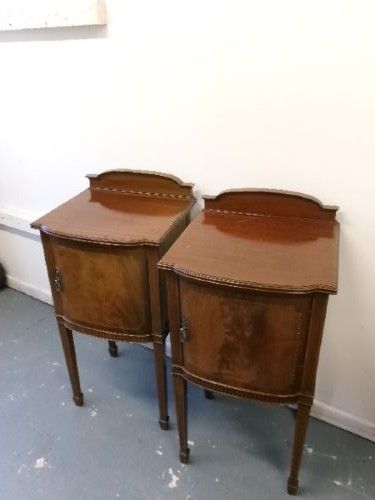
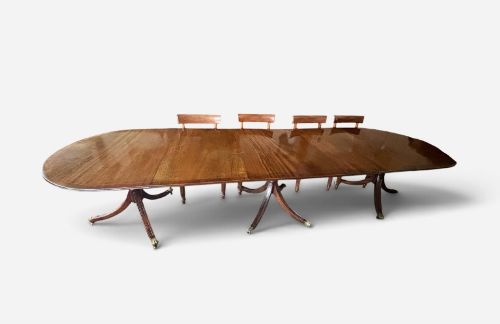
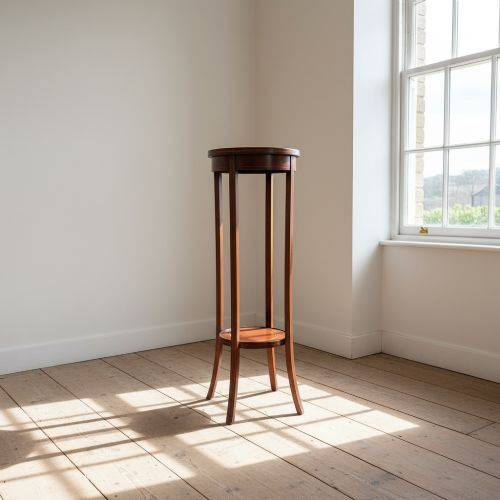
Object types range from compact wine stands and bedside cabinets to large multi-pillar dining tables, card tables, and fitted writing desks.
Evaluating Quality
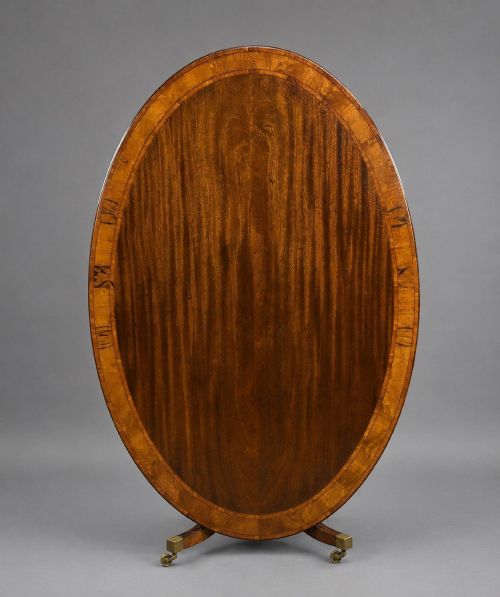
Quality rests in the crispness of the timber inlay and the depth of figure in the mahogany veneer, where well-matched grains create natural pattern across the top. Superior examples display precise mitre joints in the stringing and smooth, balanced movement in tilt-top mechanisms or drawers.
The sophistication of the brass mounts and the hand-cut nature of the marquetry distinguish workshop pieces from later mass-produced items. Original handles, unblemished leather surfaces, and stable pedestal bases indicate careful preservation and higher initial craftsmanship.
Edwards and Roberts·JAS Shoolbred·Wolfe and Hollander
The Inlaid Mahogany Pedestal Table Glossary
- Inlay
- A technique where pieces of contrasting wood, brass, or other materials are set into the surface of a primary timber to create decorative patterns. This method defines the surface decoration on these tables.
- Pedestal table
- A freestanding table supported by a central vertical column that typically branches into a tripod or weighted base. This structural form saves floor space and allows seating around the perimeter.
- Marquetry
- Elaborate veneer work forming pictorial or decorative designs using various tinted woods. It differs from simple stringing through its complex pictorial scope.
- Stringing
- Very narrow strips of contrasting wood or light-coloured timber inlaid flush into the surface to form borders or geometric lines. Craftsmen used boxwood and satinwood for this linear detailing.
- Console card table
- A folding table designed to sit against a wall when closed and open to reveal a baize-lined playing surface. Many surviving examples feature inlaid mahogany tops.
Inlaid Mahogany Pedestal Table: Frequently Asked Questions
How do I date an inlaid mahogany pedestal table?
Dating relies on observing structural characteristics, timber selection, and the style of the inlay work. Georgian and Regency pieces typically show hand-cut dovetails and heavy brass components, while Edwardian revivals often utilise lighter internal construction.
Examine the underside and drawer linings for tool marks and timber ageing. Secondary woods like oak or pine inside drawers can also help narrow down the period of manufacture.
Were pedestal tables used for dining?
Smaller pedestal tables served primarily as wine stands, candle holders, or lamp supports rather than for family meals. Larger multijoined pillar tables catered to dining rooms, while card tables were brought out for evening entertainment.
Single-pedestal variants functioned flexibly in parlours and studies as portable surfaces. Their central column allowed sitters to draw close without interference from corner legs.
How do I care for mahogany and inlay?
Protect the timber and delicate boxwood or satinwood stringing by keeping tables away from direct heat sources and strong sunlight. Consistent indoor humidity prevents the wood veneers from drying and lifting out of their channels.
Apply a microcrystalline wax periodically to feed the French polish finish and maintain a soft sheen. Avoid commercial silicone sprays, which can penetrate damaged areas of the finish.
What is the difference between stringing and marquetry?
Stringing consists of thin, straight lines of contrasting timber inlaid around borders or edges to create geometric framing. It provides understated linear definition on Georgian and Regency pieces.
Marquetry uses shaped wood veneers assembled like a puzzle to form pictorial scenes, urns, or floral sprays. This technique requires greater time and skill, frequently appearing on Sheraton Revival and Edwardian furniture.