




Inlaid Mahogany Nest
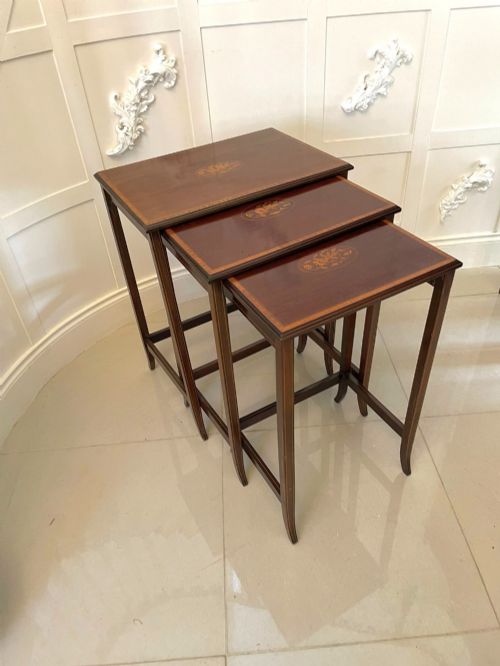
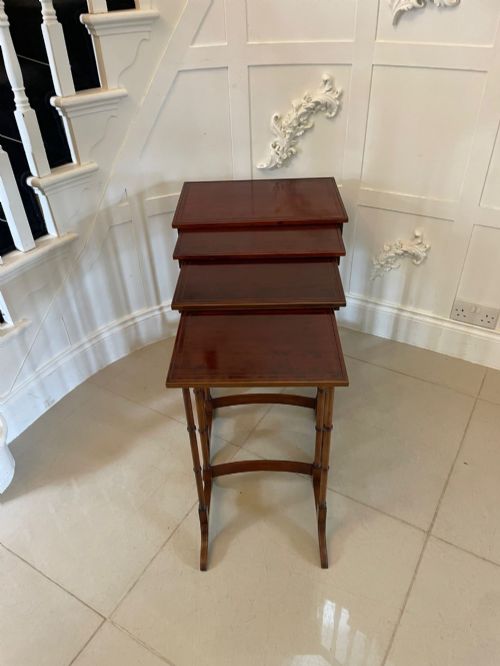
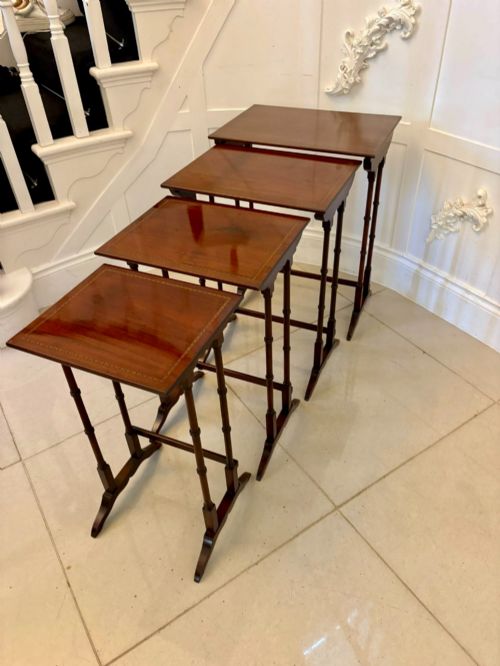
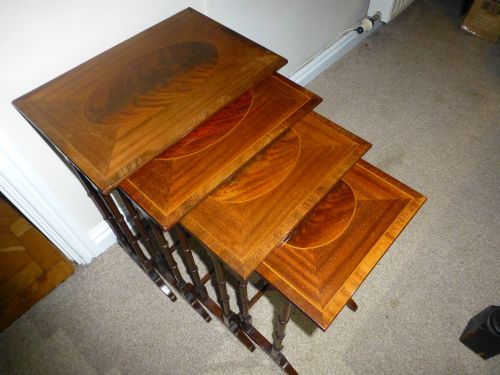
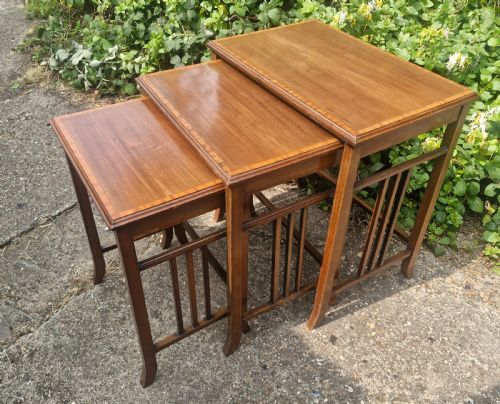
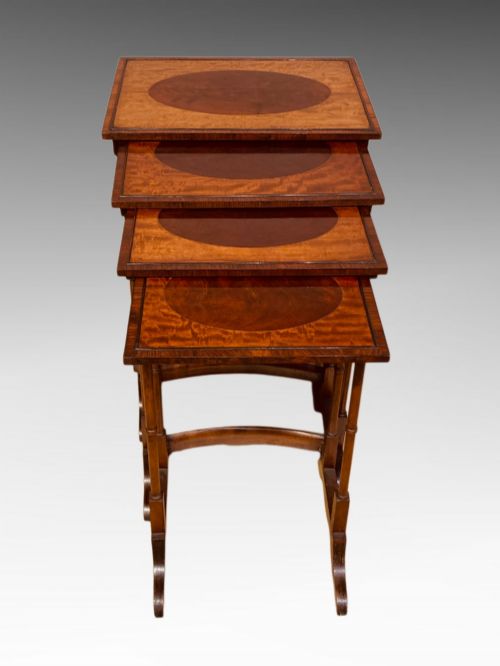
An inlaid mahogany nest offers four graduating tables that slide neatly together, bringing versatile surface space to a sitting room without cluttering the floor.
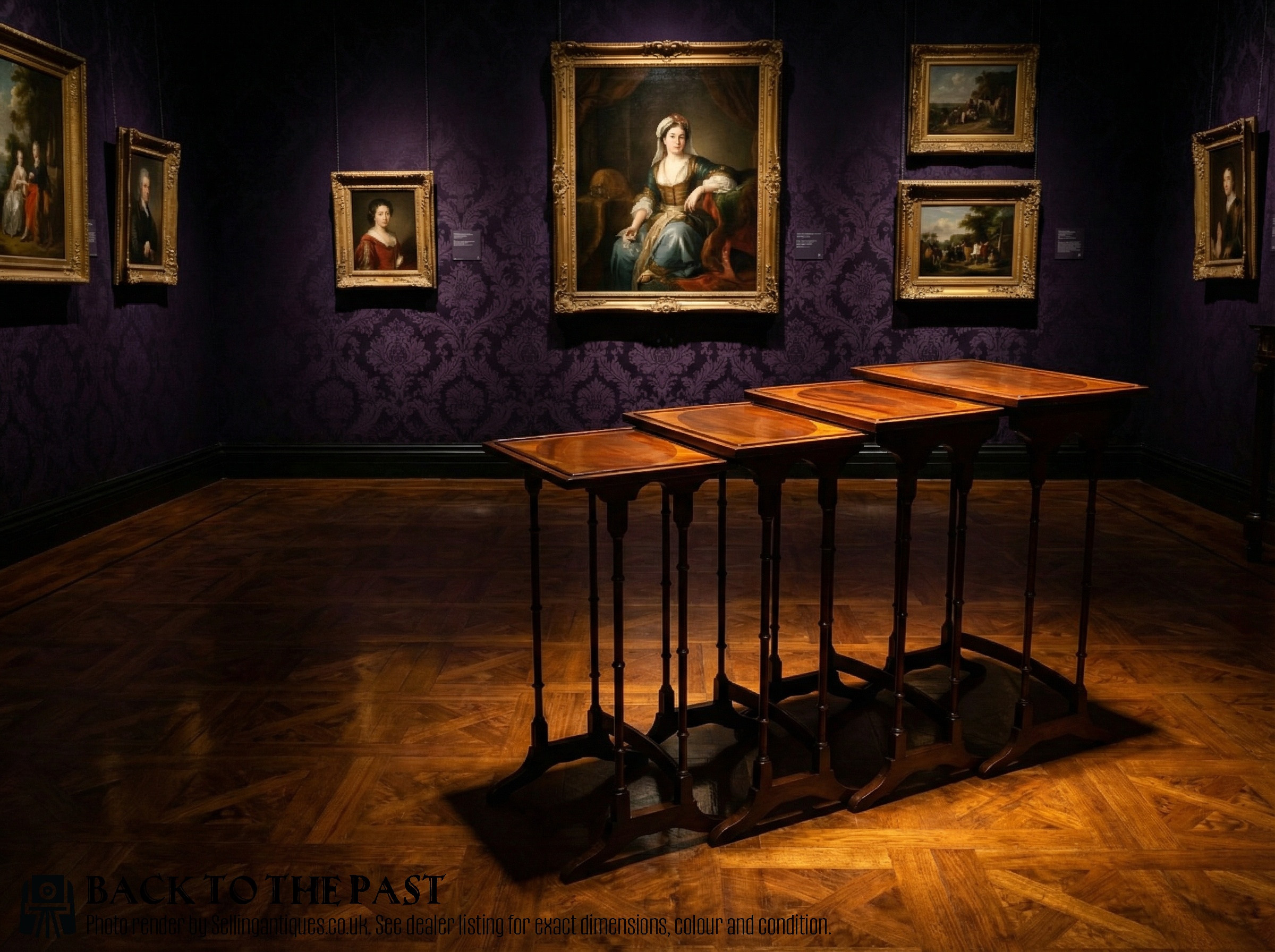
Inlaid Mahogany Nest
An inlaid mahogany nest is a set of graduating occasional tables designed to stack inside one another when not in use. You are most likely to encounter Edwardian examples on this page, alongside pieces from the nineteenth century and the early decades of the twentieth century.
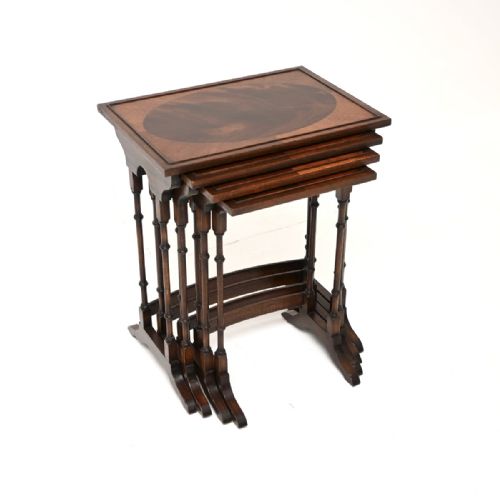
Many of these sets are known historically as quartetto tables, often following Sheraton revival styles or Georgian proportions. They appear in configurations of three or four tables, sometimes featuring serpentine fronts or kidney shapes.
Materials and Construction
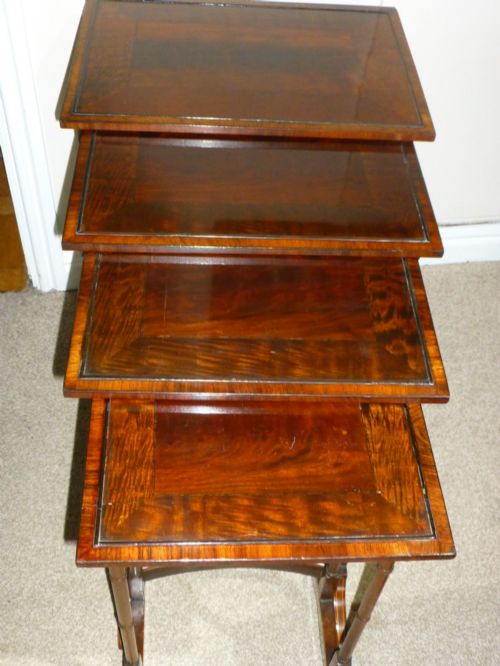
Makers built these tables using solid mahogany and mahogany veneers, selected for grain figure and warmth. Tops frequently incorporate contrasting timbers such as satinwood, boxwood, and rosewood for decorative banding and marquetry details.
Leg construction relies on slender square tapered supports or turned uprights designed to bear the weight of stacking. Cross-banding and delicate stringing define the edges, reflecting cabinet-making standards of the Edwardian and Victorian periods.
Inlaid Mahogany Nest Retail Price Guide 2026
Typical asking prices for inlaid mahogany nest among the pieces listed under this phrase on Sellingantiques today, from the lower quarter to the upper quarter. They describe what is for sale here now, not the wider market.
Some sets manage to wedge four whole tables into the floor space of a single occasional stool, proving Victorians took Tetris seriously.
Judging Quality
Quality rests on the precision of the graduating fit and the crispness of the timber inlays. Finer examples show tight joints where the smaller tables slide smoothly into the framework of the larger ones without binding.
The choice of secondary woods and the complexity of the marquetry also distinguish standard production from superior workshop output. Grain continuity across the tabletops reveals the maker's care in selecting veneers.
Waring and Gillow
The Inlaid Mahogany Nest Glossary
- Quartetto
- A set of four graduating tables designed to nest together. This term appears frequently in Edwardian catalogue descriptions.
- Satinwood
- A pale, lustrous timber utilised for contrasting stringing and cross-banding on mahogany surfaces. It provides a bright visual border.
- Cross-banding
- A strip of veneer applied to the border of a tabletop with the grain running perpendicular to the centre. This technique frames the primary mahogany panel.
- Marquetry
- Decorative patterns formed by the insertion of various woods into a veneered surface. Floral motifs and geometric lines are typical examples.
- Stringing
- Thin inlay lines of contrasting wood set flush into channels on table legs or borders. It adds linear definition to plain surfaces.
Inlaid Mahogany Nest: Frequently Asked Questions
How were nesting tables originally used?
These sets served as movable surfaces for afternoon tea, reading materials, or needlework in Victorian and Edwardian drawing rooms. Servants or hosts could separate the tables around the room as guests required.
Once tea or sewing concluded, the tables stacked back together into a single compact footprint. This space-saving design made them particularly popular in smaller reception rooms.
What is a quartetto nest?
A quartetto nest specifically refers to a set of four tables rather than three. The term gained wide currency during the Edwardian period for Sheraton revival stacking tables.
Each table diminishes in height and width so the smallest fits entirely beneath the next. This arrangement maximises surface area while occupying the floor space of a single small table.
How do I date an Edwardian nest?
Edwardian nests generally date between 1901 and 1910, often displaying Sheraton revival styling with satinwood inlay on mahogany. Construction tends to be lighter than nineteenth-century counterparts, with slender square tapered legs.
Looking underneath the largest table sometimes reveals retailer labels or pencil inscriptions from the workshop. The sharpness of the veneer work also helps separate Edwardian revival pieces from later twentieth-century reproductions.
Can I use them as coffee tables?
While historic tables were designed as occasional side or tea tables, many people now use individual pieces from the nest as coffee or lamp tables. The graduating sizes allow you to pull a smaller table out toward a sofa while keeping the main stack nearby.
Care should be taken with moisture and heat, as antique French polish and vintage veneers are sensitive to liquid rings. Using coasters preserves the polished mahogany and delicate satinwood inlay.