

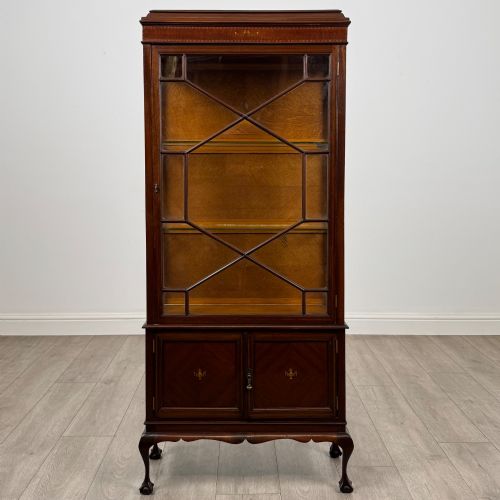
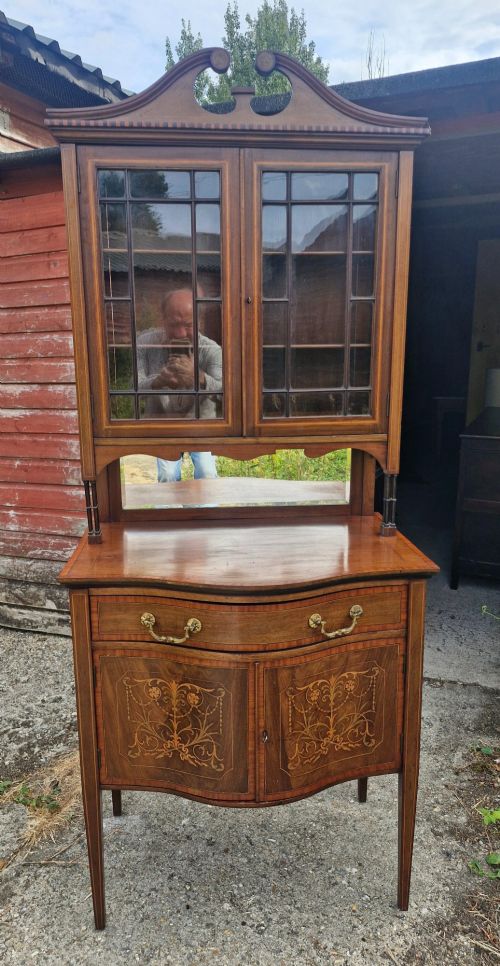
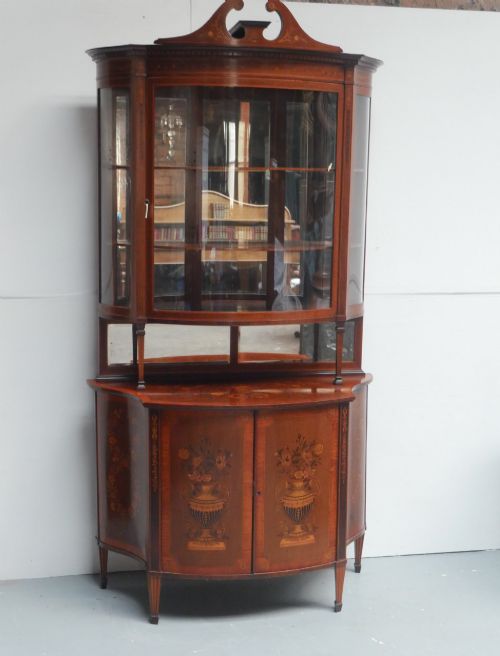
Inlaid Mahogany China Display
These inlaid mahogany china display pieces bring polished timber and clear glass together to showcase precious ceramics in any room.
Inlaid Mahogany China Display
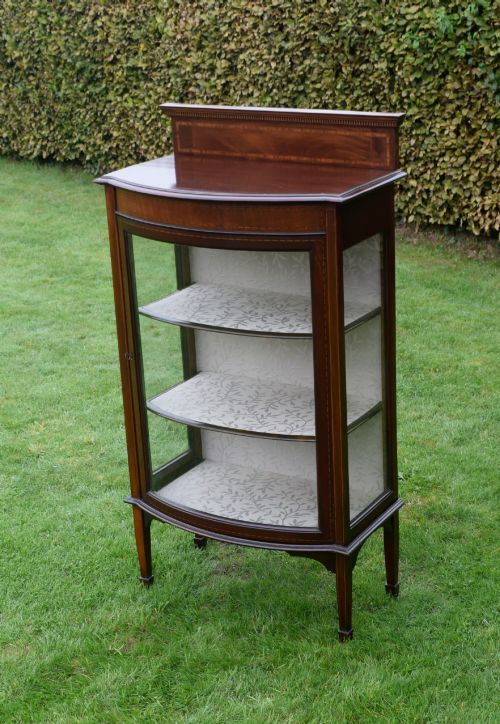
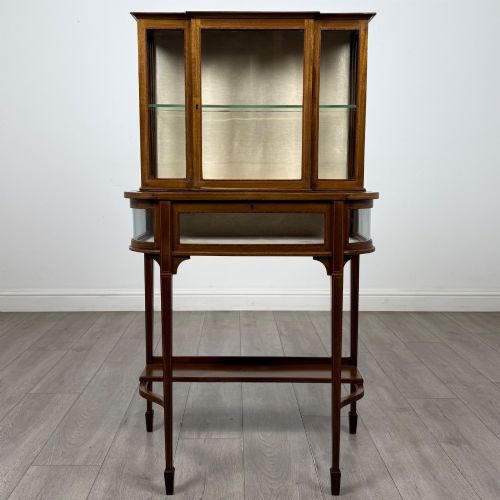
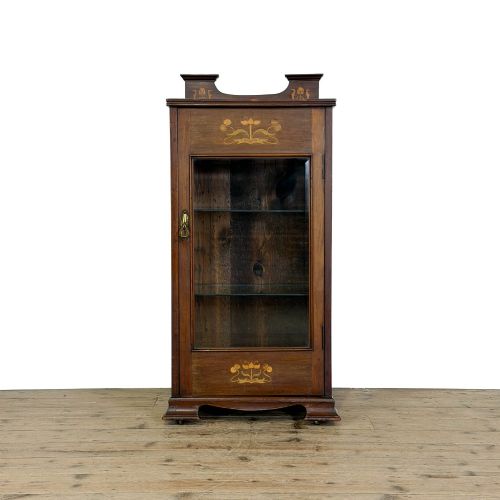
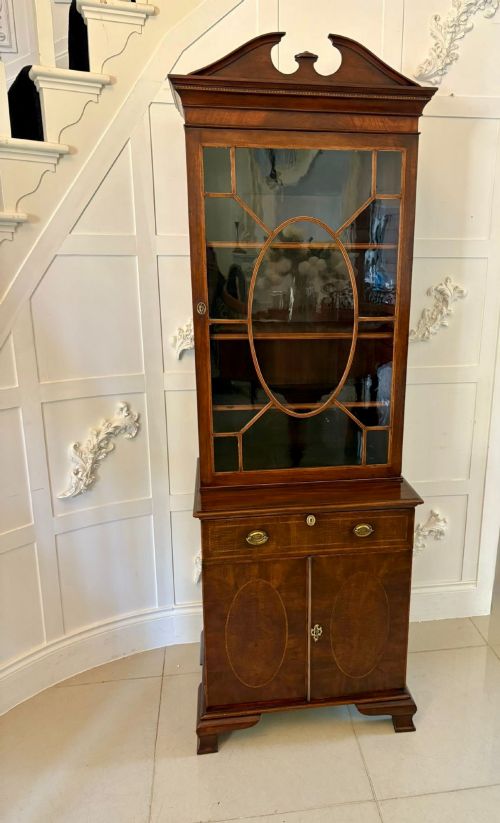
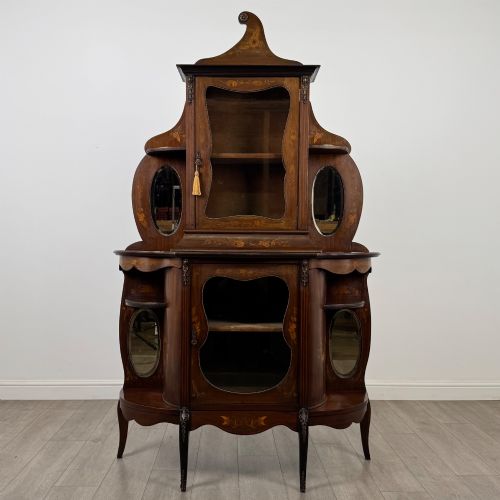
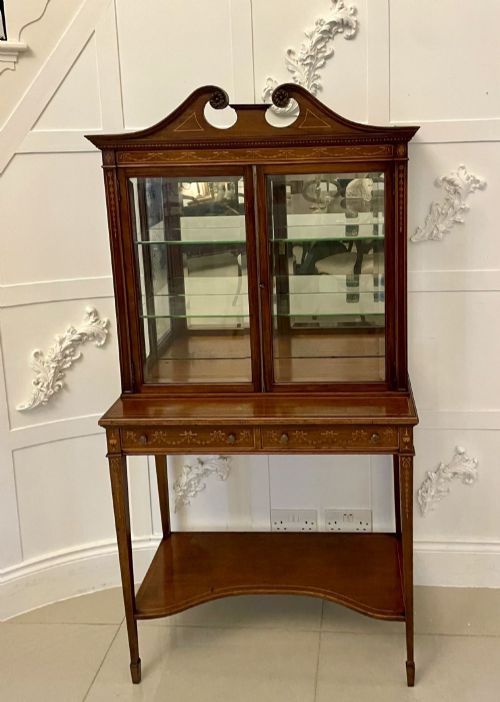
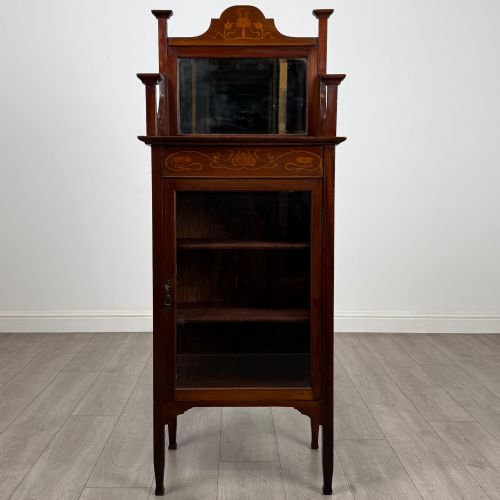
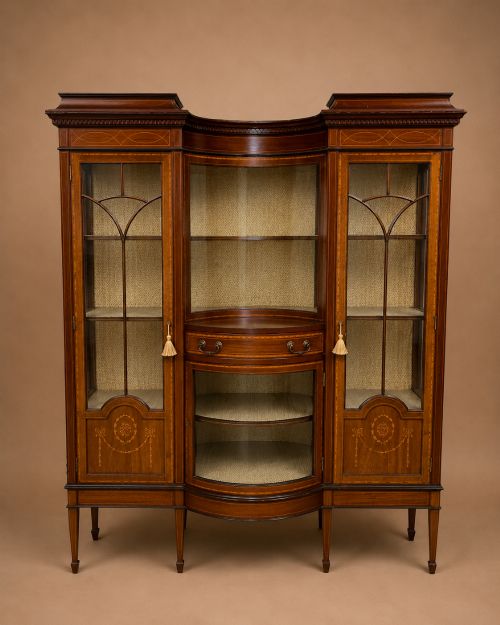
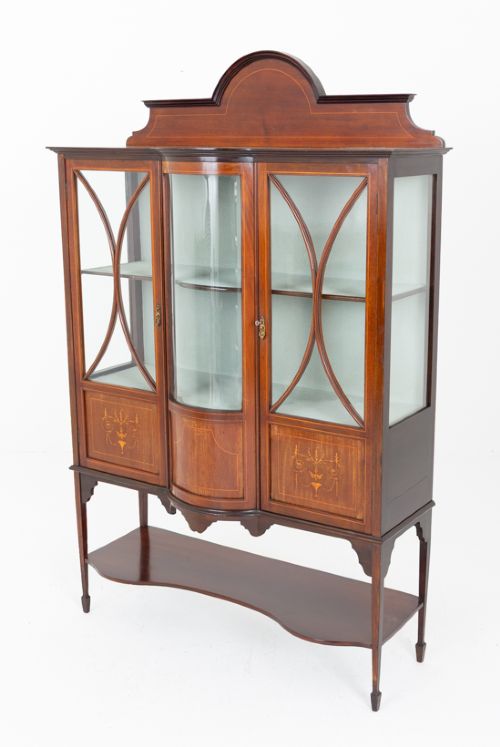
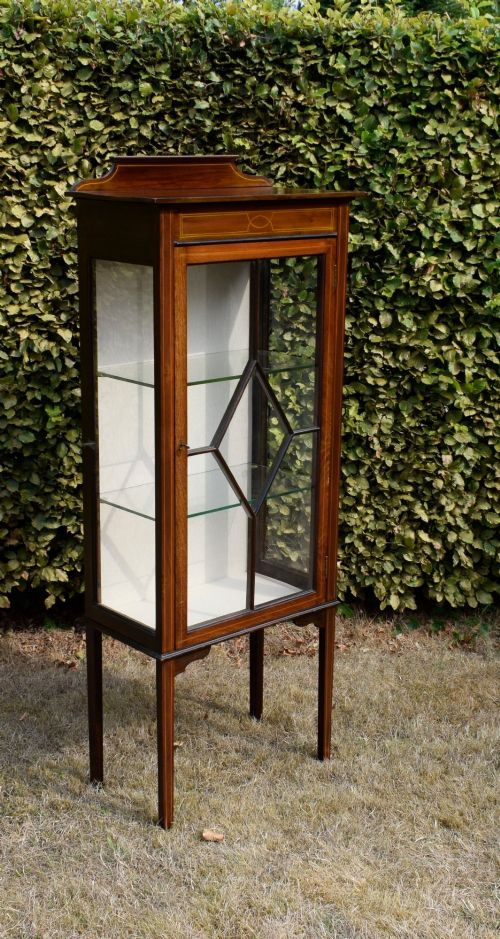
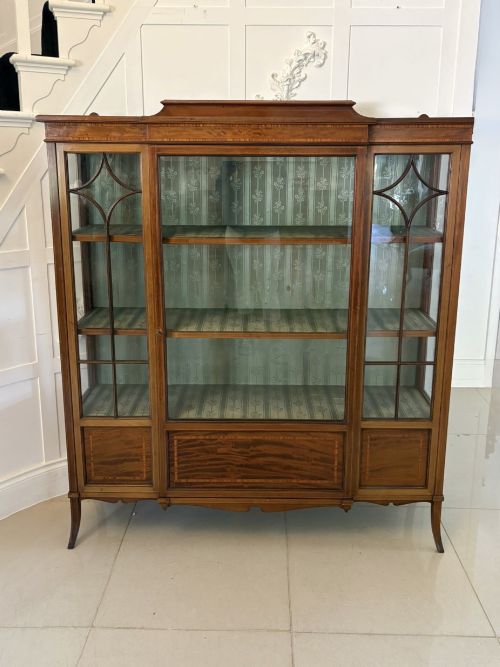
When searching for inlaid mahogany china display, buyers encounter a variety of refined storage furniture designed to protect and exhibit porcelain and collectibles. The pieces originate primarily from the Edwardian era and the Victorian period, spanning the late nineteenth century through to the early twentieth century.
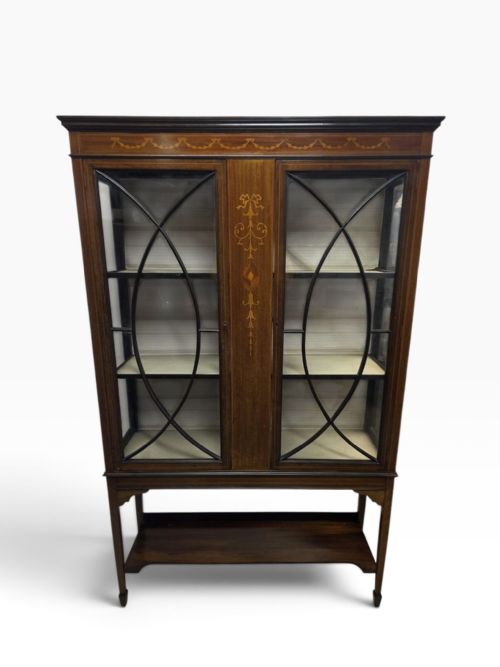
The dominant forms found here include upright display cabinets, corner cabinets, bookcases, and breakfront units. Many examples take the form of freestanding glazed cupboards featuring bow ends, serpentine fronts, or two-part constructions intended to hold decorative china.
Edwardian and Sheraton Revival interpretations are most commonly met on this page, often showcasing delicate contrasting timber details. Earlier Georgian and Victorian prototypes also appear, providing heavier timbers and deeper proportions for larger collections.
How They Were Made
Cabinet makers utilised solid mahogany and mahogany veneers as the primary structural body, often incorporating satinwood inlay and contrasting wood inlay for decorative banding and floral marquetry motifs. Glass panels were fitted into wooden frames or held behind narrow wooden glazing bars to protect the interior shelves.
Internal elements frequently included fabric-lined surfaces or mirror backs to reflect light through the stored ceramics. Brass hardware such as hinges, key escutcheon plates, and locking mechanisms completed the functional assembly of these glazed cabinets.
Materials span mahogany, satinwood inlay, mirror glass, and brass hardware.
What Varies in Quality
The standard of craftsmanship is judged by the precision of the timber joinery and the fineness of the inlaid decoration. Crisp, detailed floral marquetry and well-fitted satinwood banding distinguish superior examples from simpler production pieces.
Proportion and glass selection also dictate the grade of a cabinet. Cleanly drawn architectural lines, balanced door configurations, and unblemished glazing elevate the visual presence of the furniture.
Edwards & Roberts·Shapland and Petter·Maple & Co
The Inlaid Mahogany China Display Glossary
- Marquetry
- A decorative technique where pieces of coloured wood veneer are assembled to form pictorial or geometric patterns on a surface. This method was widely used on cabinet doors and friezes.
- Astragal glazing
- Narrow wooden bars that divide a large glass window into smaller panes. These delicate strips structure the doors of traditional display cabinets.
- Bow-ended
- A cabinet shape featuring a gently curved front profile rather than a flat plane. This design softens the geometric lines of the furniture.
- Sheraton Revival
- A late nineteenth and early twentieth century design movement inspired by the neoclassical work of Thomas Sheraton. It relies on light proportions and satinwood inlay.
- Breakfront
- A piece of furniture where the central section projects forward from the flanking wings. This architectural layout adds depth and presence to larger bookcases and cabinets.
Inlaid Mahogany China Display: Frequently Asked Questions
What are inlaid mahogany china display cabinets?
These are glazed wooden cabinets designed to hold and exhibit porcelain plates, figurines, and tea sets.
They combine mahogany woodwork with decorative inlay and glass viewing panels.
How were these cabinets used originally?
Middle and upper-class households used them in drawing rooms and dining rooms to display valuable ceramic collections.
The glass protected delicate porcelain from household dust while keeping it visible to guests.
How do I date an Edwardian display cabinet?
Edwardian pieces date from roughly 1901 to 1910 and typically feature lighter satinwood inlay on mahogany.
They often show Sheraton Revival stylistic influences and brighter, crisper veneering techniques than earlier Victorian furniture.
Where should I place a corner cabinet?
Corner cabinets fit neatly into unused room angles, making them practical for smaller spaces.
They draw the eye upward and utilise vertical room capacity without blocking main pathways.