




Inlaid Mahogany Bedside Cabinet
When you choose an inlaid mahogany bedside cabinet, you select a compact piece of period furniture designed to hold night-time essentials beside the bed.
Inlaid Mahogany Bedside Cabinet
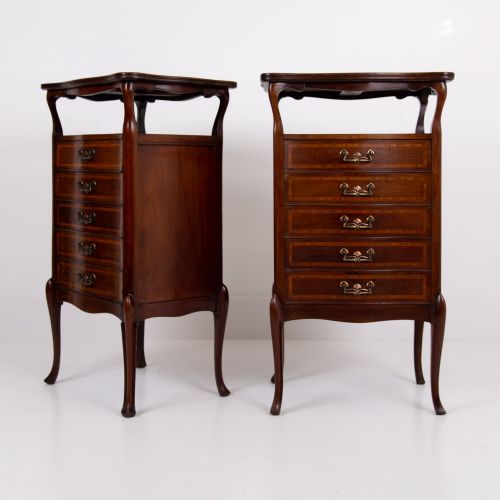
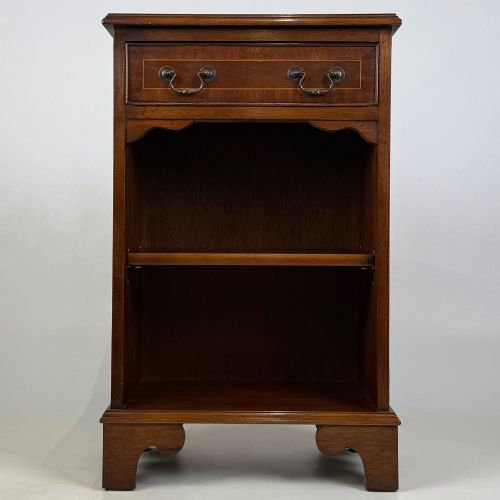
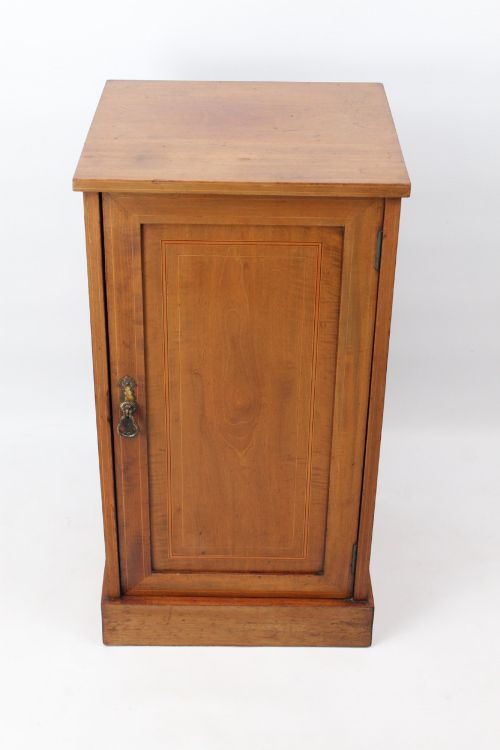
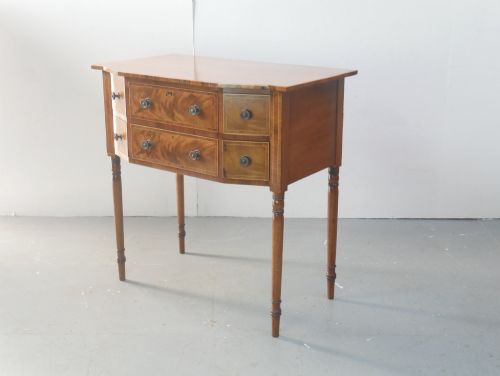
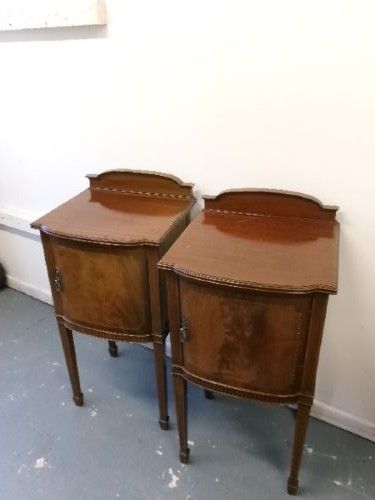
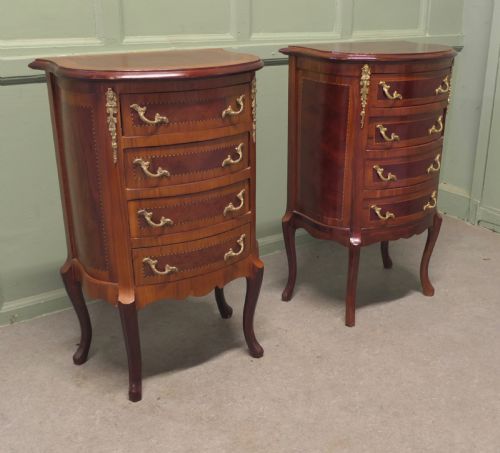
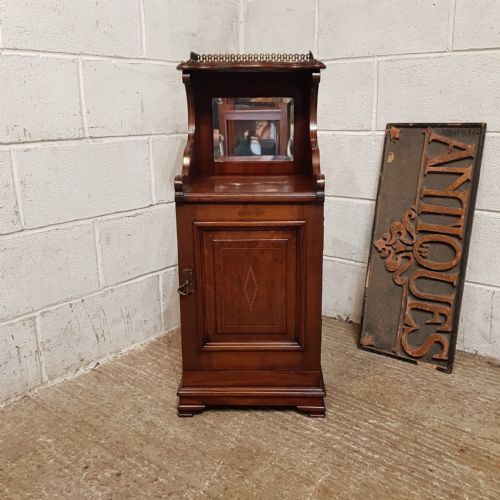
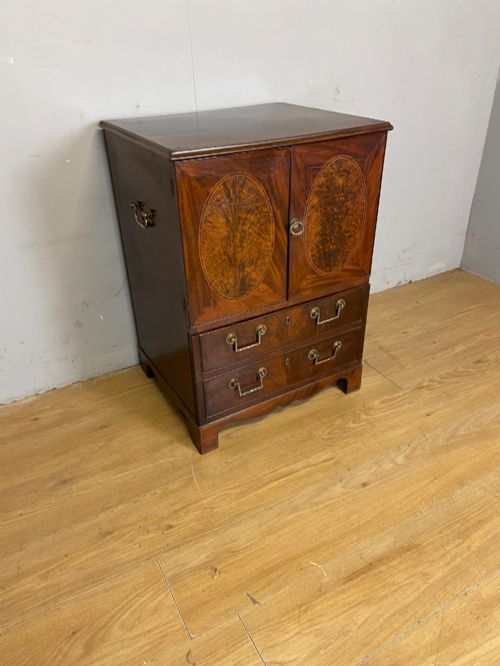
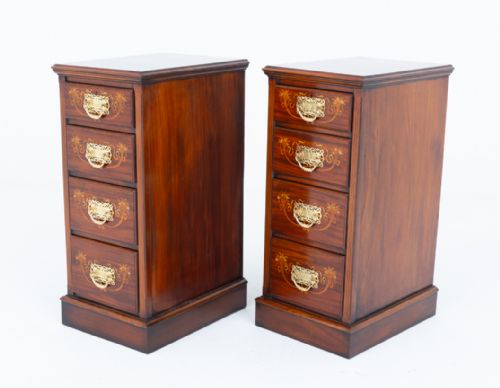
An inlaid mahogany bedside cabinet combines practical bedside storage with the refined decorative details typical of late nineteenth and early twentieth century cabinet making. Most examples discovered here date from the Edwardian period or the late Victorian era, taking the form of small cupboards, night stands, or compact chests of drawers.
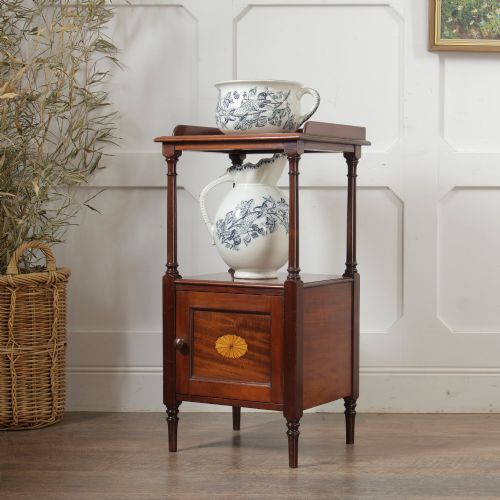
Earlier Georgian and Regency prototypes also appear alongside Sheraton Revival interpretations, offering taller proportions or pull-out steps beneath enclosed shelving. These smaller proportions make them adaptable for modern rooms where surface space is limited but period character is desired.
Materials and Construction
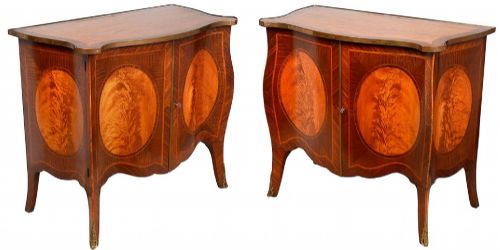
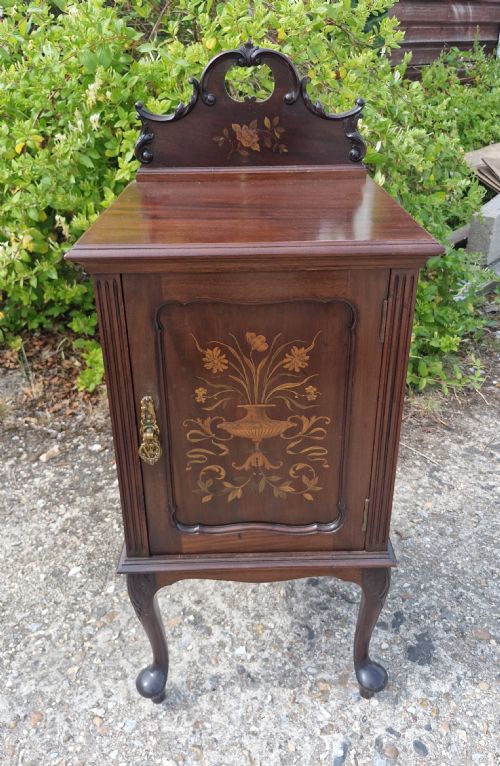
Cabinet makers built these pieces using solid mahogany and mahogany veneers, often enriching the carcase with contrasting timber details. Satinwood, boxwood, and ebony formed delicate stringing and complex marquetry inlay, tracing geometric borders or floral motifs across doors and drawer fronts.
Brass handles, hinges, and occasional gallery rails provided functional metallic accents, while selected pieces incorporated inset marble tops or glass elements for added durability and texture.
Listings feature periods spanning from the eighteenth century through the Edwardian era, constructed primarily in mahogany with boxwood and satinwood inlay.
Distinctions in Standard
The degree of distinction in an inlaid mahogany bedside cabinet rests upon the crispness of the cabinet work and the precision of the contrasting timber inlay. Finer examples display tightly fitted door joints, well-figured mahogany grain, and hand-cut marquetry rather than simpler printed or stamped decorations.
Makers known for high output, such as established London cabinet makers, generally maintained rigorous standards in internal secondary woods and drawer linings, ensuring structural longevity alongside external decorative elegance.
Maple and Co·Edwards and Roberts·Shoolbred and Co
The Inlaid Mahogany Bedside Cabinet Glossary
- Marquetry inlay
- The practice of fitting decorative wood veneers into a prepared background to create pictorial or geometric patterns. This technique requires considerable skill to ensure tight joints between contrasting timbers such as boxwood and mahogany.
- Flame mahogany
- A veneer cut from the fork of the mahogany tree where the branch meets the trunk, producing a distinctive flickering flame-like pattern. It was frequently utilised on the primary display surfaces of Georgian and Victorian cabinets.
- Pot cupboard
- A traditional term for a small bedside cabinet originally constructed to house a chamber pot behind a single door. Many later Edwardian iterations retained this enclosed cupboard format for general night storage.
- Stringing
- A narrow strip of contrasting light or dark wood inlaid into grooves on the surface of furniture. Boxwood stringing often outlines drawer fronts and table edges on Sheraton Revival pieces.
- Serpentine front
- A furniture front characterised by a gentle convex centre flanked by concave curves. This undulating shape demands advanced woodworking expertise to achieve balanced proportions.
Inlaid Mahogany Bedside Cabinet: Frequently Asked Questions
What is a bedside pot cupboard?
A pot cupboard is a small enclosed bedside cabinet historically designed to conceal a chamber pot behind a single door. Over time, the internal shelf arrangement adapted to serve as general storage for books and personal items.
These compact cupboards usually feature a panelled door and stand on short legs or a plinth base. Their enclosed design keeps night-time necessities neatly out of sight.
How do I date an inlaid mahogany cabinet?
Dating relies on examining the secondary timbers, the style of the inlay, and overall construction methods. Edwardian pieces often feature lighter satinwood banding and machine-sawn veneers, whereas Georgian examples display heavier carcase construction and hand-cut dovetails.
Cabinet makers working during the Sheraton Revival period deliberately copied eighteenth-century designs, so closer inspection of interior drawer linings and brass hardware helps clarify the true age.
Where were these cabinets placed originally?
Bedside cabinets were positioned immediately next to the sleeping quarters to hold water jugs, candles, and chamber pots during the night. Their compact footprints ensured they fitted comfortably beside period bed frames.
Today, buyers utilise them not only in bedrooms as bedside tables, but also in narrow hallways or living spaces as small side cabinets.
What is Sheraton Revival style?
Sheraton Revival describes a late nineteenth and early twentieth-century design movement inspired by the neoclassical furniture of Thomas Sheraton. These pieces typically showcase light mahogany veneers accented with boxwood and satinwood inlay.
Cabinet makers of this era favoured symmetrical proportions, tapering legs, and delicate floral urn motifs, adapting eighteenth-century elegance for Edwardian homes.