





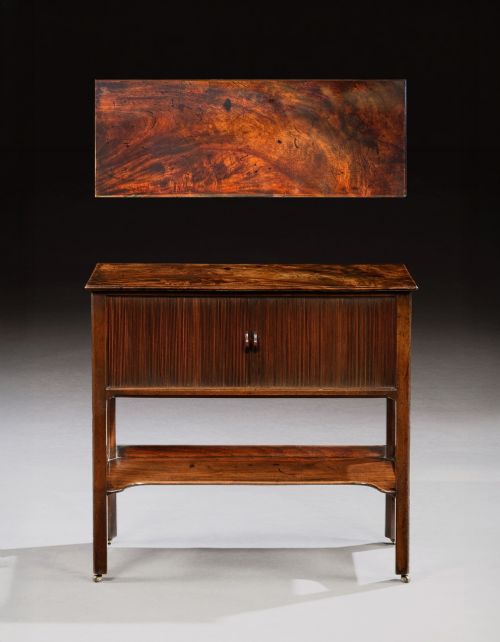

Georgian Tambour Door Cupboard
A georgian tambour door cupboard is a clever small storage piece featuring flexible slatted shutters, combining discreet enclosure with compact elegance.
Georgian Tambour Door Cupboard
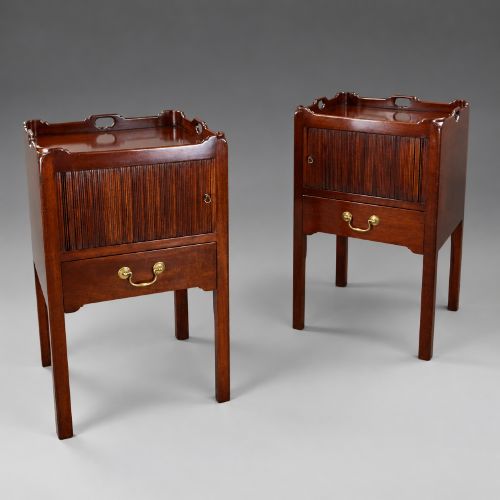
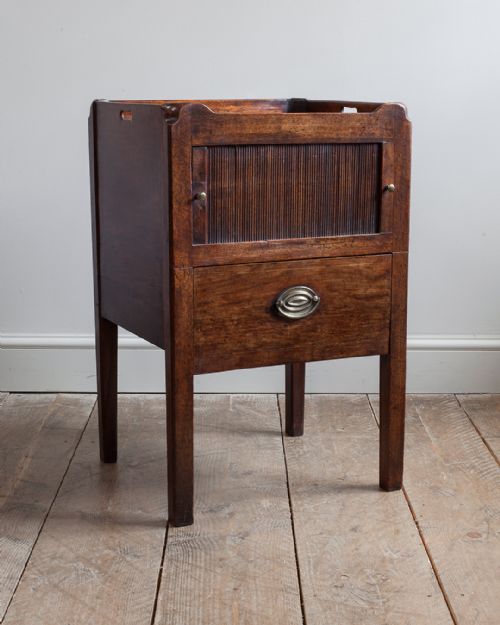
A georgian tambour door cupboard takes the form of compact bedside tables, nightstands, and commodes originating from the Georgian, George III, and Regency periods. These pieces are designed to conceal storage behind sliding slatted panels rather than traditional hinged doors.
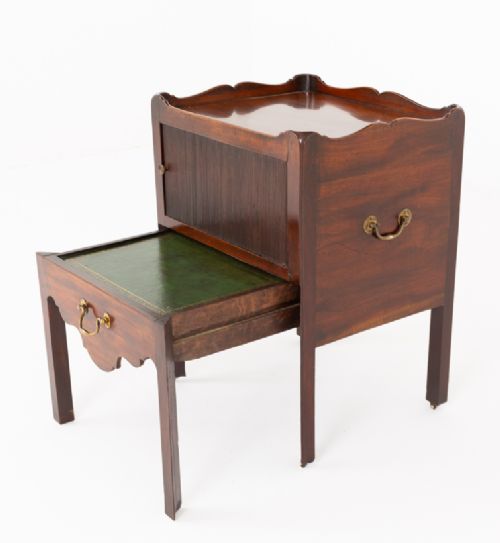
Most examples found here appear in rich mahogany, alongside occasional walnut and fruitwood variations, reflecting the primary domestic timbers of the eighteenth and early nineteenth centuries. Forms include tray-top models, serpentine fronts, and corner cabinets that suit smaller bedroom or living spaces.
How they were made
Cabinet makers constructed the flexible tambour shutters by gluing individual narrow strips of timber onto a linen or canvas backing, allowing the door to slide smoothly along grooved tracks. This technique required precise carpentry to ensure the slats fit tightly together while maintaining enough flexibility to curve around corners.
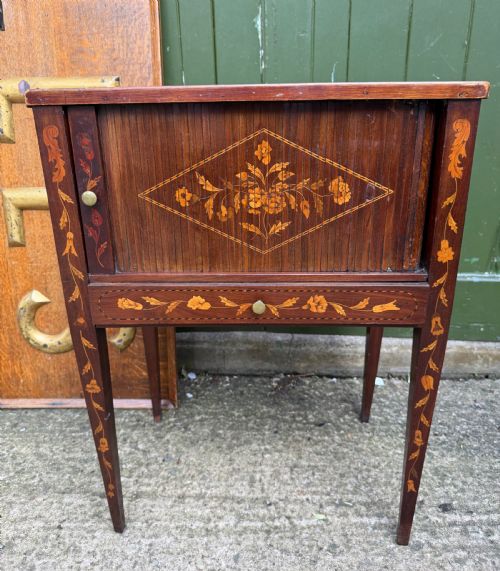
Primary structures utilise solid mahogany and walnut, frequently enhanced with boxwood stringing, brass hardware, and intricate floral marquetry in Dutch interpretations. The internal mechanism relies on hidden wooden tracks recessed directly into the cabinet frame.
Many nightstands feature enclosed spaces originally designed for chamber pots, now repurposed for modern bedside storage.
What varies in quality
Quality rests upon the smooth operation of the tambour mechanism and the precision of the slatted joints. Superior pieces feature slats that glide effortlessly without catching, maintaining alignment within their curved tracks after centuries of use.
Selection of timber grain and the finesse of secondary details, such as brass pulls, boxwood inlay, and finely moulded tray tops, separate standard workshop output from exceptional cabinet work.
The Georgian Tambour Door Cupboard Glossary
- Tambour
- A flexible door constructed from narrow strips of wood glued to a fabric backing. This allows the shutter to slide around a curved track.
- Commode
- A decorative low cabinet or chest of drawers. In Georgian terms, this often refers to bedside tables fitted with enclosed storage.
- Tray top
- A raised rim moulding along the upper surface of a bedside cabinet. This feature prevented items from rolling off the top.
- Marquetry
- Decorative veneer patterns formed by fitted pieces of various coloured woods. Dutch examples frequently display floral designs.
Georgian Tambour Door Cupboard: Frequently Asked Questions
What is a tambour door?
A tambour door is a flexible shutter made of narrow wooden slats attached to a fabric backing. It slides horizontally or vertically along hidden tracks to open and close.
This ingenious mechanism allows access to storage in tight spaces where swinging doors would be impractical.
Where were these cupboards used?
These pieces were primarily designed as bedside tables, nightstands, or pot cupboards in Georgian bedrooms. Their compact dimensions made them ideal for holding chamber pots, night lights, or personal items.
Today, buyers frequently utilise them as bedside tables or small accent cabinets in living rooms.
How do I date a Georgian piece?
Dating relies on observing timber choices, construction methods, hardware, and prevailing furniture styles of the era. George III pieces often display dense mahogany, hand-cut dovetails, and subtle boxwood stringing.
Comparing secondary woods and internal drawer construction helps distinguish eighteenth-century items from later nineteenth-century revivals.
Are tambour doors fragile?
Original tambour tracks and fabric backings require gentle handling after centuries of expansion and contraction. Regular use is encouraged, but forcing a stuck shutter will damage the delicate wooden slats.
Keeping the sliding grooves clean ensures the mechanism continues to operate smoothly.