
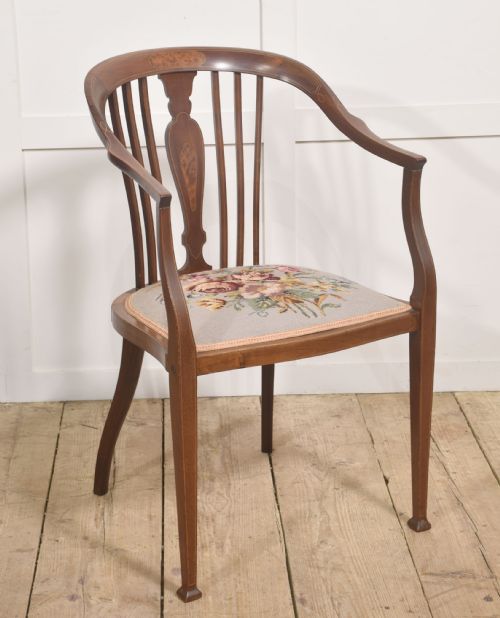

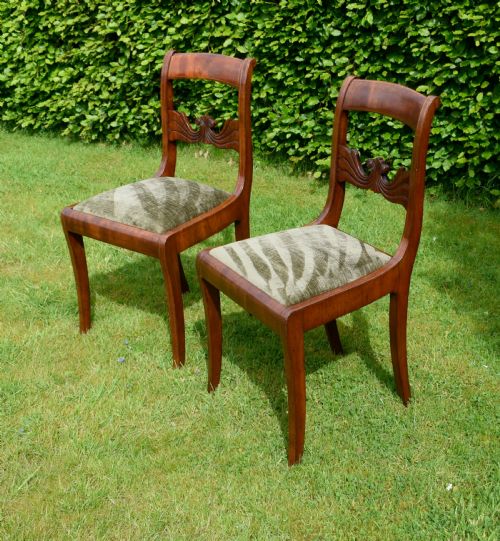


Inlaid Mahogany Accent Chairs
These inlaid mahogany accent chairs combine timber and contrasting stringing, offering practical seating shaped by Edwardian, Victorian, and Georgian makers.
Inlaid Mahogany Accent Chairs
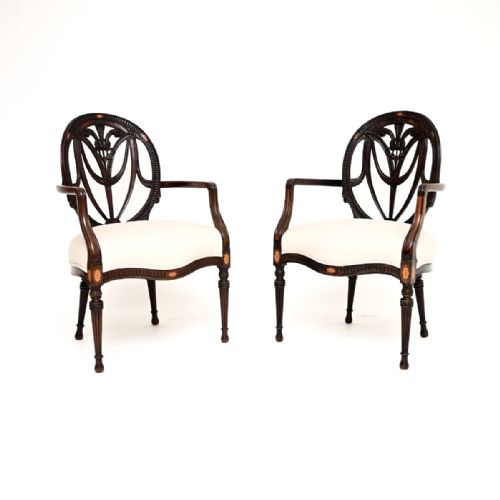
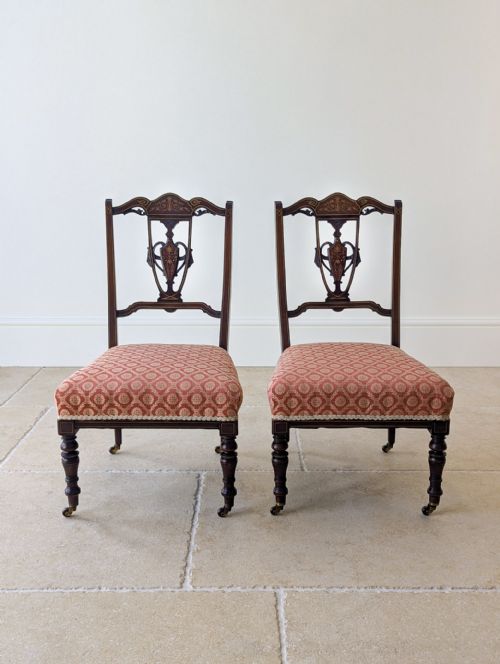
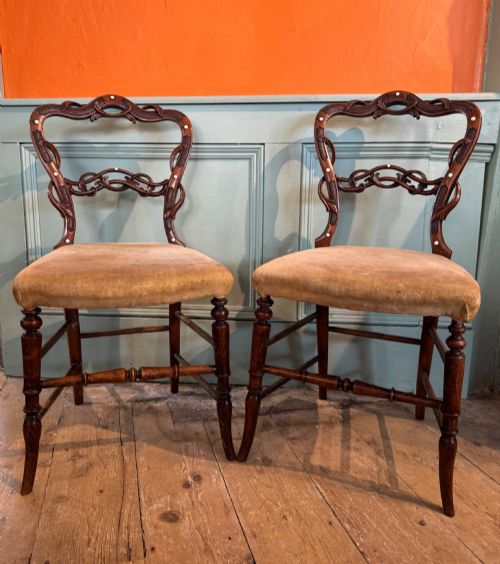
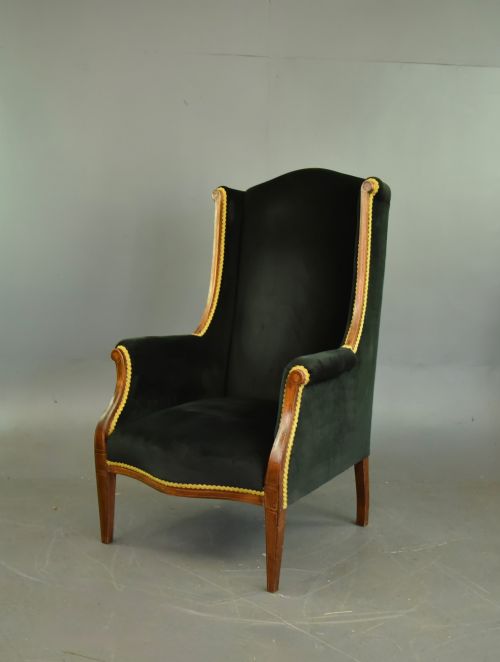
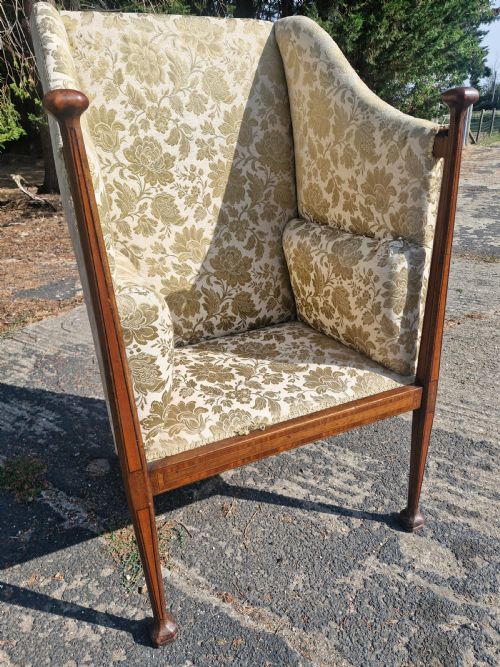
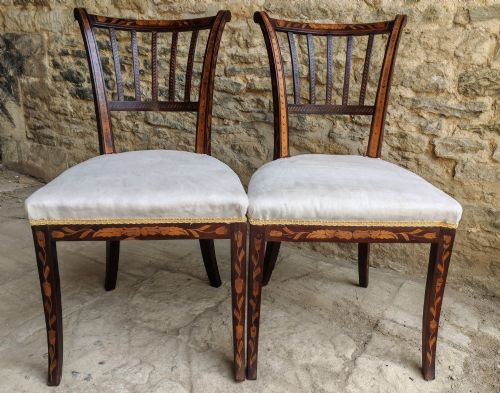
Inlaid mahogany accent chairs encompass a variety of seating forms designed for occasional use in parlours, bedrooms, and sitting rooms. The selection on this page leans heavily towards Edwardian and late Victorian pieces, alongside earlier Georgian and Regency examples.
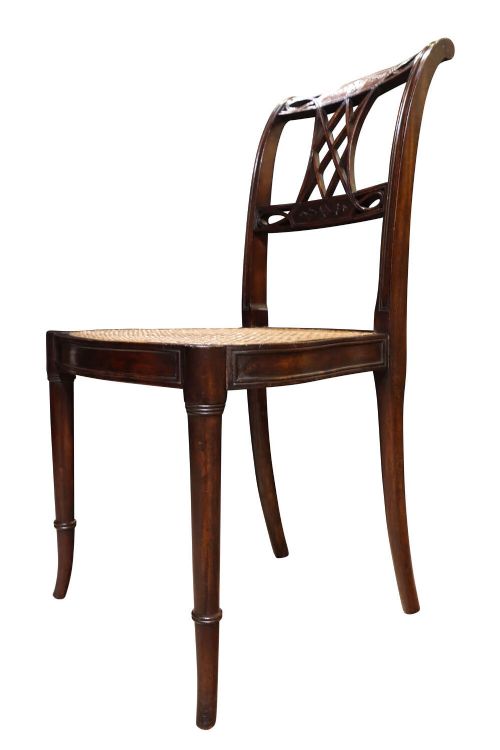
Buyers encounter numerous forms ranging from salon chairs and nursing chairs to carver armchairs and occasional elbow chairs. Many examples feature delicate frames, upholstered seats in silk, fabric, or velvet, and cane inserts.
The aesthetic bridges formal revival styles and functional household furniture. The prevalence of Edwardian Sheraton Revival designs shows a preference for light, graceful proportions over heavy timber.
What varies in quality
The precision of the inlay work marks the primary division between standard production and finer pieces. Crisp execution of satinwood banding and detailed marquetry require superior craftsmanship compared to simple painted or stamped lines.
The choice of primary timber and secondary framing woods influences overall rigidity and weight. Refined carving on the crest rails and the condition of original upholstery or cane work further distinguish the better examples.
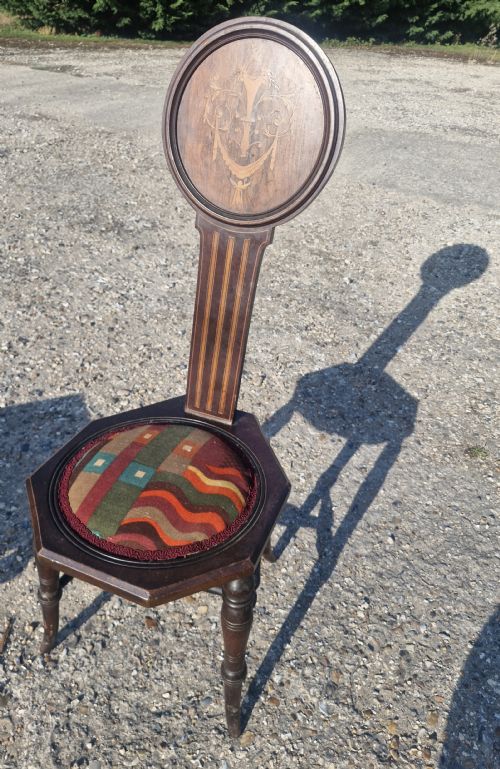
Spinning chairs appear among the seating forms, offering low seats originally designed for domestic textile work by the hearth.
The Inlaid Mahogany Accent Chairs Glossary
- Inlay
- A technique where contrasting materials are set into recesses flush with the wood surface. This method creates decorative patterns on the backrests and crest rails of accent chairs.
- Satinwood
- A pale, lustrous timber native to India and Ceylon, frequently used for contrasting stringing and marquetry panels in mahogany furniture. It provides a bright visual accent against darker woods.
- Marquetry
- Elaborate decorative veneer work assembled in pictorial or geometric patterns using various woods. This technique requires meticulous cutting and fitting to achieve seamless designs.
- Carver
- An armchair designed with arms, typically matching a set of side chairs intended for the head of a table or formal placement. These chairs offer wider proportions and supportive armrests.
- Sheraton Revival
- A late nineteenth and early twentieth century design movement that reinterprets eighteenth century neoclassical forms. It is characterised by light scaling, tapered legs, and refined inlay.
Inlaid Mahogany Accent Chairs: Frequently Asked Questions
Where should I place an accent chair?
These chairs suit corners of bedrooms, drawing rooms, or hallways where space is limited and decorative impact matters. Their lighter frames make them easy to reposition as needed.
Avoid placing them in areas of heavy daily use or direct sunlight, which can fade the mahogany and dry out the delicate inlay work.
How do I identify an Edwardian piece?
Edwardian chairs often feature light mahogany frames, delicate satinwood inlay, and Sheraton Revival influences. They frequently appear as bedroom, nursing, or occasional salon chairs.
The construction tends to be slender compared to heavier Victorian counterparts, reflecting the tastes of the early twentieth century.
What is the difference between a side chair and an armchair?
Side chairs are built without arms to allow close placement around tables or against walls. They occupy less floor space in tighter reception rooms.
Armchairs, including carvers and elbow chairs, include supporting sides designed for comfort during longer periods of sitting.
How do I care for antique wood inlay?
Maintain the timber and inlay by applying a quality beeswax polish periodically to nourish the surface. Keep the chairs away from sudden temperature shifts and moisture to prevent the veneer from lifting.
Use soft cloths for dusting and avoid chemical cleaners that can damage the polish or dissolve old adhesives beneath the stringing.