

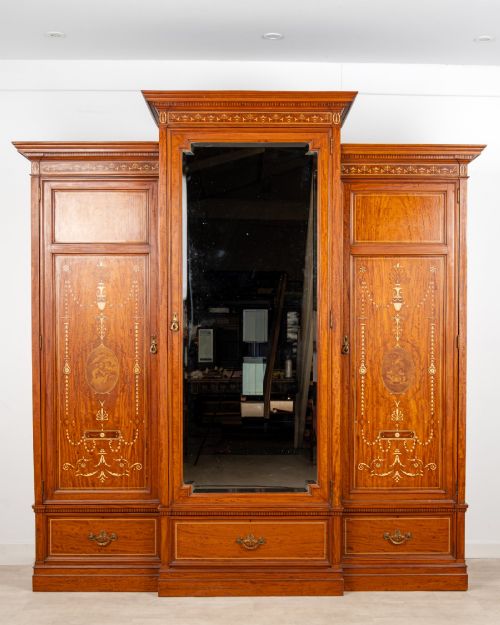
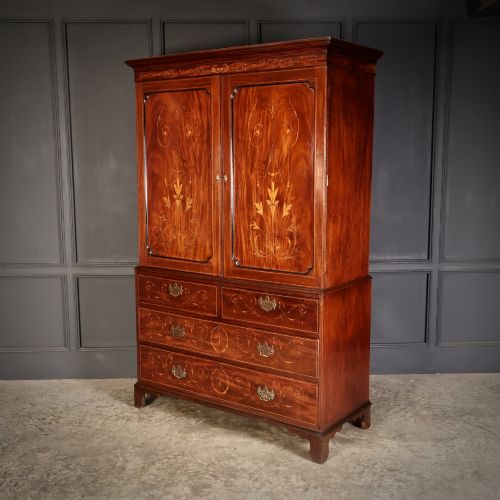
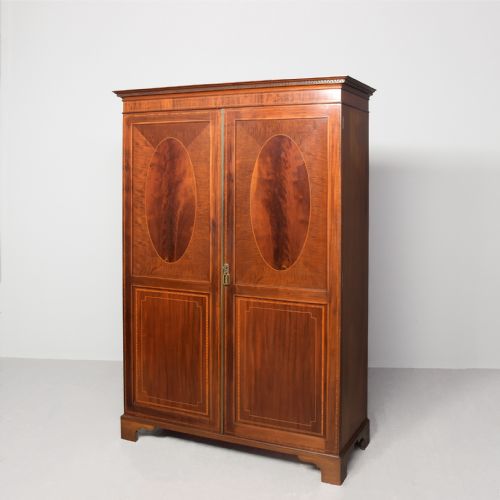
Inlaid Linen Cupboard
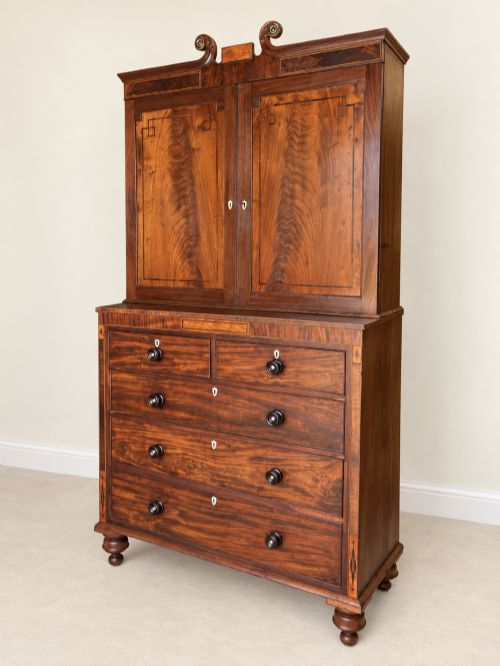
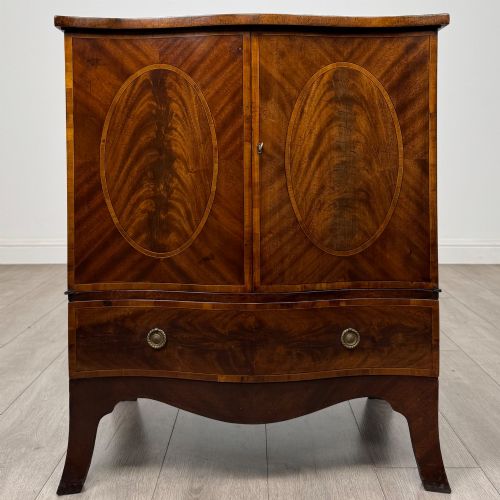
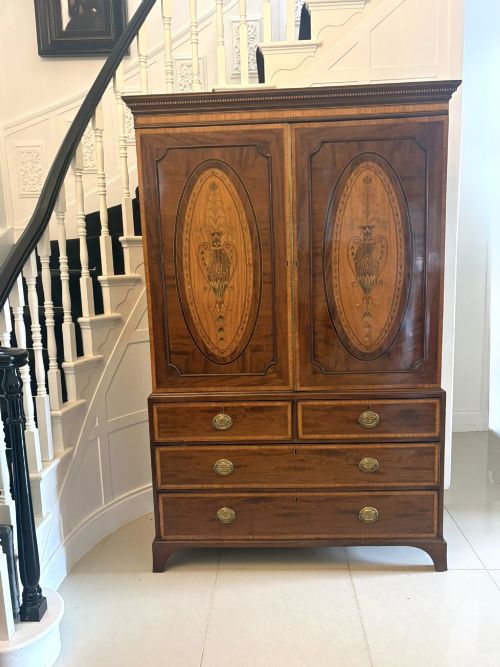
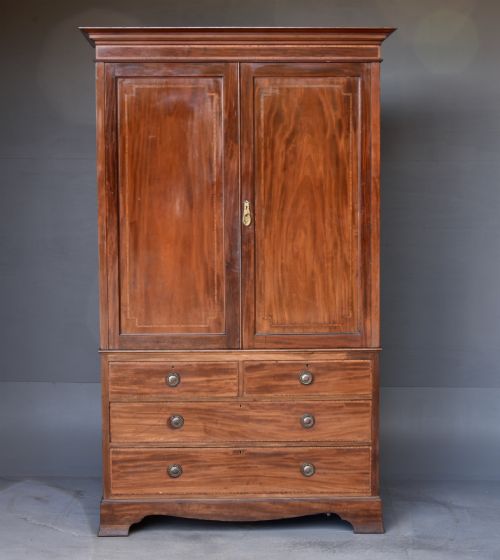
An inlaid linen cupboard is a commanding piece of storage furniture designed to hold house linens and garments, finished with decorative wood banding and marquetry.
Inlaid Linen Cupboard
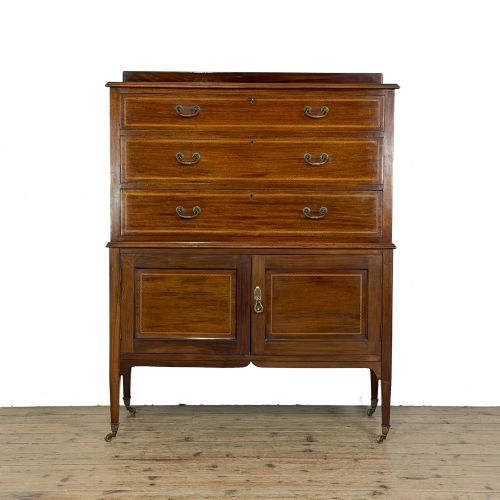
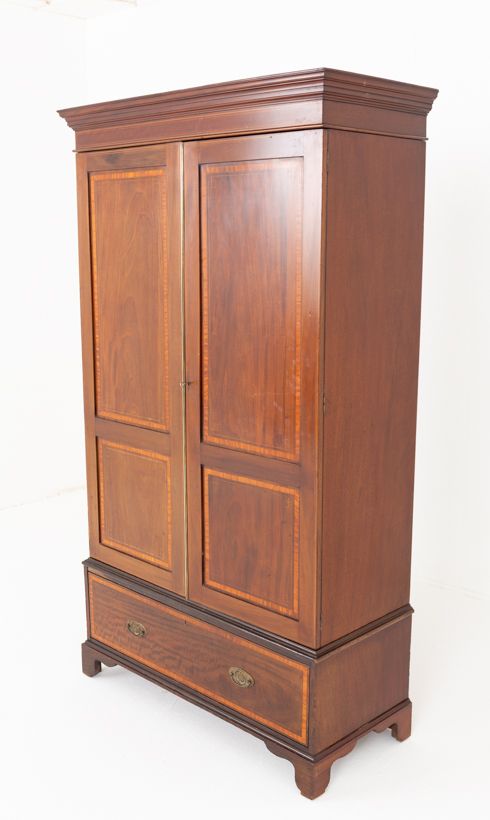
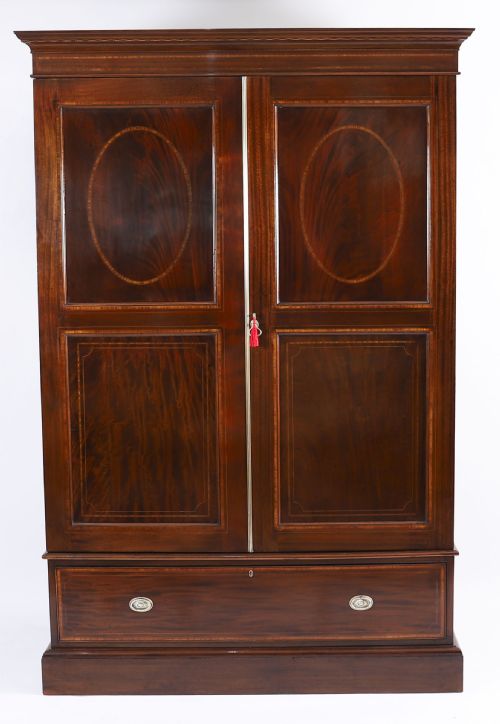
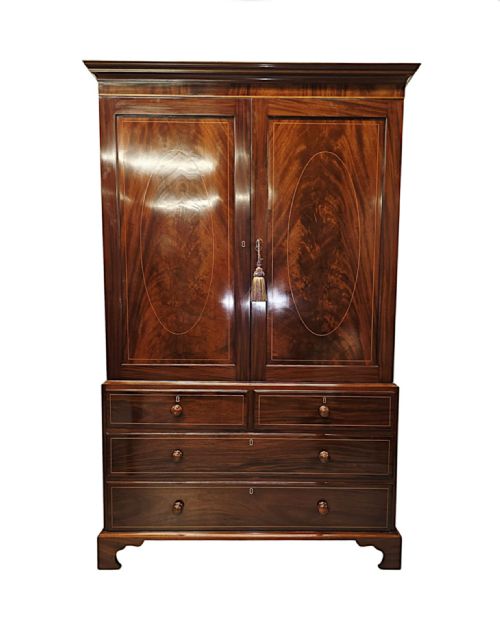
When you search for an inlaid linen cupboard, you are looking at substantial storage pieces primarily made during the Georgian, Victorian, and Edwardian periods. These items typically combine a linen press or wardrobe upper section with a chest of drawers at the base.
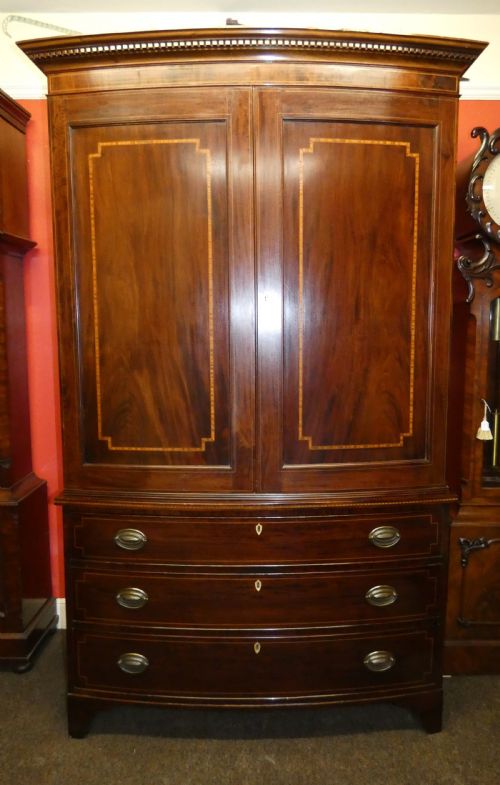
The version you are most likely to meet on this page is the mahogany or flame mahogany Georgian or Edwardian wardrobe and press. These pieces often feature contrasting satinwood banding, delicate stringing, and floral marquetry.
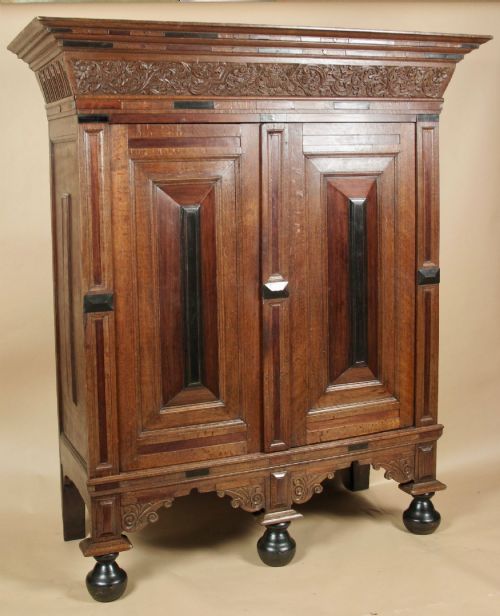
Alongside standard English forms, the selection includes Dutch walnut marquetry cabinets and oak press cupboards from the eighteenth and nineteenth centuries. Each example demonstrates the practical need for grand bedroom storage combined with decorative cabinetmaking.
Materials and Technique
Cabinetmakers built these pieces using solid timbers like mahogany, oak, and walnut, frequently applying fine veneers such as flame mahogany, satinwood, and rosewood to the main surfaces. Contrasting wood strips, known as stringing, and geometric banding created defined panels across the doors and drawer fronts.
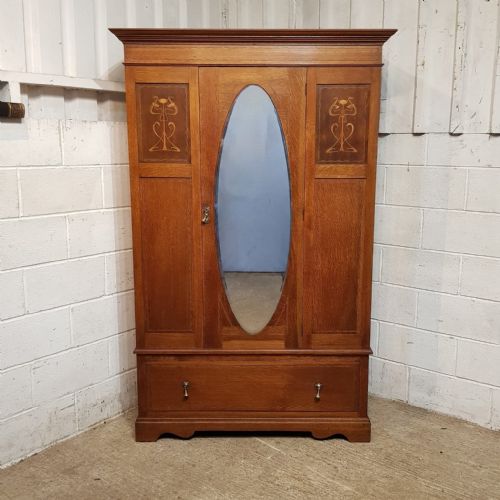
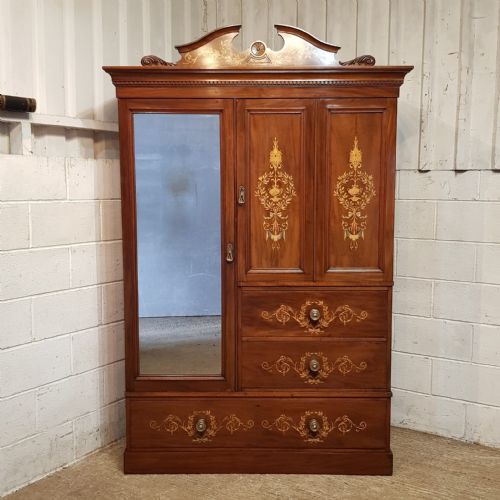
Marquetry techniques introduced pictorial or floral motifs using different coloured wood veneers carefully fitted together. Brass hardware, including drop handles and escutcheons, finished the drawer fronts and doors of these substantial storage cabinets.
Listings feature pieces spanning the 17th, 18th, 19th, and 20th centuries, executed in mahogany, oak, walnut, rosewood, and satinwood.
Judging the Standard
The distinction between average and superior pieces lies in the choice of timber and the precision of the cabinetwork. Selected flame mahogany veneers with symmetrical grain patterns and finely executed satinwood banding indicate higher workshop standards.
Internal construction details also separate standard examples from finer work. Smoothly running drawer linings made from secondary timbers and well-fitted sliding trays or hanging spaces reflect the original maker's skill.
maples & co·Druce & Co·Maple & Co·Waring & Gillow·Edwards & Roberts
The Inlaid Linen Cupboard Glossary
- Linen Press
- A two-section storage piece with sliding trays behind upper doors and drawers below. It was originally designed to keep household linens flat and organised.
- Marquetry
- The art of applying pieces of veneer to a structure to form decorative patterns and pictures. Cabinetmakers used various tinted woods to create contrasting floral and geometric designs.
- Satinwood
- A durable, lustrous timber native to India and Ceylon, valued for its golden yellow colour and satiny sheen. It was frequently used for banding and stringing on mahogany furniture.
- Stringing
- A narrow inlay of contrasting wood used in straight lines to outline panels and drawers. This technique defined the proportions of Georgian and Edwardian cabinet fronts.
- Flame Mahogany
- A veneer cut from the point where a branch joins the main tree trunk, producing a distinctive flickering flame pattern. It formed the primary visual feature on high-end eighteenth-century doors.
Inlaid Linen Cupboard: Frequently Asked Questions
How do I identify a Georgian inlaid linen cupboard?
Georgian pieces generally display hand-cut dovetails on the drawer interiors and use native secondary timbers like oak or deal behind the primary mahogany or walnut facades. The inlay work tends to rely on subtle satinwood banding and stringing rather than heavy painted decoration.
Proportions on these eighteenth-century examples remain architectural, often featuring a dental cornice or swan-neck pediment above the upper cabinet doors.
Where should I place an inlaid linen cupboard in a modern home?
These large storage units suit bedrooms, dressing rooms, or wide hallways where their depth and height can be accommodated safely. Ensure the room has stable humidity levels to protect the delicate wood veneers and stringing from drying out.
Allow enough clearance in front of the piece for the lower drawers to pull out fully and for the cupboard doors to swing wide.
How do I tell an Edwardian reproduction from an 18th-century original?
Edwardian furniture from the early twentieth century often utilises machine-sawn veneer and standardised interior fittings alongside painted satinwood decoration. Eighteenth-century pieces reveal hand-planed surfaces, irregular internal timber thicknesses, and hand-cut joinery.
Examining the backboards, drawer linings, and the nature of the inlay provides clear clues to the manufacturing date and workshop practices.