
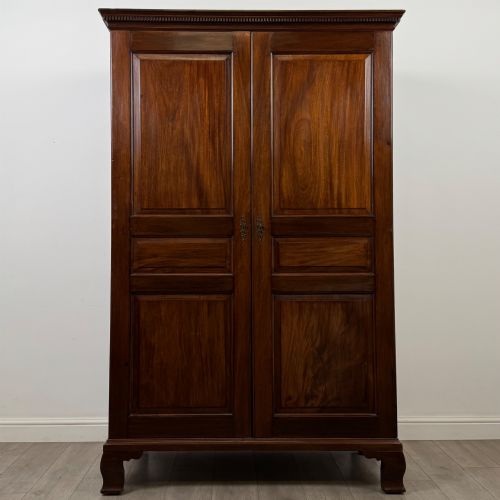
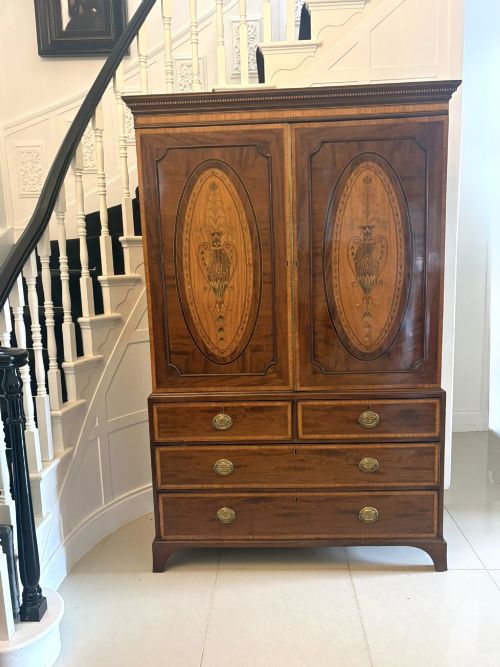
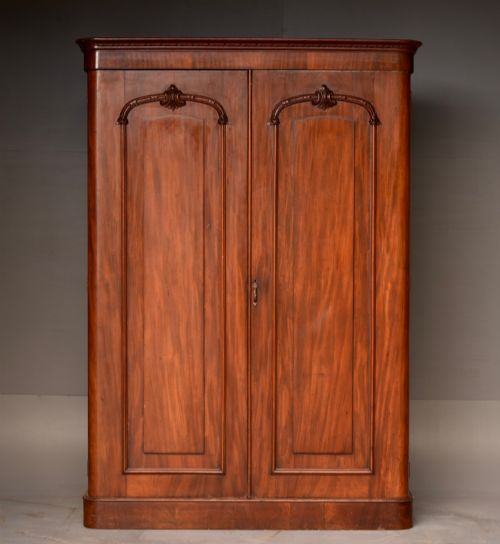
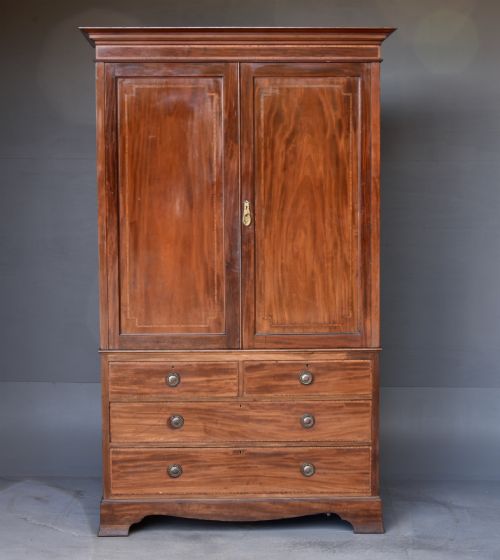
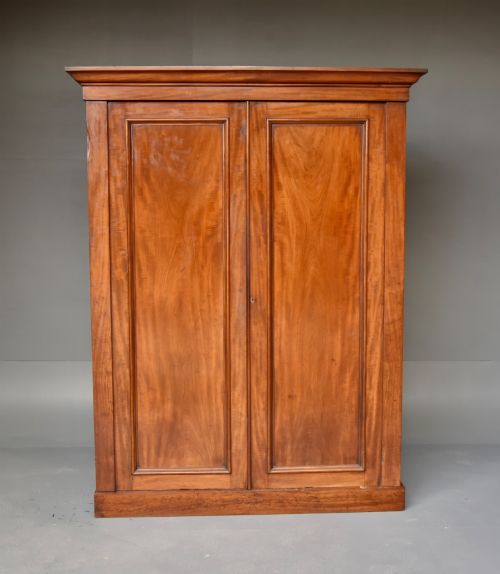
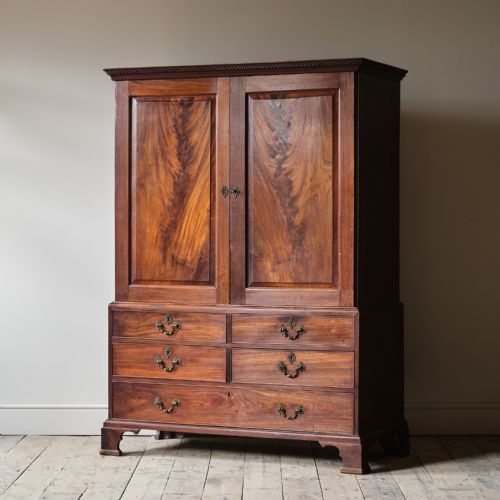
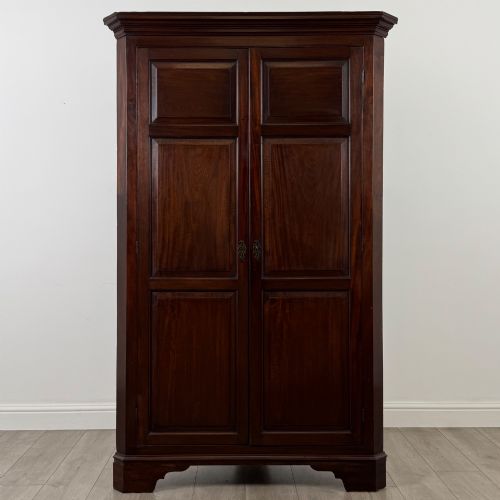
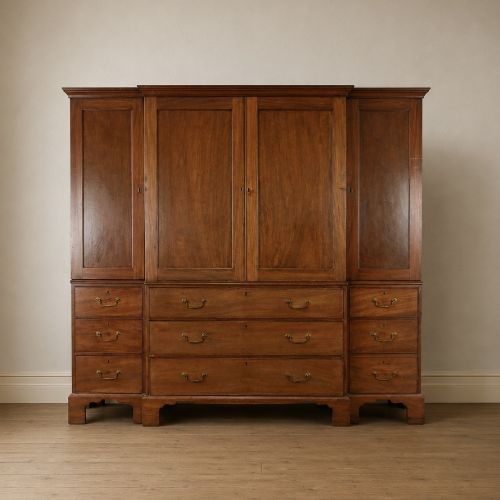
Brown Mahogany Press Cupboard
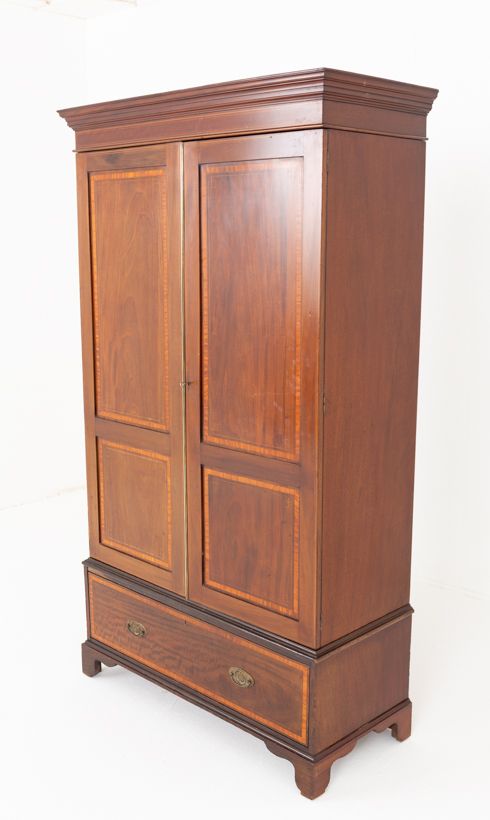
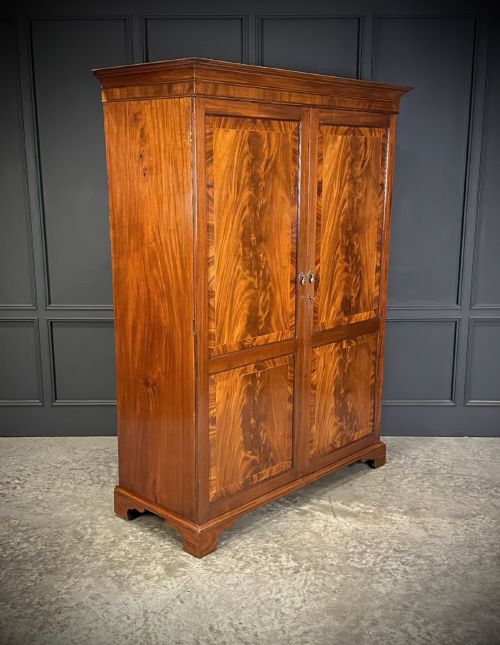
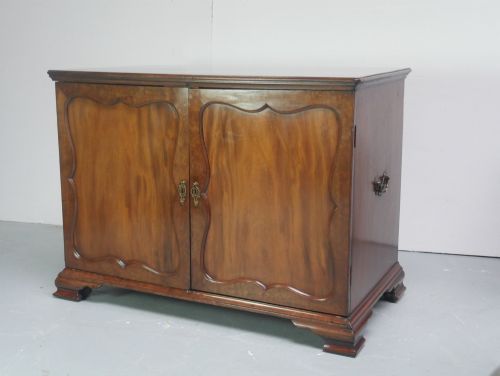
A brown mahogany press cupboard is a stately storage piece designed to hold folded linens and garments, offering rich grain and deep colour.
Brown Mahogany Press Cupboard
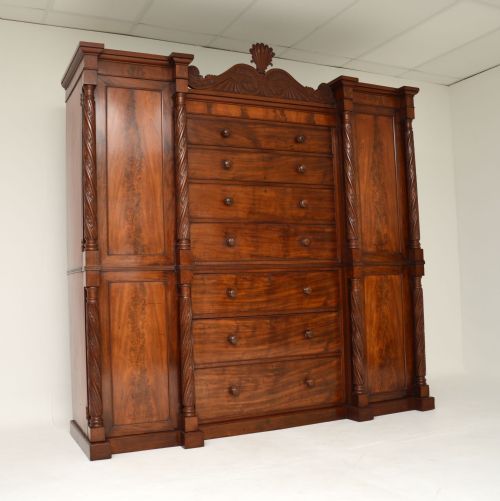
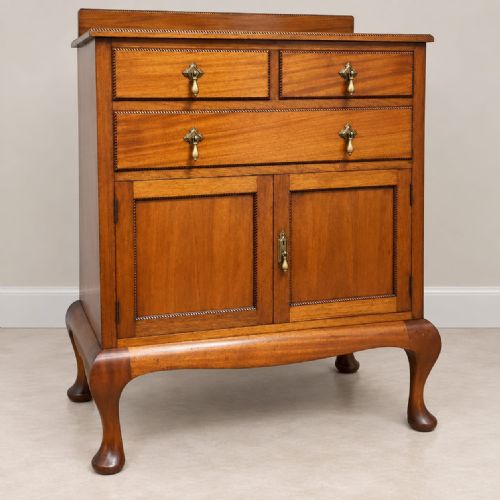
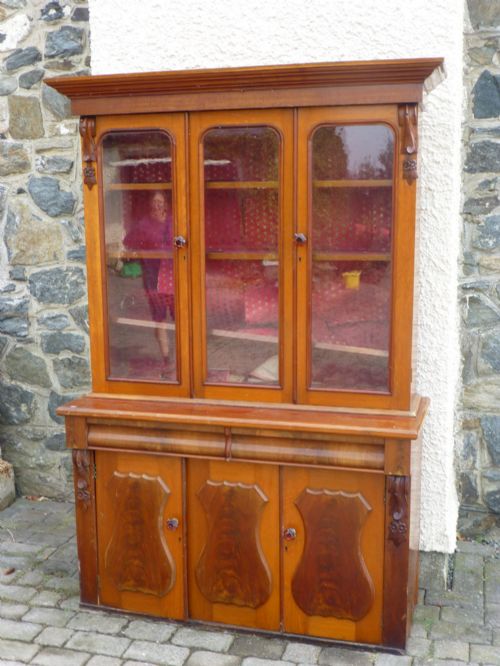
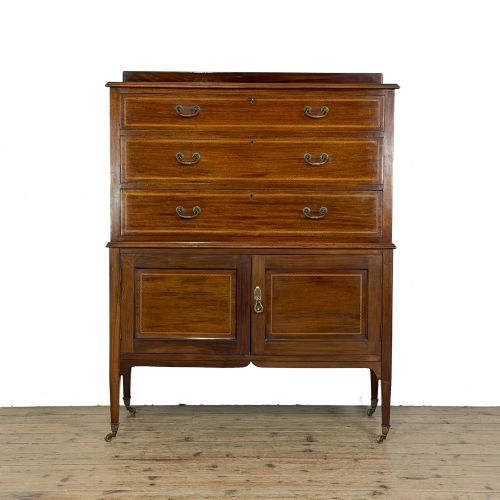
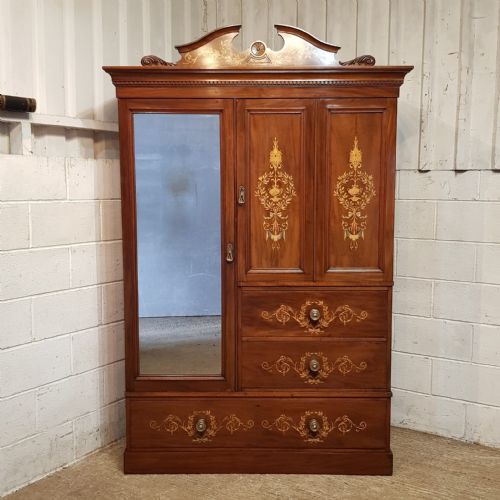
A brown mahogany press cupboard sits in the bedroom or dressing room, combining upper sliding trays or hanging space with lower drawers. These substantial pieces emerge most frequently from the Georgian and Victorian periods, often displaying panelled doors or significant height.
The form encompasses linen presses, housekeepers cupboards, and gentleman's wardrobes executed in solid timber and polished veneers. Buyers encounter examples ranging from plain utilitarian carcases to grand breakfront formats with satinwood inlay.
Judging the work
Superior examples display continuous grain matching across the doors and select cuts of timber that highlight natural figure without excessive patching. The crispness of the inlay and the integrity of the internal sliding trays distinguish finer pieces.
Proportion and scale dictate the visual weight of the cupboard, where restrained mouldings and well-balanced door panels separate refined cabinet work from heavier, utilitarian builds.
Listings feature mahogany, oak, and satinwood across Georgian, Victorian, and Edwardian periods.
maples & co·Druce & Co·Heals
The Brown Mahogany Press Cupboard Glossary
- Press cupboard
- A tall piece of furniture featuring upper doors enclosing shelves or sliding trays above a chest of drawers. It traditionally stored folded linens before modern hanging wardrobes became standard.
- Flame mahogany
- A highly figured wood veneer sliced from the point where a branch joins the main trunk, creating a distinctive flickering flame pattern. Cabinetmakers reserved this timber for primary display surfaces.
- Breakfront
- A cabinet design where the central section projects forward from the flanking wings, adding architectural depth and presence to large linen presses and bookcases.
- Satinwood inlay
- Contrasting blonde wood inserted into recesses cut into the darker mahogany surface to create geometric borders or decorative motifs. This technique grew particularly popular during the Georgian and Sheraton periods.
- Compactum
- A multi-functional wardrobe designed to maximise internal storage by combining hanging space, linen slides, and multiple drawers within a single unified carcase.
Brown Mahogany Press Cupboard: Frequently Asked Questions
What fits inside a press cupboard?
These pieces traditionally house sliding wooden trays designed for folded linen, shirts, and garments. Many examples also incorporate deeper drawers at the base for bulkier items.
Modern owners frequently adapt the upper compartments for clothing storage or household linens, utilising the deep shelves and generous vertical clearance.
How do I date a mahogany press?
Examination of the secondary timbers, drawer construction, and overall style reveals the period of manufacture. Georgian pieces often show hand-cut dovetails and subtle cockbeading around the drawers.
Victorian and Edwardian versions tend to feature heavier proportions, machine-assisted construction, and occasionally mirrored doors or more elaborate satinwood banding.
Where should I place a press?
Bedrooms and dressing rooms provide the natural home for these tall storage cabinets, matching their original domestic purpose. High ceilings are essential to accommodate their considerable height.
Placing the cabinet away from direct heat sources and strong sunlight protects the mahogany polish and prevents timber shrinkage over time.
Are the upper trays removable?
Most traditional linen presses contain fixed internal partitions that support sliding wooden trays rather than open hanging space. These trays slide out individually on wooden runners.
Some examples have been adapted by previous owners to incorporate a hanging rail, though surviving period interiors retain their original configuration of trays.