
Inlaid Leather Desk
An inlaid leather desk brings together figured timbers and supple hides to anchor a study or library.
Inlaid Leather Desk
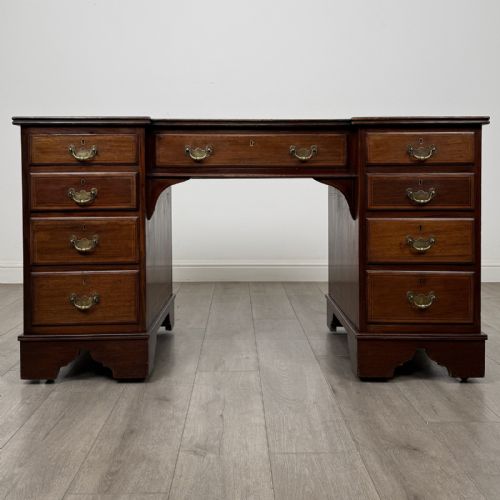
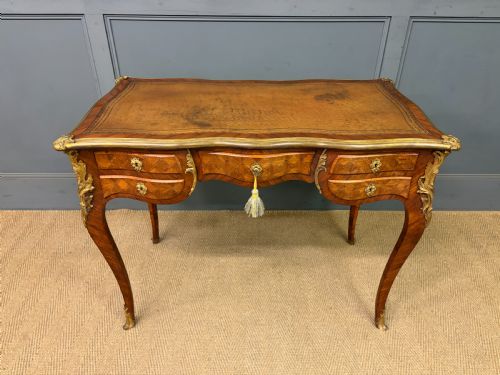
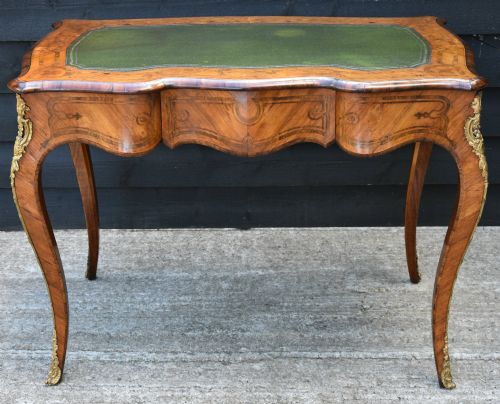
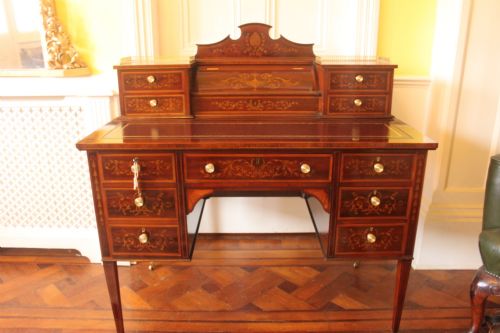
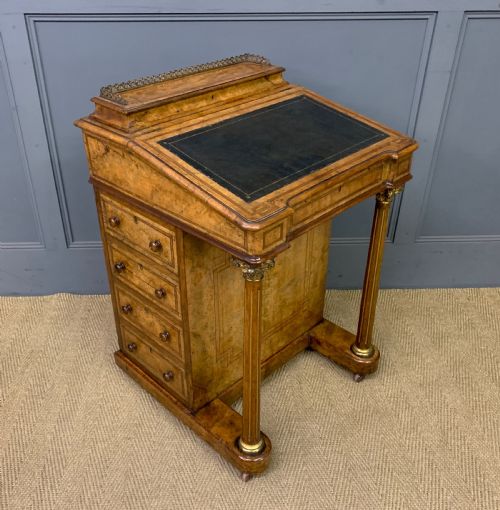
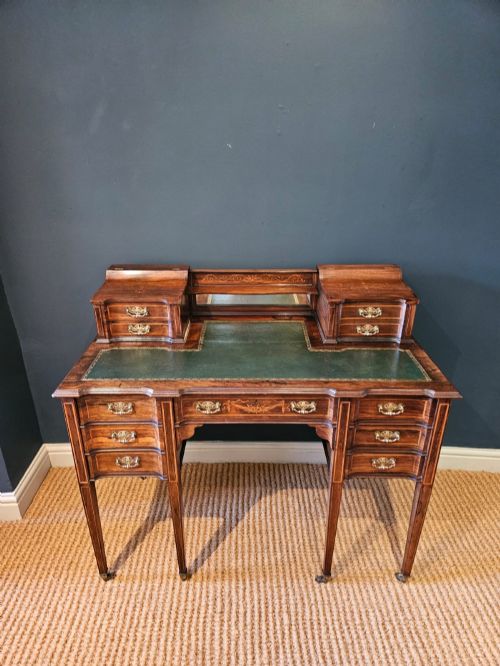
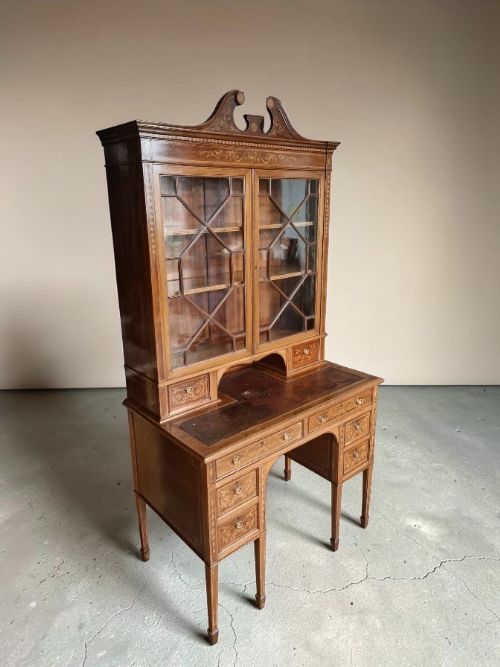
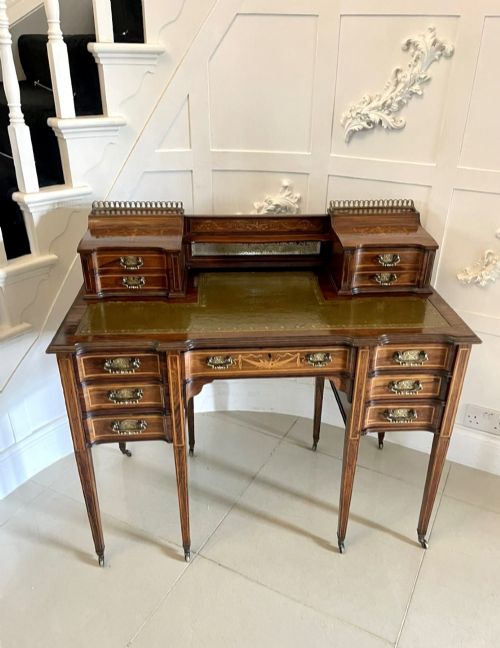
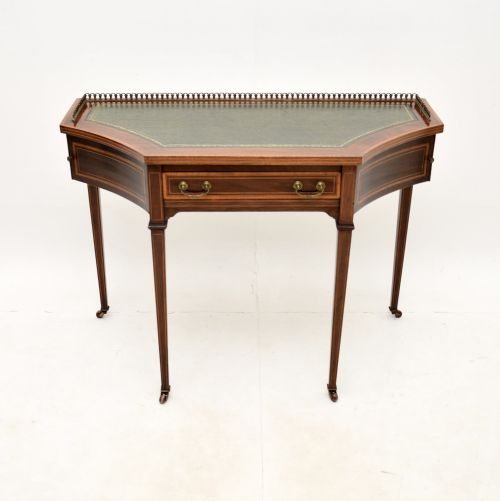
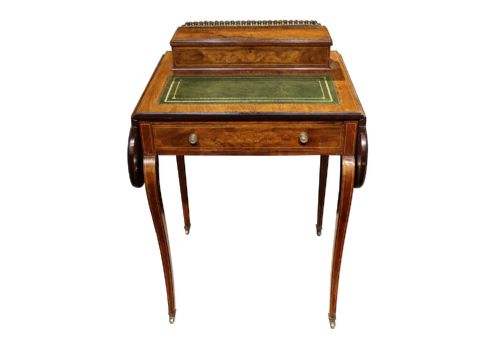
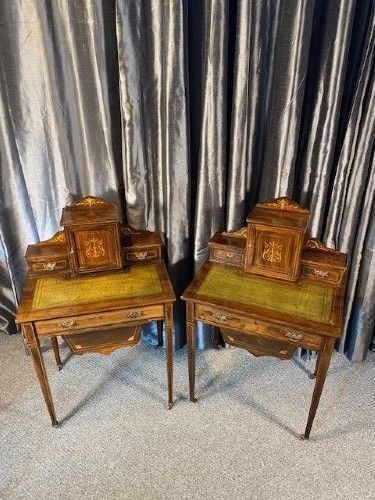
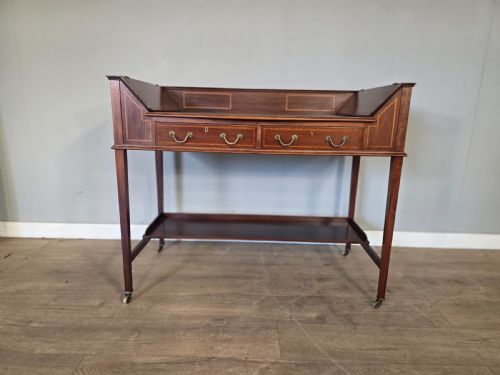
An inlaid leather desk combines a writing surface of hide with decorative woodwork across periods ranging from the nineteenth century into the twentieth. The examples seen here include Edwardian and Victorian writing tables, freestanding pedestal desks, and refined Carlton House forms.
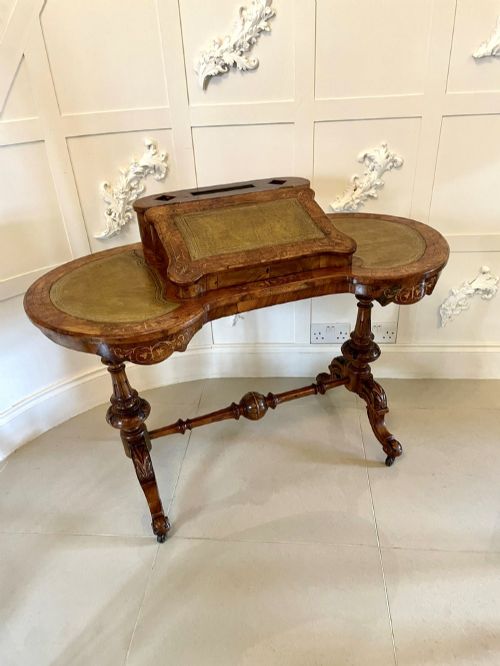
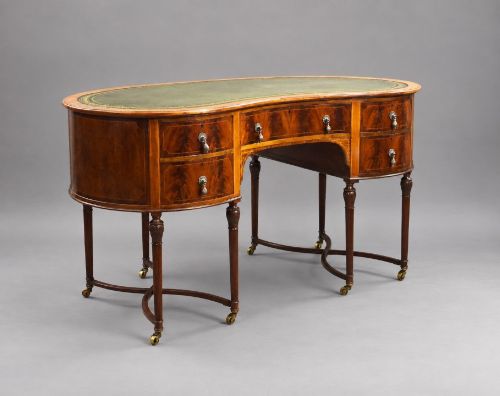
Makers and workshops of the nineteenth and early twentieth centuries produced these pieces in mahogany, satinwood, rosewood, and walnut, frequently incorporating intricate banding or marquetry. The buyer will regularly encounter kidney-shaped tables and Davenport desks designed for domestic studies or boudoirs.
Proportion and wood selection dictate the character of each piece, whether it is a compact lady's writing table or a larger library desk intended to stand centrally in a room. These forms serve both utilitarian writing tasks and decorative display within period interiors.
How they were made
Cabinetmakers constructed the carcases from dense tropical hardwoods like mahogany and walnut, often applying veneers of satinwood, rosewood, or amboyna to create patterned surfaces. Contrasting stringing in boxwood or ebony frequently frames the panels and drawers.
The writing surfaces feature inset panels of leather, commonly tooled with gilt borders around the perimeter. Brass handles, gallery rails, and sometimes ormolu mounts provide functional and decorative accents to the cabinetry.
Several desks retain fitted interiors complete with tiny pigeonholes designed for nineteenth-century postage stamps and sealing wax.
What varies in quality
The refinement of the timber selection and the precision of the marquetry define the upper tier of these pieces. Dense flame mahogany or figured satinwood matched symmetrically across a top indicate superior workshop practice.
Secondary details such as finely cast brass mounts, hand-tooled leather inserts, and secondary timbers of solid oak or mahogany distinguish individual examples. The integration of fitted interior stationery compartments and smoothly operating drawer runners further separates standard production from workshop masterpieces.
Maple & Co·Edwards & Roberts·Gill & Reigate·Jackson & Graham·S & H Jewell
The Inlaid Leather Desk Glossary
- Carlton House desk
- A form of writing desk featuring a curved superstructure of small drawers and pigeonholes rising around the rear and sides of the writing surface.
- Marquetry
- The art of forming decorative patterns by fitting together veneers of different coloured woods, occasionally combined with ivory or metal.
- Davenport
- A compact pedestal desk with a sloping, hinged writing surface enclosing a fitted interior, mounted over a bank of side drawers.
- Bureau Plat
- A freestanding French writing table featuring a flat leather-inset top and one or more drawers in the frieze.
- Stringing
- Thin lines of contrasting wood inlaid into the surface of furniture to create geometric borders and panels.
Inlaid Leather Desk: Frequently Asked Questions
How do I care for the leather top?
Dust the leather regularly with a soft cloth and avoid exposing the surface to direct sunlight or excessive heat. Periodic treatment with appropriate leather dressings helps maintain suppleness without harming the surrounding wood.
Keep liquids away from the writing surface, and use blotting paper when writing directly on the hide to prevent staining the gilt tooling.
Where should a freestanding desk be placed?
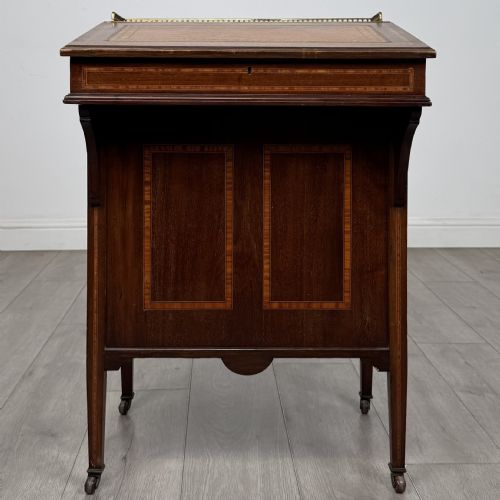
Freestanding pedestal desks and writing tables are finished on all sides, allowing them to sit away from walls in the centre of a room. This placement showcases the polished backs and fine timber grains that standard wall-facing desks lack.
Ensure adequate clearance around the piece for chairs and movement within the study or library.
How do I distinguish Edwardian pieces from Victorian ones?
Victorian desks tend to utilise heavier proportions and darker timbers like rosewood or walnut, often featuring robust carving and brass banding. Edwardian examples frequently employ lighter satinwood and mahogany with delicate stringing and Sheraton Revival influences.
Drawer construction, secondary woods, and hardware styles also offer clues to the specific period of manufacture.