


Inlaid Kingwood Side Tables
These inlaid kingwood side tables bring French revival elegance and intricate marquetry into a room, offering both decorative presence and practical surface space.
Inlaid Kingwood Side Tables
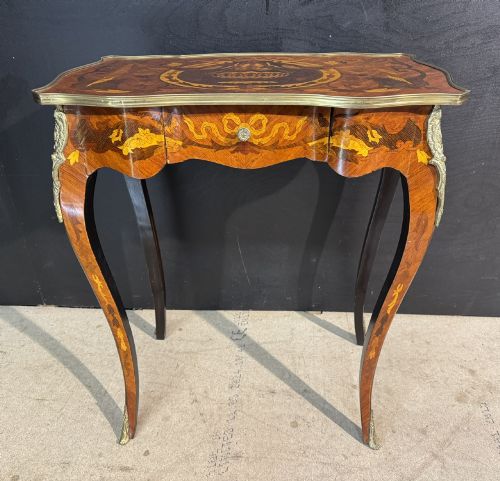
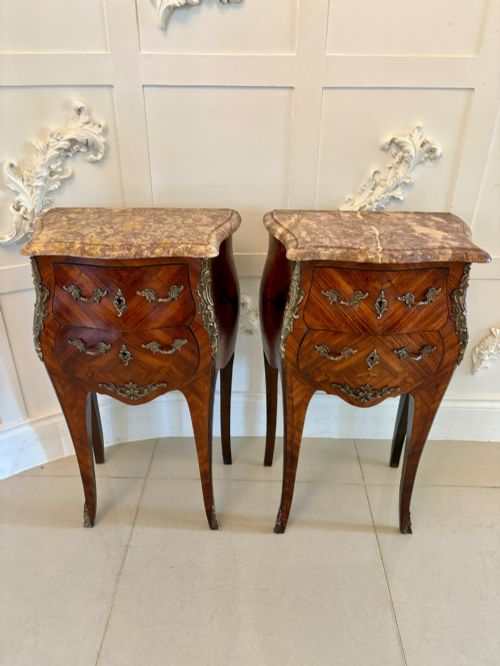
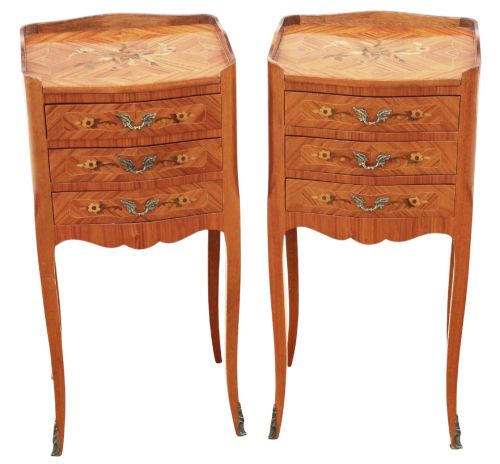
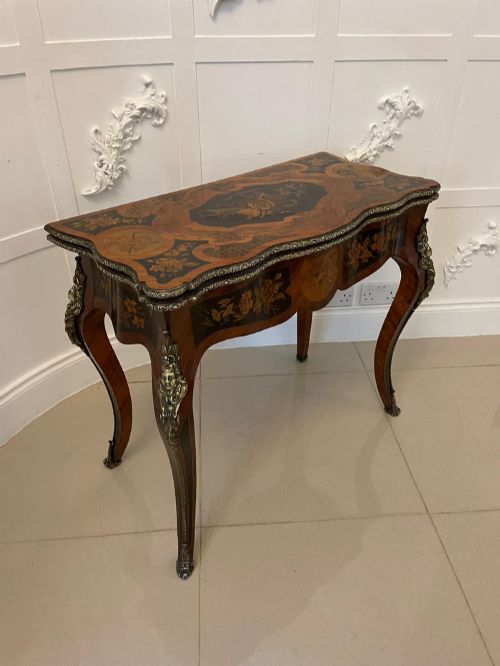
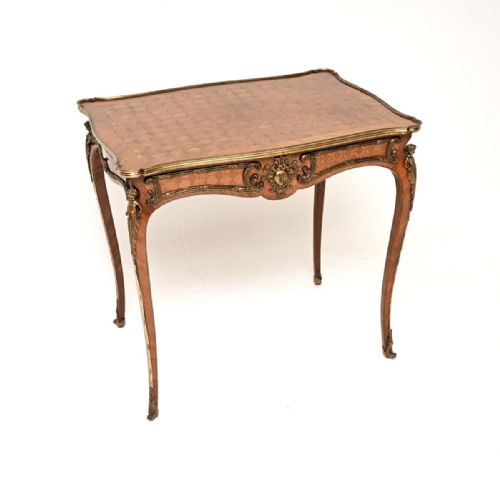
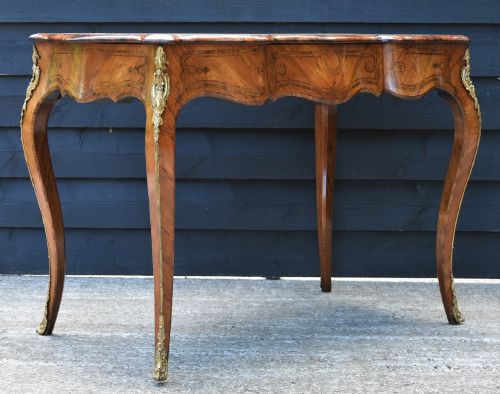
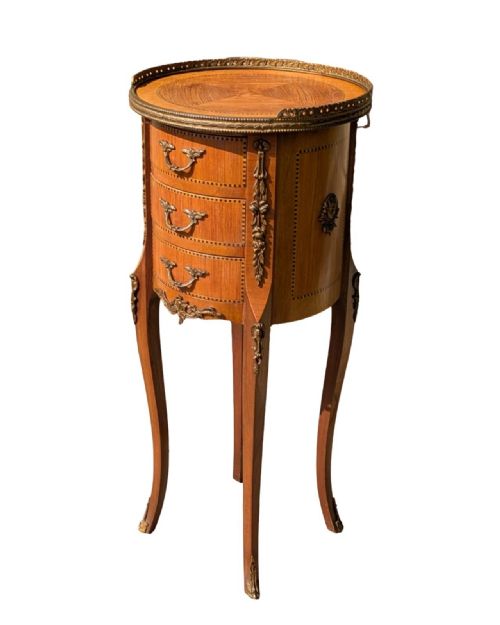
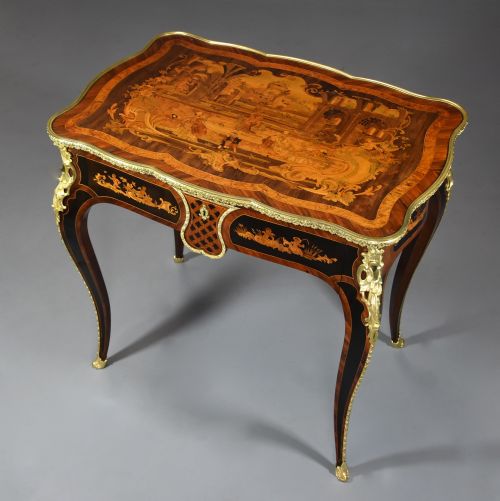
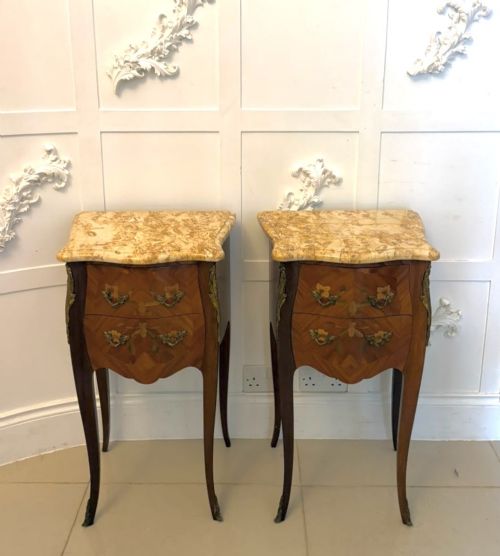
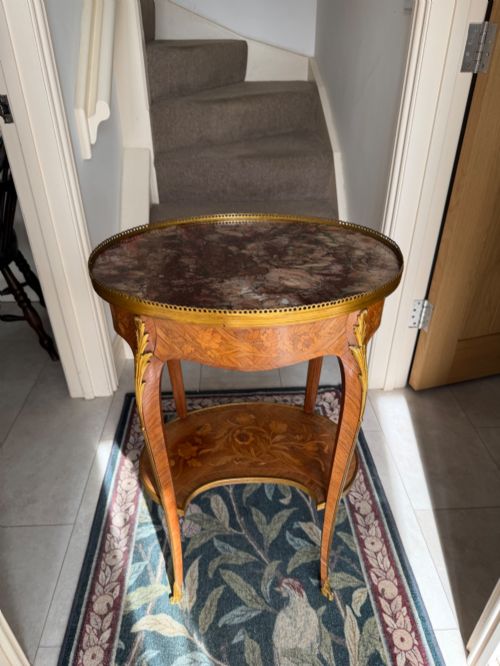
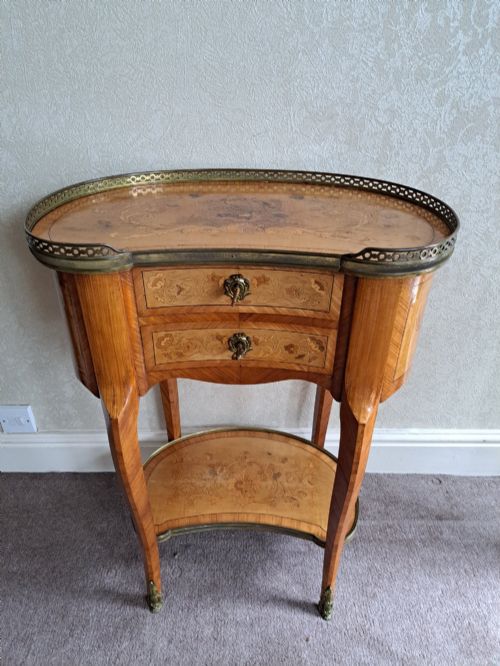
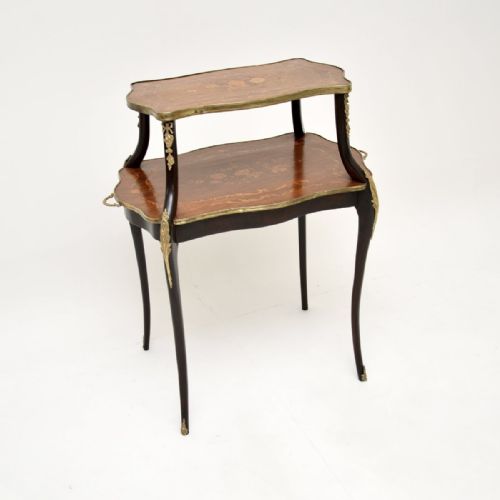
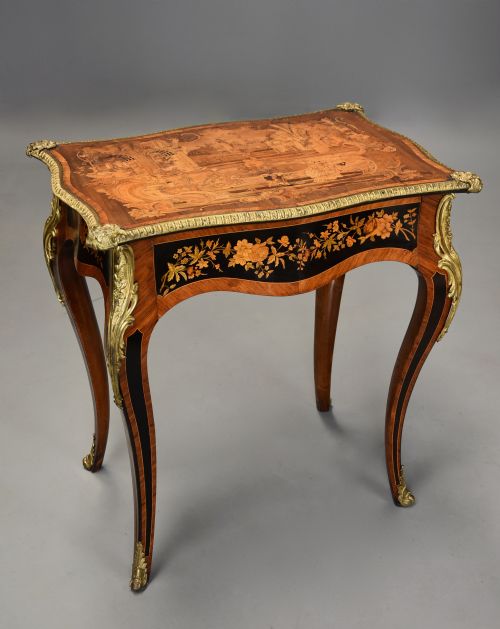
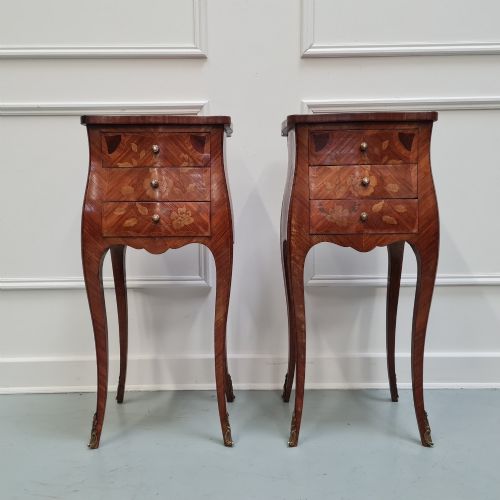
When you examine inlaid kingwood side tables, you encounter a variety of forms shaped largely by nineteenth and early twentieth century French tastes. The selection ranges from compact bedside cabinets and lamp tables to serpentine writing desks and centre tables.
Many examples adhere to Louis XV and Louis XVI revival styles, showing the curved lines or restrained geometry typical of those periods. Pairs of bedside tables and occasional pieces appear frequently across the listings.
Makers and designers from the nineteenth century onward adapted these classic eighteenth century vocabularies for domestic interiors, producing smaller scaled furniture intended for drawing rooms and bedrooms.
How they were made
The makers of these pieces used kingwood veneers laid onto structural timbers in intricate marquetry and parquetry patterns, often combining satinwood, walnut, rosewood, and mahogany to create contrasting floral or geometric designs.
Mounts in ormolu, gilt bronze, and brass accent the contours of the tables, framing drawers and corners while protecting vulnerable edges.
Marble tops, particularly in white or mottled varieties, appear regularly on bedside cabinets and console tables, set neatly into recessed wooden galleries.
Kingwood, rosewood, and satinwood appear alongside marble and ormolu mounts across the various occasional and bedside tables.
What varies in quality
Quality rests significantly on the precision of the marquetry cutting and the choice of veneer grains, where subtle tonal variations in the kingwood create depth and movement across the surface. Lesser pieces rely on repetitive, mechanical patterns.
The weight and crispness of the ormolu mounts dictate the overall standard of the piece, as hand-chased bronze mounts show far greater definition than cast brass alternatives.
Structural integrity in the joints and the smooth action of drawers separate standard production items from exhibition grade works produced by notable workshops.
Collingson & Lock·Millet·Francoise Linke
The Inlaid Kingwood Side Tables Glossary
- Kingwood
- A dense, richly figured Brazilian timber prized for its violet-brown colour and dark striping. It serves as the primary veneer for decorative French revival furniture.
- Marquetry
- The art of forming decorative patterns by fitting together contrasting veneers of wood, shell, or ivory. This technique creates the floral displays seen across the tabletops.
- Ormolu
- Gilt bronze mounts applied to furniture edges and corners for ornamentation. The technique involves coating cast bronze in a gold amalgam.
- Parquetry
- Geometric wood inlay forming repetitive patterns such as cubes or chequers. It differs from marquetry through its reliance on straight lines and formal symmetry.
- Bureau Plat
- A kneehole writing desk fitted with drawers, standing on cabriole or tapered legs. These desks frequently feature leather writing surfaces and elaborate bronze mounts.
Inlaid Kingwood Side Tables: Frequently Asked Questions
How do I clean an inlaid wood surface?
Dust regularly with a soft, dry cloth to prevent accumulation in the veneer crevices. Avoid modern liquid polishes containing silicone, opting instead for traditional beeswax applied sparingly.
Keep these tables away from direct sunlight and heat sources to prevent the kingwood veneer from drying out or lifting over time.
Are marble tops original to these tables?
Many bedside cabinets and side tables were specifically designed to accommodate fitted marble slabs, providing a durable and water-resistant surface. These slabs sit directly into the wooden frame, sometimes secured by a raised moulding.
While replacements do occur, original marble tops generally match the exact proportions and period style of the base cabinet.
How do I tell Louis XV from Louis XVI style?
Louis XV style furniture relies on asymmetrical curves, cabriole legs, and flowing rococo ornamentation. The lines feel organic and fluid.
Louis XVI style introduces neoclassical straight lines, fluted tapered legs, and geometric symmetry, reflecting a return to classical architectural restraint.
Can I use a bedside cabinet as a lamp table?
Compact bedside cabinets and lamp tables share similar proportions, making them versatile enough for various rooms. Their enclosed storage or open shelves accommodate books and small items easily.
Ensure the surface dimensions safely support the base of your chosen lamp without overhang.