
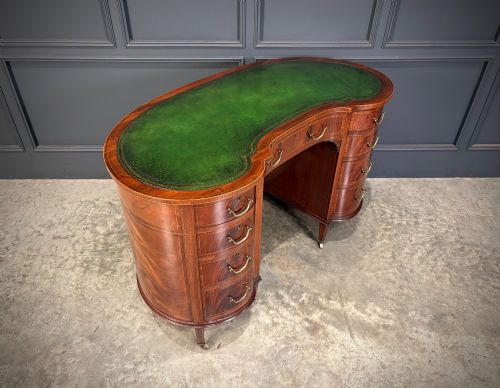
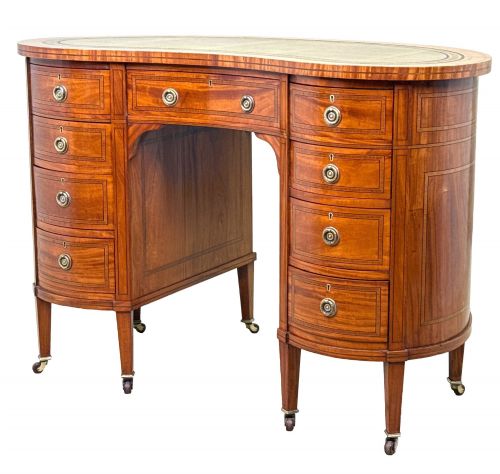
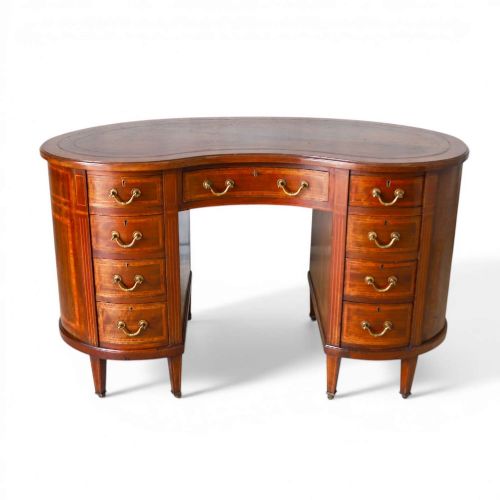
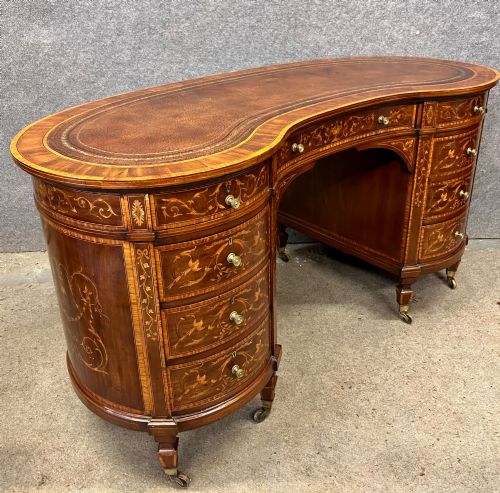

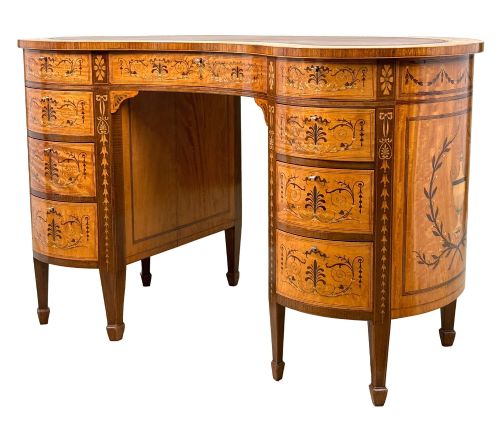


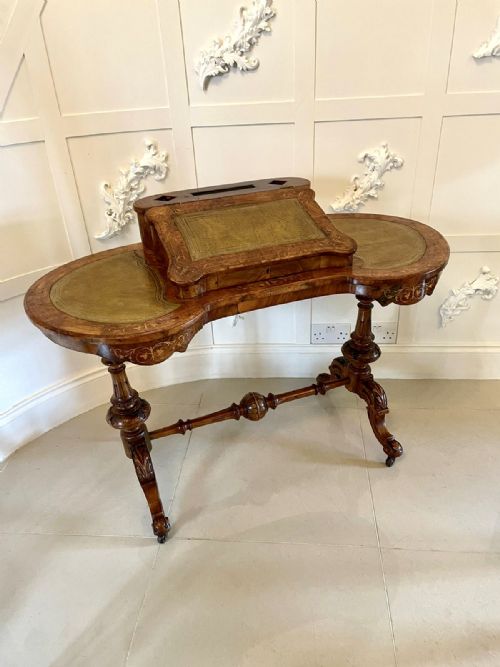


Inlaid Kidney Writing Table
An inlaid kidney writing table brings serpentine grace to a room, offering a concave curve designed to fit the writer.
Inlaid Kidney Writing Table
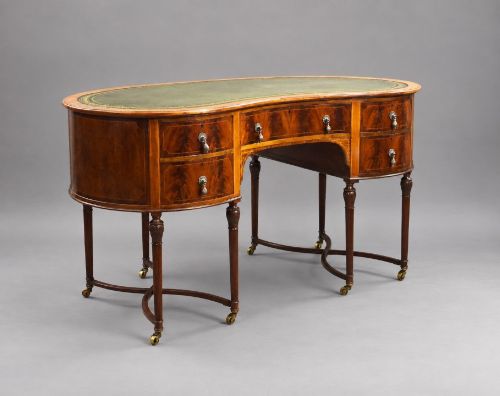
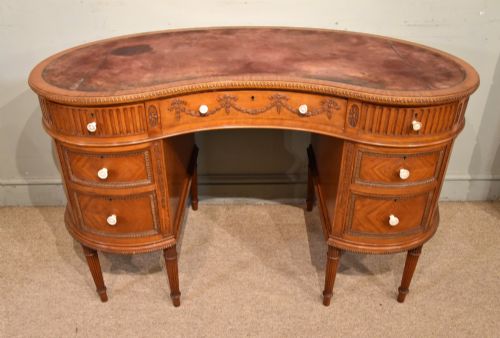
An inlaid kidney writing table is a compact writing desk or side table defined by its curved, kidney-shaped top. These pieces appear frequently from the Victorian and Edwardian periods, stretching back through Sheraton Revival styles to the nineteenth century.
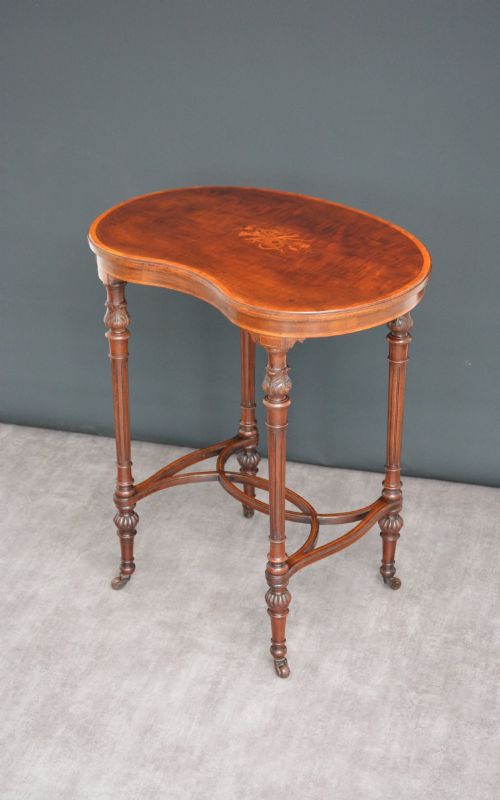
Makers designed these tables for correspondence and private study, constructing them in mahogany, satinwood, burr walnut, and rosewood. The form sits comfortably away from a wall, often finished with detailed parquetry or marquetry across the top surface.
Most examples encountered on this page date from the late nineteenth century into the Edwardian era. They serve as functional writing desks or decorative occasional tables within a study or drawing room.
How They Were Made
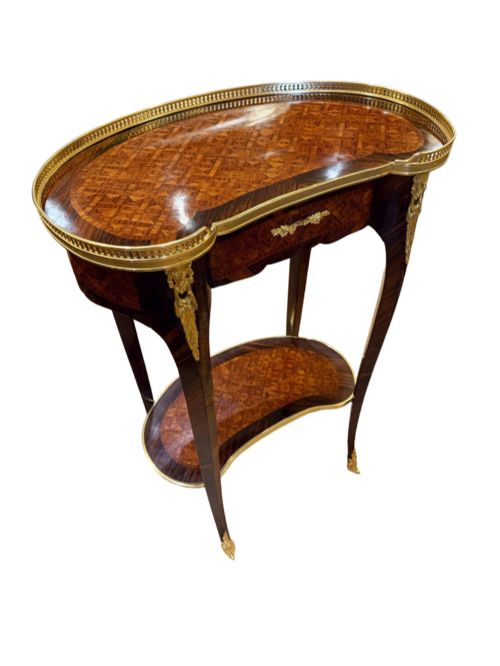
Cabinet makers built the curved carcase using solid timbers such as mahogany, walnut, or rosewood, applying fine veneers of satinwood or burr walnut to the top. Marquetry and parquetry inlay formed intricate floral or geometric patterns across the curved surface.
Many examples incorporate tooled leather writing surfaces bordered by gilt tooling. Brass mounts, ormolu details, and delicate stringing completed the construction of these refined desks.
Makers such as Edwards & Roberts and Maple & Co frequently produced these curved desks.
What Varies in Quality
The distinction between standard production and exhibition quality lies in the depth of the marquetry and the choice of timbers. Superior desks utilise richly figured burr walnut or select satinwood with precise, multi-wood inlay rather than simple painted lines.
Construction details such as freestanding finish on the reverse, original tooled leather inserts, and substantial ormolu mounts separate fine workshop pieces from simpler domestic furniture.
Maple & Co·Edwards & Roberts·Wolfe & Hollander·Gillows·JAS Shoolbred
The Inlaid Kidney Writing Table Glossary
- Kidney-shaped
- A desk or table top curved in a concave kidney bean outline to fit the user. This curved profile allows the person sitting at the table to draw closer to the writing surface.
- Marquetry
- Decorative veneer patterns formed by fitting together small pieces of different woods, metals, or shells. Artisans cut these precise motifs to create pictorial designs across the desk top.
- Parquetry
- Geometric wood inlay arranged in repeating patterns such as cubes or chequers. This technique provides a structured, decorative border or field on the writing surface.
- Ormolu
- Gilded bronze mounts applied to furniture for decorative enrichment. These metal accents decorate the corners, legs, and borders of finer tables.
- Sheraton Revival
- A late nineteenth-century design movement inspired by the neoclassical furniture of George Sheraton. Pieces in this style utilise light satinwood, delicate stringing, and classical motifs.
Inlaid Kidney Writing Table: Frequently Asked Questions
What is an inlaid kidney writing table?
An inlaid kidney writing table is a nineteenth or early twentieth-century desk featuring a concave curved top and decorative wood veneer inlay. These pieces combine a distinctive serpentine shape with traditional cabinet making.
They function primarily as compact writing desks or freestanding occasional tables. The curved front allowed the user to sit closer to the centre of the desk.
How do I tell Victorian from Edwardian pieces?
Victorian examples tend to use darker timbers like mahogany and burr walnut, often paired with heavier proportions and rich marquetry. Edwardian pieces frequently employ lighter satinwood and display the refined influence of the Sheraton Revival.
Examination of the secondary woods, internal drawer construction, and inlay style helps clarify the period of manufacture. Makers' stamps inside the drawers also provide direct attribution.
Where should I place a kidney table?
These tables work well as freestanding centrepieces in a room because their backs are finished with the same care as the front. Placing them away from walls showcases the curve and the inlaid top.
They also serve effectively as writing desks in a study or as console tables in a hallway. Their compact footprint allows them to fit into smaller spaces where rectangular desks dominate.
Did these tables always have leather tops?
Many writing tables and desks incorporated inset leather panels tooled with gold leaf to provide a smooth writing surface. Some examples feature entirely wood or marquetry tops without leather inserts.
Original leather surfaces often show patination from use, while replaced leather presents a cleaner appearance. Both configurations appear across different workshops and periods.