




Inlaid Hallway Tables
Inlaid hallway tables bring refined timber work and decorative stringing into narrow domestic spaces, offering surface area without crowding a thoroughfare.
Inlaid Hallway Tables
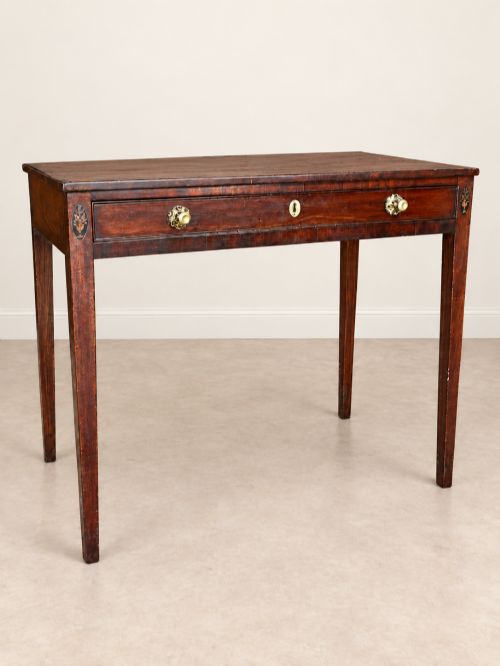
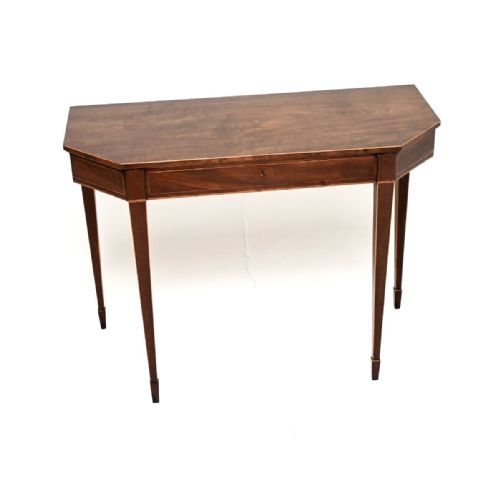
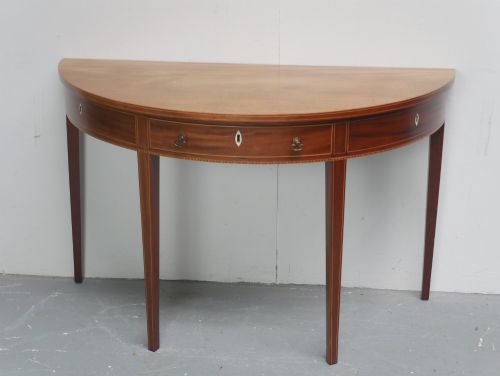
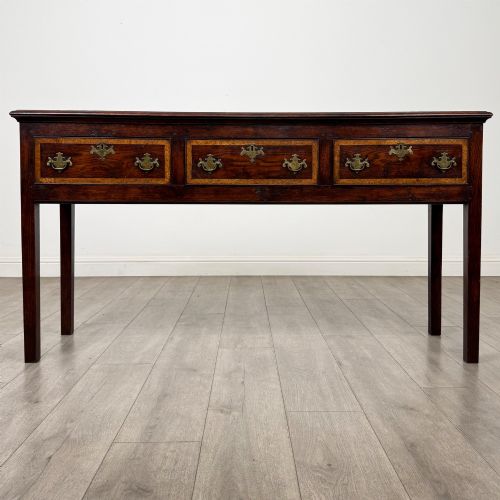
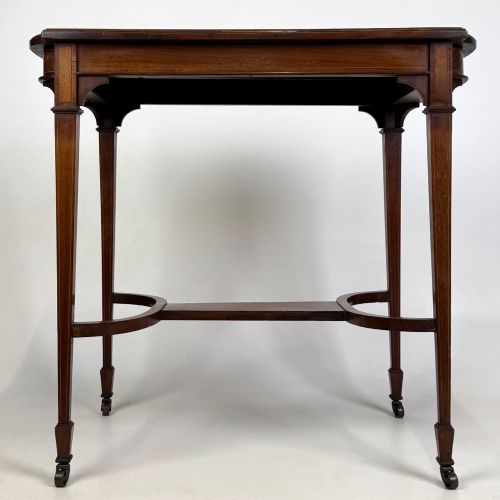
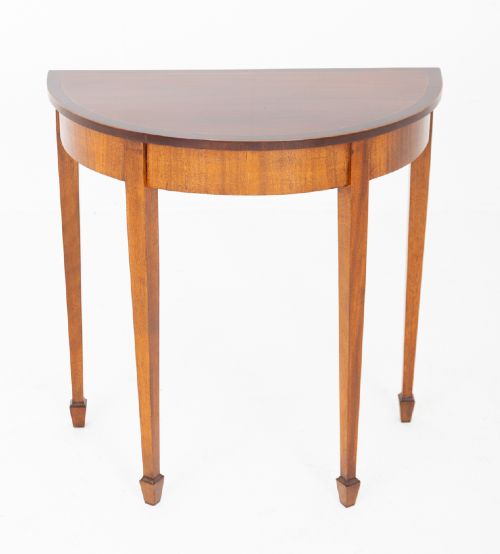
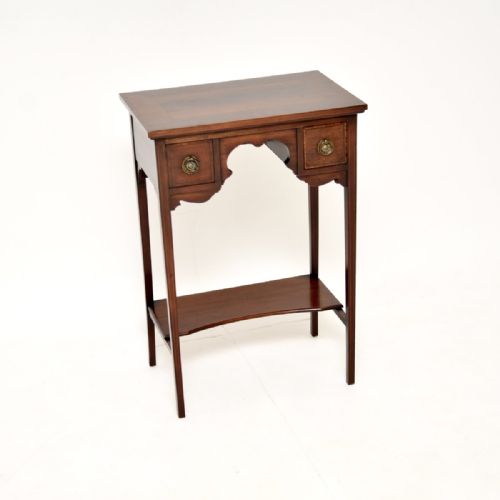
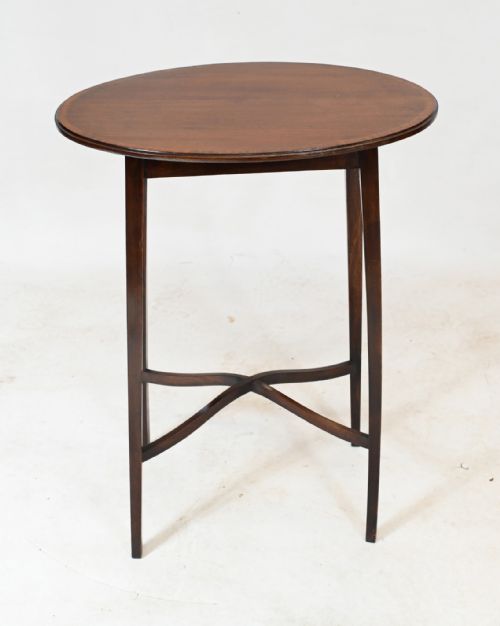
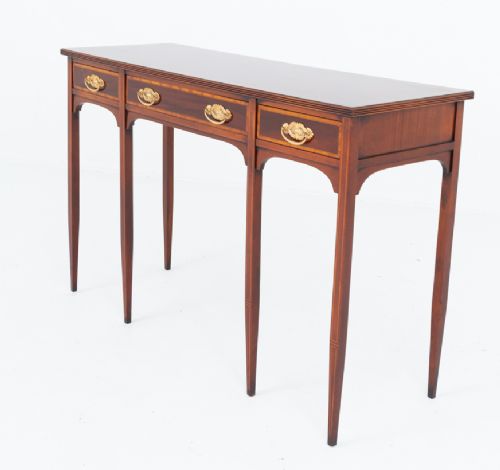
When buyers search for inlaid hallway tables, they encounter slender furniture designed to stand against walls in passages and reception areas, most frequently appearing as demi-lune, console, or side tables. The selection spans distinct eras from the eighteenth century through the Edwardian period and into the early twentieth century, showing strong representation of Georgian and Sheraton Revival designs.
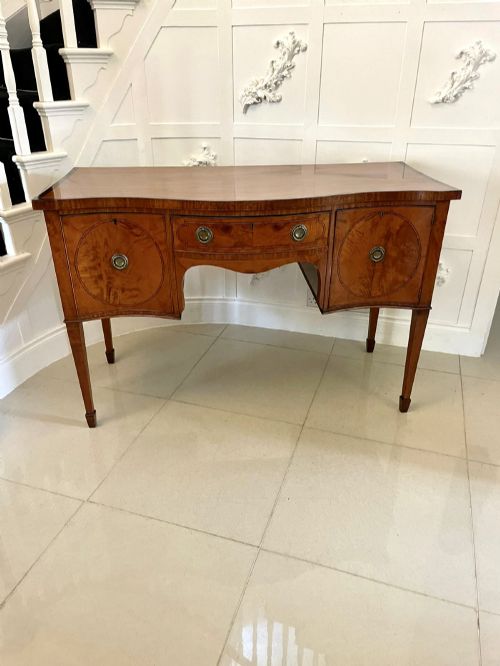
The dominant material format is mahogany, frequently enriched with boxwood and satinwood inlay, alongside associated forms like sideboards and servers. Pieces range from compact tea tables and D-shaped consoles to larger bow-fronted sideboards, reflecting the diverse domestic storage and display requirements of past households.
Materials and construction
Cabinet makers utilised solid mahogany and polished veneers as the primary structural body for these tables, building strong frames designed to support everyday use. Contrasting timbers such as satinwood and boxwood were carefully shaped into fine stringing and geometric banding to decorate borders and tabletops.
Metal mounts occasionally appear, with brass and ormolu details finishing feet and key escutcheons on select examples. Joinery follows traditional cabinet-making standards appropriate to each period, from eighteenth-century George III workshops to later Edwardian revivalists.
Several tables include hidden tambour doors and subtle D-shaped drawers designed to guard clandestine notes and hallway keys.
Judging the work
Quality rests in the crispness of the timber inlay and the precision with which contrasting woods fit into their channelled recesses. Subtle variations in grain selection across mahogany surfaces and the delicacy of the boxwood banding separate standard production from superior pieces.
Proportion and structural integrity dictate the standing of a table, where well-balanced demi-lune curves and stable leg assemblies demonstrate disciplined craftsmanship. The refinement of secondary timbers inside drawers and the original state of brass or ormolu mounts further distinguish finer examples.
The Inlaid Hallway Tables Glossary
- Demi-lune
- Half-moon shape in furniture design, creating a flat back to sit flush against a wall with a curved front projection. This profile remains a primary form for hallway and console tables.
- Satinwood
- A lustrous, yellowish-gold timber native to India and Sri Lanka, utilised extensively for contrasting veneers and inlaid panels during the Georgian and revival eras.
- Stringing
- Thin lines of contrasting timber inlaid into shallow channels on tabletops and drawer fronts to create geometric borders. It defines much of the decorative work seen on Sheraton revival pieces.
- Console table
- A wall-mounted or freestanding table designed primarily for display rather than heavy dining use, often featuring a shaped front and decorative legs.
- Boxwood
- A dense, pale yellow wood employed historically for fine inlay work and contrasting stringing lines against darker primary timbers like mahogany.
Inlaid Hallway Tables: Frequently Asked Questions
How do I date an inlaid table?
Dating relies on observing structural characteristics, timber choices, and inlay styles associated with specific periods like the Georgian era or Edwardian revival. Secondary woods inside drawers and the method of assembly offer reliable clues to the decade of manufacture.
Cabinet-making techniques evolved from eighteenth-century hand joinery to later industrial methods, helping to separate antique originals from subsequent reproductions.
Where should I place a console table?
Console tables suit narrow passages, landings, and reception rooms where floor space is limited yet a decorative surface is desired. Their shallow depth allows them to sit against walls without obstructing movement through a home.
Pairing a table with a mirror or placing a small lamp upon the top creates a traditional focal point in an entrance hall.
What is Sheraton Revival furniture?
Sheraton Revival furniture refers to pieces made during the late nineteenth and early twentieth centuries that emulate the light, neoclassical styles of eighteenth-century designer Thomas Sheraton. These items frequently feature satinwood banding, delicate mahogany frames, and classical inlaid motifs.
Makers of this period combined historical elegance with the robust construction standards of the late Victorian and Edwardian eras.