






Inlaid Glass Display Table
An inlaid glass display table turns the simple act of showing a collection into a formal exercise in interior staging.
Inlaid Glass Display Table
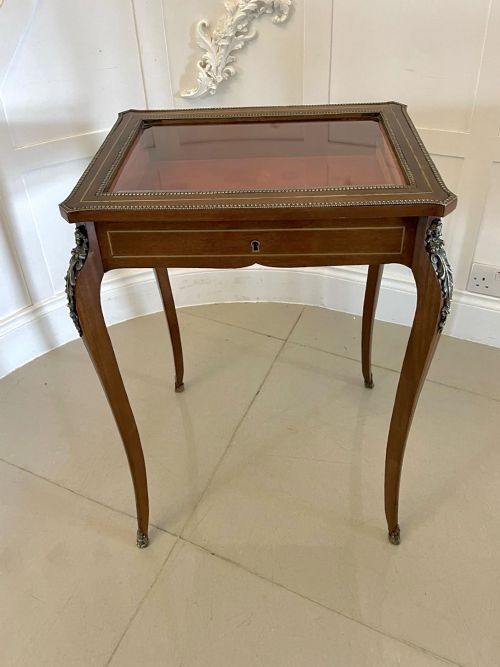
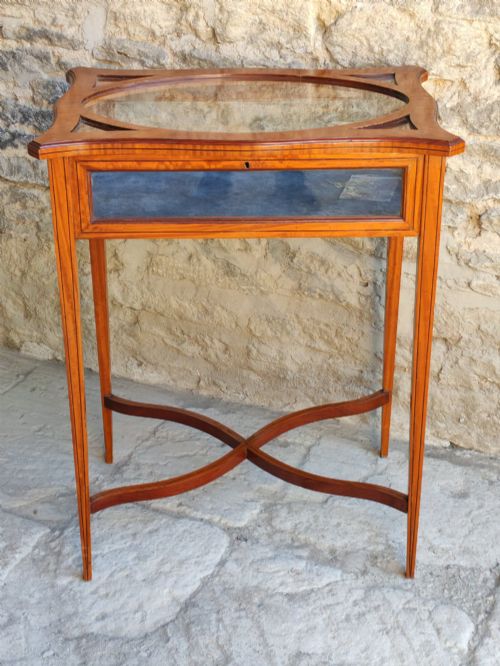
An inlaid glass display table is a glazed showcase designed to elevate small objects, medals, and jewellery into direct view while resting on a fitted wooden frame. Buyers searching this phrase will find pieces spanning the nineteenth and early twentieth centuries, with Edwardian and Victorian examples forming the backbone of the selection.
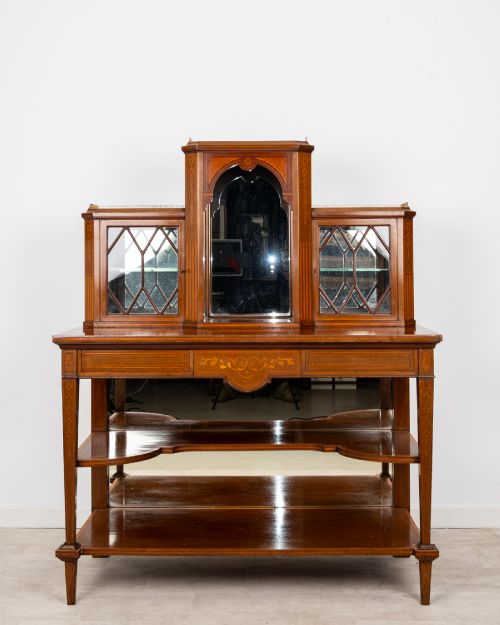
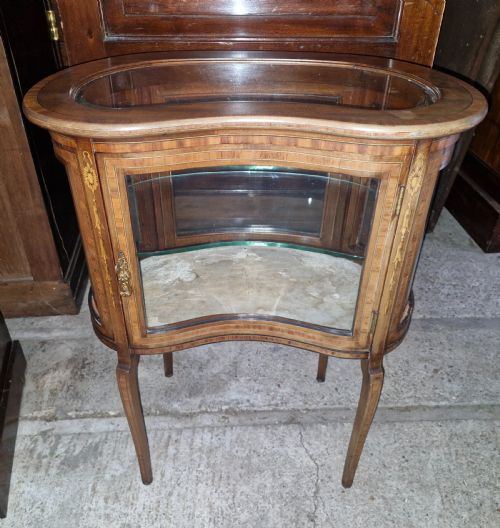
The dominant formats on this page range from oval, kidney-shaped, and octagonal bijouterie tables to upright cabinets and occasional writing desks. These pieces appear in varied woods such as mahogany, satinwood, and rosewood, frequently carrying geometric or floral stringing.
Origins stretch across English cabinetmaking traditions alongside French influences, particularly French Louis XV Revival and Sheraton Revival styles. Most items date from the height of late Victorian and Edwardian domestic display culture, when surface decoration matched internal visibility.
Construction and surface materials
Cabinetmakers constructed the structural carcasses of an inlaid glass display table primarily in solid mahogany, walnut, or rosewood, often applying fine veneers of satinwood and boxwood across the tabletops and friezes. These contrasting timbers formed complex marquetry panels and delicate stringing lines.
Glazing framed the top or upper cabinet sections, supported by cast brass mounts, hinges, and glazed panels that allowed light to reach the interior velvet or fabric lining. Artisans combined traditional mortise and tenon joinery with meticulous inlay techniques to ensure rigid support for the heavy glass tops.
Inlaid Glass Display Table Retail Price Guide 2026
Typical asking prices for inlaid glass display table among the pieces listed under this phrase on Sellingantiques today, from the lower quarter to the upper quarter. They describe what is for sale here now, not the wider market.
Mahogany and satinwood dominate the wood palette across these listings, frequently paired with brass hardware and glass.
Distinctions in execution and finish
The separation between standard production and top-tier execution lies in the precision of the timber matching and the crispness of the marquetry inlay. Superior examples display tightly fitted boxwood and satinwood stringing that follows complex curves, such as kidney shapes, without splintering or filler.
Hardware quality further defines the tier of the piece, where heavy cast brass mounts, clean hinges, and well-fitted glass lids separate fine workshop output from utility furniture. The choice of internal fabric lining and the depth of the cabinet carcass complete the structural integrity of the better pieces.
Edwards & Roberts
The Inlaid Glass Display Table Glossary
- Bijouterie table
- A specialised glazed table designed specifically for displaying small ornaments, trinkets, or jewellery beneath a glass top. These pieces often feature velvet-lined interiors to protect delicate items.
- Marquetry
- The art of forming decorative patterns by fitting together small pieces of coloured wood veneer, shell, or ivory onto a structural carcass. It differs from simple inlay by covering the entire surface in a picture-like mosaic.
- Stringing
- Thin lines of contrasting timber inlaid into grooves on the surface of furniture to create geometric borders and panels. This technique defined much of the Sheraton Revival style seen on Edwardian tables.
- Vitrine
- A glass-fronted or glass-topped cabinet or display table meant for presenting collections to view. The term derives from the French word for glass.
- Bonheur du jour
- A light lady's writing desk featuring a small cabinet or set of drawers and display compartments on the upper surface. These combined writing utility with visible storage.
Inlaid Glass Display Table: Frequently Asked Questions
What fits inside a bijouterie table?
These tables were built to house small, prized possessions such as pocket watches, portrait miniatures, medals, and fine jewellery. The glass top kept dust away while keeping the collection visible.
Today, they serve the exact same purpose in a modern room, offering a secure, dust-free stage for curated groupings of small antiques.
How do I care for the interior fabric?
Most historical display surfaces use velvet or similar textiles that absorb dust and light over decades. Gentle vacuuming with a soft brush attachment is the safest method for routine maintenance.
Avoid using liquid cleaners near the fabric or the surrounding timber frame to prevent moisture damage to the antique veneers and glue joints.
Where should I place a display table?
Because the primary view is from above through the glazed lid, these tables work best away from heavy foot traffic where people can pause to look down. Placing them near a natural light source enhances the visibility of items inside.
Direct, harsh sunlight should be avoided to protect both the internal collection and the sensitive satinwood or rosewood veneers from fading.
How do I distinguish Edwardian from Victorian pieces?
Victorian examples tend to use heavier proportions, darker timbers like rosewood or burr walnut, and robust brass mounts. They often favor ornate carving alongside brass stringing.
Edwardian pieces generally lean towards lighter satinwood and mahogany frames, employing delicate Sheraton Revival stringing and airier forms like kidney and oval shapes.